



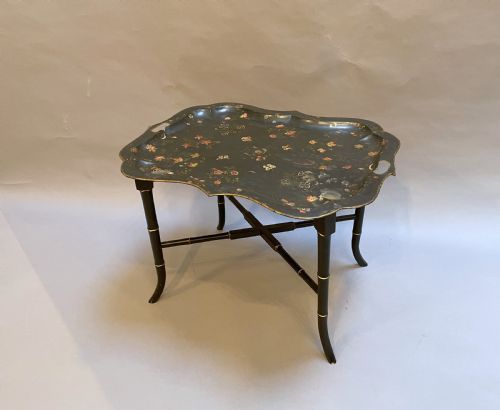


Ebonised Tray Table
An ebonised tray table combines a removable serving surface with a supportive stand, offering a functional piece of furniture rooted in nineteenth-century design.
Ebonised Tray Table
When you search for an ebonised tray table, you encounter pieces designed for serving and display across the Victorian and Edwardian eras. These items typically comprise a dark-finished timber or papier-mâché tray resting upon a folding or fixed wooden stand.
The selections on this page span from the nineteenth century into the early twentieth century, including styles such as Chinoiserie and Regency. Forms range from occasional and coffee tables to specialised side tables and serving trays on stands.
How they were made
Maker construction relies heavily on ebonised wood, timber, and papier-mâché, often finished with black lacquer. Craftsmen applied these dark surfaces to mimic expensive ebony.
Decoration frequently incorporates gilt detailing and Chinoiserie painted motifs, alongside brass hardware where stands or trays require structural support.
Ebonised Tray Table Retail Price Guide 2026
Typical asking prices for ebonised tray table among the pieces listed under this phrase on Sellingantiques today, from the lower quarter to the upper quarter. They describe what is for sale here now, not the wider market.
Object types catalogued here include occasional tables, jewellery boxes, serving trays on stands, and mirrored table plateaus.
What varies in quality
Quality rests in the crispness of the painted Chinoiserie decoration and the depth of the lacquer finish on the papier-mâché or timber surfaces. Hand-painted floral or oriental scenes distinguish finer examples from plain or later interpretations.
The structural integrity of the tray and stand integration matters significantly, as does the condition of the gilt highlights. Original stands designed specifically for the tray hold greater cohesion than mismatched later pairings.
The Ebonised Tray Table Glossary
- Ebonised
- Timber treated with stain, dye or polish to resemble genuine ebony wood. This dark finish gained immense popularity during the Victorian period.
- Papier-mâché
- A composite material made from paper pulp or layers of paper bound with glue, then moulded and dried. It forms a remarkably rigid and smooth base for lacquering.
- Tray Plateau
- A mirrored or decorative tray base traditionally used as a centrepiece on dining tables for display. These reflective surfaces enhance the illumination of silver or glassware.
Ebonised Tray Table: Frequently Asked Questions
What is an ebonised tray table?
An ebonised tray table is a piece of furniture featuring a removable tray top set upon a supporting stand, finished with a dark, ebony-like coating. They originated primarily in the nineteenth century as versatile serving and display furniture.
These tables often incorporate decorative papier-mâché or timber surfaces adorned with gilt or Chinoiserie artwork. They function well in modern interiors as compact coffee or occasional tables.
How do I date a tray table?
Dating involves examining the materials, construction methods, and decorative styles present on both the tray and the stand. Papier-mâché cores and hand-painted Chinoiserie point toward Victorian production.
Later Edwardian and George V examples often display refined timber turning or distinct lacquer techniques. Comparing the wear patterns on the underside of the tray helps confirm period authenticity.
Were these tables used for dining?
These tables served primarily for serving drinks, afternoon tea, or displaying decorative objects rather than formal dining. The removable tray allowed servants to transport items from the kitchen to the parlour.
Once in the room, the tray rested securely on its folding or fixed stand to serve as a convenient occasional table. This dual functionality made them popular in nineteenth-century drawing rooms.
How do I care for papier-mâché?
Papier-mâché requires gentle handling and protection from excessive moisture and direct sunlight. Dust the surface regularly with a soft, dry cloth rather than using liquid polishes.
Keeping the table away from damp environments prevents the composite material and its lacquer finish from warping or cracking over time.