

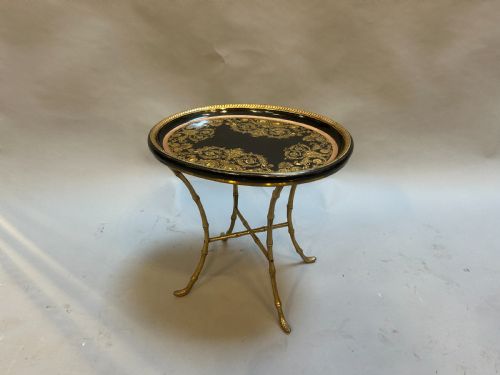
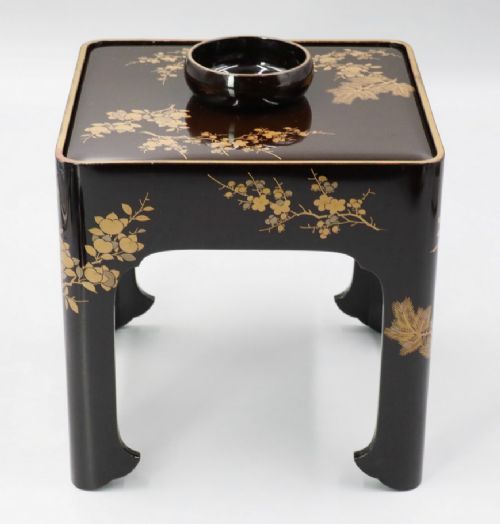
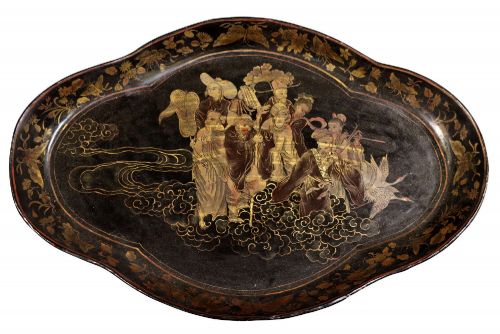


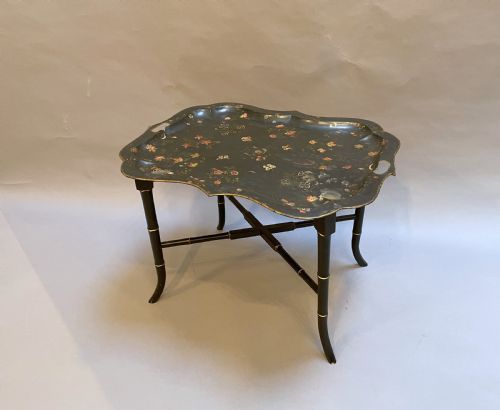


Black Lacquer Tray Table
A black lacquer tray table brings depth and historical character to a room, serving as both a functional surface and a decorative focal point.
Black Lacquer Tray Table
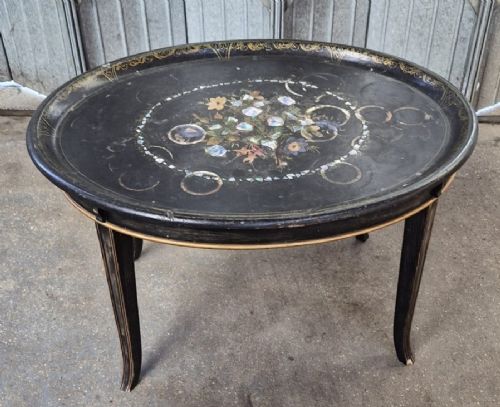
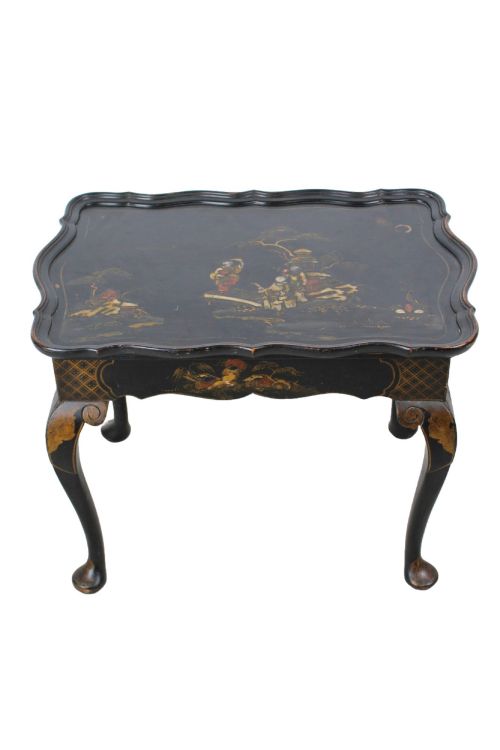
A black lacquer tray table combines a portable serving surface with a supportive base, creating an adaptable piece of furniture for contemporary and traditional interiors alike. When searching for a black lacquer tray table, buyers encounter a range of forms, from occasional tables and coffee tables to side tables and dedicated serving trays mounted on stands. These items draw on historical periods spanning the eighteenth, nineteenth, and early twentieth centuries, reflecting diverse international origins.
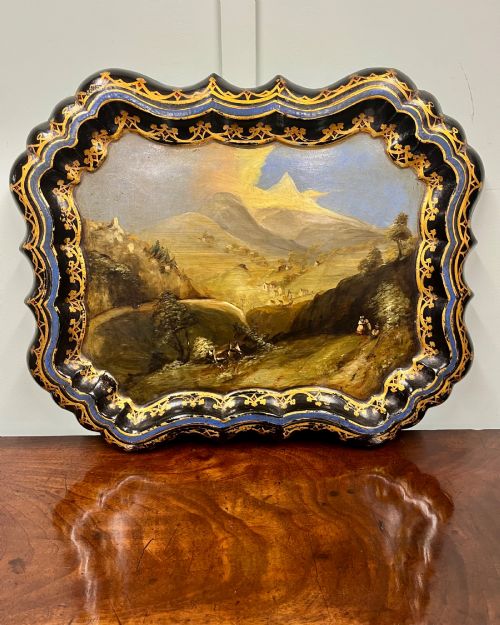
The most common versions on this page are nineteenth-century pieces, often featuring Victorian papier-mâché or ebonised wood trays placed on folding or fixed stands. Alongside these English interpretations, the selection includes Japanese Meiji and Taisho period lacquerware alongside Edwardian and Regency examples. Forms vary from circular coffee tables to large rectangular serving trays adapted for domestic use.
Trays and tables often unite disparate periods through later adaptations, such as nineteenth-century papier-mâché trays mounted on later stands or iron supports. This combination of portable top and supportive base defines the category, offering flexibility in placement and utility throughout the home. Each variation displays distinct regional aesthetics, from British Chinoiserie motifs to Japanese decorative lacquer work.
How they were made
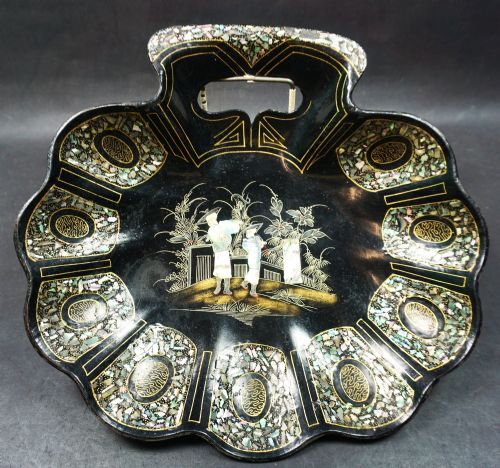
Maker workshops utilised natural lacquer, wood, and papier-mâché as primary structural materials, building up smooth surfaces through successive coats and polish. Papier-mâché construction involved layers of paper pulp pressed and bound with adhesive, creating a lightweight yet rigid base suitable for intricate surface decoration. Wood variants employed ebonised timber, walnut, and general hardwoods to form stable tabletops and supporting stands.
Surface ornamentation frequently incorporated gold leaf, gilt, and hand-painted pigments to delineate Chinoiserie scenes, floral patterns, and pictorial motifs. Metal elements such as brass or iron appeared in structural fittings and occasional stands, providing robust support for the lacquered trays above. Artisans applied these materials through specialised layering techniques, ensuring the glossy finish endured daily use.
Black Lacquer Tray Table Retail Price Guide 2026
Typical asking prices for black lacquer tray table among the pieces listed under this phrase on Sellingantiques today, from the lower quarter to the upper quarter. They describe what is for sale here now, not the wider market.
Materials recorded across the inventory include papier-mâché, lacquer, gold leaf, ebonised wood, and brass.
What varies in quality
The standard of execution in hand-painted Chinoiserie and gilt detailing dictates the visual appeal of each piece, distinguishing accomplished artisan work from simpler production. The integrity of the underlying lacquer, wood, or papier-mâché determines durability, particularly where trays meet independent stands. Superior examples display refined brushwork and stable material composition across both the tabletop surface and the supporting framework.
Historical provenance and maker attribution elevate certain pieces, as seen in signed works from notable nineteenth-century workshops. The harmony between the tray and its stand also influences desirability, whether the stand is contemporary to the tray or a later adaptation. Attention to detail in the application of gold leaf and the smoothness of the final lacquer coat separate standard domestic items from finer decorative pieces.
Jennens & Bettridge·Henry Clay
The Black Lacquer Tray Table Glossary
- Papier-mâché
- A composite material made from paper pulp or layers of paper mixed with glue and pressed into moulds. Once dried, it provided a smooth, stable surface ideally suited for fine lacquer finishes.
- Toleware
- Painted or enamelled metalware, usually tinplate, utilised for domestic vessels and trays. In furniture, tole trays were frequently mounted onto wooden or iron stands to form tables.
- Ebonised wood
- Timber treated with a chemical stain or black finish to imitate the appearance of ebony. This technique was widely employed in nineteenth-century furniture to create a dark, polished ground.
- Meiji
- A period of Japanese history spanning from 1868 to 1912, characterised by opening trade and exceptional decorative arts. Lacquerware from this era often showcases intricate craftsmanship.
Black Lacquer Tray Table: Frequently Asked Questions
Were these trays originally made to be removable?
Many historical trays were constructed as portable serving vessels designed to lift off their supporting frames entirely. This allowed servants to carry items between rooms before resting the tray back upon its folding or fixed stand.
Over time, some trays were permanently secured to their bases, while others retained their removable function. Examining the underside reveals whether the tray rests in a dedicated frame or has been affixed with screws.
How do I distinguish papier-mâché from wood?
Papier-mâché feels lighter than solid wood and lacks natural grain patterns when examined closely beneath the surface lacquer. It offers a smooth, tactile resilience that absorbed thick layers of black finish.
Wooden examples, including ebonised walnut and lacquered timber, display greater heft and occasional signs of natural grain movement. Both materials required careful priming before artisans applied the final decorative lacquer layers.
How should I care for a black lacquer surface?
Black lacquer requires gentle dusting with a soft, dry cloth to prevent micro-scratches on the glossy finish. Avoid placing hot or wet items directly onto the surface without protective coasters.
Keep these tables away from direct sunlight and extreme temperature fluctuations to prevent the lacquer from cracking or warping. Natural wax can be applied sparingly to maintain the sheen of older wood and papier-mâché pieces.
How can I tell a Victorian tray from a Regency one?
Regency pieces often display neoclassical proportions and refined Chinoiserie detailing dating from the early nineteenth century. Papier-mâché trays from this era occasionally bear stamps from prominent makers.
Victorian examples tend to feature heavier ebonised stands and more elaborate floral or pictorial Chinoiserie decoration. Comparing the style of the painted motifs and the construction of the stand helps narrow down the period of manufacture.