






Papier Mache Coffee Table
A papier mache coffee table brings rich lacquer and gilded Chinoiserie decoration directly from nineteenth-century serving trays onto sturdy modern stands.
Papier Mache Coffee Table
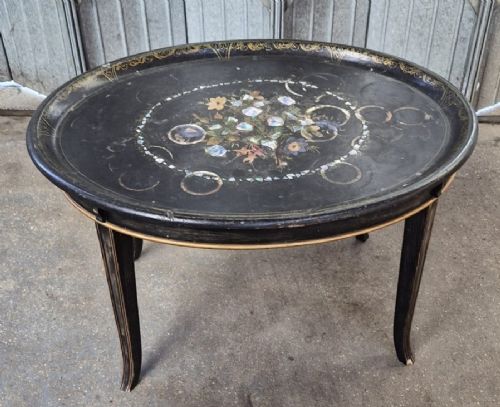
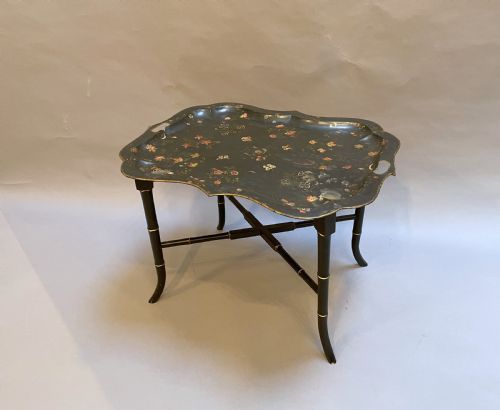
When you search for a papier mache coffee table, you are looking at repurposed serving trays mounted on custom stands to create functional low tables. The pieces on this page span the eighteenth, nineteenth, and early twentieth centuries, drawing heavily on Regency and Victorian aesthetics.
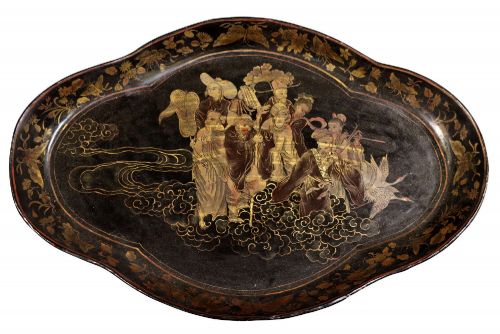
You will most frequently meet nineteenth-century examples featuring Chinoiserie landscapes, floral motifs, and ebonised finishes. Many of these originated as butlers serving trays or large platters before receiving later stands.
Alongside English and Victorian pieces, the selection includes Kashmiri examples and occasional tables from the early twentieth century. Tray tables and side tables dominate the forms, offering portable surfaces adapted for contemporary living.
How they were made
The core material is papier-mâché, constructed from layers of paper pulp or sheets pressed and heavily varnished to create a rigid, durable board. Artisans then applied dark lacquer and intricate gold leaf or gilt ornamentation.
Decoration often involved hand-painted Chinoiserie scenes depicting figures, pavilions, and botanical elements, sometimes enhanced with inlaid mother-of-pearl. Stands were fashioned from wood, iron, or brass to support the substantial weight of the tray tops.
Papier Mache Coffee Table Retail Price Guide 2026
Typical asking prices for papier mache coffee table among the pieces listed under this phrase on Sellingantiques today, from the lower quarter to the upper quarter. They describe what is for sale here now, not the wider market.
Tea was serious business, hence trays large enough to host entire porcelain services ended up holding coffee cups today.
What varies in quality
The distinction between ordinary and exceptional pieces rests on the crispness of the hand-painted decoration and the depth of the lacquer finish. Signed work by prominent makers commands attention through superior brushwork and intricate detailing.
The integrity of the papier-mâché base and the harmony between the tray and its stand determine the overall success of the piece. Period trays mounted on later stands are common, so the proportional balance of the base matters greatly.
Jennens & Bettridge·Henry Clay
The Papier Mache Coffee Table Glossary
- Chinoiserie
- European decorative style reflecting Chinese artistic influences, frequently seen in gold motifs on black lacquer grounds. This aesthetic defines much of the nineteenth-century work.
- Lacquer
- Protective and decorative coating applied in multiple layers to papier-mâché surfaces. It provides the characteristic deep sheen.
- Gilt
- Application of gold leaf or gold paint used to highlight figures and borders on dark trays. This technique catches the light.
- Toleware
- Painted or enamelled metalware often grouped with papier-mâché items of the period. It shares similar decorative palettes.
- Ebonised
- Wood or base material finished to resemble ebony, creating a dark, uniform background for gilt decoration.
Papier Mache Coffee Table: Frequently Asked Questions
Can I use it daily?
These tables function well for everyday use provided you protect the surface from excessive moisture and heat. Using coasters and placemats preserves the historic lacquer.
Regular dusting with a soft, dry cloth keeps the finish clean without damaging the delicate painted details.
Are the stands original?
Many nineteenth-century trays started life as portable serving pieces and were mounted on stands much later. This practice repurposes antique trays into practical coffee table heights.
Matching stands are occasionally period-correct, though iron, wood, and brass bases from subsequent decades frequently support the original tops.
How do I clean lacquer?
Clean the surface gently using a soft, dry microfibre cloth to remove dust and particles. Avoid liquid cleaners, harsh chemicals, and abrasives that can dull the varnish.
Keep the table away from direct sunlight and heat sources to prevent the lacquer from cracking or fading over time.
How do I date a piece?
Examine the style of the Chinoiserie decoration, the materials of the base stand, and any maker signatures on the underside. Victorian and Regency pieces often display characteristic floral borders and gilt work.
Construction details on the tray edge and the weight of the papier-mâché composition provide further clues to the manufacturing period.