



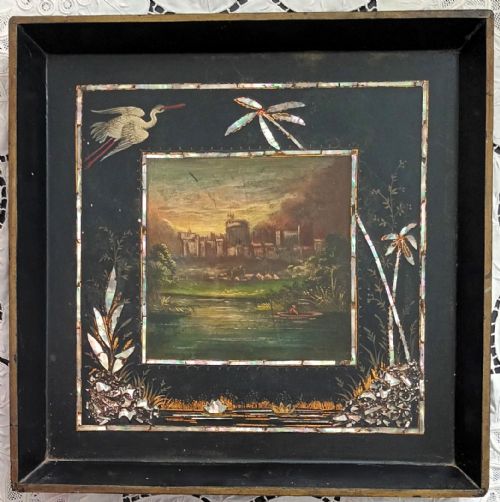
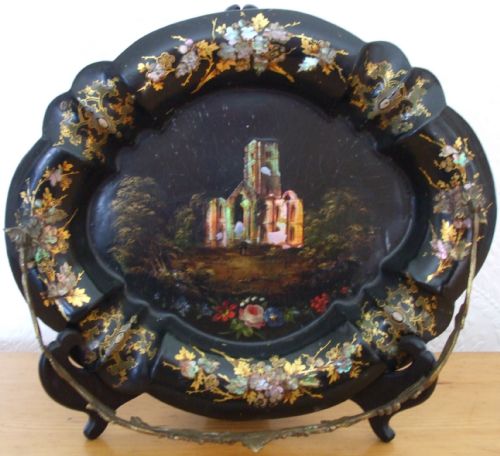
Black Papier Mache Tray
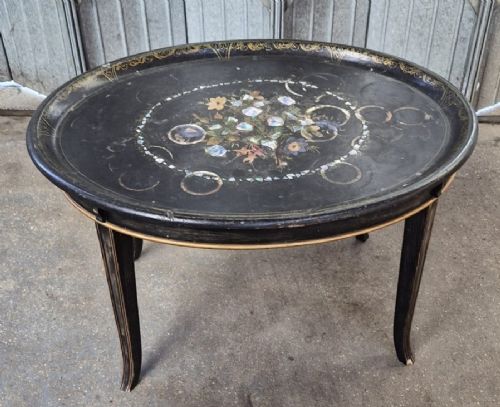
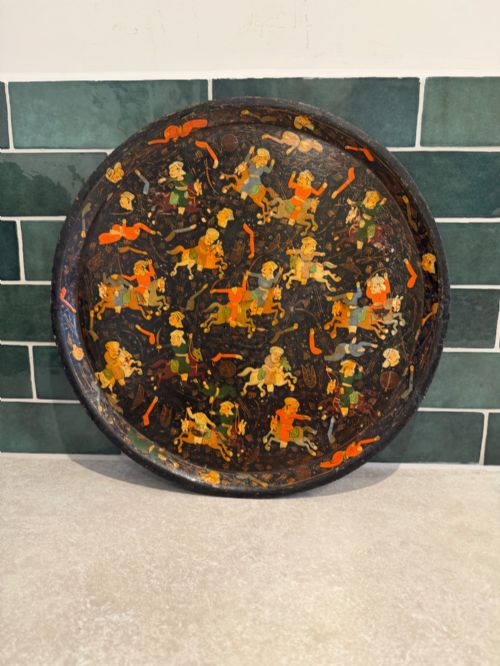
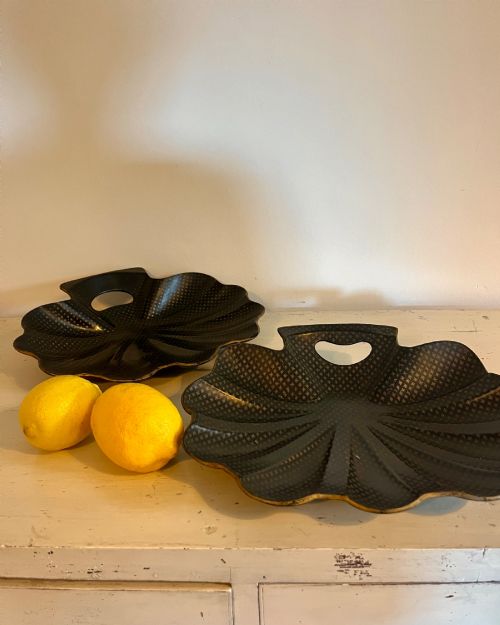
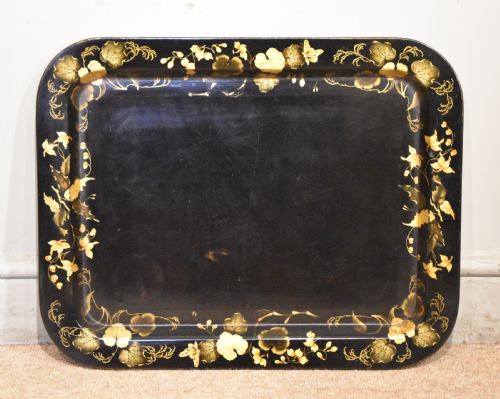
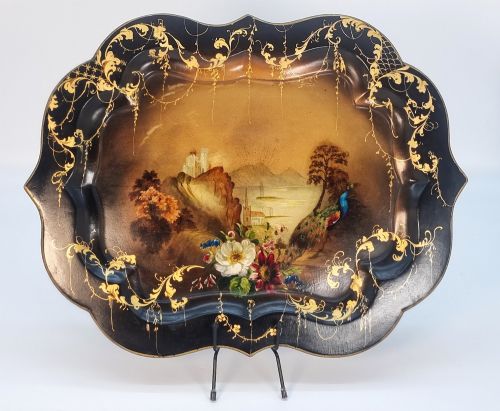
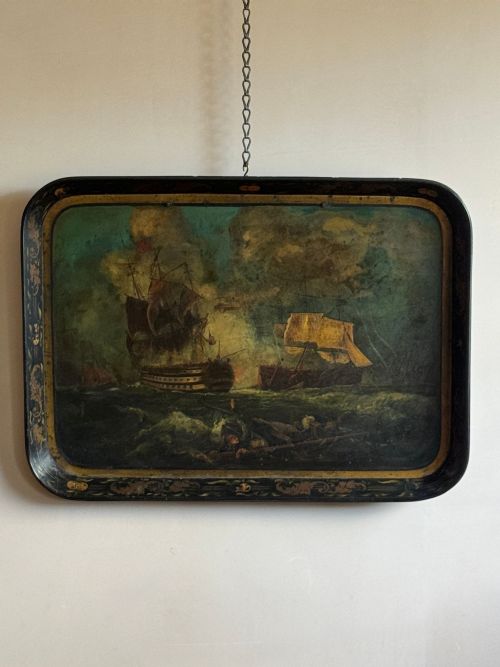
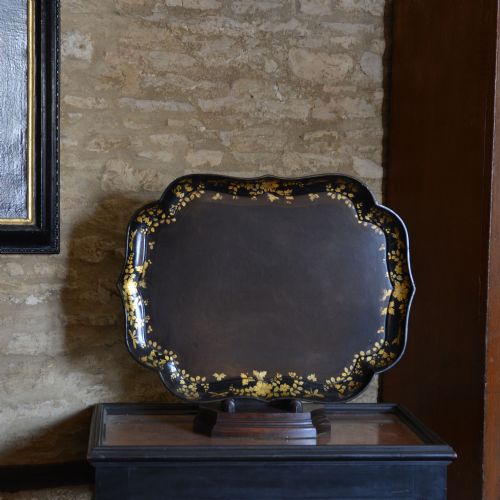
A black papier mache tray brings brilliant lacquer and gold leaf to a room, serving as a decorative centrepiece or resting on a stand as a table.
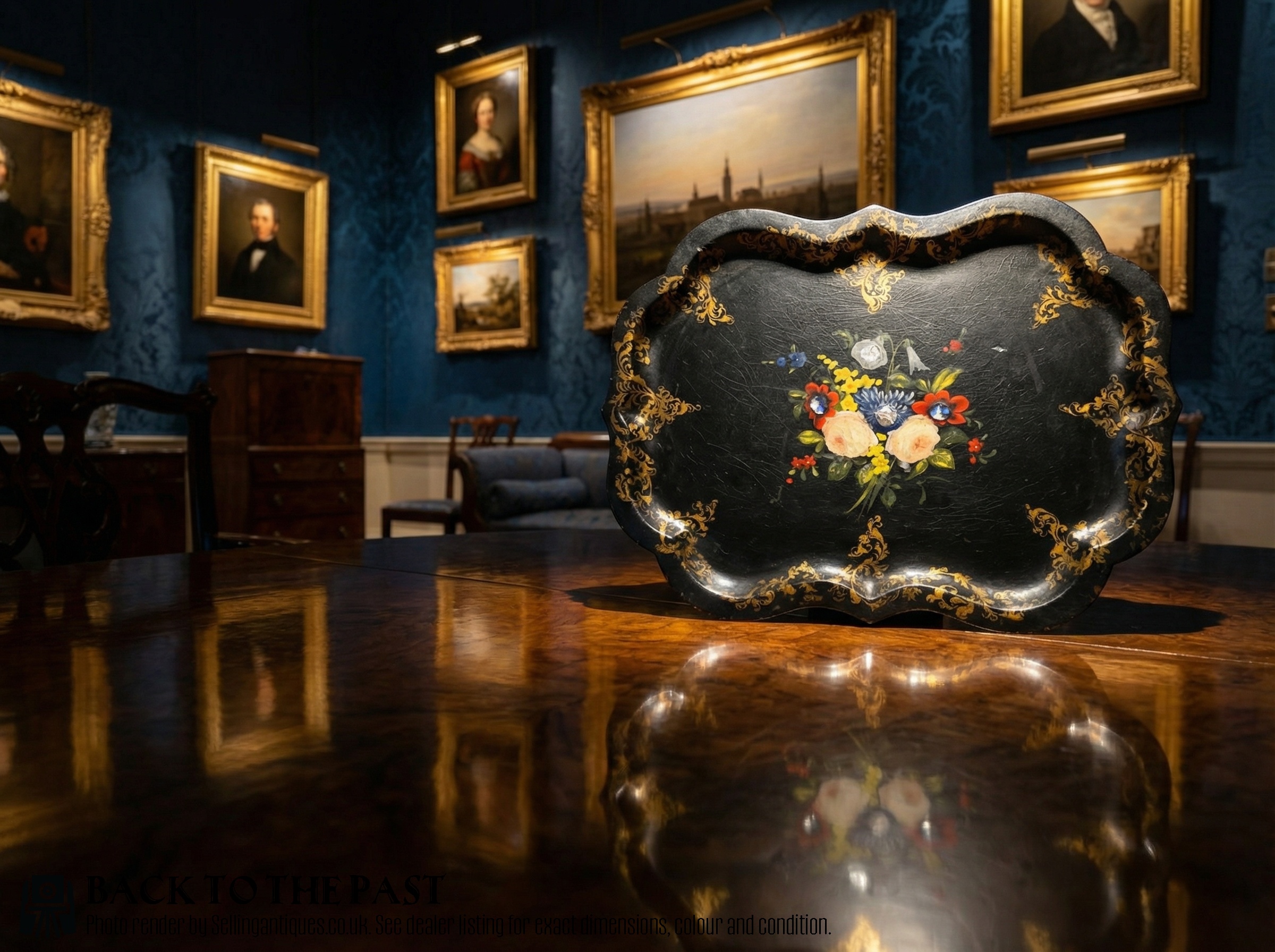
Black Papier Mache Tray
A black papier mache tray is a robust serving piece or decorative object originating largely from the Georgian, Regency, and Victorian periods. Buyers search for these items to find resilient serving trays, occasional tables, and desk accessories adorned with hand-painted details.
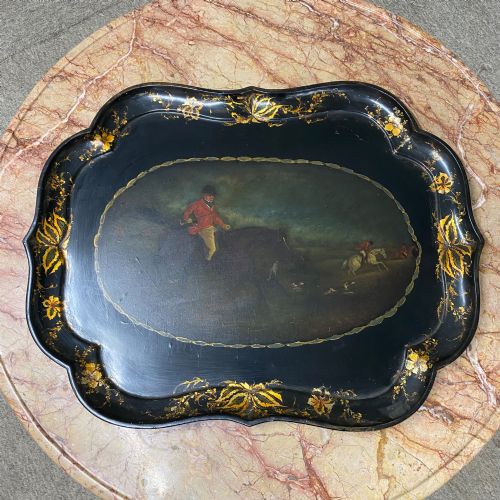
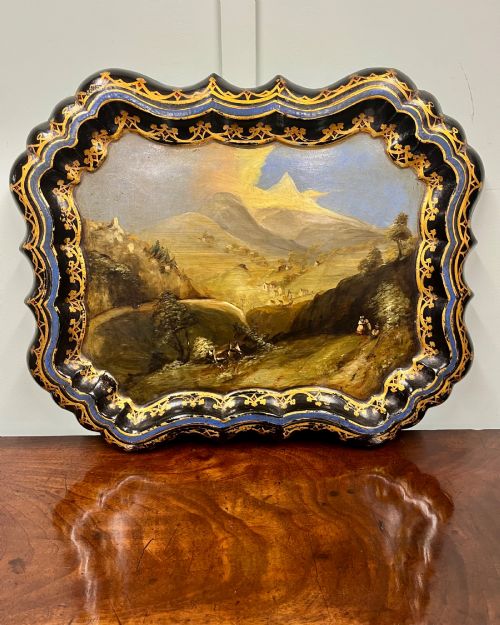
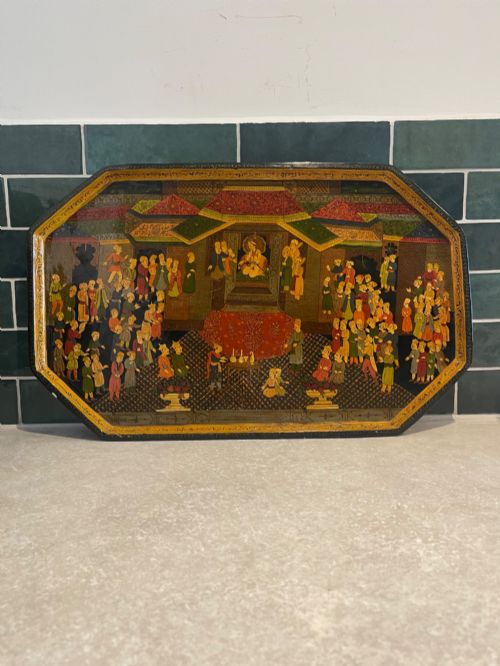
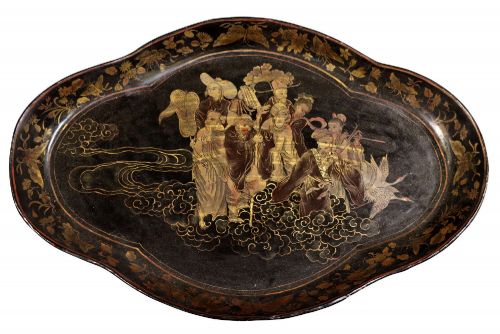
The versions most commonly met on this page span the nineteenth century, including large oval serving trays, kidney-shaped boards with gilded borders, and complete tray tables mounted on later stands. These pieces range from simple utilitarian butler items to elaborate display pieces with Chinoiserie decoration.
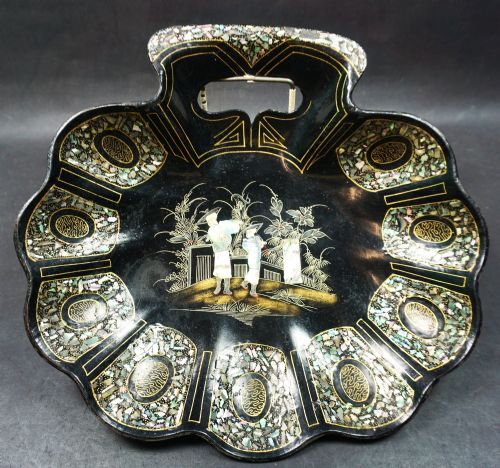
Makers and workshops from Georgian times onward produced these wares in varied formats, incorporating card baskets, letter racks, and ink stands alongside standard serving boards. Their dual function as portable trays and permanent furniture makes them enduringly useful in contemporary interiors.
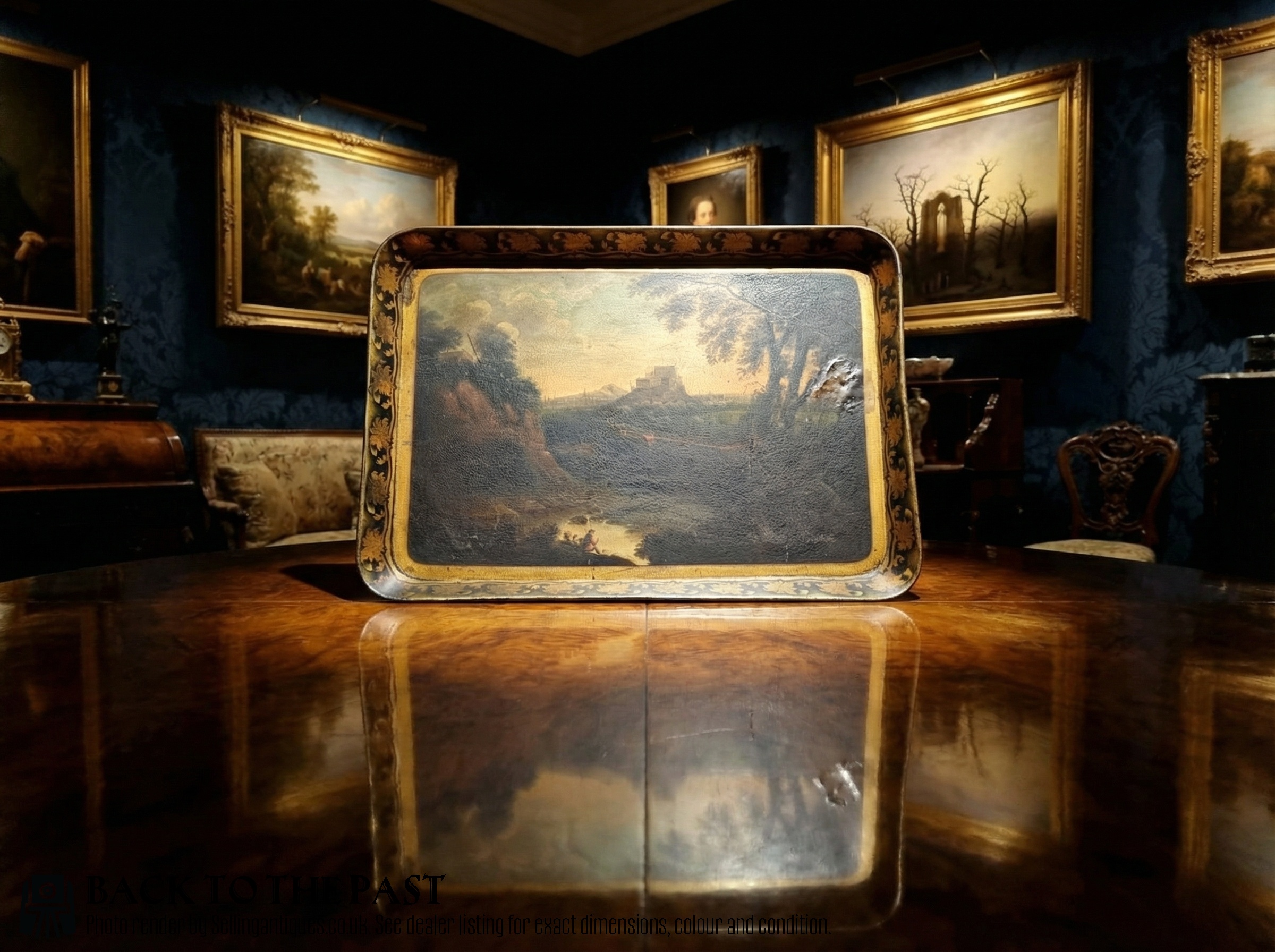
How they were made
These pieces start with layers of paper pulp, glue, and chalk combined under heavy pressure to form a dense, durable board known as papier-mache. Artisans then coat this rigid foundation with dark lacquer and polish the surface to a smooth, deep finish.
Makers embellish the hardened black ground using gold leaf, vibrant hand-painted pigments, and inlaid mother-of-pearl. Some examples incorporate brass fittings or wooden stands to transform flat boards into sturdy serving tables and desk accessories.
Black Papier Mache Tray Retail Price Guide 2026
Typical asking prices for black papier mache tray among the pieces listed under this phrase on Sellingantiques today, from the lower quarter to the upper quarter. They describe what is for sale here now, not the wider market.
The object forms on this page range from small card baskets and desk tidies to massive serving boards and complete tray tables on stands.
What varies in quality
The distinction between ordinary and exceptional pieces rests upon the precision of the hand-painted artistry and the depth of the lacquer finish. Superior examples display crisp Chinoiserie motifs, intricate gilding, and the original maker stamps of renowned workshops such as Jennens and Bettridge or Henry Clay.
Structural integrity also dictates value, as boards that retain their original flat shape without warping show better preservation. Furthermore, the presence of matching stands, mother-of-pearl inlay, and well-preserved painted borders elevates an item above standard utility wares.

Jennens and Bettridge·Henry Clay
The Black Papier Mache Tray Glossary
- Papier-mache
- A composite material made from paper pulp or sheets of paper mixed with glue and pressed into moulds. It cures into a hard, lightweight substance suitable for heavy lacquer and paint.
- Chinoiserie
- European interpretations of Chinese and East Asian artistic traditions, frequently featuring pagodas, figures, and landscapes. This style dominates the painted decoration on nineteenth-century trays.
- Japanned
- A European imitation of Japanese and East Asian lacquerwork, created by applying layers of dark varnish and curing them under heat. It provides the signature glossy black background found on these pieces.
- Toleware
- Metalware, usually tin-plated steel, painted and lacquered in a manner similar to papier-mache. These items appear alongside paper-based trays in historic collections.
- Mother-of-pearl
- The iridescent internal layer of mollusc shells, cut into thin pieces and embedded into the lacquered surface. This technique adds shimmering highlights to floral and architectural designs.
Black Papier Mache Tray: Frequently Asked Questions
Can I use these trays for serving drinks?
Historic black papier mache trays were originally built to handle heavy use as butler trays and serving boards. However, modern users often protect the antique lacquer surface by placing modern liners or light items on top.
Water and excessive heat can damage the historic varnish and paintwork over time. Many owners choose to display them on stands or hang them on walls rather than use them for active serving.
How do I care for antique lacquer?
Dust the surface regularly with a soft, dry cloth to prevent abrasive particles from scratching the delicate black finish. Avoid liquid cleaners, chemical polishes, and direct sunlight, which can cause the lacquer to crack or fade.
Maintaining a stable room temperature prevents the underlying paper-mache core from expanding and contracting. Gentle care preserves the original hand-painted details and gold leaf for years to come.
Were these trays originally made with stands?
Many trays were manufactured purely as flat serving pieces or desk accessories used on top of furniture. Stand mountings often occurred later when owners sought to repurpose the decorative boards as side tables or coffee tables.
Original period tables do exist, specifically engineered with folding or fixed wooden stands from the Victorian era. Examining the underside of the tray reveals mounting marks or wear patterns that indicate whether a stand is original or a later addition.
How do I date a black papier mache tray?
Georgian and early Regency examples often feature deep, heavy construction with simplified hand-painted designs or maker stamps from pioneers like Henry Clay. Victorian pieces frequently showcase more vibrant Chinoiserie motifs, mother-of-pearl inlay, and signatures from firms like Jennens and Bettridge.
Stylistic shifts in the floral borders, the type of wood used for stands, and the clarity of any maker marks help narrow down the decade of production. Comparing the construction weight and edge profile against documented archive pieces also clarifies the timeline.