



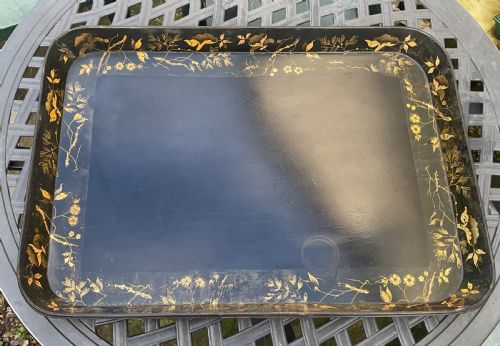




Gilt Papier Mache Tray
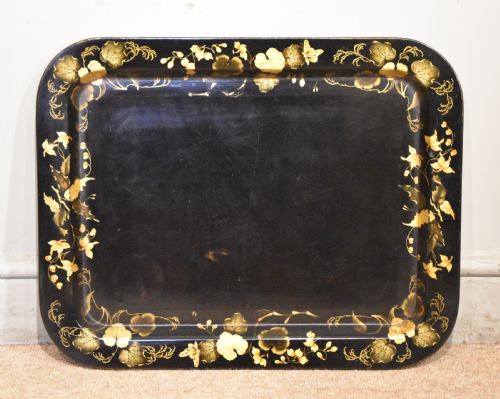
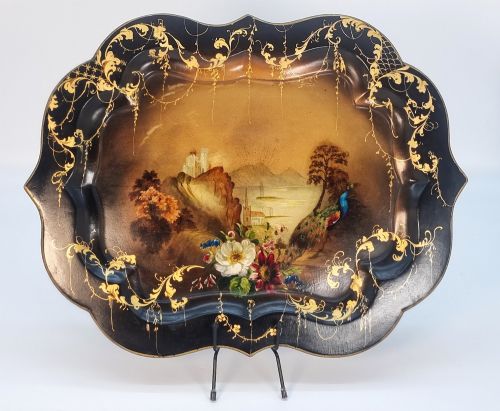
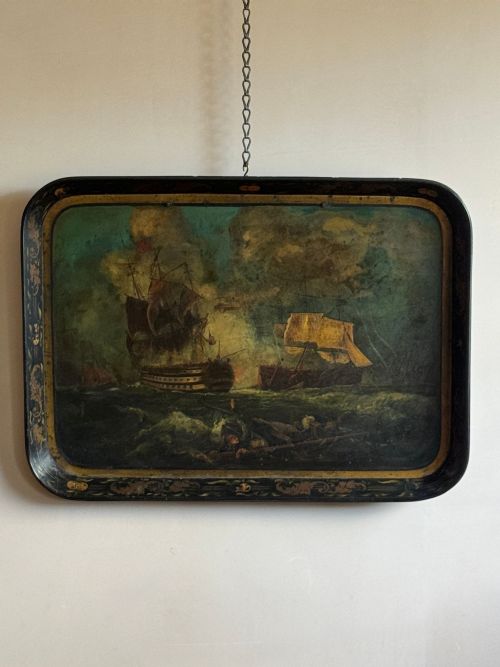
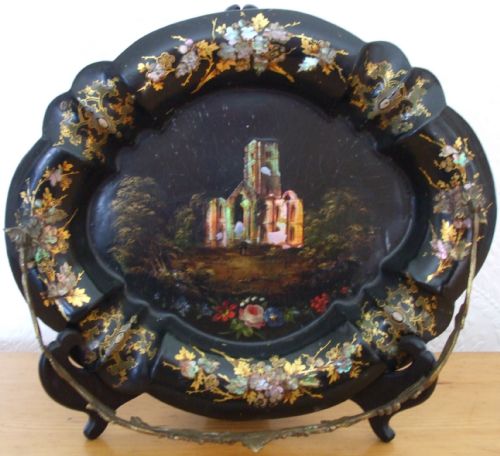
These gilt papier mache tray examples bring tactile depth to a room through layered lacquer and gold leaf.
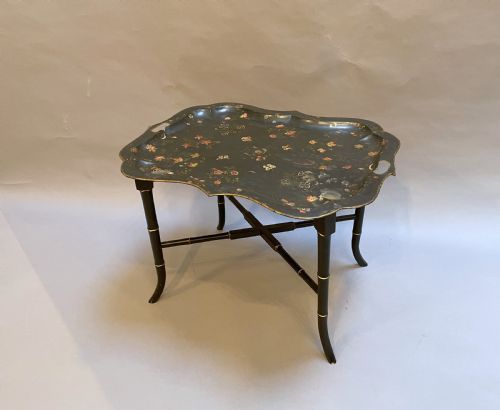
Gilt Papier Mache Tray
A gilt papier mache tray combines pressed paper pulp with lustrous surface finishes and metallic leaf. Buyers search for these pieces to find decorative serving surfaces or occasional tables.
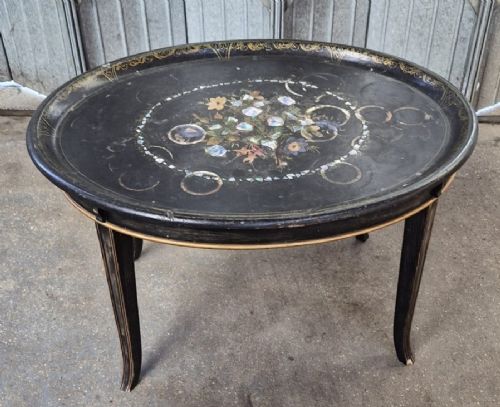
The most common version met on this page is the large oval serving tray from the nineteenth century. Many examples appear mounted on later stands to function as side tables or coffee tables.
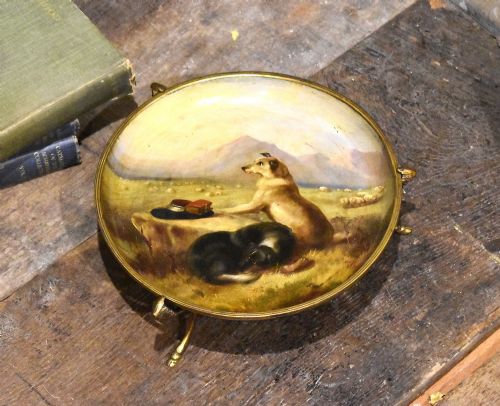
Makers produced these objects across the Georgian, Regency, and Victorian periods. Forms range from simple dishes and letter racks to massive serving pieces and tray tables.
How they were made
Craftsmen built these trays by pressing layers of paper pulp and glue over a metal or wooden mould under heavy pressure. This process created a remarkably strong, lightweight blank that resisted warping.
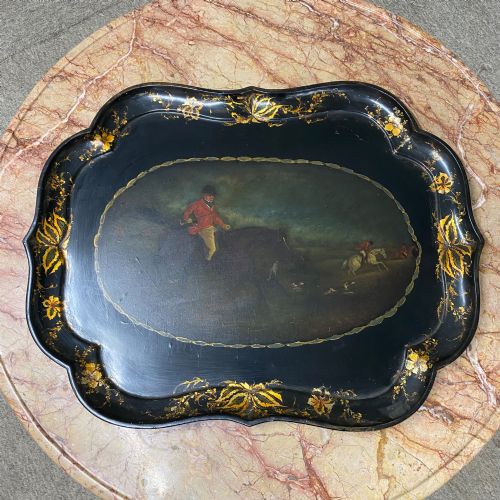
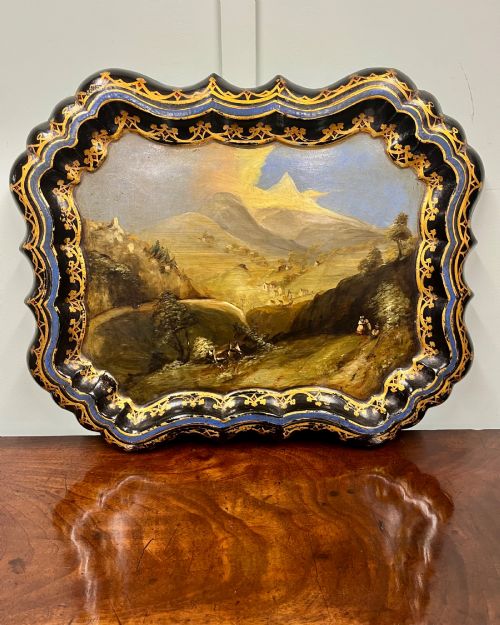
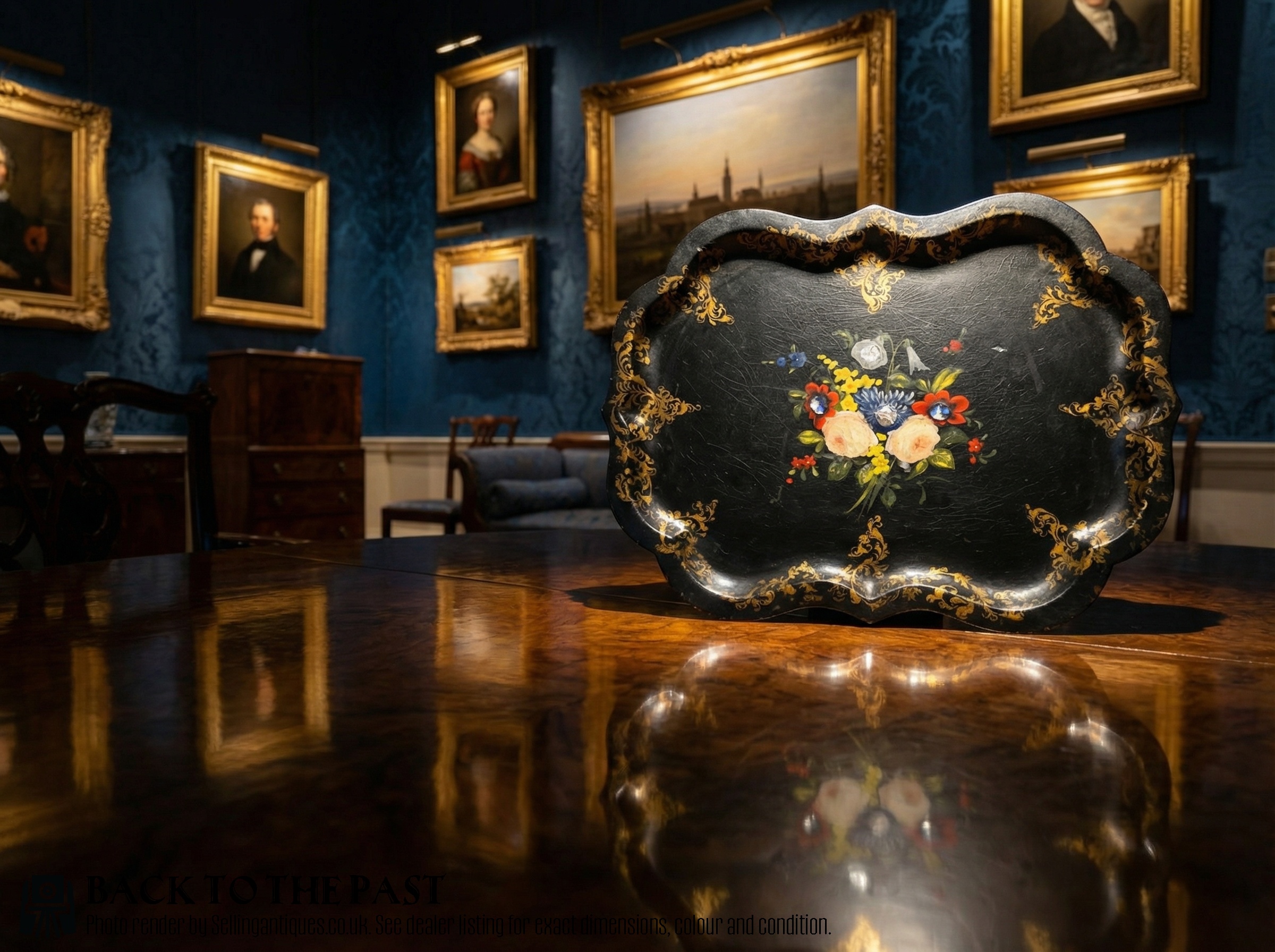
Workshops applied multiple coats of dark lacquer and paint to seal the surface before embellishing the design. Artisans laid down gold leaf and hand-painted gilt details, often incorporating Chinoiserie motifs or floral scenes.
Gilt Papier Mache Tray Retail Price Guide 2026
Typical asking prices for gilt papier mache tray among the pieces listed under this phrase on Sellingantiques today, from the lower quarter to the upper quarter. They describe what is for sale here now, not the wider market.
One massive eighteenth-century specimen records a distinct fishing interest among its painted scenes.
What varies in quality
The sophistication of the hand-painted decoration and the crispness of the gilt work dictate the standing of a piece. Skilled hands achieved subtle shading and intricate border patterns that elevate the overall composition.
Structural integrity of the papier-mache base and the preservation of the original lacquer surface separate superior examples from naive or heavily restored pieces.
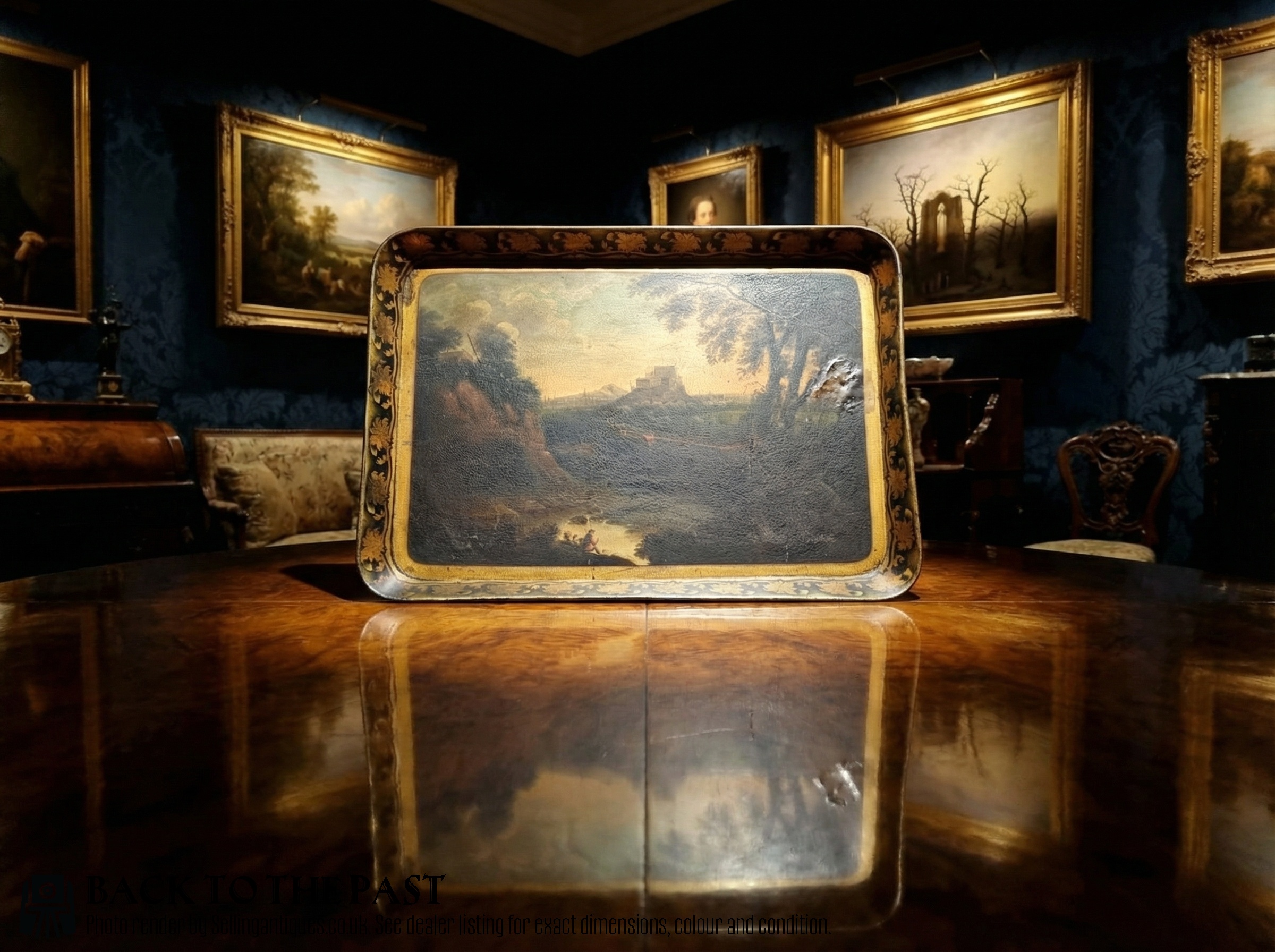
Jennens & Bettridge·Henry Clay
The Gilt Papier Mache Tray Glossary
- Papier-mâché
- A composite material made from paper pulp, mixed with glue, resin, and sometimes clay, pressed and baked to form a rigid board.
- Japanned
- A European imitation of East Asian lacquerwork, created by applying layers of dark varnish and curing them with heat.
- Chinoiserie
- A European artistic style reflecting Chinese motifs, featuring landscapes, figures, and pavilions rendered in gold and colour.
- Toleware
- Metalware, usually iron or steel, coated with tin and painted with lacquer or enamel, often found alongside papier-mache.
- Gilt
- Covered thinly with gold leaf or gold paint to produce a reflective metallic surface.
Gilt Papier Mache Tray: Frequently Asked Questions
How were these trays used?
These pieces served households as serving vessels for drinks, cards, or food. They functioned in formal rooms for entertaining guests.
Many examples now rest on folding or fixed stands, transforming them into occasional tables or side tables for daily living spaces.
Are they sturdy enough for daily use?
The pressed paper composite possesses surprising strength and durability for carrying items. The rigid material stands up to normal handling.
Careful owners protect the lacquer and gold leaf from moisture and heat to preserve the painted decoration over time.
How do I spot a stand added later?
Stands often show differences in wear, timber type, or construction methods compared to the tray top. Many nineteenth-century trays were mounted on bases decades after their creation.
Examine the fixing points where the tray meets the stand to see if the screw holes or battens match the period of the base.
What periods do these pieces span?
The selection includes items from the eighteenth century through the late Victorian era and into the early twentieth century. Georgian and Regency examples typically feature simpler, robust proportions.
Victorian pieces frequently display elaborate Chinoiserie ornamentation, ebonised finishes, and rich floral motifs.