


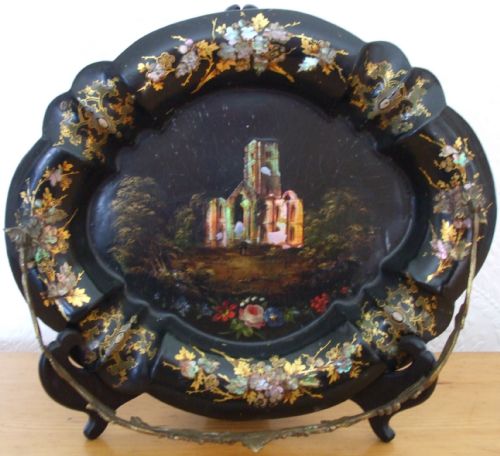
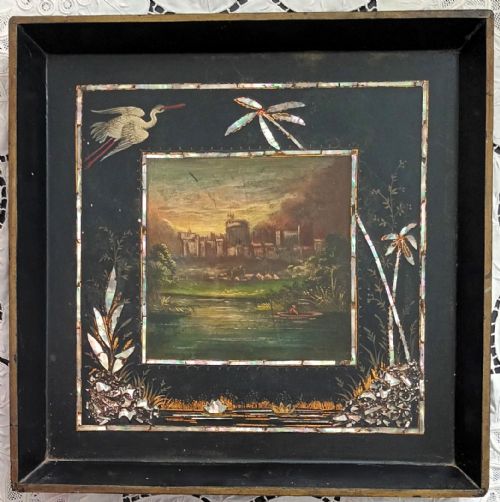


Mother of Pearl Tray
A mother of pearl tray brings a luminous surface and historic craftsmanship to any room, catching the light with iridescent depth.
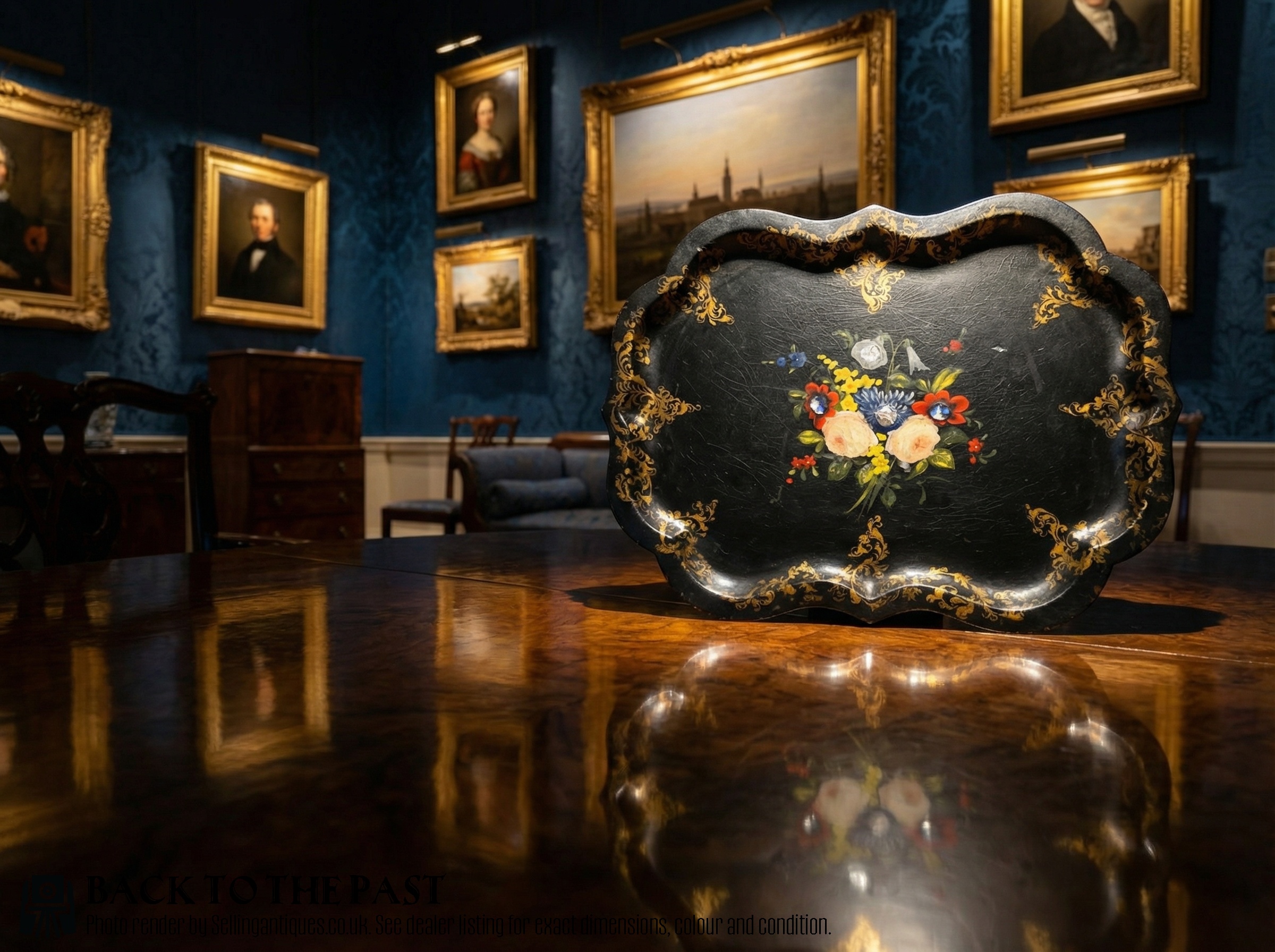
Mother of Pearl Tray
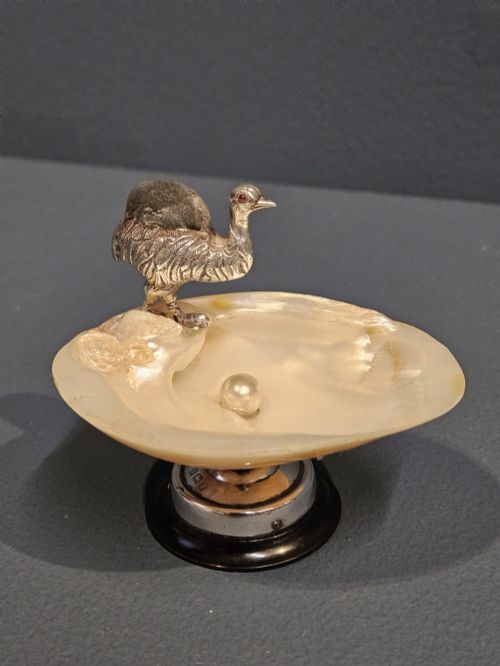
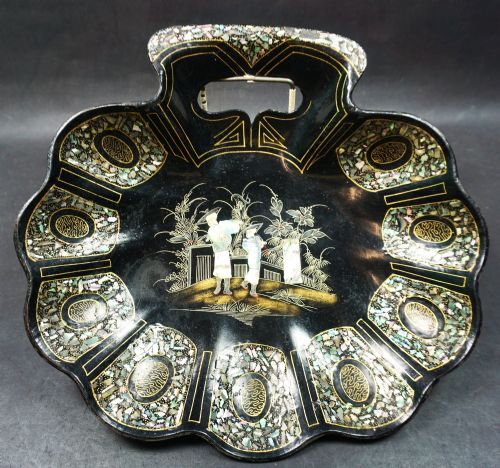
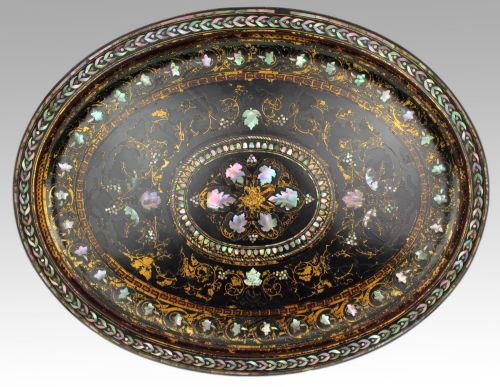
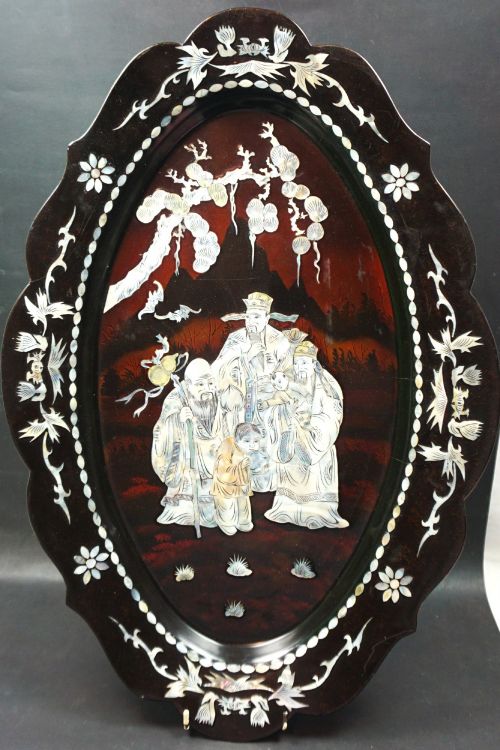
A mother of pearl tray combines polished nacre inlay with dark bases of papier-mâché, lacquered wood, or hardwoods. These pieces span the Georgian, Victorian, and Edwardian periods, alongside Chinese Qing Dynasty and Japanese export examples.
The most common formats on this page are oval and rectangular serving trays or decorative platters, often associated with Victorian papier-mâché production. Many examples incorporate hand-painted details or gold leaf to complement the shimmering shell fragments.
Earlier Georgian and Regency variants sit alongside late nineteenth-century items, including specialised forms such as card baskets, tray-top tables, and crumb scoops. Each object reflects the prevailing decorative tastes of its manufacturing origin, from English domestic interiors to East Asian export workshops.
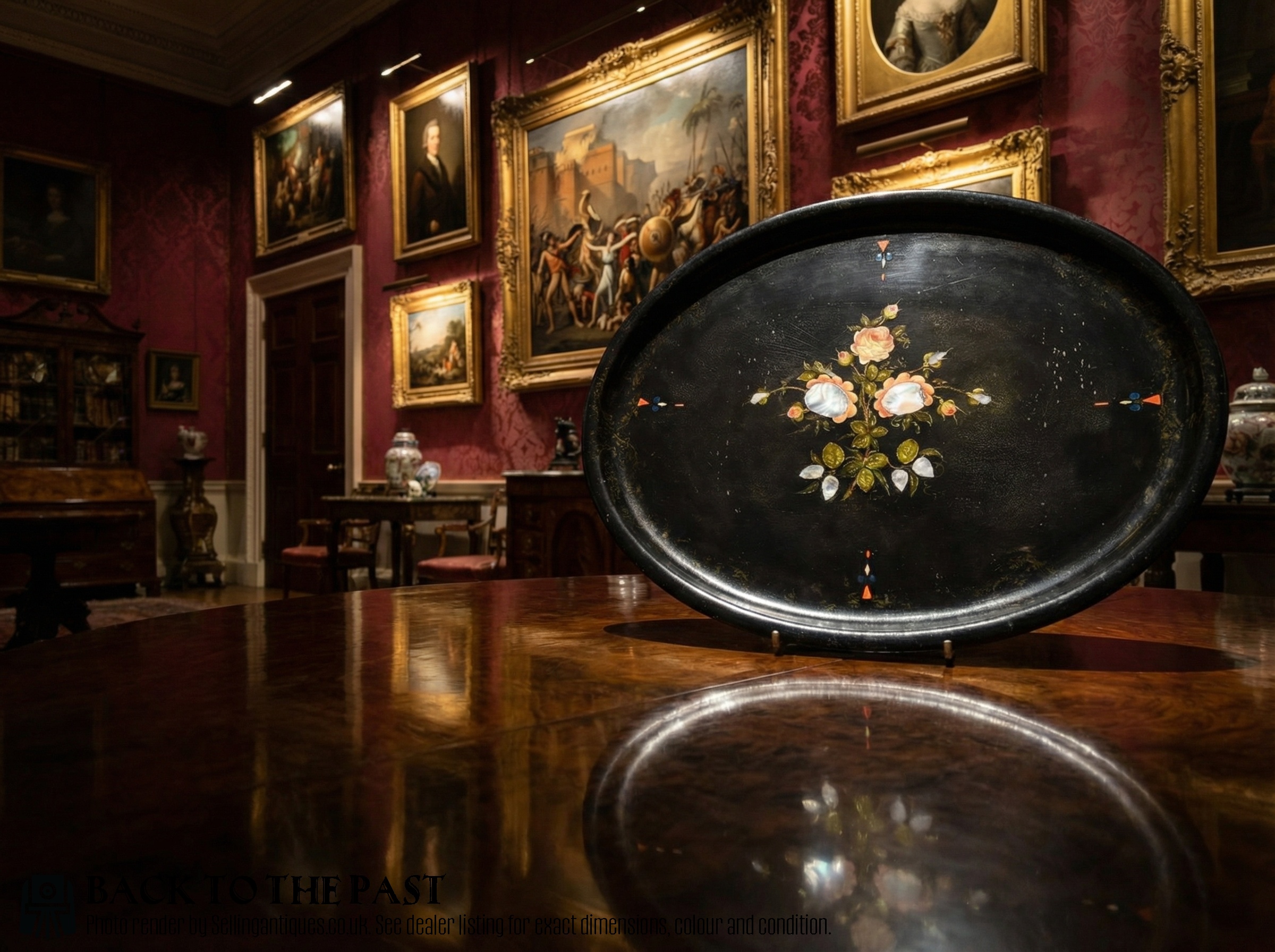
Construction and materials
Papier-mâché foundations were built from layers of paper pulp or sheets pressed and heavily varnished to create a rigid, smooth core. Lacquered wood and solid hardwoods such as rosewood provided alternative structural bases for Asian export pieces.
Shell was carefully cut and embedded into the surface lacquer or paint layers, sometimes augmented with gold leaf highlights. Metal elements like brass fittings or sterling silver sections appear on specific hybrid serving items and crumb scoops.
Mother of Pearl Tray Retail Price Guide 2026
Typical asking prices for mother of pearl tray among the pieces listed under this phrase on Sellingantiques today, from the lower quarter to the upper quarter. They describe what is for sale here now, not the wider market.
The records show pieces spanning the Georgian, Victorian, and Edwardian eras, utilising papier-mâché, lacquered wood, and sterling silver.
Quality and execution
The sophistication of the shell inlay dictates visual distinction, ranging from flat geometric patterns to finely engraved figurative scenes. Precision in the hand-painting and the depth of the dark lacquer base separate standard utility items from masterwork presentation pieces.
Structural integrity of the papier-mâché or timber core remains paramount, as stable foundations prevent the lifting of delicate nacre segments. The integration of auxiliary materials like brass or gold leaf shows the ambition of the original workshop.
The Mother of Pearl Tray Glossary
- Mother of Pearl
- The iridescent internal layer of mollusc shells, valued for its shimmering colour play and used for decorative inlay. This material catches ambient light to create depth across dark surfaces.
- Papier-mâché
- A composite material made from paper pulp or reinforced paper sheets mixed with glue, then baked and varnished. It provides a lightweight yet durable base for Victorian trays.
- Lacquer
- A durable resin finish applied in multiple layers to wood or papier-mâché, often polished to a high gloss. This dark coating heightens the contrast against inlaid shell.
- Toleware
- Painted or enamelled sheet metal items produced to mimic more costly lacquerwares. These pieces frequently incorporate metallic dust or shell fragments in their decoration.
Mother of Pearl Tray: Frequently Asked Questions
Can I use these trays for serving food?
Most antique trays function primarily as decorative objects or for displaying dry items like visiting cards and letters. Direct contact with moisture, alcohol, or hot dishes can damage historic finishes.
If utilised for serving drinks, line the surface with a linen cloth to protect the sensitive lacquer and shell from liquid spills and heat.
How do I distinguish Victorian from Georgian trays?
Georgian and Regency papier-mâché trays often display restrained neoclassical motifs, bolder geometric borders, and deep, lustrous black lacquering. Victorian examples frequently embrace florid floral painting, inlaid mother of pearl, and mother-of-pearl highlights.
Examination of the reverse side and the weight of the papier-mâché core can offer further clues to the manufacturing decade.
What is shibayama work on trays?
Shibayama is an intricate Japanese decorative technique employing inlaid sections of shell, ivory, coral, and metal to form raised pictorial scenes. On trays, these elements create tactile, multi-coloured compositions against a dark ground.
Pieces featuring this method represent specialised export manufacturing from the late nineteenth century.