

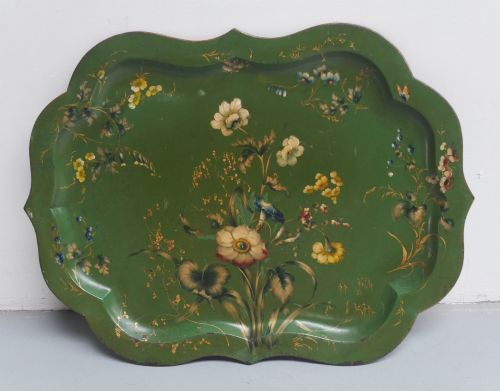
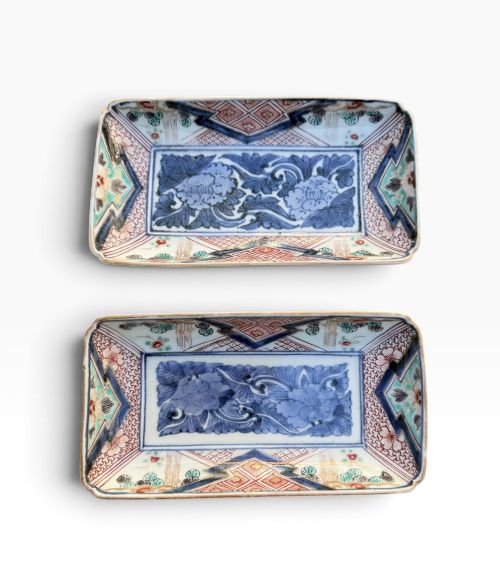
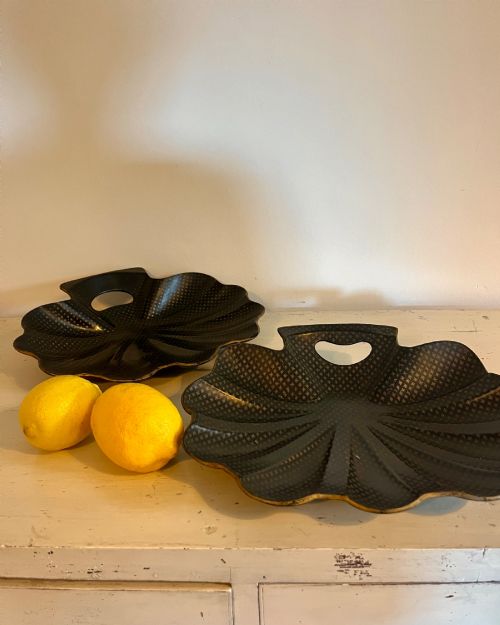
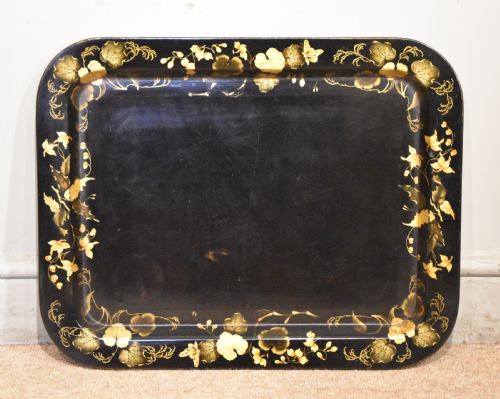




Japanned Serving Tray
A japanned serving tray brings rich dark lacquer and gilded detail to the room, offering a functional surface steeped in historic craft.
Japanned Serving Tray
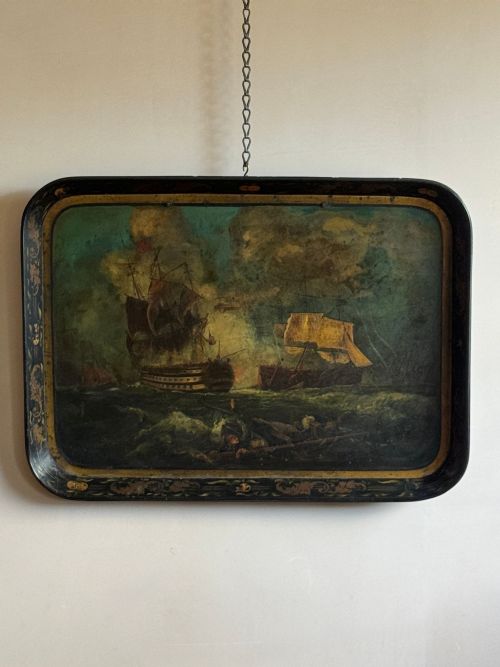
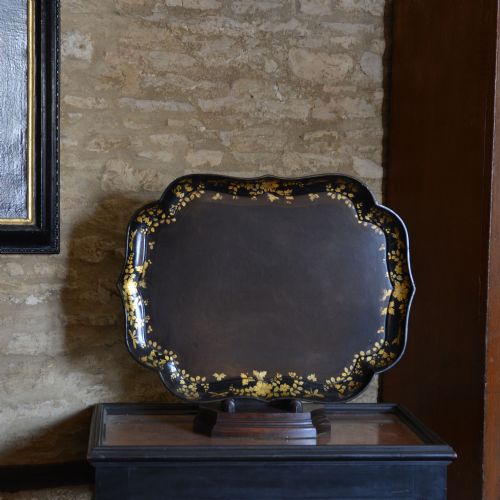
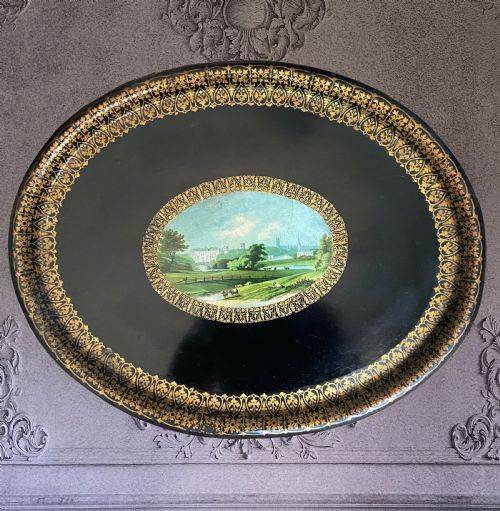
A japanned serving tray stands as a durable domestic surface shaped from papier-mâché, sheet iron, or lacquer. These pieces emerge predominantly from the Georgian, Regency, and Victorian eras, alongside French Napoleon III and Japanese export styles.
The most common form met here is the large oval or rectangular serving tray, though kidney shapes and tray tables also appear. Makers produce both plain service items and decorative trays designed for display or mounting upon stands.
Markers of Distinction
The refinement of the hand-painted details and the depth of the gilding separate standard production from exceptional works. Signed pieces from notable makers demonstrate superior crispness in the brushwork and framing borders.
The structural integrity of the papier-mâché or metal base dictates the longevity of the piece. Smooth edges, stable lacquer free from extensive craquelure, and intact pictorial scenes denote higher preservation.
Japanned Serving Tray Retail Price Guide 2026
Typical asking prices for japanned serving tray among the pieces listed under this phrase on Sellingantiques today, from the lower quarter to the upper quarter. They describe what is for sale here now, not the wider market.
Listings feature items spanning the Georgian, Regency, and Victorian periods, alongside French Napoleon III and Japanese export styles.
Jennens & Bettridge·Clay·H. Meeson
The Japanned Serving Tray Glossary
- Japanning
- European imitation of East Asian lacquerwork, created by applying layers of varnish and resin onto a prepared substrate. This technique produces a hard, dark, polished finish often decorated with gold or coloured motifs.
- Papier-mâché
- A composite material made from paper pulp or layers of paper bound with glue, then pressed and dried into a rigid form. It provides a lightweight yet remarkably sturdy base for lacquered trays.
- Toleware
- Painted or lacquered sheet metal items produced in Britain and France during the eighteenth and nineteenth centuries. Pontypool stands as a notable centre for this metalwork.
- Chinoiserie
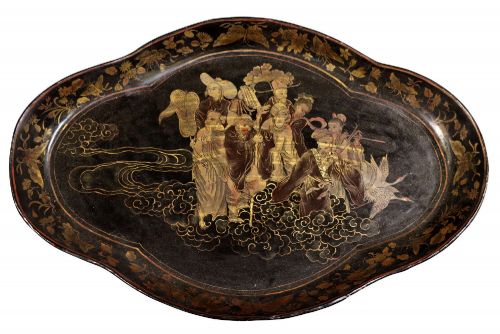
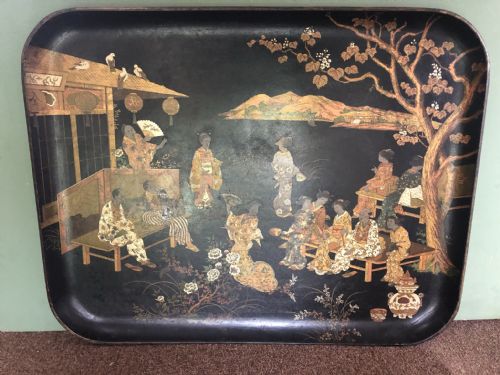
- European artistic style reflecting Chinese motifs and imaginary landscapes, frequently rendered in gold on dark lacquer surfaces. This style dominates the decoration of many nineteenth-century trays.
- Gilding
- The application of gold leaf or gold dust to a surface to impart metallic lustre. It highlights borders and central pictorial scenes on dark grounds.
Japanned Serving Tray: Frequently Asked Questions
How do I clean a japanned serving tray?
Dust the surface gently with a soft, dry microfibre cloth to remove particles. Avoid water, harsh chemical cleaners, or abrasives that might damage the delicate lacquer and gold leaf.
For stubborn marks, use a barely damp cloth and dry the area immediately. Regular gentle maintenance preserves the historic finish without wearing away the painted details.
Can I still use these trays for serving?
While these pieces originated as functional items for food and drink, their age and delicate surfaces require careful consideration. Many owners now use them for display on walls, tables, or stands rather than active service.
If you choose to use one for serving, line the surface with a cloth or doily. This protects the historic lacquer and paintwork from scratches and moisture damage.
What is the difference between papier-mâché and toleware?
Papier-mâché relies on compressed paper pulp or layered sheets treated to create a rigid, lightweight base. Toleware utilises beaten sheet iron as the structural foundation for the painted finish.
Both materials receive similar dark lacquering and gilded decoration, but papier-mâché offers a warmer touch and distinct tactile weight compared to metal.
How do I date a nineteenth-century tray?
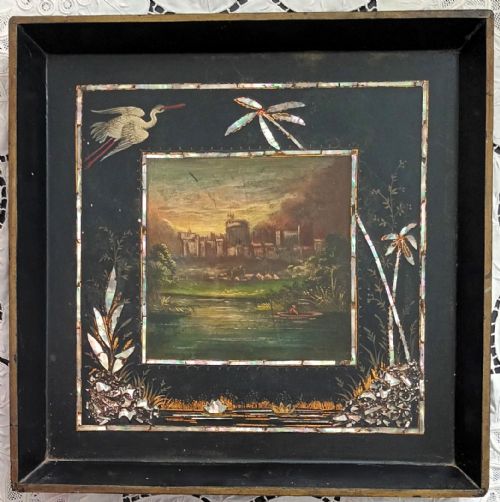
Examine the materials, edge profiles, and decorative style to narrow down the period. Regency examples often feature bold Chinoiserie motifs, while later Victorian pieces may incorporate mother-of-pearl inlay.
Maker stamps or signatures, where present, provide the most direct link to a specific decade. The absence of marks requires relying on stylistic conventions and construction methods of the era.