



Edwardian Serving Tray
When you search for an edwardian serving tray, you are looking for functional household elegance shaped by the refined tastes of the early twentieth century.

Edwardian Serving Tray
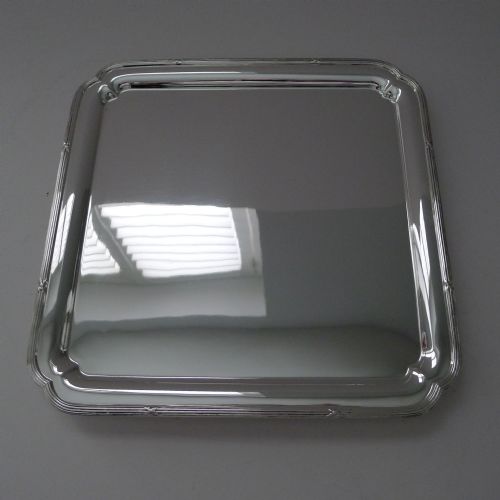
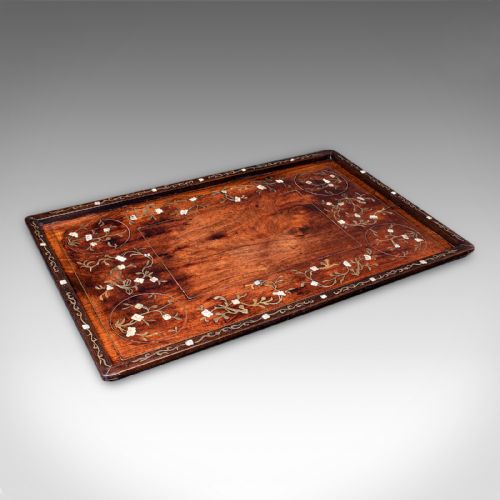
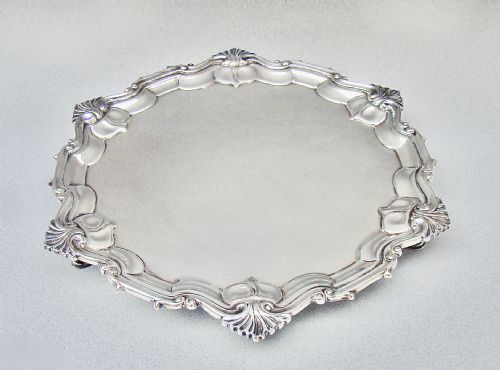
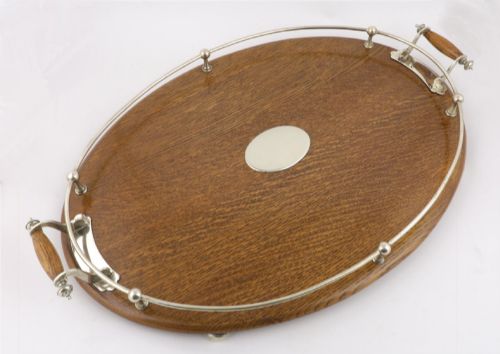
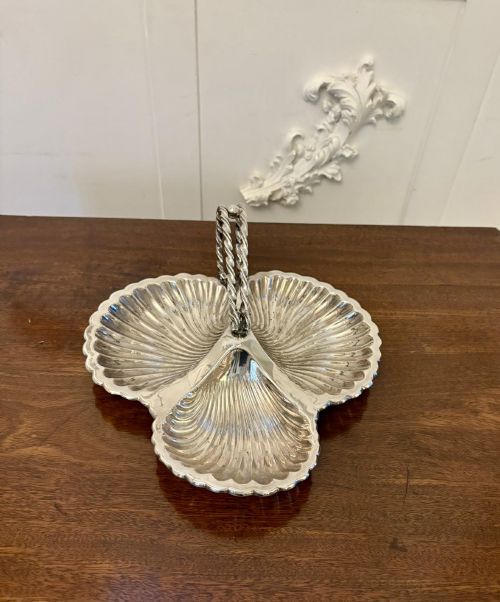
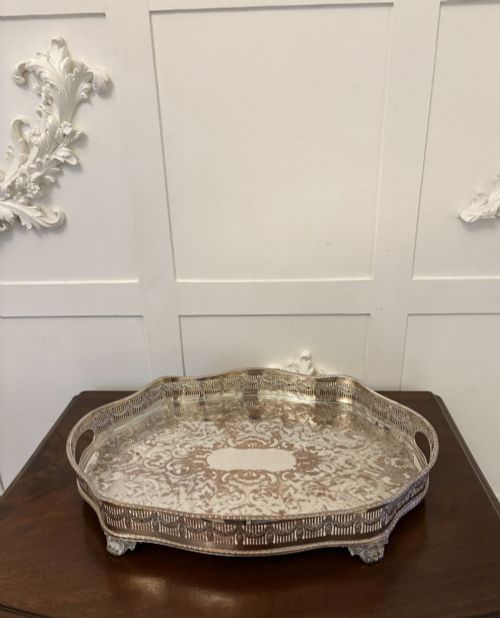
An edwardian serving tray serves as both a practical carrier for afternoon tea and drinks and a decorative centrepiece for the home. The pieces found here span from compact personal platters to large galleried boards intended for formal entertaining.
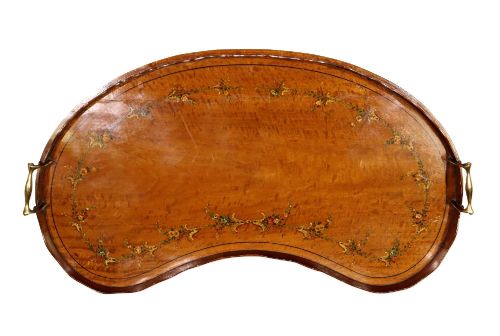
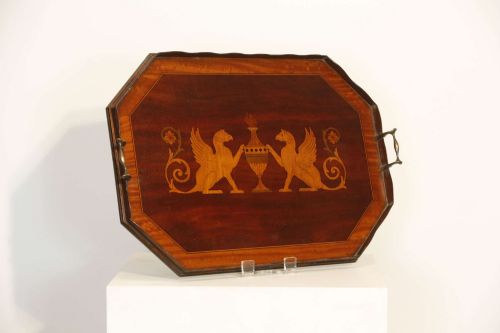
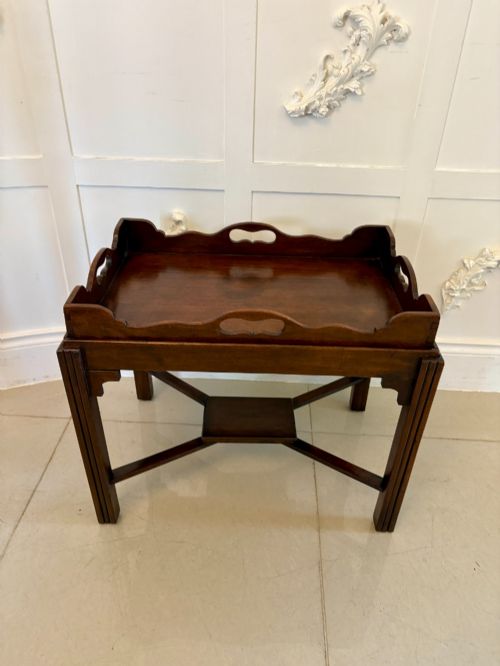
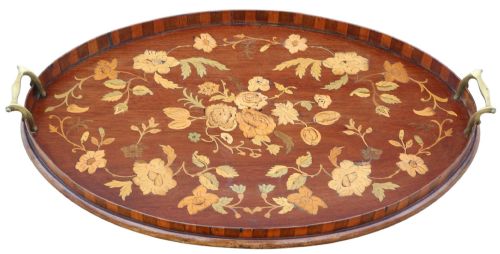
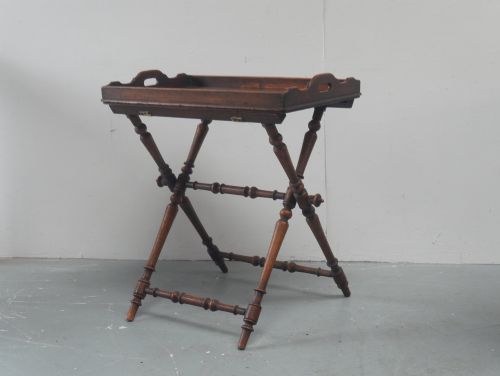
Makers of the period produced these forms in mahogany, silver plate, oak, and satinwood, often incorporating marquetry inlays or raised brass galleries. Variants range from folding butler tray tables to kidney-shaped presentation platters designed for display.
The selection reflects the diverse social rituals of the era, encompassing campaign styles, tea trolleys, and removable trays set upon dedicated stands. Each form balances utilitarian strength with decorative refinement.
How They Were Made
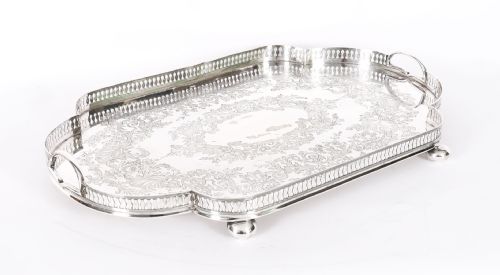
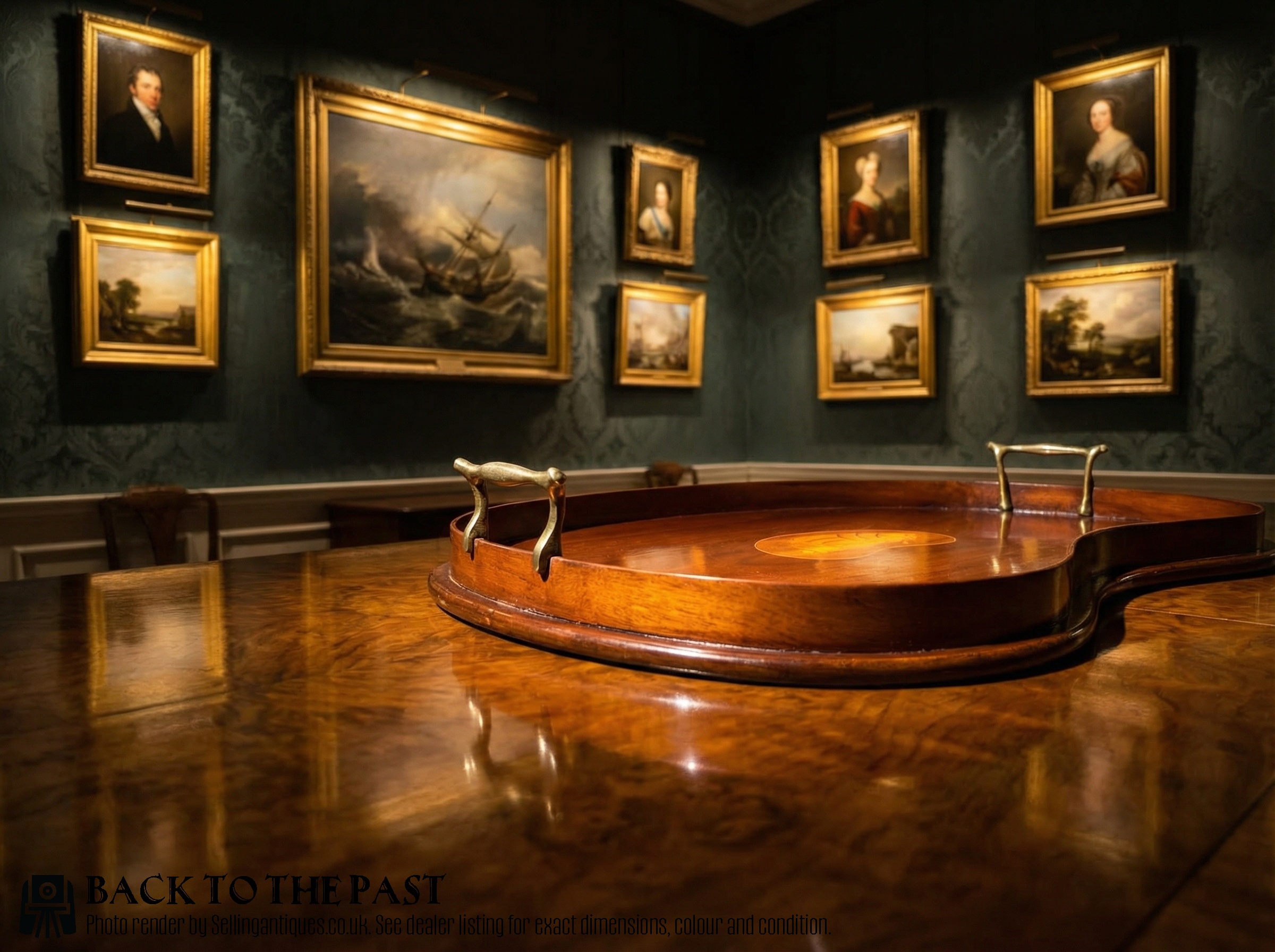
Craftsmen utilised traditional cabinet-making methods, joining timber bodies with dovetail techniques and applying delicate marquetry or shell inlay into mahogany, walnut, and satinwood surfaces. The integration of brass handles, pierced silver-plated galleries, and copper accents provided both structural support and visual contrast.
Metal trays and galleried pieces relied on electroplating silver onto base metals like copper and nickel silver, often finishing the borders with chased or engraved grape vine motifs. Wooden tray bases frequently featured raised mouldings or oyster veneers to protect surfaces and contain glassware.
Edwardian Serving Tray Retail Price Guide 2026
Typical asking prices for edwardian serving tray among the pieces listed under this phrase on Sellingantiques today, from the lower quarter to the upper quarter. They describe what is for sale here now, not the wider market.
Listings feature brass, mahogany, oak, satinwood, and silver plate across forms ranging from tea trolleys to kidney-shaped platters.
What Varies in Quality
The distinction between ordinary production and superior craftsmanship rests in the precision of the marquetry inlay and the weight of the metal plating. Higher-grade silver-plated examples exhibit crisp chasing along pierced borders and substantial gauge metal that resists flexing.
Timber selection and structural joinery define the finer wooden pieces, where figured mahogany, burr walnut, or satinwood are matched with hand-cut dovetails and tightly fitted gallery rails. Lesser examples rely on printed motifs or thin veneers applied to secondary woods with minimal hand-finishing.
James Deakin And Sons·William Hutton And Sons·Mappin And Webb·Edwards And Roberts
The Edwardian Serving Tray Glossary
- Gallery tray
- A serving tray fitted with a raised pierced or solid metal border designed to prevent items from sliding off during transport.
- Marquetry
- Decorative woodwork where thin slices of various coloured veneers are arranged to form intricate pictorial or geometric patterns.
- EPNS
- Electroplated nickel silver, a common base metal method utilised underneath a silver coating on Edwardian metalware.
- Butler tray
- A portable wooden tray with hinged or removable sides, frequently set upon a folding stand to function as a temporary side table.
- Salver
- A flat metal serving platter or tray, typically supported on small feet and utilised for presenting drinks or calling cards.
Edwardian Serving Tray: Frequently Asked Questions
How were serving trays used in Edwardian homes?
These items functioned primarily in the transport and presentation of afternoon tea, aperitifs, and calling cards across formal rooms.
Servants carried them from kitchens to drawing rooms, while folding butler variants provided flexible surface space for guests during social gatherings.
How do you care for an antique silver plated tray?
Maintenance requires gentle cleaning with a soft cloth and dedicated silver polish to preserve the electroplated layer without wearing through to the base metal.
Harsh abrasives and prolonged exposure to moisture should be avoided to protect both the metal finish and any underlying wooden core.
Can these trays still be used for daily serving?
Most solid wood and heavy silver-plated examples remain robust enough for regular use in modern hospitality settings.
Careful handling prevents damage to delicate marquetry inlays, glass inserts, and fragile nineteenth-century joinery.