


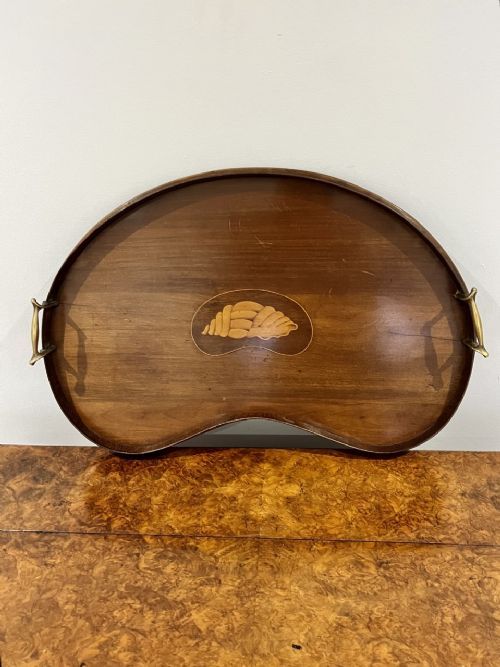

Marquetry Wooden Tray
A marquetry wooden tray brings intricate wood-in-wood pictorial work to the table, combining functional serving with the refined craftsmanship of Victorian and Edwardian makers.
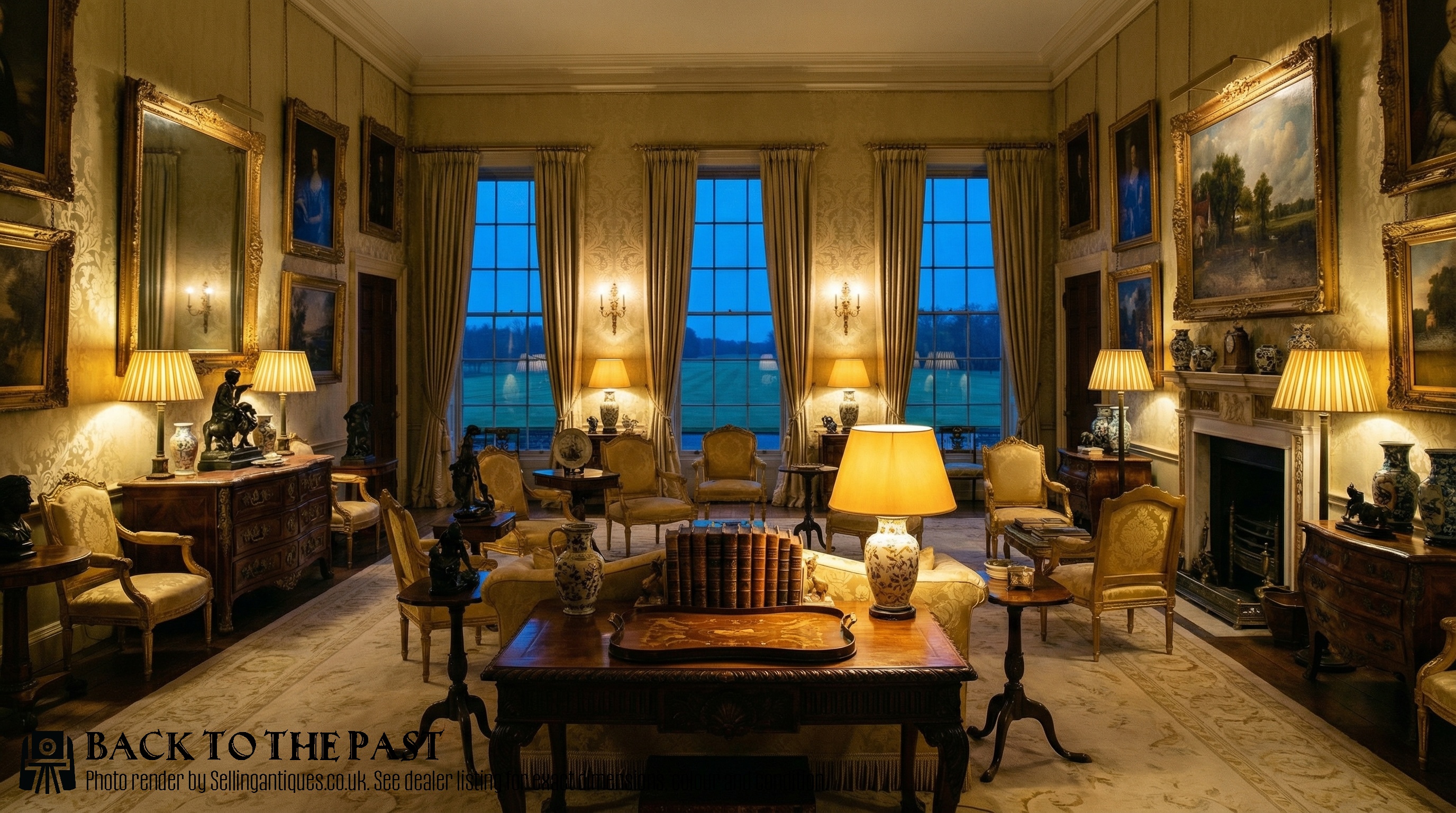
Marquetry Wooden Tray
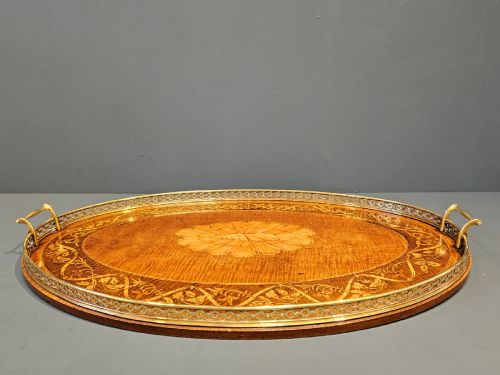
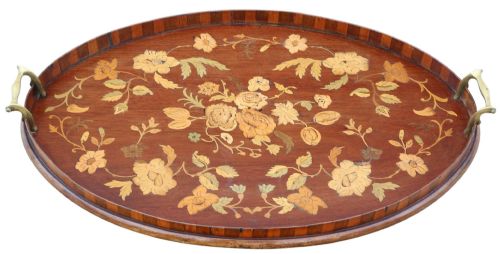
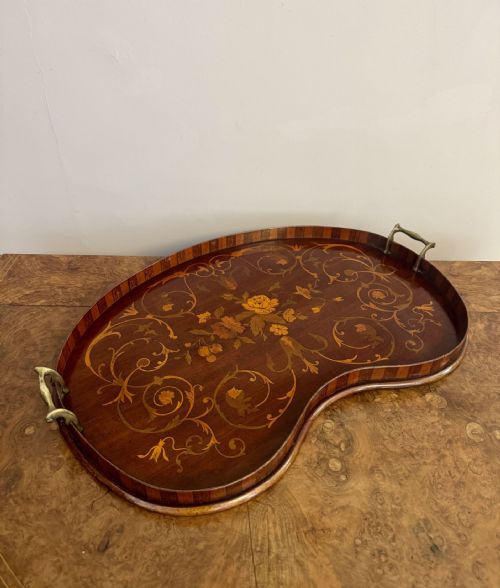
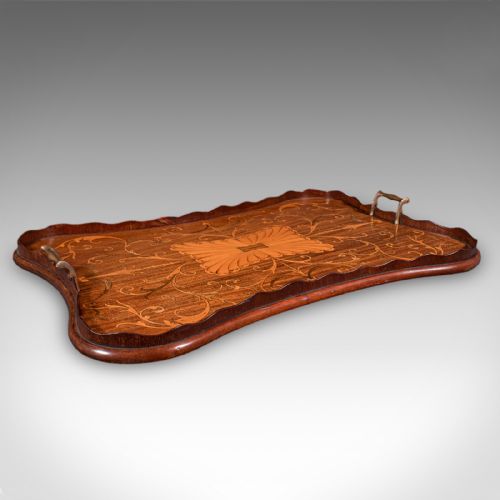
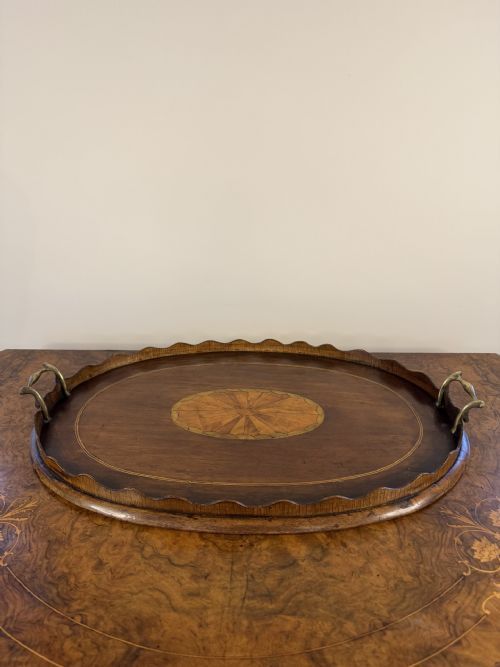
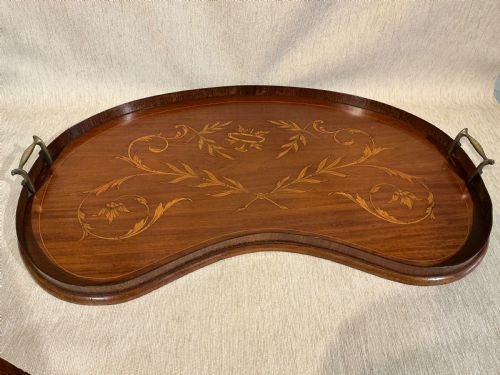
When you search for a marquetry wooden tray, you find serving vessels and display pieces decorated with fitted wood veneers that form pictorial or geometric designs. These pieces date predominantly from the Victorian and Edwardian eras, spanning the nineteenth and early twentieth centuries, alongside occasional Georgian and later examples.
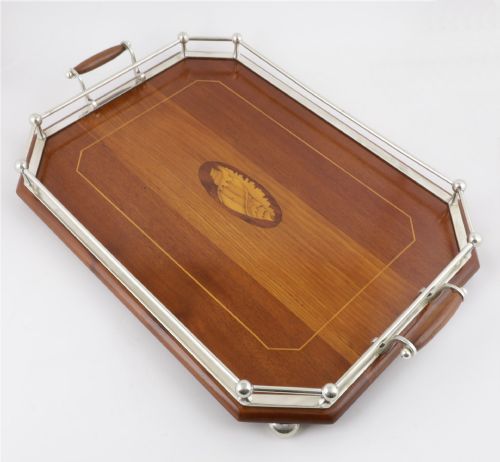
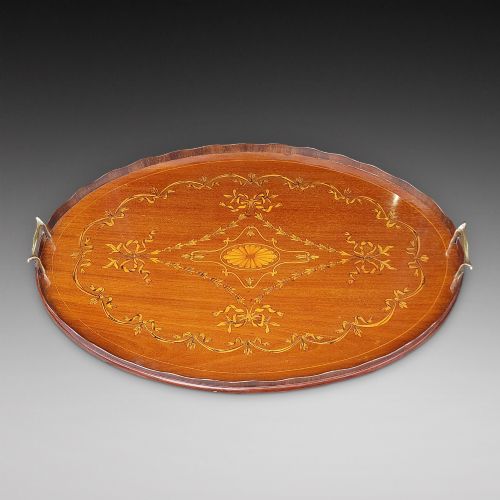
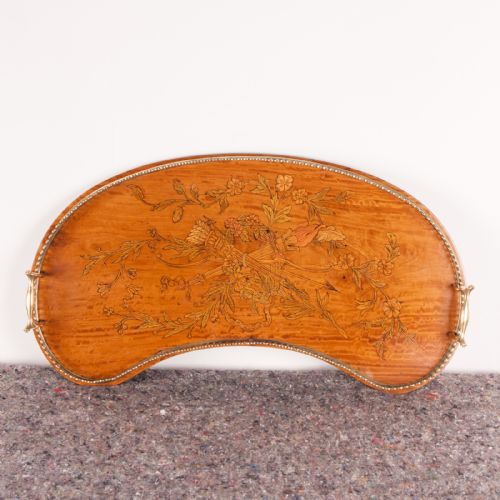
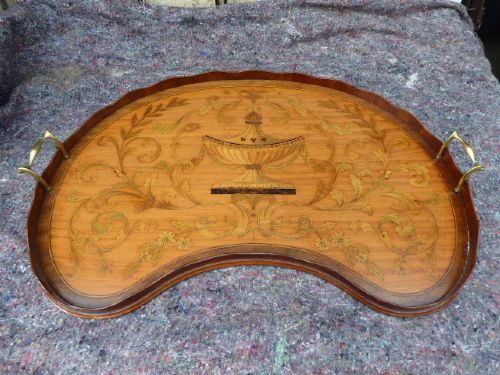
The most common forms on this page are oval and kidney-shaped serving trays constructed from mahogany or satinwood. Many feature raised wooden rims or mounted brass galleries, designed originally for afternoon tea, drinks service, or general display.
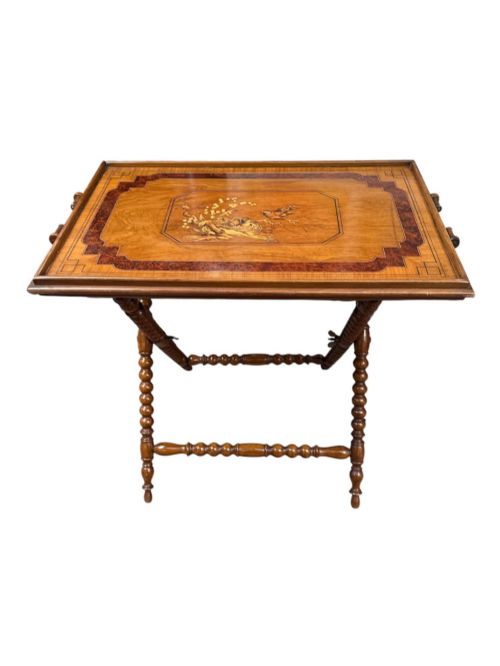
Beyond standard serving trays, the selection includes butler's trays mounted on folding stands to serve as occasional tables, alongside related Sorrento ware and Tunbridge ware items utilising similar wood-inlay techniques.
How they were made
Cabinetmakers built the foundational bodies of these trays using dense timbers such as mahogany, walnut, and satinwood, frequently applying contrasting veneers to create the primary surface. Boxwood, burr yew, and rosewood provided the tonal variation required for complex decorative schemes.
Craftsmen cut thin slices of various woods by hand, assembling them like puzzles into paper patterns before gluing the complete picture down onto the solid wood base. Marquetry inlay differed from simpler banding by depicting pictorial scenes, floral sprays, or neoclassical motifs using the natural colours and grains of the timbers.
Marquetry Wooden Tray Retail Price Guide 2026
Typical asking prices for marquetry wooden tray among the pieces listed under this phrase on Sellingantiques today, from the lower quarter to the upper quarter. They describe what is for sale here now, not the wider market.
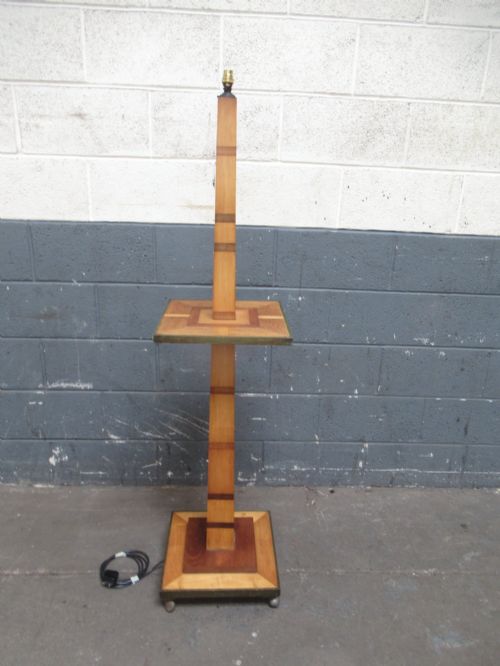
The inventory spans the nineteenth century through the Edwardian period, incorporating occasional Georgian precursors and Art Deco lighting.
What varies in quality
The distinction between ordinary and exceptional pieces lies in the precision of the veneer cutting and the complexity of the timber selection. Finer trays employ a wider palette of exotic and native woods to achieve realistic shading in floral and architectural marquetry.
Structural hardware also defines the upper tier of the range, seen in the transition from simple shaped wooden edges to pierced brass galleries, silver-plated mountings, and integrated turned wooden handles.
Edwards and Roberts
The Marquetry Wooden Tray Glossary
- Marquetry inlay
- The art of applying small pieces of veneer to a structural base to form decorative pictures or patterns. It relies entirely on the natural colour and grain of different woods rather than paint.
- Satinwood
- A pale, lustrous timber imported from the tropics, highly favoured by cabinetmakers during the eighteenth and nineteenth centuries for high-status furniture and trays.
- Sorrento ware
- A style of decorative woodworking originating from the Italian town of Sorrento, characterised by intricate micro-mosaic marquetry depicting buildings, landscapes, or figures in olivewood.
- Gallery
- A raised ornamental border fitted around the perimeter of a tray or table top. It is typically fashioned from pierced brass or shaped wood to prevent items from sliding off.
- Kidney-shaped
- A curved, concave furniture and tray outline popular during the Edwardian period. This ergonomic form allowed the server to hold the tray closer to the body.
Marquetry Wooden Tray: Frequently Asked Questions
What woods were used for marquetry trays?
Cabinetmakers relied on a stable primary timber like mahogany or satinwood for the main body and base of the tray. They then applied thinner veneers of contrasting woods such as boxwood, walnut, burr yew, and rosewood for the inlay work.
Using woods with distinct natural colours and grain directions allowed artisans to create pictorial depth without relying on artificial stains or paints.
How do I care for an antique tray?
Keep wooden trays away from direct sunlight and radiators to prevent the delicate veneer from drying out and lifting from the base. Avoid exposing the surface to excess moisture or standing liquids, as old polishes and glues are sensitive to dampness.
Apply a gentle application of appropriate furniture wax occasionally to nourish the timber and maintain the natural lustre of the satinwood or mahogany.
How do I distinguish Victorian from Edwardian trays?
Victorian trays from the mid to late nineteenth century often feature heavier mahogany construction with bold, formal inlay and robust brass or wooden handles. They lean towards classical revival motifs and darker, richer timber tones.
Edwardian pieces from the early twentieth century frequently utilise lighter satinwood and maple, favouring graceful kidney shapes, delicate floral marquetry, and refined neoclassical revival designs.