




Inlaid Mahogany Tray
When you examine an inlaid mahogany tray, you hold a piece of social history designed for the rituals of tea and hospitality.
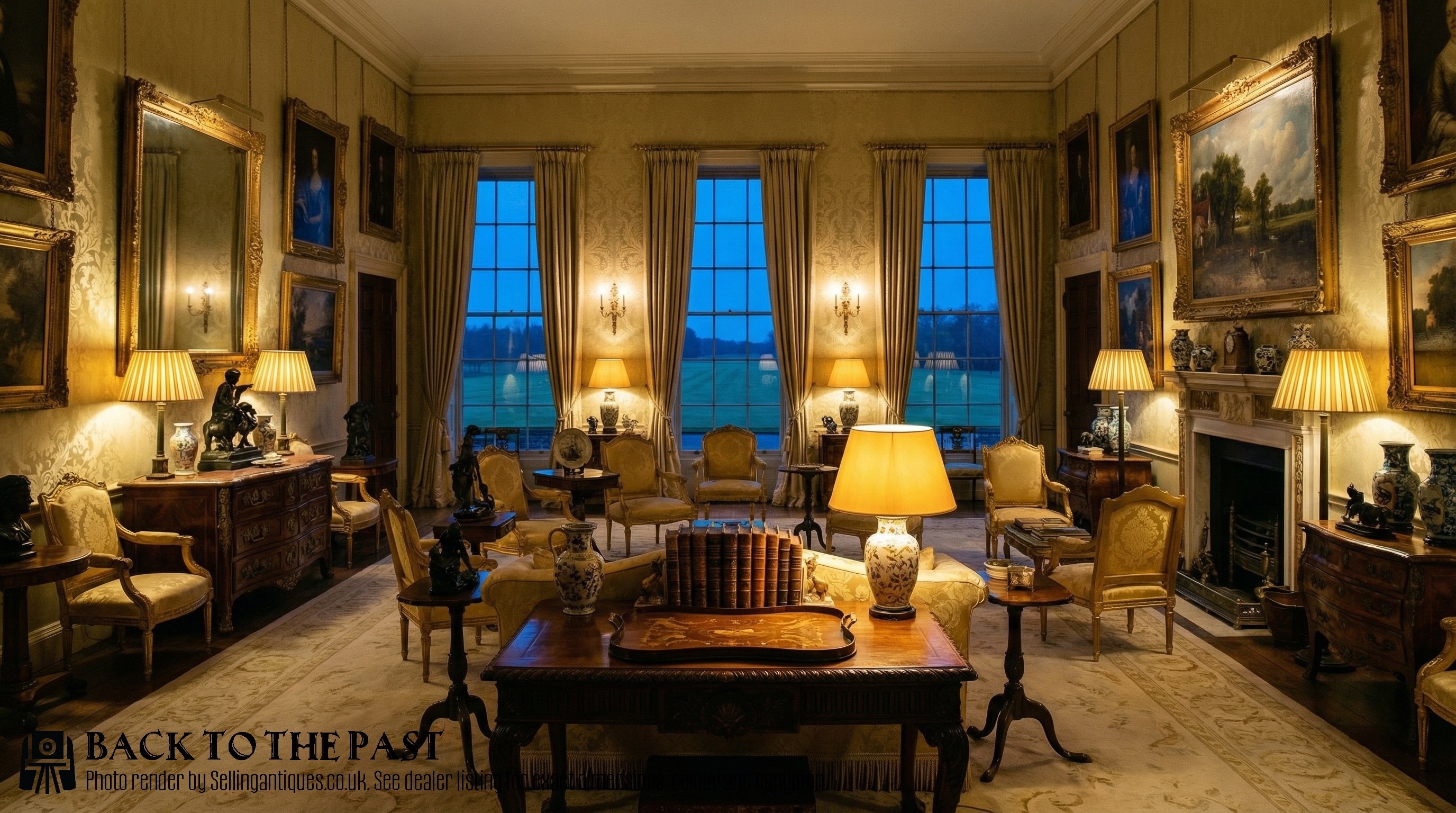
Inlaid Mahogany Tray
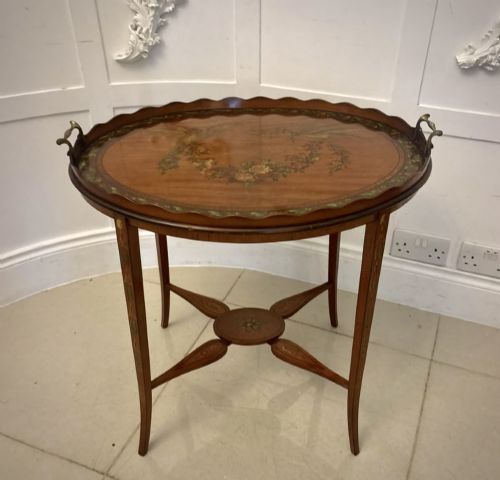
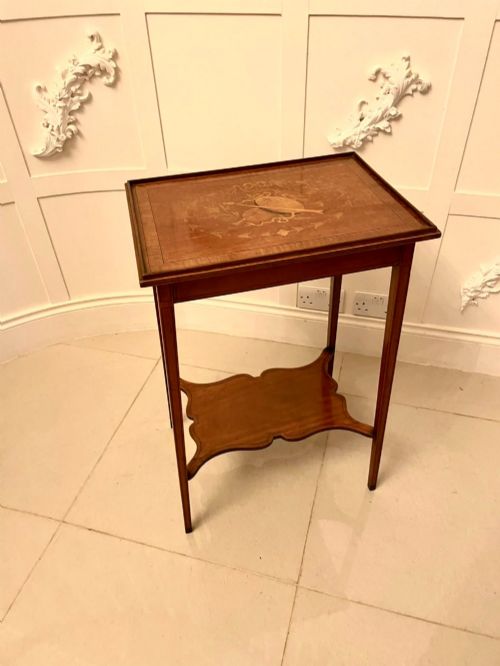
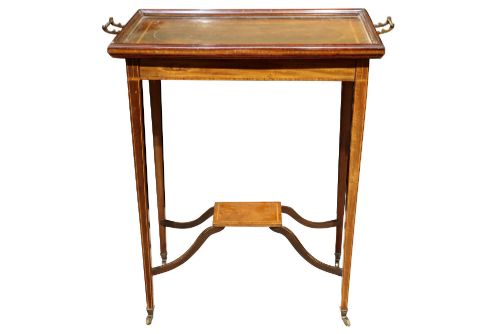
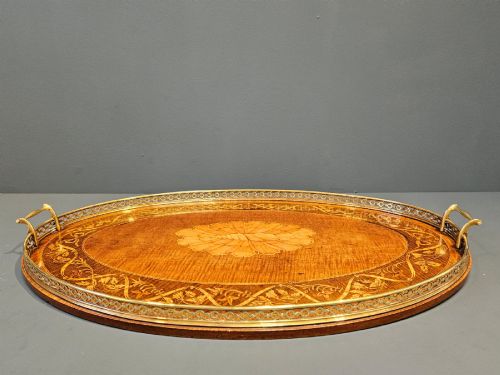
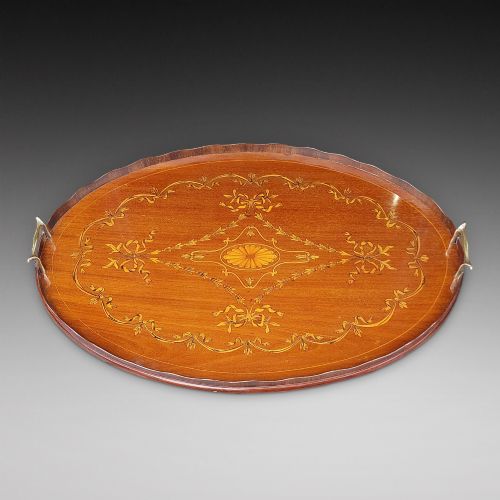
An inlaid mahogany tray serves as both a functional piece of servingware and a decorative object originating primarily from the Georgian, Victorian, and Edwardian eras. Collectors encounter diverse forms ranging from traditional oval and kidney-shaped tea trays to occasional tables featuring removable tray tops.
The selection spans simple serving platters with brass handles to elaborate multi-tiered etageres and bedside cabinets utilising tray top designs. Edwardian and nineteenth-century examples dominate the available pieces, reflecting the period's sustained interest in Sheraton Revival styles.
Makers produced these items for domestic use in drawing rooms and parlours, employing contrasting timbers to create geometric and floral motifs. Whether resting on a folding stand or held by handles, each piece demonstrates the enduring appeal of mahogany in traditional interior settings.
Materials and Construction
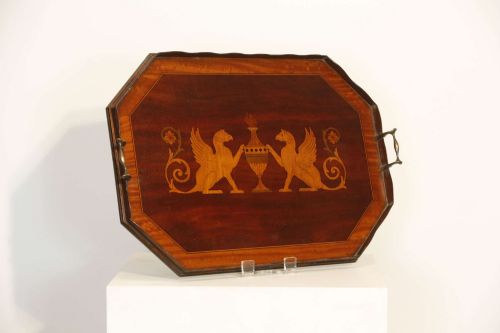
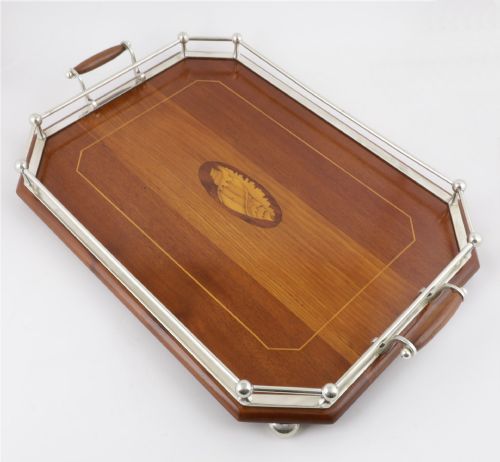
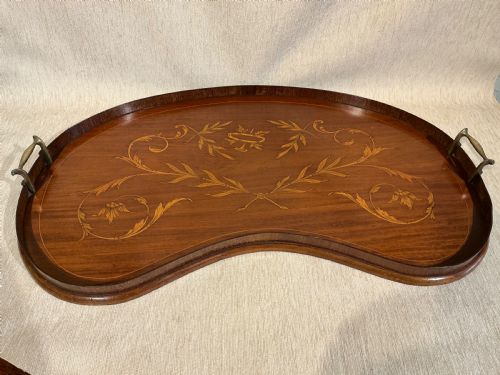
Cabinetmakers constructed the primary body using solid or veneered mahogany, selected for its stable grain and rich warm colour. Artisans then recessed contrasting timbers into the surface to form decorative borders and central paterae.
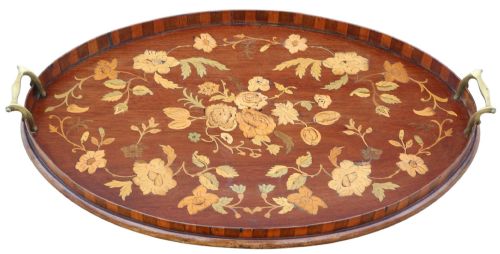
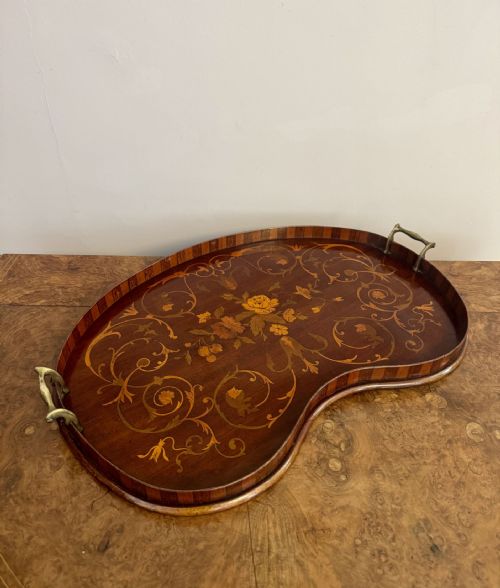
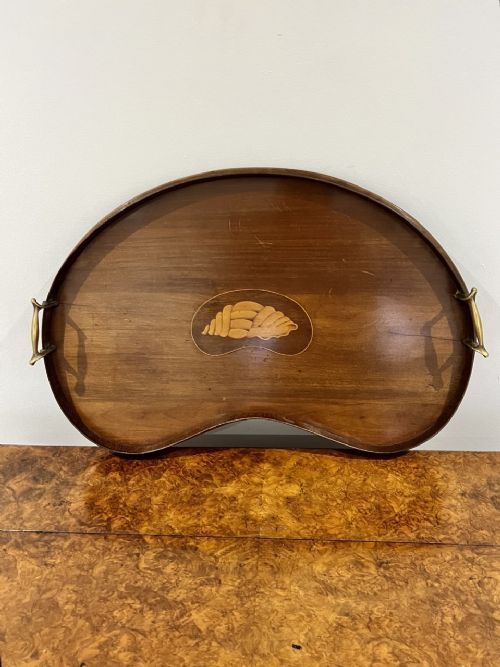
Satinwood, boxwood, and ebony feature prominently as inlay materials, creating sharp tonal contrast against the dark mahogany background. Marquetry techniques combine various dyed and natural woods to picture floral sprays and neoclassical shell motifs.
Many serving examples incorporate brass mounts, such as pierced galleries or drop handles, secured firmly to the wooden base. Tray top tables utilise raised edges, sometimes shaped into delicate pie crust or scalloped profiles, carved directly from the solid timber or built up with moulded rims.
Inlaid Mahogany Tray Retail Price Guide 2026
Typical asking prices for inlaid mahogany tray among the pieces listed under this phrase on Sellingantiques today, from the lower quarter to the upper quarter. They describe what is for sale here now, not the wider market.
Materials recorded across current inventory include solid mahogany, satinwood inlay, marquetry, boxwood, and brass gallery mounts.
Assessing Quality and Craftsmanship
The precision of the inlay work marks the primary division between standard production and superior craftsmanship. Finer examples display tight, seamless joints where the contrasting woods meet the mahogany ground, without excessive use of dark filler.
The choice of secondary woods and the depth of the figure in the mahogany veneer indicate the maker's investment in materials. Flame grain mahogany and finely figured satinwood borders separate high-end London or provincial pieces from simpler commercial items.
Structural integrity and the retention of original hardware, including brass handles and gallery rails, heavily influence the standing of a piece. Trays that maintain their original surface finish without harsh modern stripping preserve the crispness of the inlaid details.
The Inlaid Mahogany Tray Glossary
- Inlay
- A technique where small pieces of contrasting wood are fitted into recesses carved into the solid wood base. This creates a flush, decorative surface across the tray floor.
- Marquetry
- An elaborate form of pictorial inlay utilising various wood veneers to compose complex scenes or floral designs. Artisans cut these patterns together before gluing them to the structural carcase.
- Gallery
- A raised wooden or metal rim fitted around the edge of a tray to prevent items from sliding off during service. Pierced brass galleries represent a refined variation found on better pieces.
- Etagere
- A set of open shelves or tiers used for displaying objects or serving afternoon tea. Many Edwardian variants incorporate a removable inlaid tray as the top tier.
- Paterae
- Small circular or oval decorative motifs carved or inlaid with neoclassical rosette patterns. They frequently anchor the corners or centre of Georgian and Sheraton Revival designs.
Inlaid Mahogany Tray: Frequently Asked Questions
How do I date an inlaid mahogany tray?
Dating relies on examining the timber species, construction methods, and stylistic cues present in the inlay. Georgian examples often display restrained neoclassical motifs like urns and bellflowers executed in satinwood and ebony.
Edwardian and Sheraton Revival pieces from around nineteen hundred frequently feature lighter satinwood fields, intricate marquetry ribbon bows, and brighter polished finishes. Secondary wood choices on the underside also provide clues regarding regional or period origins.
Were these trays used for food or display?
Most pieces functioned primarily for serving afternoon tea, wine, or spirits in formal drawing rooms. Their sturdy mahogany construction and integrated brass handles accommodated heavy silver teapots and porcelain cups.
Over time, many serving trays transitioned into decorative display items or found new utility placed atop folding stands as occasional lamp tables.
How should I clean and care for mahogany?
Maintenance requires minimal intervention using a soft, dry cloth to remove dust from the surface. Avoid using silicone-based polishes or placing the wood in direct sunlight, which fades the rich mahogany tones.
Applying a traditional beeswax paste occasionally helps nourish the antique polish and protects the delicate satinwood inlay from drying out.
What is a tray top table?
A tray top table combines an occasional table base with a removable or fixed serving tray forming the upper surface. This design allowed households to bring refreshments into a room and set them directly onto a dedicated stand.
Victorian and Edwardian iterations frequently feature folding X-frames or two-tier etagere structures designed to hold the tray securely.