




Edwardian Inlaid Tray
These edwardian inlaid tray examples combine fine timbers with delicate ornamental work, offering practical service alongside period character.
Edwardian Inlaid Trays
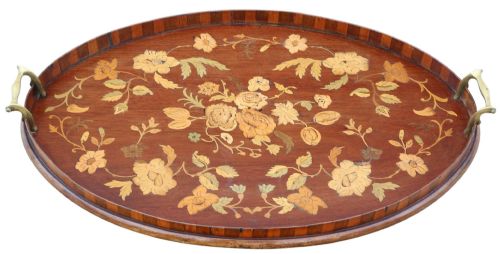
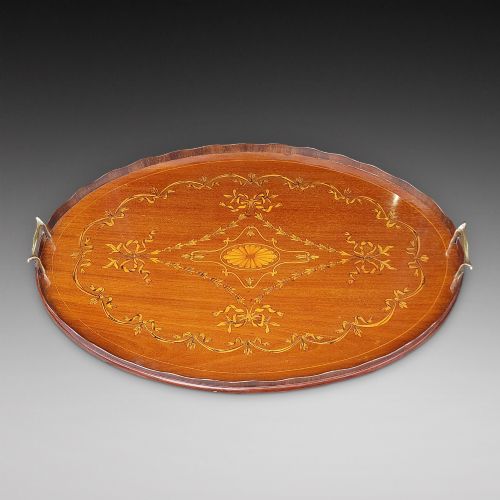
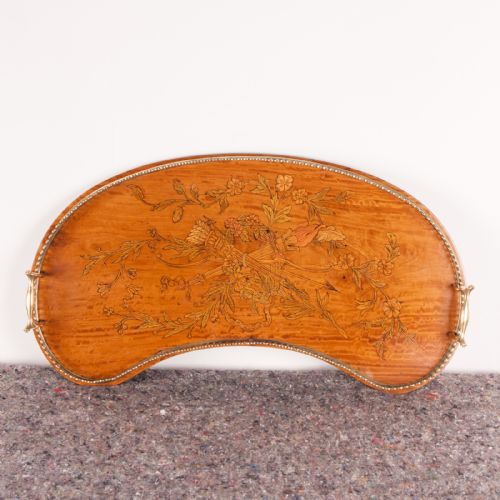
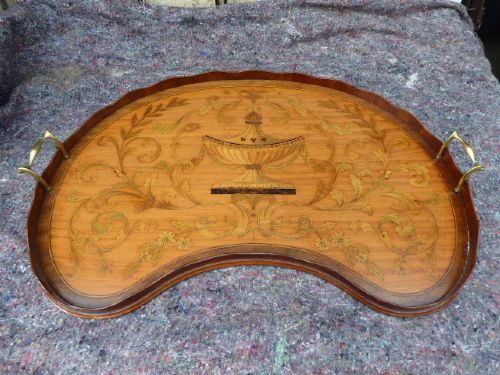
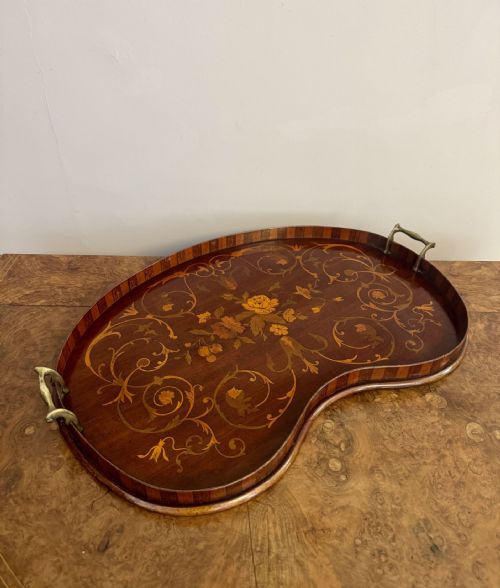
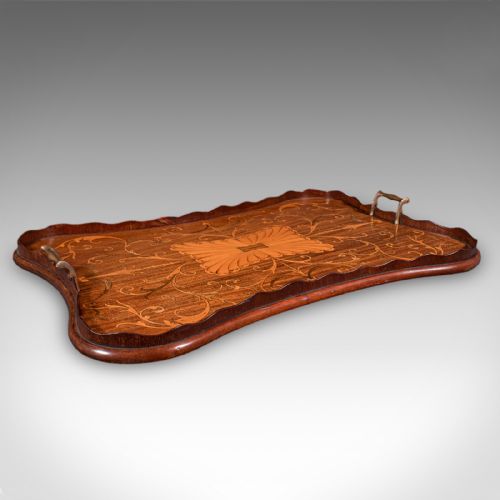
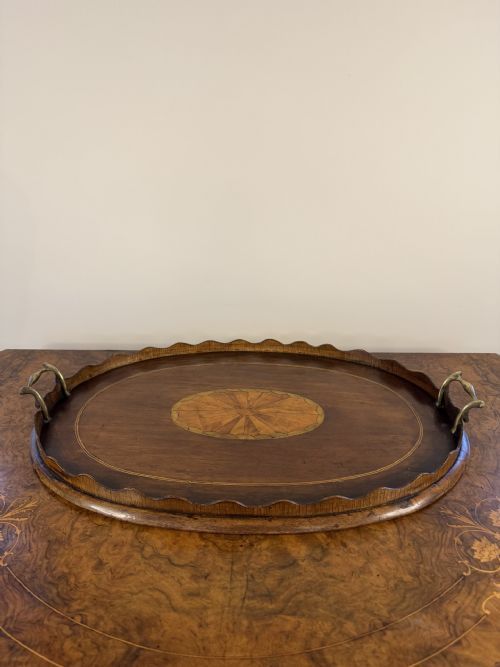
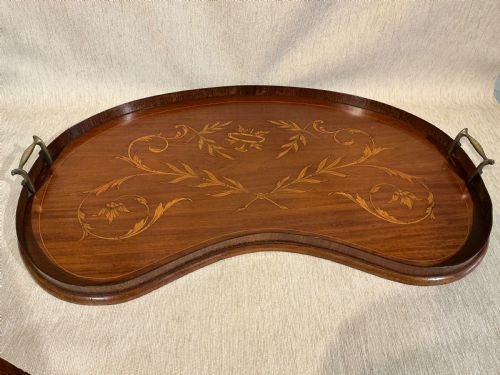
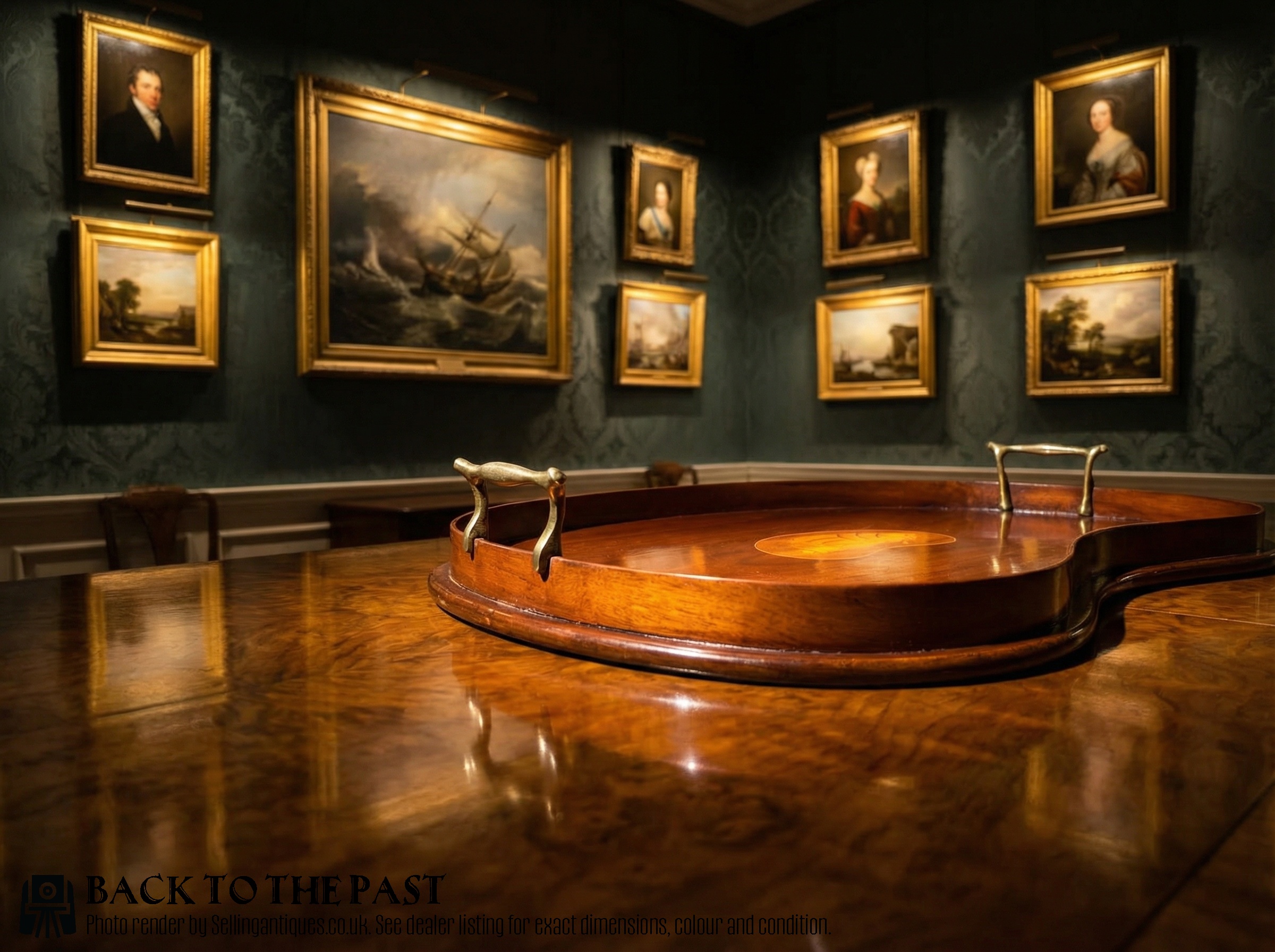
An edwardian inlaid tray typically takes the form of an oval or kidney-shaped serving piece, frequently produced in mahogany during the early twentieth century. Buyers encounter these items as tea trays, drinks trays, or galleried serving pieces designed for domestic hospitality.
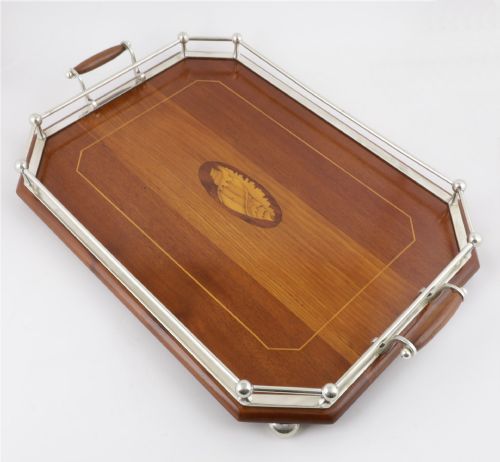
The archive and current selection reveal a strong presence of Edwardian and nineteenth-century examples, alongside occasional Georgian and eighteenth-century pieces. Oval and kidney shapes dominate the forms, often fitted with brass handles or wooden galleries.
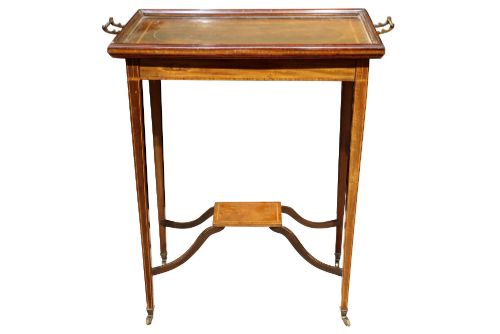
Makers adapted these serving pieces for various furniture forms, incorporating removable trays into etageres and occasional tables. The primary function remains serving, yet many survive in a condition that suggests display rather than heavy daily use.
Materials and Construction
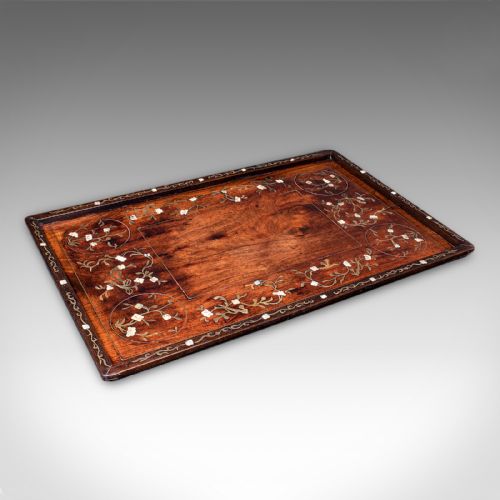
Makers utilised solid mahogany and wood veneers as the primary base materials, supplemented by satinwood, boxwood, and walnut. Marquetry inlay and satinwood inlay create contrasting decorative motifs across the wooden surfaces.
Retail Price Guide 2026
Typical UK retail prices for edwardian inlaid tray, calculated from the Sellingantiques database of over a million retail prices indexed since 2003. This retail price guide relies exclusively on Sellingantiques data; no external sources or auction records are used, so the figures do not describe the wider market.
Some trays double as removable table tops, proving that Victorians and Edwardians truly appreciated modular furniture.
Markers of Quality
Quality rests upon the precision of the marquetry inlay and the choice of timber figure, such as plum pudding mahogany. Crisp detailing in the satinwood and boxwood work distinguishes finer examples from simpler production.
Structural integrity of the gallery and handles separates standard pieces from the finest output. The smoothness of the wooden surface and the tightness of the veneer joints indicate the standard of original workshop execution.
The Edwardian Inlaid Tray Glossary
- Marquetry inlay
- Decorative patterns formed by fitting contrasting pieces of wood veneer into a prepared timber ground. This technique allows for complex floral or shell motifs across the tray surface.
- Kidney-shaped
- A curved, indented outline resembling a kidney, popular in Edwardian tray design for comfortable carrying against the body. It requires precise cutting of the wooden base and surrounding gallery.
- Gallery
- A raised border around the edge of a tray to prevent items from sliding off during service. Galleries are constructed from pierced brass or shaped wood.
- Satinwood
- A durable, lustrous yellowish timber native to India and Ceylon, used extensively for contrasting inlay work and banding. Its bright tone highlights central motifs.
Frequently Asked Questions
How were these trays used?
These pieces served primarily for carrying tea sets, glassware, and decanters in Edwardian drawing rooms.
Servants used them to transport refreshments from kitchens to guests, relying on the raised galleries to secure the porcelain.
Are they suitable for daily use?
Most survive in good condition, but vintage wooden surfaces require careful handling to prevent moisture damage.
Using coasters and keeping them away from direct heat protects the delicate marquetry and polished timber.
What woods were used?
Mahogany forms the primary body for the majority of these serving items, complemented by walnut and satinwood.
Boxwood and contrasting veneers create the fine decorative lines and central motifs embedded within the wood.
How do I spot an Edwardian piece?
Edwardian examples typically combine mahogany bases with light satinwood inlay and sometimes brass gallery rails.
Construction methods, timber ageing, and specific decorative motifs help separate them from later revival items.