


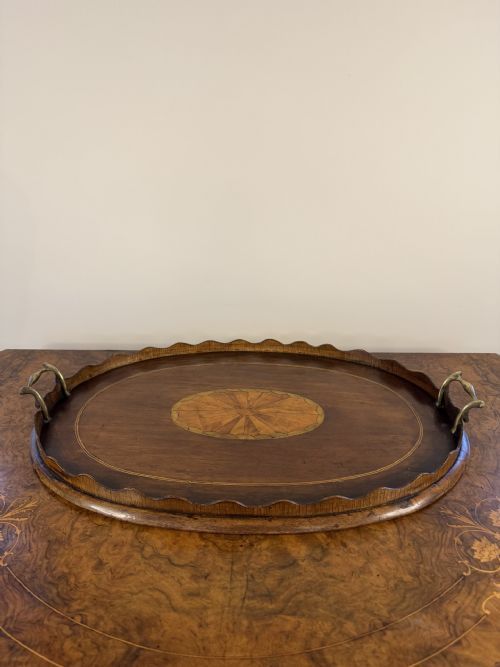


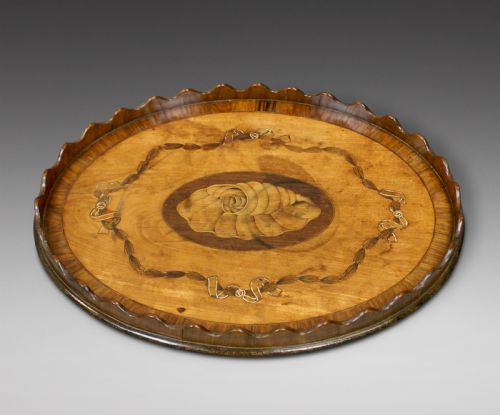


Scalloped Edge Wooden Tray
A scalloped edge wooden tray brings tactile warmth to any room, offering both a practical surface for serving and a sculptural outline.
Scalloped Edge Wooden Tray
A scalloped edge wooden tray is a serving piece or small tabletop defined by its shaped rim, appearing across periods from the eighteenth century to the twentieth century. These items manifest primarily as serving trays, platters, and occasional tables, often featuring oval or rectangular formats.
The selection on this page demonstrates various historical expressions, ranging from George III mahogany examples and Victorian inlaid tea trays to Kashmiri walnut items and Edwardian oyster veneered pieces. Buyers encountering this selection meet diverse woods and subtle regional interpretations rather than a single uniform design.
How they were made
Cabinetmakers constructed these trays using timbers such as mahogany, walnut, satinwood, and ebonised wood, frequently employing wood veneer and marquetry inlay to decorate the surfaces. Artisans shaped the characteristic edges by hand, integrating brass mounts or silver plate gallery rails on specific pieces.
Techniques varied from traditional Georgian mahogany joinery to intricate Kashmiri carving and Venetian painted finishes. Craftsmen matched grains carefully, particularly on oyster veneered and inlaid surfaces, ensuring structural stability alongside decorative richness.
What varies in quality
Quality rests in the precision of the woodwork and the crispness of the scalloped shaping along the rim. Pieces exhibiting fine marquetry inlay, well-matched veneers, and thoughtful grain selection stand apart from simpler utilitarian versions.
The integration of materials also defines the tier of a piece, such as the harmony between inlaid stringing and the primary timber. Original surface patination and the refined execution of carved or painted details elevate an item's overall presence.
The Scalloped Edge Wooden Tray Glossary
- Mahogany
- A durable tropical hardwood prized for its reddish-brown colour and stability in cabinetmaking. It forms the primary carcase material for many eighteenth and nineteenth century trays.
- Oyster Veneer
- Slices cut transversely from small branches to create circular or ovoid patterns resembling oyster shells. This technique requires exceptional skill to lay evenly across an oval tray surface.
- Marquetry Inlay
- The art of applying pieces of veneer to a structure to form decorative patterns or pictures. It appears frequently on Victorian and earlier serving trays to enrich the central field.
- Gallery Tray
- A tray featuring a raised border or rail around its perimeter to prevent items from sliding off. These rails often incorporate pierced brass or silver plate work.
- Ebonised Wood
- Timber treated with a chemical stain or finish to imitate the appearance of ebony. This dark, formal surface treatment appears on select late nineteenth and early twentieth century pieces.
Scalloped Edge Wooden Tray: Frequently Asked Questions
How were these trays used?
These trays served primarily for carrying tea ware, wine glasses, and food items in domestic interiors. Many also functioned as display surfaces on tables or were mounted permanently as tray top tables.
Over time, their decorative qualities meant they often remained on view in reception rooms when not in active service.
How do I care for a wooden tray?
Keep wooden trays away from direct sunlight, excessive heat sources, and high humidity to prevent the timber from warping and the veneer from lifting. Dust them gently with a dry, soft cloth and avoid chemical polishes that can damage older finishes.
Because many carry delicate inlay or painted surfaces, they are best suited for dry display or light service rather than heavy daily use.
What is oyster veneering?
Oyster veneering involves slicing small branches diagonally to produce small, circular or oval pieces of wood with distinctive concentric growth rings. Artisans arranged these carefully across the surface of a tray to create an eye-catching, patterned expanse.
This method gained particular favour during periods when makers sought to highlight the natural grain patterns of walnut and other decorative timbers.
How do I distinguish between periods?
Georgian and George III pieces typically rely on solid mahogany construction, restrained proportions, and subtle carving along the shaped edge. Victorian items often embrace more elaborate marquetry inlay, contrasting woods, and rich surface ornamentation.
Later Edwardian and twentieth-century examples introduce distinct techniques like ebonising, specialised veneers, or painted Venetian decoration while retaining the classic scalloped silhouette.