




Georgian Inlaid Tray
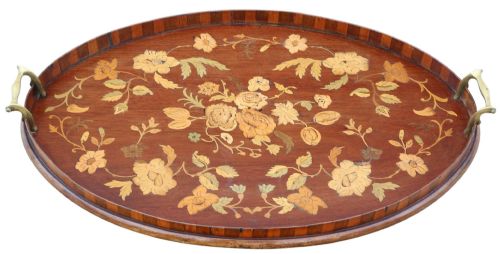
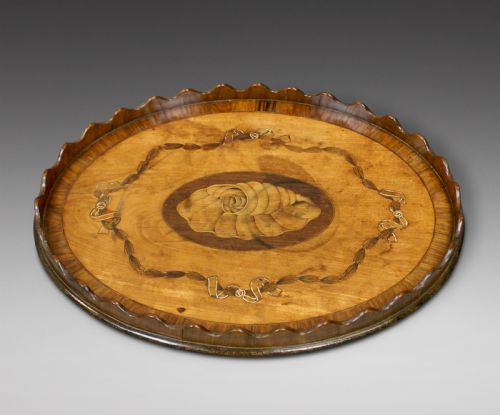
Georgian inlaid tray pieces are timber serving and display pieces sought for their fine woodworking, and you find mostly mahogany and satinwood examples here.
Georgian Inlaid Tray
A georgian inlaid tray serves as both a functional tabletop and a decorative object, taking forms from circular wine trays to oval serving platters. The pieces on this page span the Georgian, Regency, and Edwardian periods, reflecting both original manufacture and later revival styles.
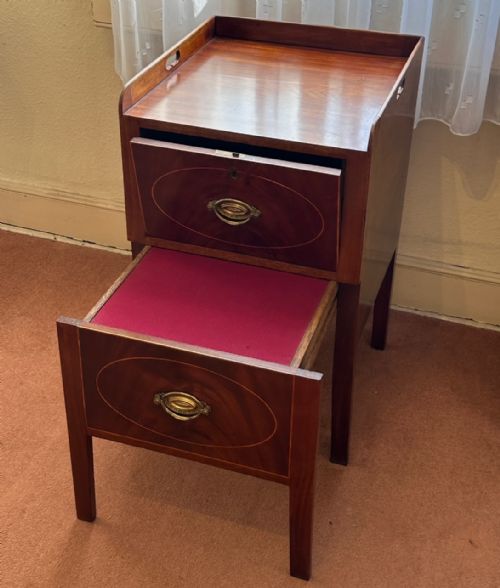
Most items you encounter are fashioned from mahogany, often enhanced with satinwood, boxwood, and marquetry inlay. Alongside traditional serving trays, the evidence includes related furniture formats such as tray top bedside tables and coffee tables.
How they were made
Cabinet makers constructed these trays primarily using solid mahogany timbers, shaping circular, oval, and rectangular surfaces with raised edges. They incorporated contrasting timbers like satinwood and boxwood to create geometric and floral banding.
Marquetry inlay techniques feature prominently, embedding delicate wood veneers into the primary timber ground. Brass handles and brassbound edges also appear on selected pieces to provide structural reinforcement and grip.
Materials documented across the inventory include mahogany, satinwood, boxwood, brass, papier-mâché, and lacquer.
What varies in quality
Quality rests upon the precision of the timber selection, visible in the depth of the flame grain mahogany and the crispness of the boxwood and satinwood inlay. Finer examples display meticulous attention to the joinery of the raised gallery edges and the symmetry of the marquetry.
The integration of secondary materials, such as polished brass handles and well-fitted bases, separates standard production from superior craftsmanship. Original period manufacture also holds a distinct place compared to later revival pieces.
The Georgian Inlaid Tray Glossary
- Marquetry Inlay
- A decorative technique where small pieces of coloured wood veneer are fitted into a master panel to form pictorial or geometric designs.
- Satinwood
- A durable, lustrous timber native to India and Sri Lanka, utilised for contrasting yellow-gold banding and inlay work.
- Boxwood
- A dense, pale wood employed by cabinet makers for fine stringing lines and delicate geometric borders.
- Flame Grain
- A characteristic rippled grain pattern in mahogany timber, prized for its dynamic visual movement under polish.
- Gallery Edge
- The raised rim surrounding a tray or table top designed to prevent items from sliding off.
Georgian Inlaid Tray: Frequently Asked Questions
What is a georgian inlaid tray used for?
These pieces served originally for carrying glassware, wine bottles, and tea services across the formal rooms of a house. Today, many people use them as decorative centrepieces on coffee tables or sideboards.
Their robust timber construction and raised edges also make them practical for organising smaller domestic objects on desks and side tables.
How do I date a georgian inlaid tray?
Dating relies upon examining the timber species, the style of the marquetry, and the construction methods used for the gallery edge. Pieces from the eighteenth century typically exhibit hand-cut dovetails and natural wax finishes.
Later Edwardian revival items often display machine-cut elements and brighter, more uniform satinwood veneers while copying earlier Georgian proportions.
Are these trays suitable for daily use?
Most antique trays handle light everyday placement of objects, though moisture and heat require caution to protect the antique polish. Using coasters and keeping them away from direct sunlight preserves the delicate satinwood and boxwood inlays.
Heavier pieces, particularly those mounted on stands or converted into tables, function securely as stable furniture surfaces.
What woods appear most often?
Mahogany forms the primary structural timber for the vast majority of these items, providing a sturdy and dark reddish-brown base. Satinwood and boxwood provide the contrasting light tones necessary for intricate border work and floral motifs.
Ebony and rosewood also appear in select examples to create sharp dark outlines within the marquetry designs.