





Vintage Inlaid Serving Tray
A vintage inlaid serving tray brings enduring craftsmanship and natural wood figures to the table, offering a practical centrepiece for display and hospitality.
Vintage Inlaid Serving Tray
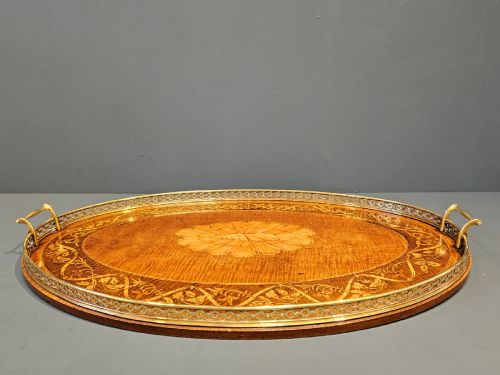
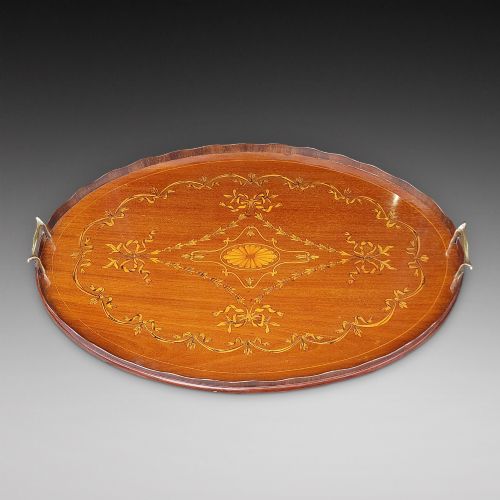
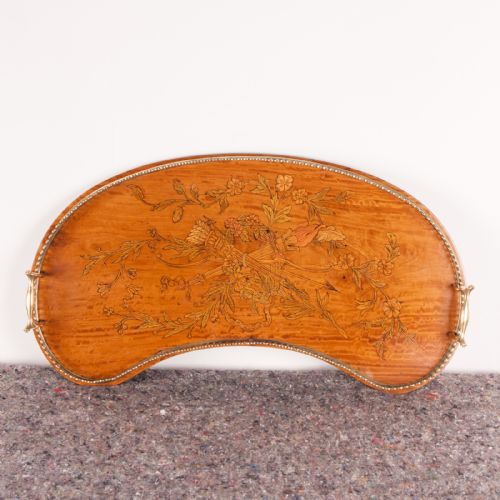
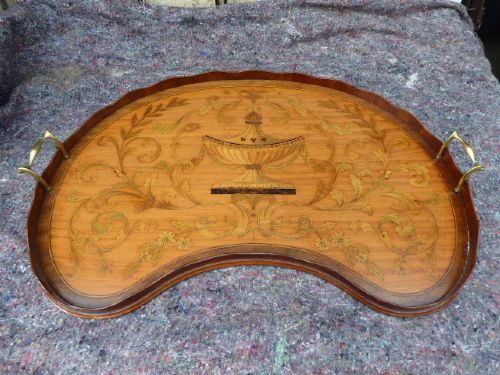
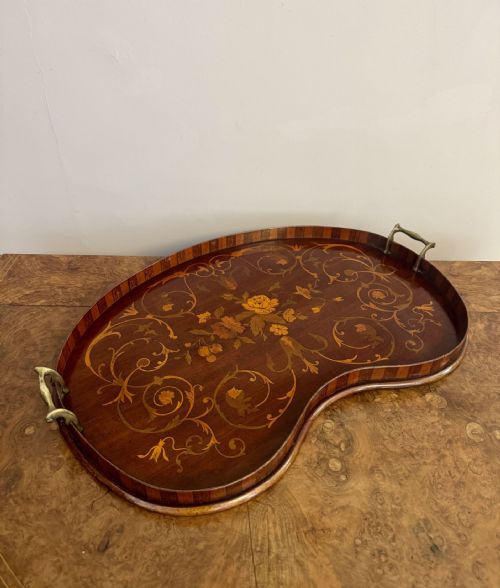
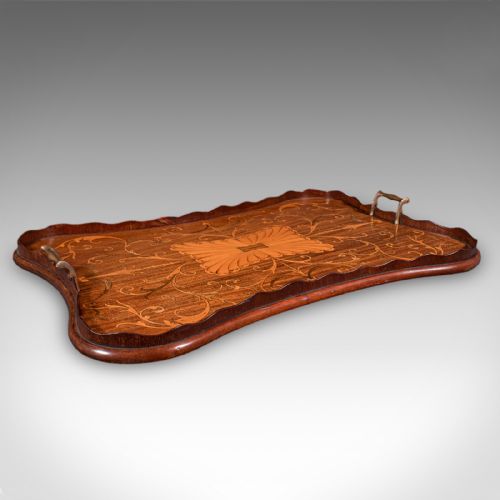
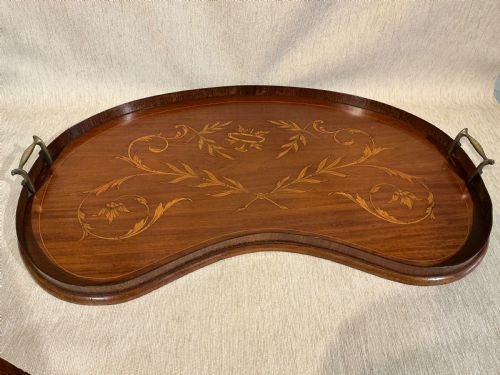
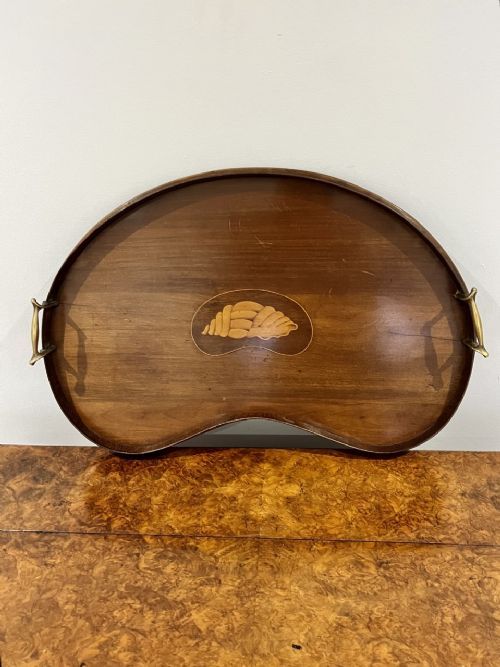
When you search for a vintage inlaid serving tray, you encounter an array of servingware spanning the Georgian, Victorian, and Edwardian periods alongside early twentieth-century examples. The most common form on this page is the mahogany or satinwood tray, often fashioned in an oval or kidney shape with contrasting marquetry.
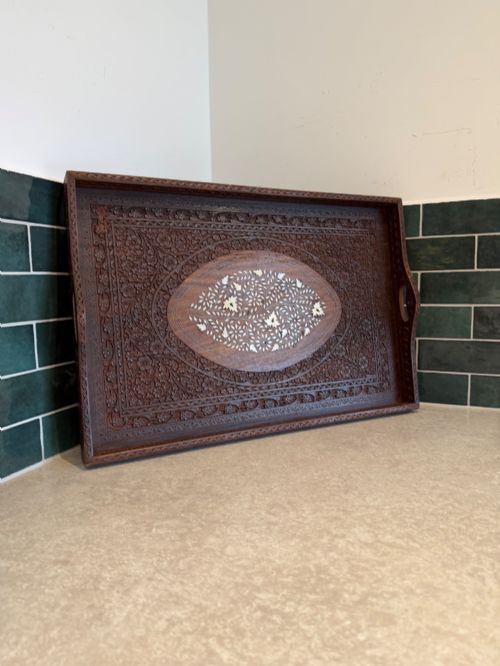
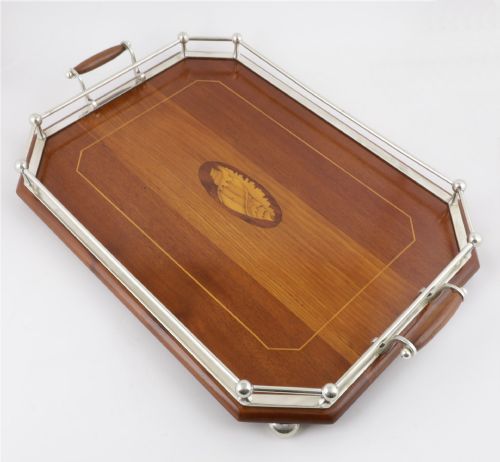
These pieces encompass various regional and stylistic origins, from traditional English afternoon tea trays to Anglo-Indian teak items and Kashmiri designs. Alongside standard serving trays and platters, you will find occasional gallery trays fitted with brass or wood surrounds, as well as occasional butler's trays.
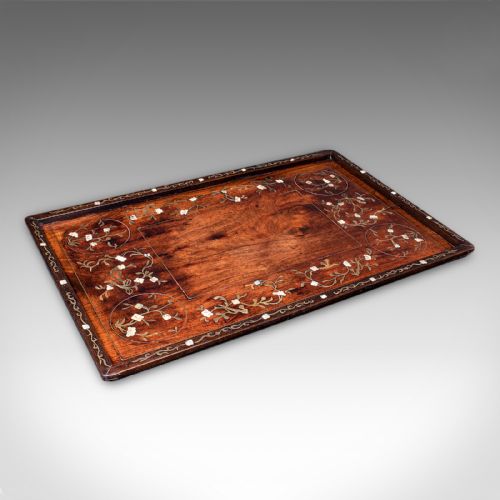
Materials extend beyond standard hardwoods to incorporate silver plate, glass, mother of pearl, lacquer, and toleware. Whether working within a Georgian Revival aesthetic or a late-nineteenth-century idiom, each piece combines utility with decorative woodwork.
How they were made
Cabinetmakers constructed these trays primarily using solid timber frameworks and stable veneers such as mahogany, satinwood, burr yew, and rosewood. Craftsmen applied marquetry and inlay techniques to create contrasting geometric or floral motifs across the central field.
Metalwork played a structural and decorative role, with brass utilised for galleries and handles, while silver plate adorned gallery frames. Specialised forms also relied on papier-mâché, lacquer, and specialised glass or butterfly wing panels under glass.
Joinery methods varied according to the period, supporting raised edges, integrated handles, and gallery rails designed to secure glassware and teaware during transit.
Listings feature mahogany, satinwood, and burr yew timbers alongside brass galleries, silver plate, and lacquer.
What varies in quality
Quality separates standard production items from master cabinetmaker output through the precision of the marquetry and the choice of timber. Finer pieces display crisp, tight-fitting satinwood and mahogany inlays without gaps, utilising choice burr veneers for visual depth.
The integrity of the structural frame and the finishing of the handles dictate the durability of the tray. Superior examples feature securely mounted brass galleries and robust timber bases that resist warping under daily use.
Artisanal touches, such as hand-cut mother of pearl details or complex pictorial marquetry scenes, elevate the stature of an individual tray above standard factory-turned items.
Edwards and Roberts
The Vintage Inlaid Serving Tray Glossary
- Marquetry
- The art of applying decorative pieces of veneer to a structural structure to form pictorial or geometric designs. This technique defines the surface decoration of many Edwardian and Victorian pieces.
- Gallery tray
- A serving tray fitted with an elevated raised border, often pierced brass or turned wood, designed to prevent items from sliding off the edge. These borders can be continuous or interrupted by integrated handles.
- Butler's tray
- A portable serving tray traditionally paired with a folding stand for household service. They often feature hinged or shaped sides for secure carrying.
- Satinwood
- A hard, durable timber with a natural golden sheen and fine grain, frequently used for contrasting inlays and principal surfaces during the Georgian and Edwardian eras.
- Toleware
- Enamelled or japanned metalware popular during the nineteenth century, often decorated with hand-painted motifs.
Vintage Inlaid Serving Tray: Frequently Asked Questions
Can I use these trays for serving drinks?
Most of these pieces were constructed for practical domestic service during the Victorian and Edwardian periods, making them suitable for carrying glassware and teaware today. Ensure you protect fragile or delicate finishes from standing liquids.
For pieces featuring brass galleries or delicate marquetry, use coasters or linen runners to prevent surface scratching during everyday use.
How do I date an inlaid tray?
Examine the underlying timber, the style of the marquetry, and the construction methods used for the handles and gallery. Georgian pieces often show simpler geometric banding, while Edwardian trays frequently employ elaborate satinwood marquetry.
Reference the overarching design motifs, such as Neoclassical revival elements or Art Deco influences, to narrow down the decade of manufacture.
What is an etagere?
An etagere is a piece of furniture featuring multiple tiers for displaying objects or serving items. Some variations integrate removable trays into their upper framework.
These tiered pieces combine storage with display, often utilising mahogany and satinwood construction consistent with adjacent tray designs.