


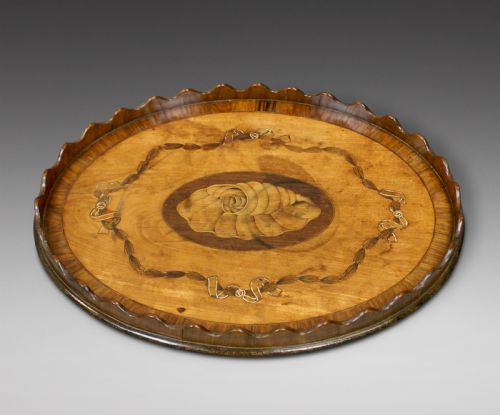


Shell Inlay Tea Tray
These shell inlay tea tray examples combine refined cabinetmaking with practical service, offering an authentic touch of period hospitality for any interior.
Shell Inlay Tea Tray
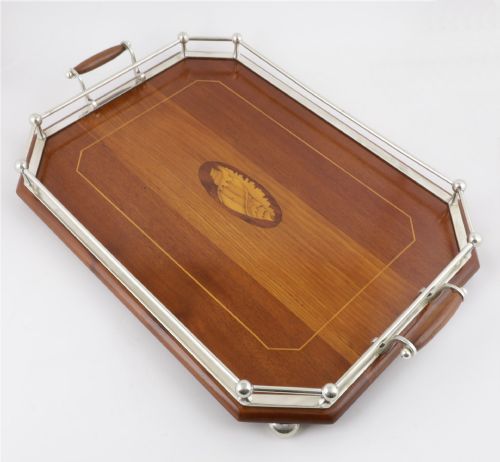
A shell inlay tea tray provides a solid wooden base designed for carrying and serving refreshments, frequently shaped with raised edges or fitted gallery rails. These pieces span multiple eras, including Georgian, Victorian, and Edwardian periods, reflecting the shifting tastes of British domestic life.
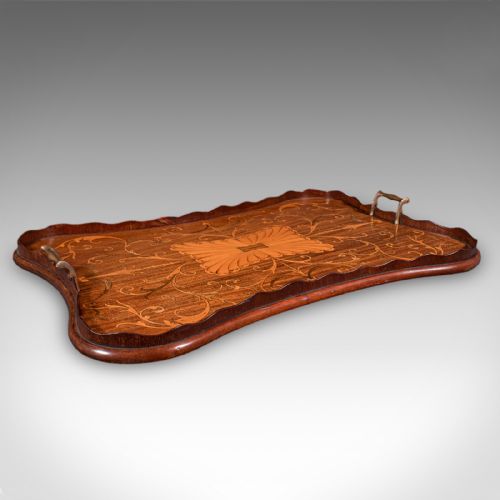
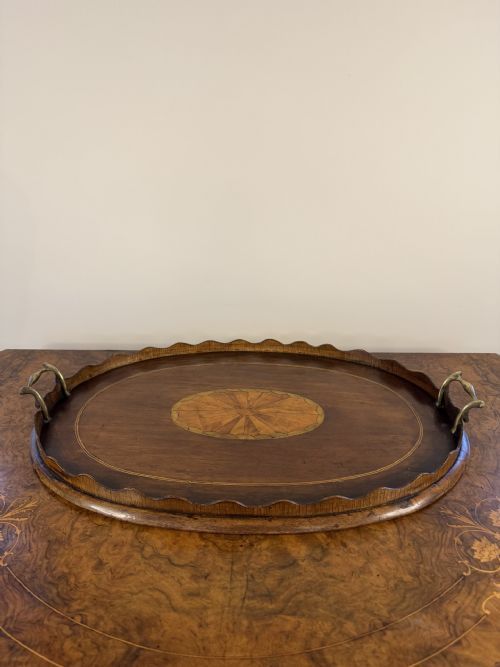
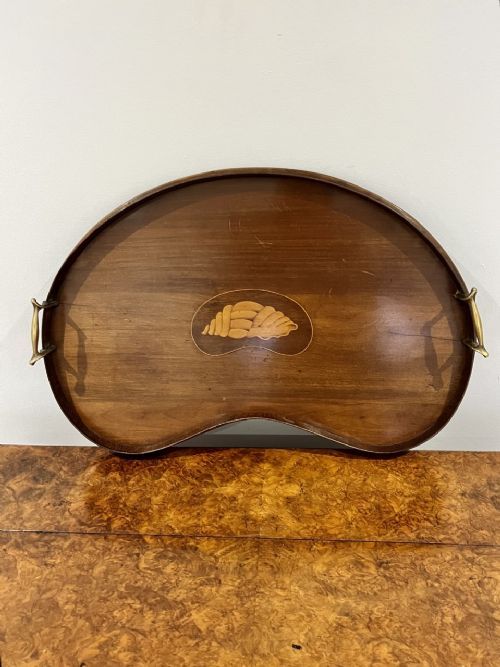
Mahogany forms the primary body of most examples, often enhanced by contrasting timbers such as satinwood, boxwood, and burr yew. Buyers will frequently encounter rectangular, octagonal, and kidney shapes, each demonstrating specific regional cabinetmaking traditions.
The decorative shell motif usually occupies the centre of the surface, executed through precise marquetry techniques. These trays range from large afternoon tea platters to smaller serving pieces.
Construction and materials
Cabinetmakers constructed these trays using dense hardwoods like mahogany and rosewood to provide stability against warping from hot teapots and cups. Marquetry inlay required meticulous hand-cutting of contrasting veneers, such as boxwood and satinwood, to form the detailed shell centrepieces.
Many items incorporate brass handles or delicate silver-plate galleries secured directly to the wooden rims. Surfaces were then hand-polished to highlight the natural grain variations of the timbers used.
Factors determining quality
The precision of the marquetry work dictates the distinction between standard production and superior craftsmanship. Clean joints around the inlaid shell and minimal gaps in the surrounding stringing indicate a skilled maker.
Selection of timber also governs overall merit, with figured woods like burr yew and richly grained mahogany commanding greater visual depth. The integration of solid brass hardware rather than plated base metals elevates the piece.
The Shell Inlay Tea Tray Glossary
- Marquetry inlay
- The art of creating decorative patterns by fitting small pieces of veneer into a prepared wooden surface. This technique allows for complex pictorial designs like central shells.
- Gallery tray
- A serving tray featuring an elevated pierced metal or wooden border around the perimeter. This edge prevents items from sliding off during transit.
- Kidney shaped
- A curved, asymmetrical furniture outline resembling a bean. This form became particularly popular during the Edwardian Sheraton Revival.
- Stringing
- Thin lines of contrasting wood inlay used to outline borders and geometric shapes. It frames the central decorative elements on the tray floor.
Shell Inlay Tea Tray: Frequently Asked Questions
How do I date my tray?
Dating relies on examining the timber species, construction methods, and stylistic cues present in the inlay work. Georgian pieces often display simpler geometric stringing, while Edwardian revivals utilise lighter exotic woods.
Hardware styles also provide clues, as brass handles and silver plate mounts evolved significantly between the eighteenth and twentieth centuries.
Were these used for daily service?
These trays served primarily during formal afternoon tea rituals in prosperous British households. Servants utilised them to transport porcelain teapots, cups, and saucers from the kitchen to the drawing room.
Larger gallery versions remained on side tables to hold heavy silver service sets when not actively carried.
How should I clean the wood?
Maintenance requires only a soft, dry cloth to remove dust from the polished surfaces. Avoid applying modern liquid polishes or water directly to the wood, as moisture can damage old veneers.
Waxing occasionally helps preserve the dry lustre of the antique mahogany and rosewood.
What defines Sheraton Revival style?
Sheraton Revival pieces emulate the lighter, neoclassical designs popularised by Thomas Sheraton in the late eighteenth century. Makers working around nineteen hundred adopted these motifs, incorporating satinwood and delicate shell marquetry.
This aesthetic favoured graceful curves and balanced proportions over heavy Victorian mass.