



Kidney Shaped Tray
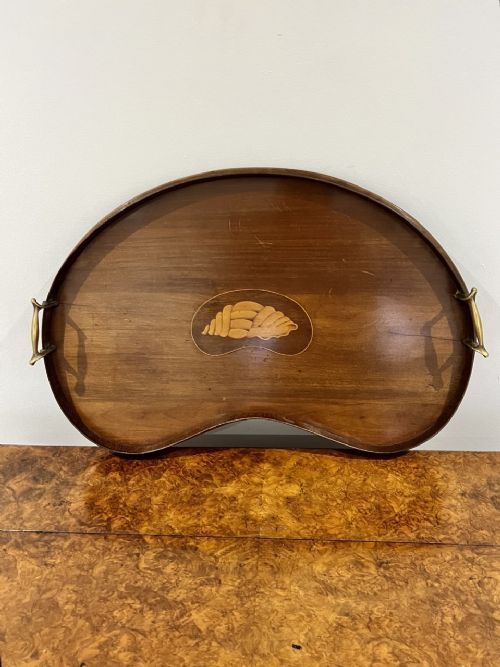
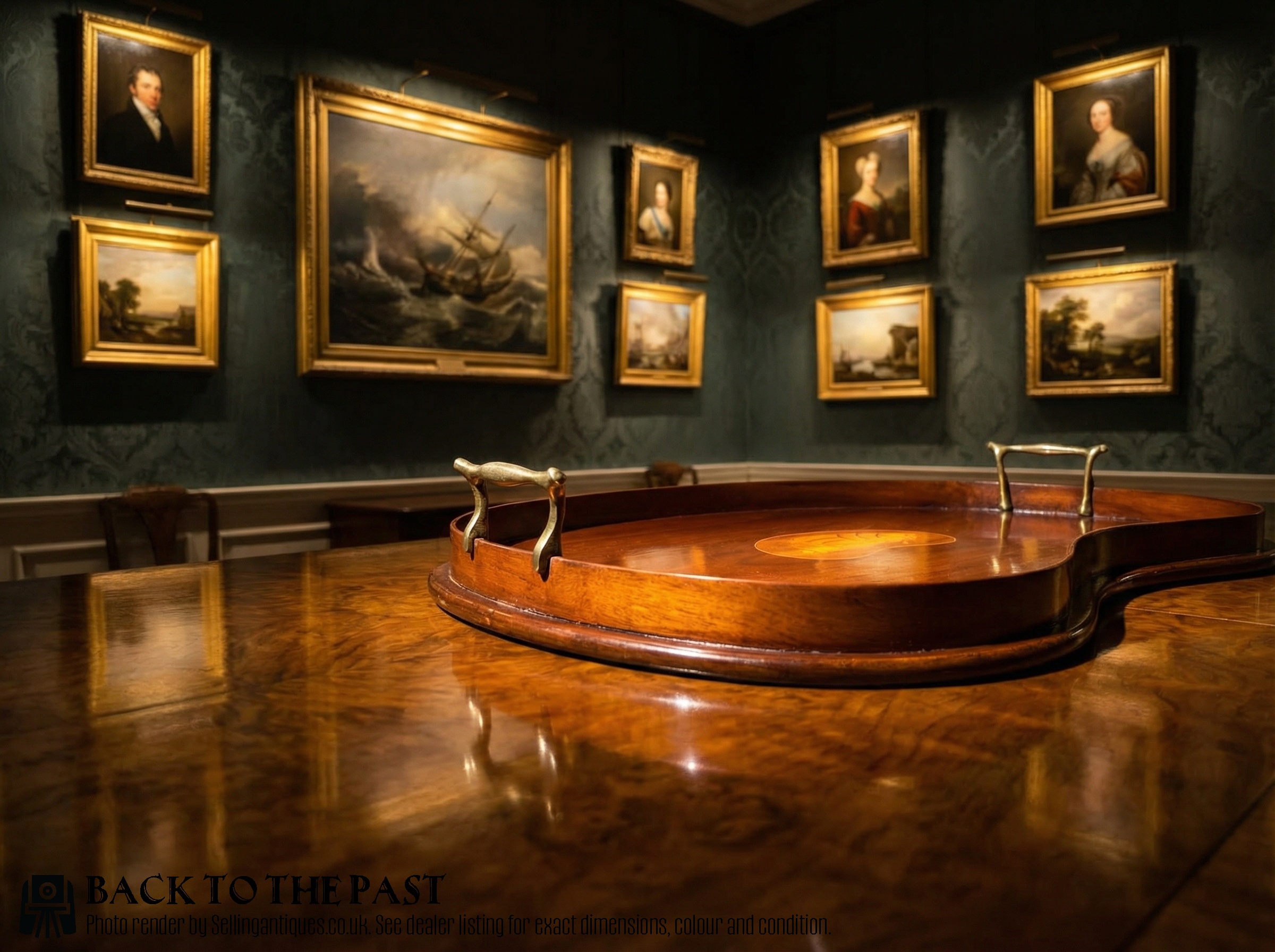
These kidney shaped trays are curved serving and display pieces designed to sit comfortably against the body, combining practicality with refined decorative appeal.
Kidney Shaped Tray
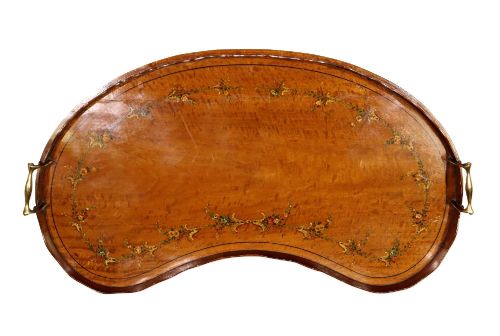
A kidney shaped tray offers a distinctive curved outline originally conceived to make carrying drinks and tea services easier against the waist. When you search for a kidney shaped tray, you are looking at items designed primarily during the nineteenth century and the Edwardian period.
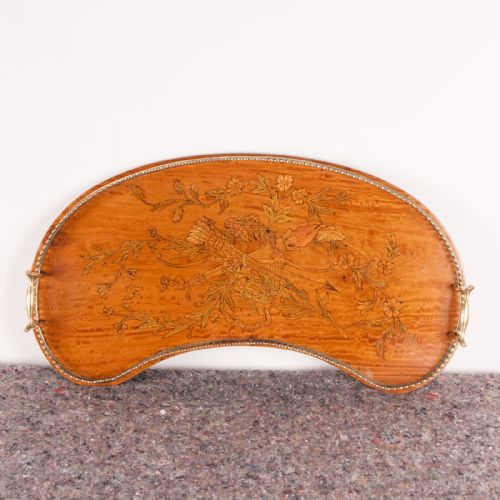
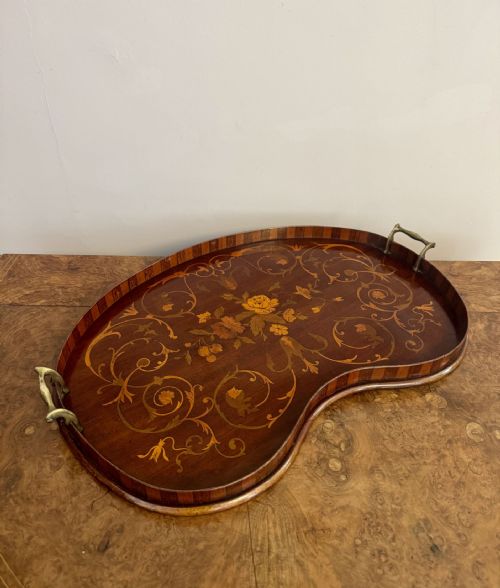
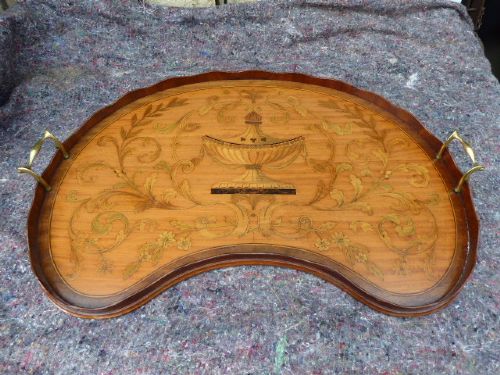
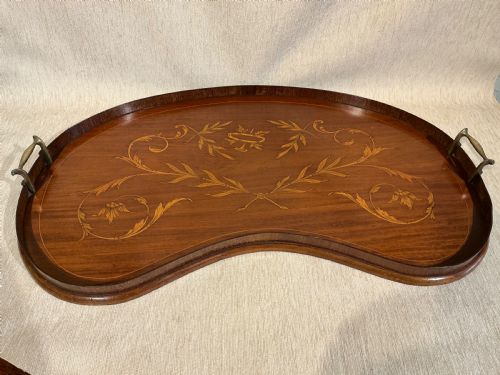
The versions most frequently met on this page are fashioned from mahogany or satinwood, often decorated with delicate marquetry and inlay. Alongside wood, earlier examples appear in papier-mâché with gilded borders, while silver plated and oak variations also occur.
Serving trays and drinks trays form the main object types available. These pieces span Victorian, Edwardian, and Neoclassical Revival styles, reflecting the enduring popularity of the curved silhouette.

How they were made
Maker construction relies heavily on solid mahogany and satinwood timbers, shaped to form the characteristic double curve. Workshops applied intricate marquetry inlay using contrasting woods to create detailed decorative motifs on the surface.
Alternative manufacturing methods include moulded papier-mâché finished with lacquer and gold leaf border details. Metalworking techniques appear in silver plated examples featuring pierced or solid gallery rails.
Kidney Shaped Tray Retail Price Guide 2026
Typical asking prices for kidney shaped tray among the pieces listed under this phrase on Sellingantiques today, from the lower quarter to the upper quarter. They describe what is for sale here now, not the wider market.
Listings feature mahogany, satinwood, papier-mâché, and brass, spanning the nineteenth century through the Edwardian era.
What varies in quality
Quality rests in the crispness of the marquetry and the choice of timber figure, where finely grained satinwood and rich mahogany distinguish superior examples. The precision of the curved edge and the integration of any brass handles or gallery rails mark the standard of workshop production.
Makers such as Edwards and Roberts represent the upper tier of execution through meticulous detail and refined timber selection. Lesser pieces show simpler construction without the complex wood inlay or hand-applied gilding found on finer items.
Edwards and Roberts
The Kidney Shaped Tray Glossary
- Marquetry
- The art of forming decorative patterns by fitting together small pieces of wood veneer. This technique defines the surface decoration on many Edwardian satinwood examples.
- Gallery
- A raised rim or border around the edge of a tray, often pierced or solid. It prevents items from sliding off during service.
- Papier-mâché
- A composite material made from paper pulp or layers of paper bound with glue, then lacquered. Mid nineteenth-century makers used this to create smooth, dark trays with gilded borders.
- Satinwood
- A hard, durable timber with a characteristic golden sheen and satin-like lustre. It provides a pale, reflective surface favoured for detailed inlay work.
- Neoclassical Revival
- A style drawing inspiration from classical antiquity, featuring symmetrical motifs and restrained ornamentation. This aesthetic influences the decorative inlay patterns on Victorian and Edwardian trays.
Kidney Shaped Tray: Frequently Asked Questions
What were kidney shaped trays used for?
These trays served primarily for carrying tea, drinks, or small items while resting comfortably against the server due to the inward curve. Their elegant form also made them suitable for display on side tables when not in active service.
Over time, households used them in drawing rooms and parlours for entertaining guests. The inclusion of raised galleries on certain models helped secure glassware and porcelain during movement.
How do I identify an Edwardian tray?
Edwardian trays typically feature light mahogany or satinwood construction paired with delicate marquetry inlay. The craftsmanship reflects the decorative tastes popular around nineteen hundred.
They often display refined handles and crisp geometric or floral wood veneers. Comparing the timber quality and inlay patterns helps separate this period from earlier nineteenth-century productions.
Are papier-mâché trays antique?
Papier-mâché trays listed here date back to the mid nineteenth century. They utilise moulded paper pulp finished with dark lacquer and gold leaf borders.
These pieces offer a different aesthetic compared to the wood-based variations. Their smooth surfaces and gilded detailing distinguish them within the broader category.
How do I care for inlaid wood?
Inlaid wooden trays require gentle dusting with a soft, dry cloth to protect the delicate veneer and marquetry. Avoid placing them in direct sunlight or near heat sources to prevent the wood from warping.
Keeping the environment stable preserves both the polished finish and the embedded contrasting woods. Wax can be applied sparingly to maintain the lustre of mahogany and satinwood.