



Brass Handle Tray
These brass handle tray pieces combine functional utility with refined decorative detail across several periods, offering a practical centrepiece for any table or sideboard.
What these pieces are
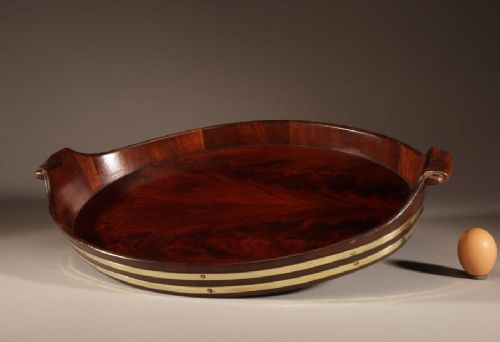
A brass handle tray brings together sturdy metallic grips and finely worked wooden or papier-mâché bases, serving as both a functional item for tea and a decorative object. When you search for this phrase, you will find examples spanning from the Georgian and Regency eras through the Edwardian period and nineteen hundred.
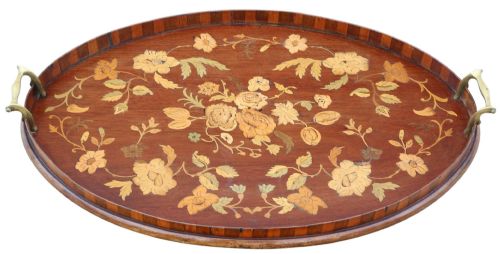
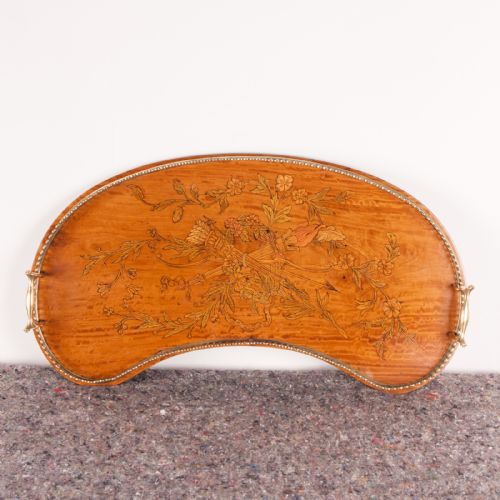
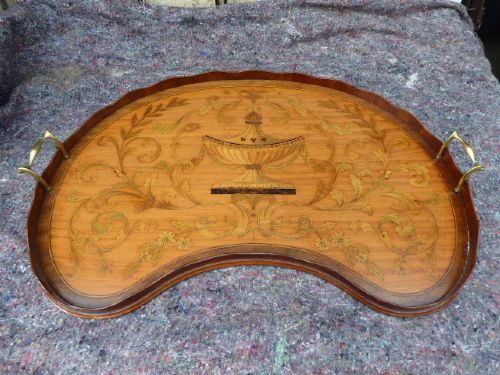
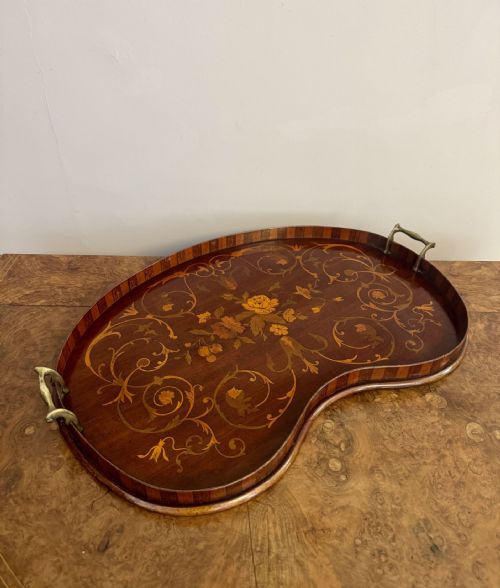
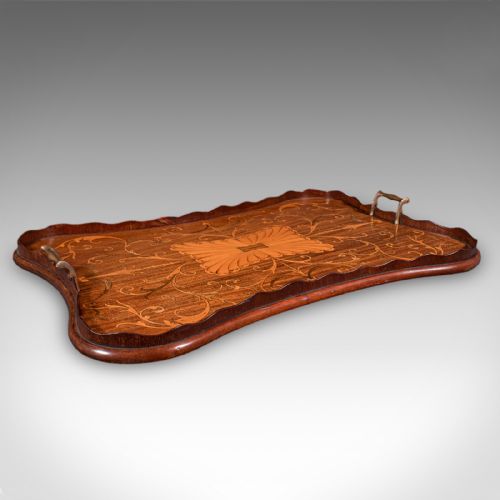
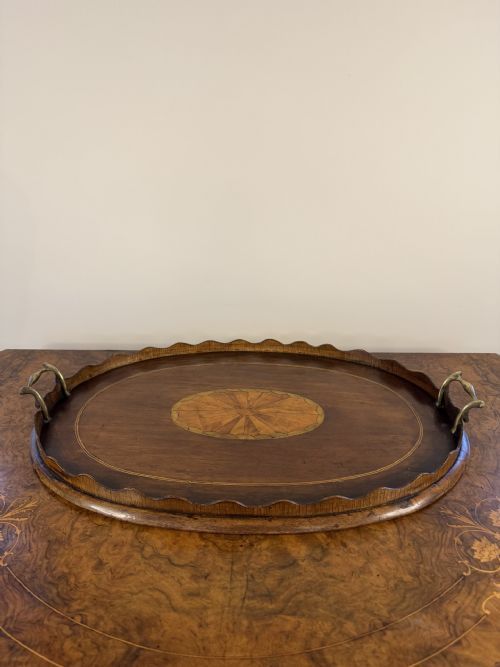
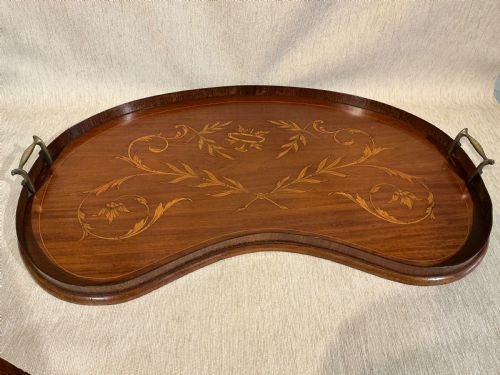
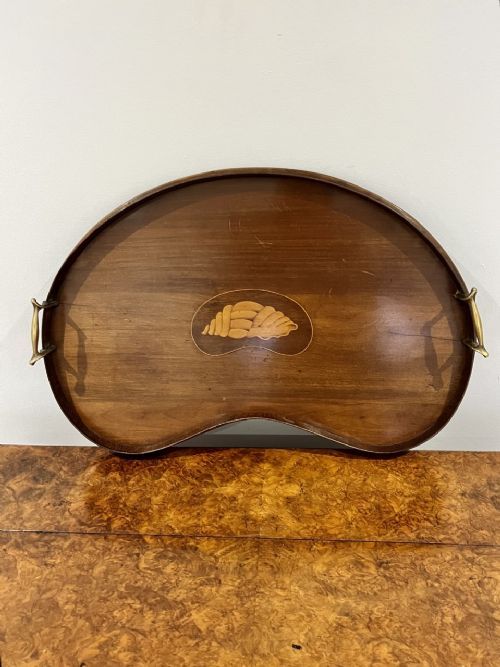
The most common forms on this page are mahogany tea trays and serving trays, often shaped in ovals or kidney outlines with inlaid decoration. Pieces range from large serving formats to smaller cutlery trays and glass-fitted designs.
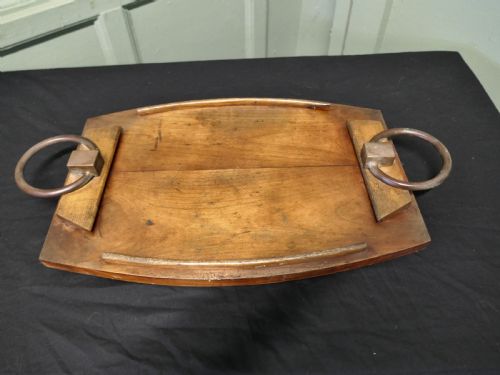
Origins represented in the evidence include British cabinet-making traditions alongside Indian brass-inlaid rosewood and copper serving wares with whiplash handles. Buyers encounter both gallery-rimmed tea trays and flat serving surfaces fitted with secure metal handles.
How they were made
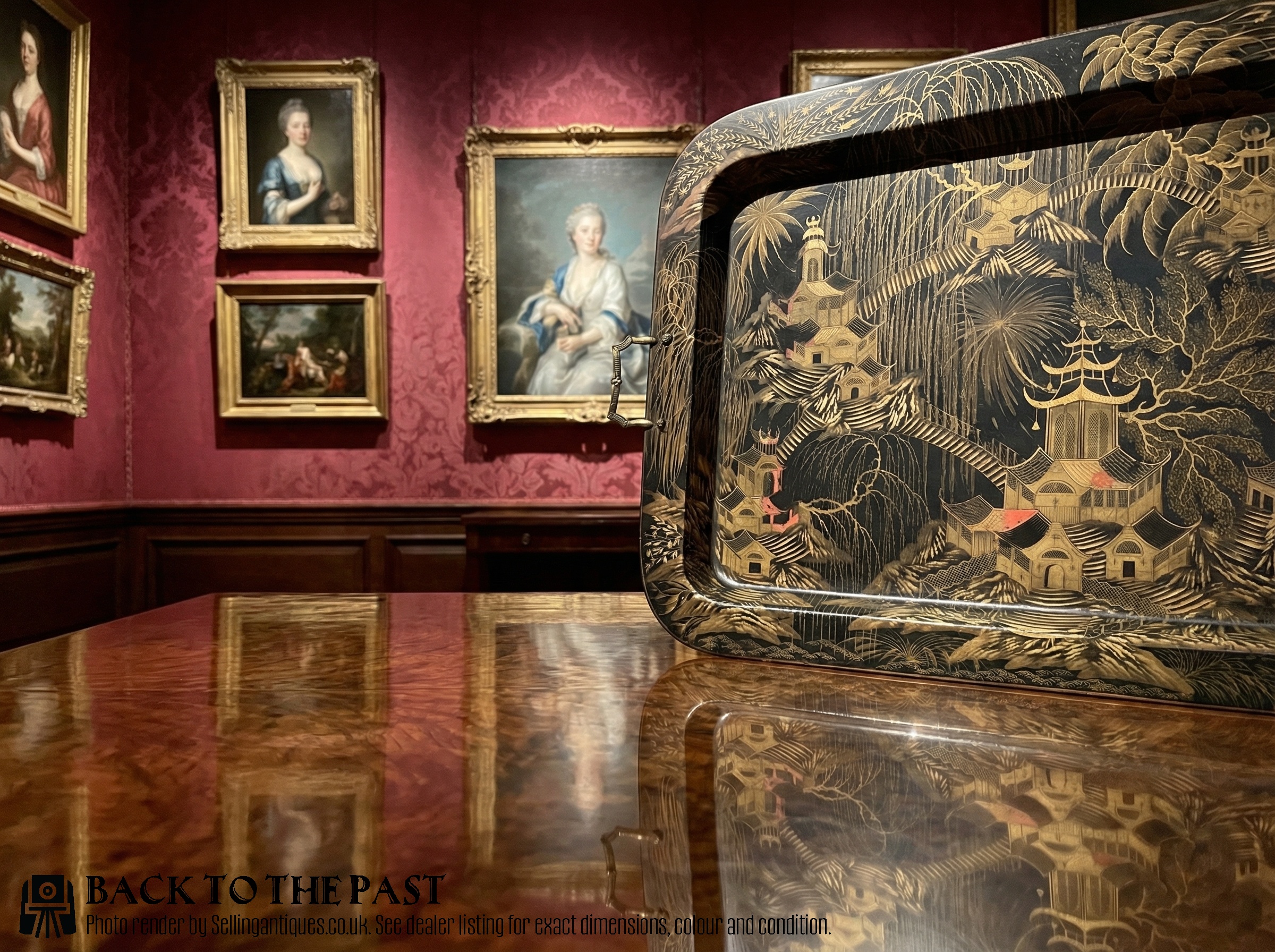
Craftsmen built these trays using solid timbers such as mahogany and rosewood, frequently enhanced by satinwood inlay, marquetry, and delicate banding. Papier-mâché and lacquer also appear, providing smooth, durable surfaces finished with gold leaf accents.
Metal elements involve cast or engraved brass, shaped into secure handles or structural galleries that border the tray rim. Artisans integrated these brass mounts firmly into the wooden or papier-mâché foundations to withstand regular lifting and serving.
Retail Price Guide 2026
Typical UK retail prices for brass handle tray, calculated from the Sellingantiques database of over a million retail prices indexed since 2003. This retail price guide relies exclusively on Sellingantiques data; no external sources or auction records are used, so the figures do not describe the wider market.
Listings feature trays spanning the Georgian, Regency, and Edwardian periods, constructed in mahogany, rosewood, papier-mâché, and copper.
What varies in quality
Quality rests in the precision of the woodwork and the crispness of the inlay, where tighter marquetry and well-figured mahogany distinguish finer examples from plain alternatives. The integration of the brass handles and galleries also reveals the maker's hand, with heavier, securely fastened mounts demonstrating superior construction.
Surface finish dictates visual appeal, from glossy lacquer on papier-mâché bases to polished wood that highlights the grain and satinwood banding. Pieces featuring detailed hand-engraving or specialised maker attribution command greater interest among collectors.
Clay·WMF Jugendstil
The Brass Handle Tray Glossary
- Marquetry
- Elaborate decorative veneer arranged in pictorial or geometric patterns across the tray surface. It requires precise cutting and fitting of various wood types.
- Papier-mâché
- A composite material made from paper pulp or layers of paper bound with glue, then lacquered and dried. It forms a smooth, lightweight base suited for decorative painting and gold leaf.
- Gallery
- A raised pierced or solid border fitted around the edge of a tray to prevent items from sliding off. These structures frequently incorporate brass railings and matching handles.
- Band
- A decorative border of contrasting wood veneer running along the outer edge of a tray. This framing technique emphasises the oval or rectangular outline of the piece.
Frequently Asked Questions
What periods do these trays come from?
The pieces span from the late Georgian and Regency eras through the Edwardian period and nineteen hundred. Each era brings distinct materials, from early mahogany and papier-mâché to later inlaid tea trays.
Cabinet-makers adapted styles across these decades, shifting from simple butler formats to decorative Edwardian serving trays with detailed brass galleries.
How were these trays originally used?
They served primarily for carrying tea sets, glassware, or cutlery in domestic settings. Larger formats handled full service, while smaller versions acted as desktop organisers or butler's companions.
The inclusion of sturdy brass handles allowed servants or hosts to transport heavy items safely across dining and drawing rooms.
How do I care for a wooden or lacquered tray?
Keep wooden and papier-mâché surfaces away from direct heat and excessive moisture to protect the polish and inlay work. Dust gently with a dry cloth and avoid harsh chemical cleaners.
Brass handles can be left with their natural aged patina or polished lightly with a suitable metal cleaner, taking care not to stain the surrounding wood or lacquer.
How can I tell a Georgian tray from an Edwardian one?
Georgian and Regency pieces often rely on robust mahogany construction, sometimes combined with papier-mâché and lacquer or specific maker attribution like Clay. They tend to feature restrained lines and utilitarian focus.
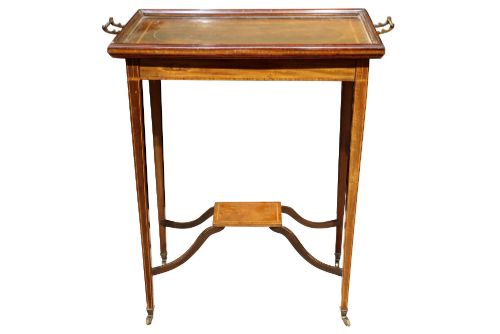
Edwardian examples frequently showcase lighter satinwood inlay, oval or kidney shapes, and decorative brass galleries. The decorative emphasis shifts toward refined drawing-room presentation.