




Oval Wooden Tray
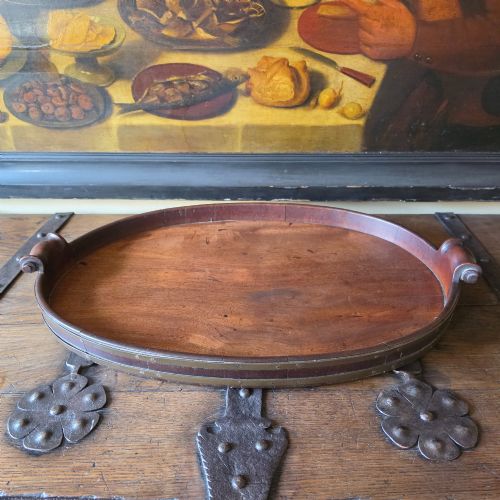
An oval wooden tray is a practical serving piece or table top that brings rich timber grain and period craftsmanship into a room.
Oval Wooden Tray
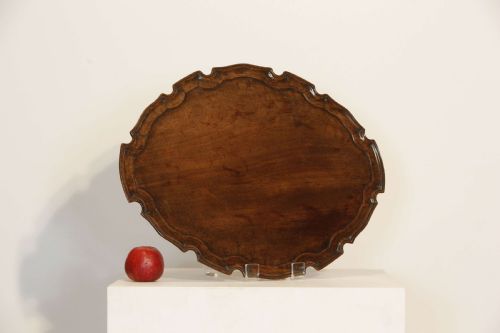
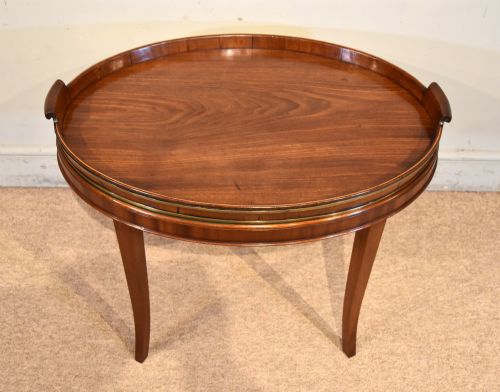
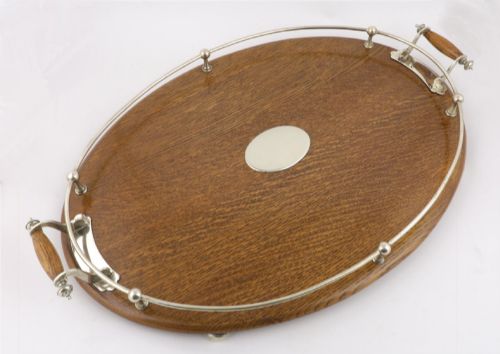
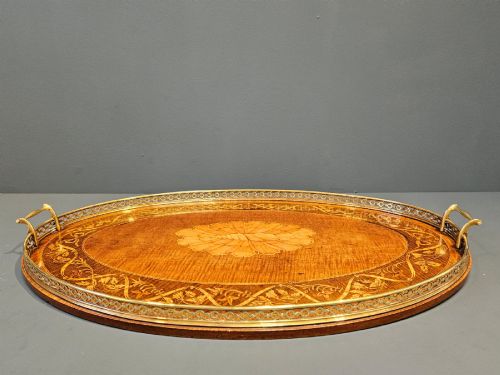
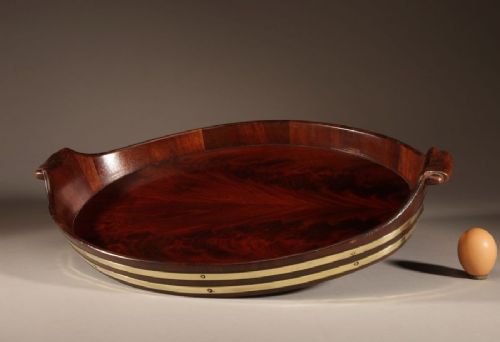
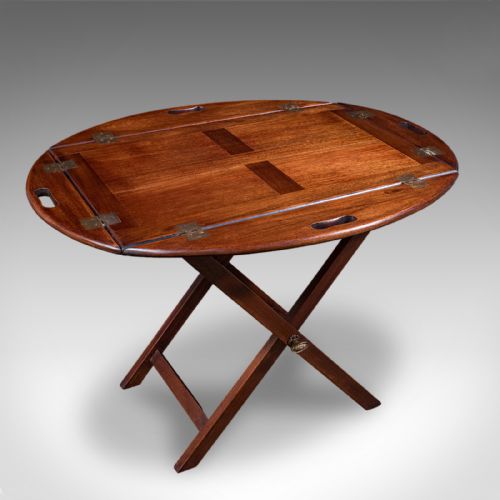
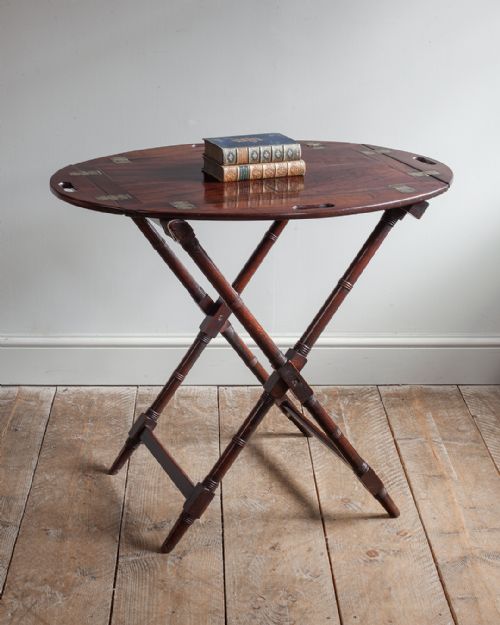
An oval wooden tray encompasses everything from small tea servers and galleried display pieces to large butler trays mounted on folding stands. When you search for an oval wooden tray, you meet items spanning the Georgian, Victorian, and Edwardian eras, constructed primarily from rich timbers.
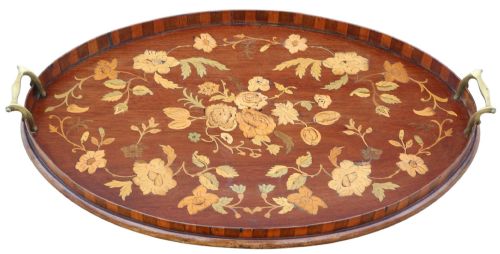
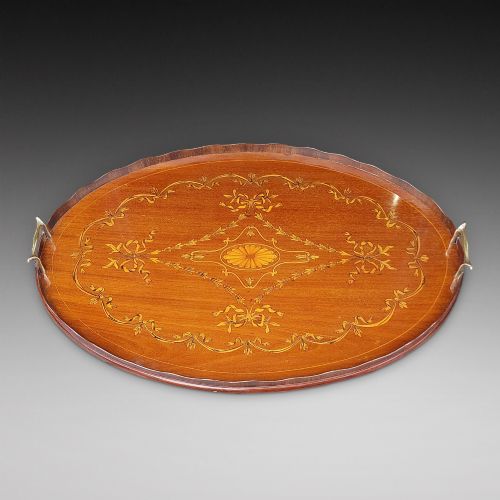
The versions most common on this page are mahogany serving trays featuring satinwood inlay or marquetry, alongside freestanding butler tray tables designed for occasional use. Pieces range from simple eighteenth-century examples to later revival styles and ingenious folding coffee tables.
Materials and Construction Techniques
Cabinet makers relied heavily on mahogany, oak, and walnut, often applying delicate satinwood inlay and marquetry to create intricate borders and central motifs. Many items incorporate brass handles, galleries, or coopered construction to ensure structural strength.
Oyster veneering and fine edge gallerying add texture and depth to the timber surface, while specialised stands utilise folding wooden frames or brass hinges to support the heavy serving tops.
Oval Wooden Tray Retail Price Guide 2026
Typical asking prices for oval wooden tray among the pieces listed under this phrase on Sellingantiques today, from the lower quarter to the upper quarter. They describe what is for sale here now, not the wider market.
One remarkably compact piece manages to be both tiny and inlaid, proving that miniature serving ambitions existed alongside grand ones.
Judging Quality in Period Trays
Quality rests in the crispness of the marquetry inlay, the retention of original brass fittings, and the depth of the timber grain rather than any single decorative flourish. Superior pieces display seamless veneer work and robust framing that has survived decades of heavy lifting.
Simpler nineteenth-century items often rely on plain mahogany boards with minimal detailing, whereas fine Georgian and Edwardian examples showcase meticulous hand-cut stringing and balanced proportions.
The Oval Wooden Tray Glossary
- Marquetry inlay
- Decorative patterns formed by fitting small pieces of veneer into a prepared wood surface. This technique creates detailed floral or geometric motifs across the tray floor.
- Butler tray
- A removable wooden tray with hinged or fixed sides, traditionally used for carrying service items. It often pairs with a folding X-frame stand.
- Galleried
- Having a raised border or railing around the edge to prevent items from sliding off. This feature is common on tea and serving trays.
- Oyster veneering
- Cutting branches obliquely to produce small, circular cross-section patterns in the wood grain. It creates an eye-catching figure across Edwardian surfaces.
- Coopered
- Constructed from curved wooden staves joined tightly together, similar to barrel-making. This technique appears on specialised circular and oval vessels.
Oval Wooden Tray: Frequently Asked Questions
How do I use an oval wooden tray today?
These trays function well on coffee tables for holding books and decorative objects, or as intended for serving drinks.
Placed on folding stands, they easily convert into stable occasional tables for small living spaces.
How do I distinguish Georgian from Edwardian trays?
Georgian pieces generally feature heavier timber construction with restrained stringing and deep, untreated mahogany patination.
Edwardian items often display lighter satinwood veneer, elaborate marquetry, and brighter brass gallery railings.
Are tray tables sturdy enough for daily use?
Most butler trays on folding stands are built to bear significant weight from heavy ceramic and silver service items.
Care should be taken with antique hinges and delicate veneer edges during frequent repositioning.
What woods were commonly used?
Mahogany remains the dominant timber across the nineteenth and eighteenth century examples on this page.
Satinwood, oak, and walnut appear frequently, particularly when makers incorporated contrasting inlay work.