

Mahogany Tea Tray
These mahogany tea trays bring structured elegance to a room, offering a functional surface rooted in centuries of fine cabinet-making.
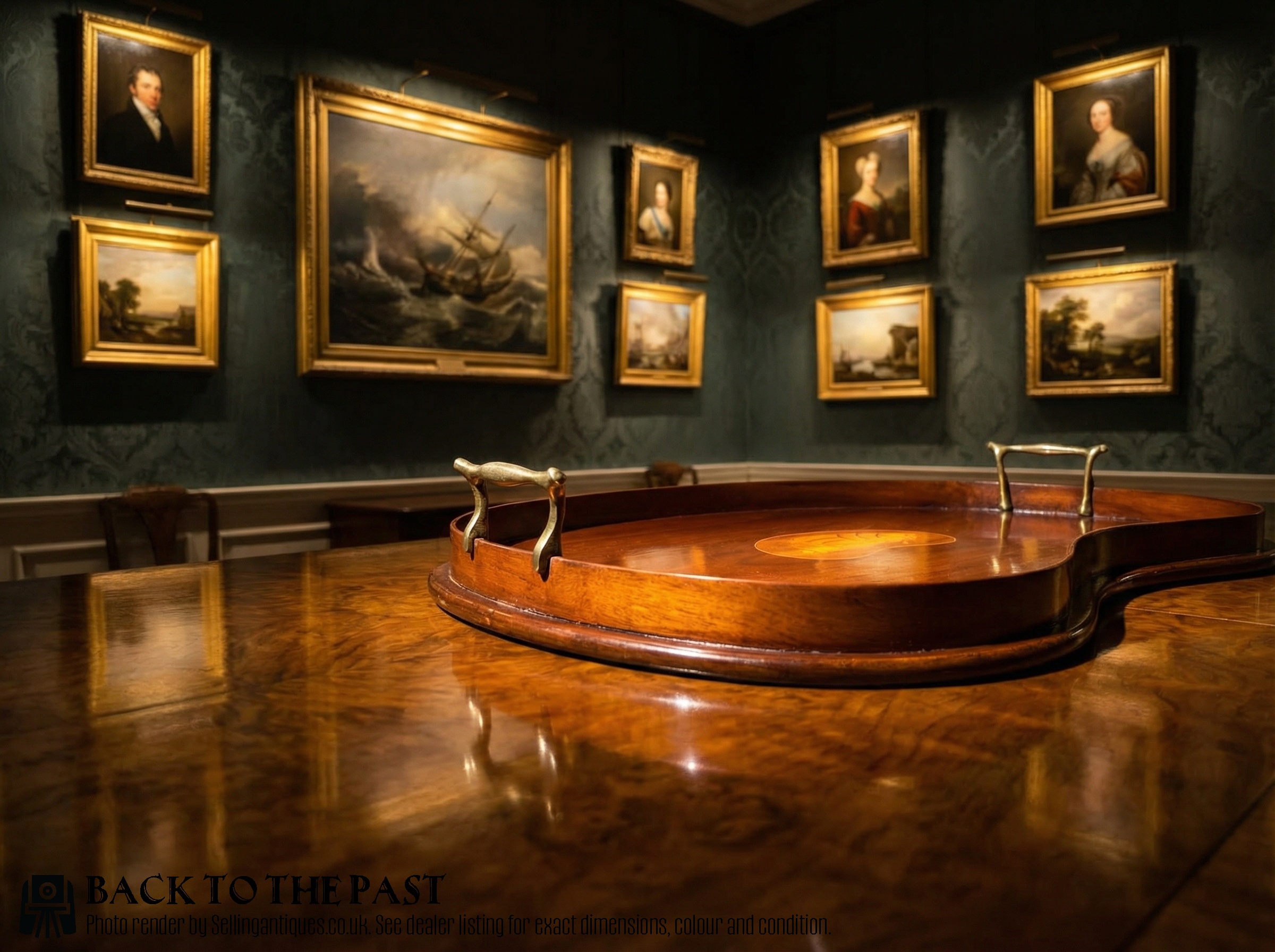
Mahogany Tea Tray
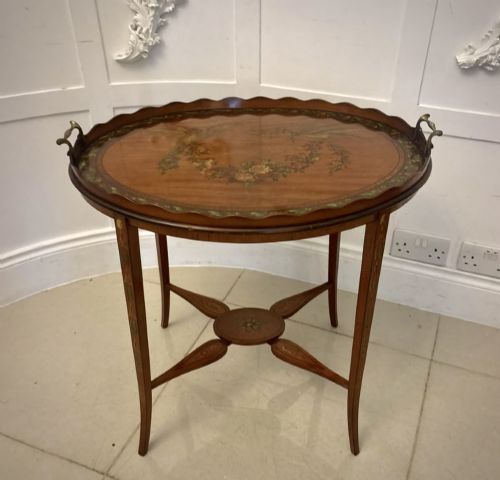
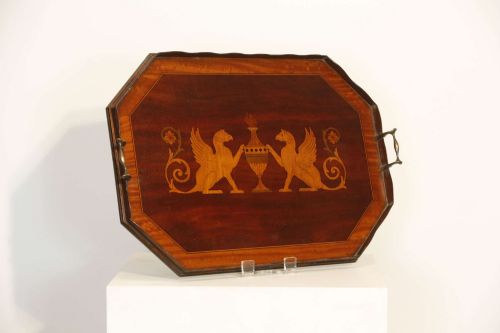
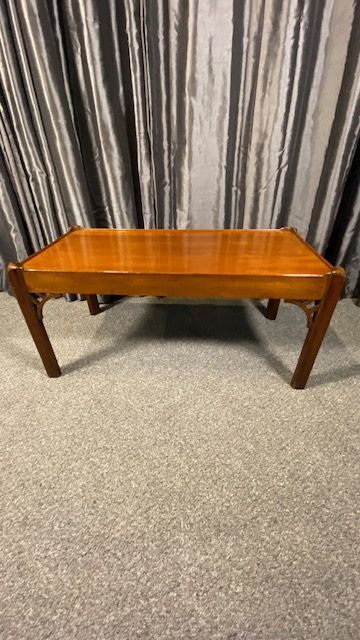
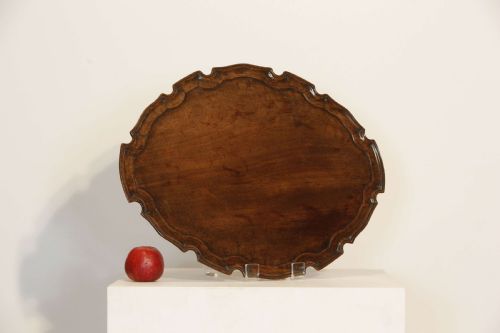
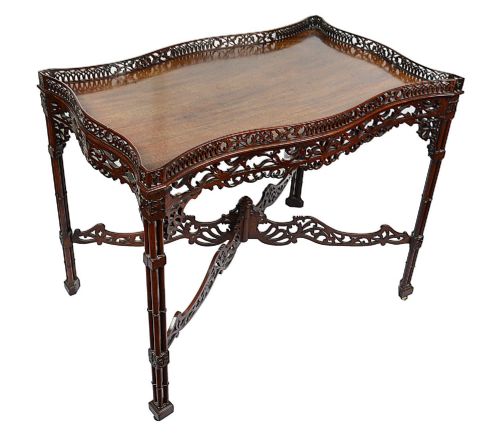
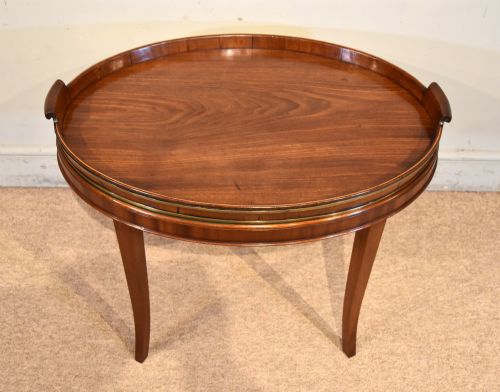
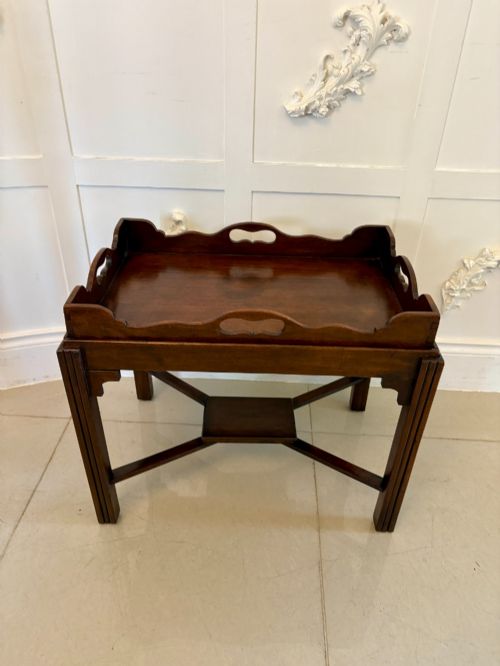
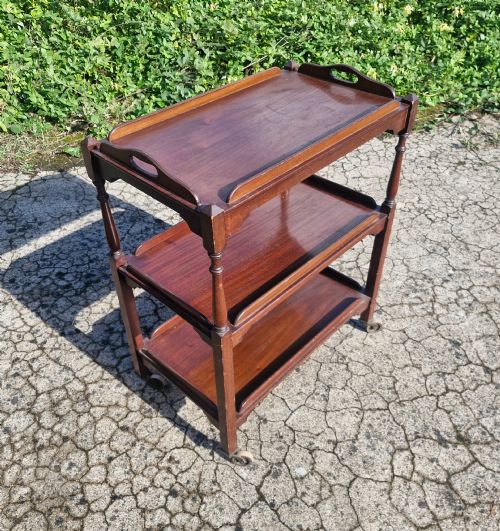
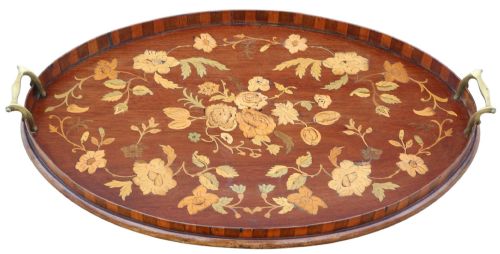
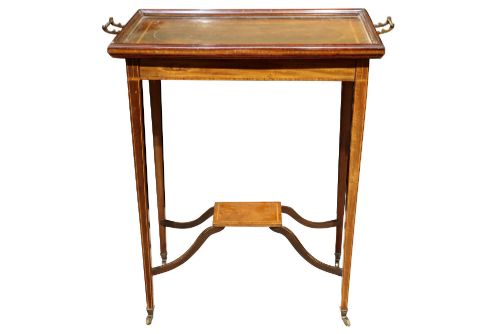
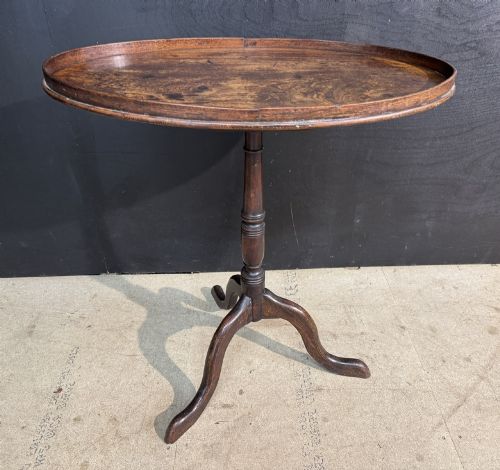
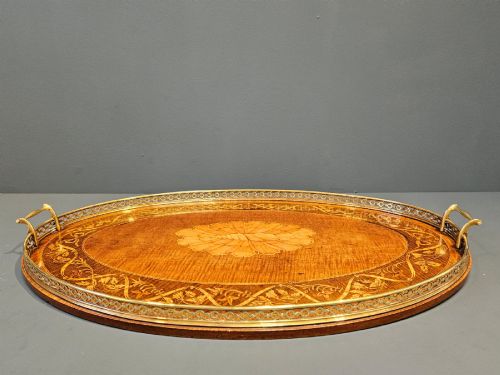
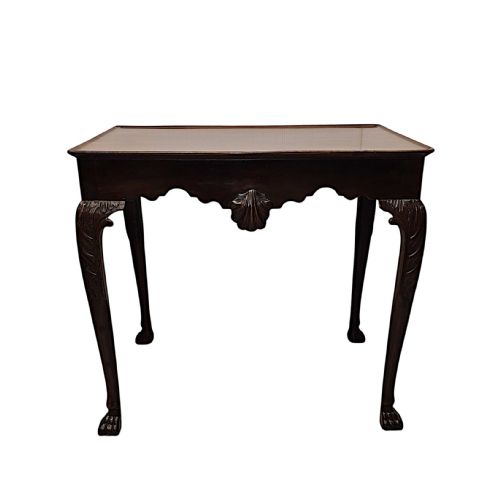
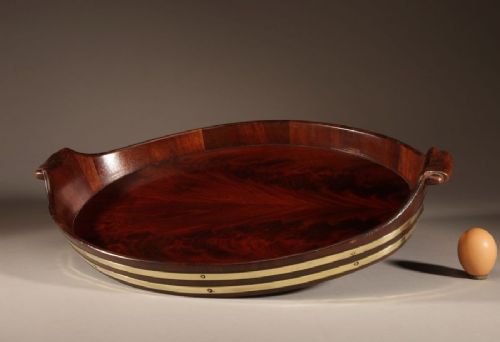
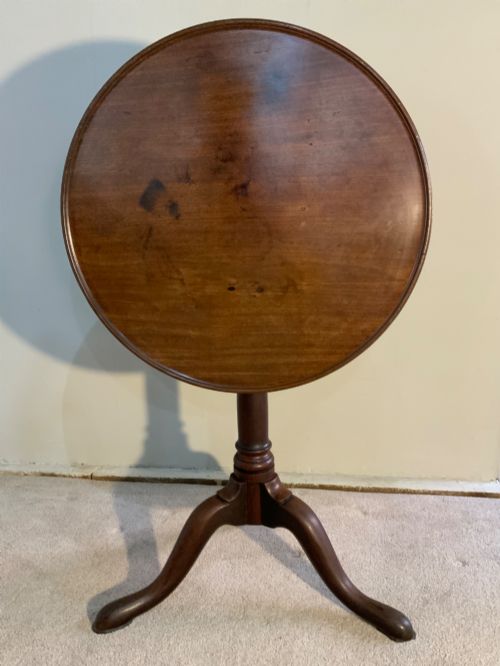
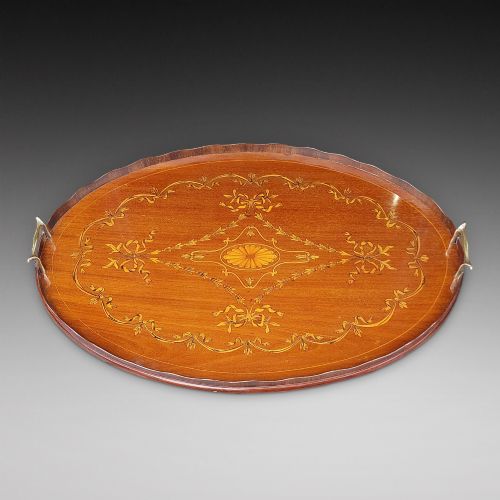
The domestic forms recorded on this page range from portable serving platters with brass handles to galleried trays and dedicated tray-top occasional tables. Edwardian and Victorian iterations often display delicate marquetry, while Georgian examples rely on deep timbers and raised edges to secure porcelain and silver vessels.
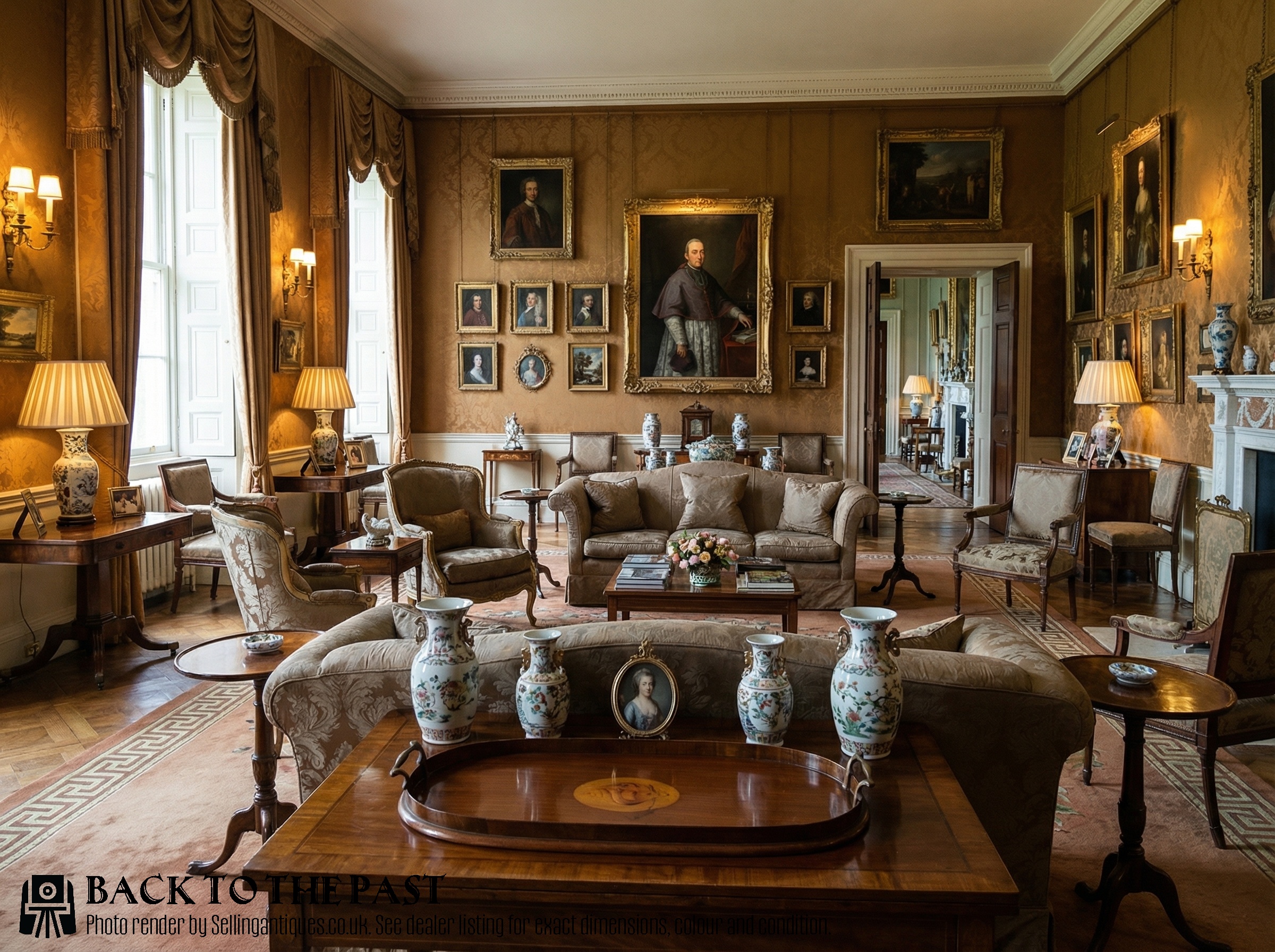
Materials and construction methods
The primary material is dense mahogany, frequently selected for its deep grain and stability, complemented by contrasting stringing in satinwood and boxwood. Artisans incorporated marquetry inlay to create central floral motifs and geometric borders across Edwardian and Victorian surfaces.
Structural integrity often depended on coopered construction for curved edges, alongside brass gallery rails and drop handles fixed firmly to the timber. Tilt-top mechanisms and tripod bases appear among the occasional tables, demonstrating the joinery typical of eighteenth and nineteenth-century workshops.
Mahogany Tea Tray Retail Price Guide 2026
Typical asking prices for mahogany tea tray among the pieces listed under this phrase on Sellingantiques today, from the lower quarter to the upper quarter. They describe what is for sale here now, not the wider market.
Cartographer's trays feature European map motifs, turning afternoon tea into an inadvertent geography lesson.
Distinctions in execution and finish
Quality rests in the precision of the inlay and the depth of the figured mahogany grain rather than decorative elaboration alone. Finer pieces show crisp hand-cut marquetry and tightly fitted dovetails or corner joints that withstand the weight of loaded silver services.
The balance of a galleried edge and the tactile weight of brass fittings separate standard production from superior examples. Secondary timbers beneath the surface and the crispness of carved mouldings further indicate the maker's hand and period of origin.
Gillows
The Mahogany Tea Tray Glossary
- Gallery
- A raised wooden or brass border surrounding the perimeter of a tray to prevent items from sliding off. It is pierced or solid depending on the period style.
- Marquetry
- Decorative veneer work arranged in pictorial or patterned designs using various coloured woods. Craftsmen cut these pieces precisely to fit flush into the mahogany ground.
- Butler's Tray
- A portable serving tray with hinged or fixed sides, frequently paired with a folding stand. These pieces originated for domestic service in large households.
- Sheraton Revival
- A late nineteenth and early twentieth-century style inspired by the furniture designs of George Sheraton. It uses light satinwood inlay against dark mahogany.
Mahogany Tea Tray: Frequently Asked Questions
How were mahogany tea trays used?
These trays served afternoon tea and carried porcelain services from the kitchen to the drawing room. They were also placed onto folding stands to create temporary side tables during social gatherings.
In daily domestic life, they provided a stable surface for decanters, glasses, and letters, keeping household items organised and portable.
Are these trays suitable for daily use?
Original antique trays require care when handling liquids and heavy objects to protect the antique polish and delicate inlay. Placing felt pads underneath heavy items helps preserve the timber surface.
Many owners use them as stationary display pieces on coffee tables or sideboards rather than for active serving.
How do I distinguish Georgian from Edwardian trays?
Georgian trays typically exhibit heavier timber, simpler brass handles, and subtle moulding with minimal inlay. They rely on the natural grain of Cuban or Honduras mahogany for visual depth.
Edwardian interpretations frequently feature lighter construction, extensive satinwood marquetry, kidney shapes, and refined stringing inspired by earlier revival styles.