

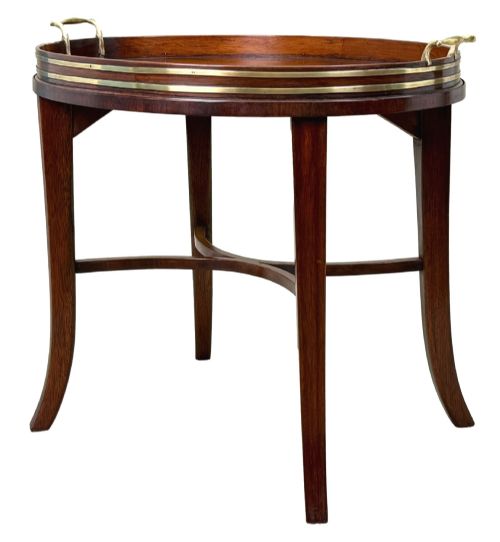


Oval Mahogany Tea Tray
An oval mahogany tea tray brings tactile warmth and refined proportion to a room, serving as both a functional piece and a display surface.
Oval Mahogany Tea Tray
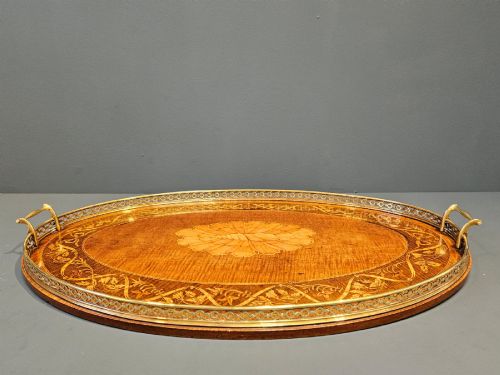
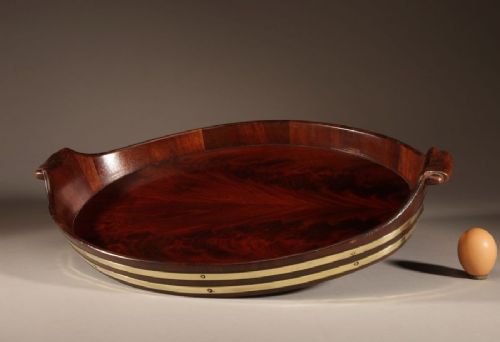
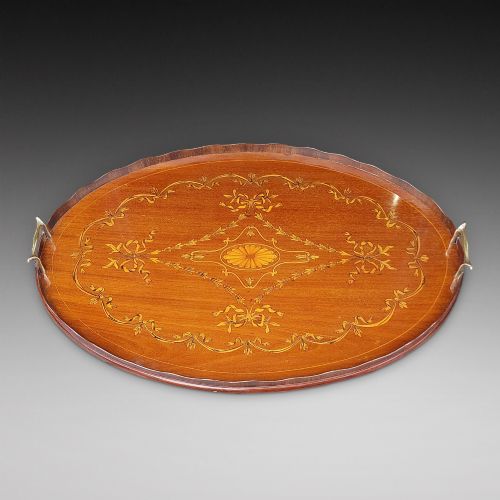
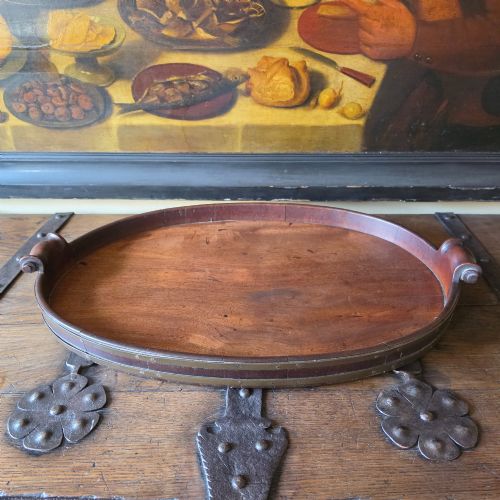
An oval mahogany tea tray is a handled or galleried serving piece shaped in a smooth curve, designed for carrying cups and pots or for presentation upon a surface. The pieces catalogued here span several periods, most frequently appearing in Georgian, Victorian, and Edwardian iterations.
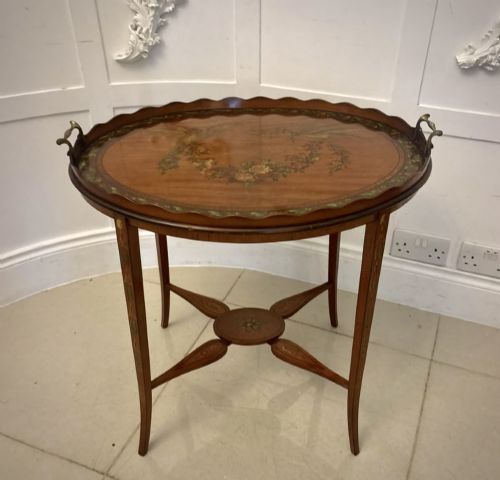
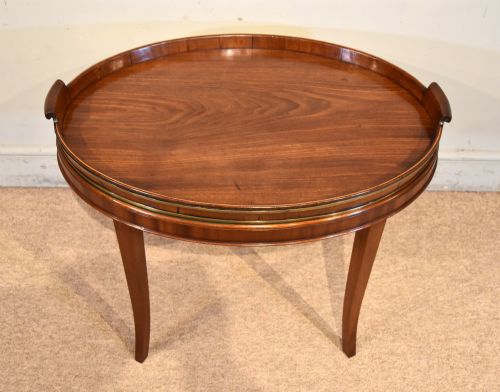
The form stretches from simple serving boards to elaborate examples set upon dedicated folding stands, sometimes repurposed later in life as low tables. Collectors encounter plain timber surfaces alongside those embellished with contrasting wood details and metal mounts.
While many remain standalone serving implements, others integrate into larger furniture configurations such as etageres and tray top occasional tables. The selection ranges from compact miniature items to large pieces capable of carrying substantial service sets.
How they were made
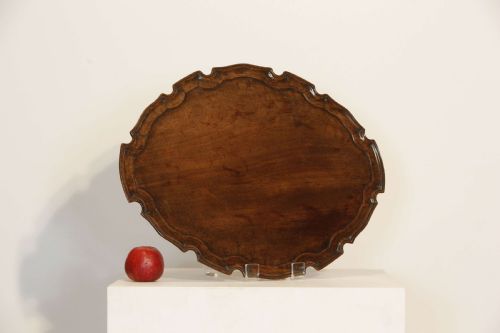
Makers utilised solid mahogany and figured veneers, often selecting the timber for its deep grain and rich colour before shaping the curved perimeter. Raised edges were achieved through carved galleries, coopered construction, or bentwood techniques designed to secure the contents during transit.
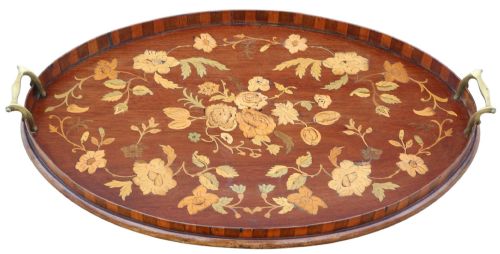
Decoration relied on contrasting woods, employing satinwood inlay and intricate marquetry to form geometric borders or central motifs. Brass was frequently incorporated for handles, gallery rails, and bound edges, adding structural definition to the wooden framework.
Oval Mahogany Tea Tray Retail Price Guide 2026
Typical asking prices for oval mahogany tea tray among the pieces listed under this phrase on Sellingantiques today, from the lower quarter to the upper quarter. They describe what is for sale here now, not the wider market.
The listings combine standard serving trays with pieces mounted on stands, reflecting a long history of converting portable trays into low occasional furniture.
What varies in quality
The standard of a tray rests on the crispness of the timber selection and the precision of the joinery where the curved walls meet the baseboard. Finer examples display meticulous attention to the grain alignment and seamless integration of contrasting inlay.
The handling of the edges, whether carved from the solid wood as a gallery or applied as a separate rail, dictates the overall heft and tactile appeal. Secondary woods used for the underside and framing similarly reveal the care taken by the maker.
The Oval Mahogany Tea Tray Glossary
- Galleries
- Raised wooden rims encircling the edge of a tray to prevent items from sliding off during transport. These borders can be pierced, fret-cut, or moulded from solid timber.
- Marquetry
- Decorative patterns formed by fitting together thin veneers of various coloured woods into a prepared surface. This technique creates pictorial or geometric designs on the tray bed.
- Etagere
- A set of open shelves or tiered surfaces used for display, occasionally constructed with a removable tray as the upper tier. These pieces combine serving utility with display furniture.
- Coopered
- Constructed using vertical wooden staves fitted together with curved sides, similar to barrel-making. This method provides robust strength to shaped trays and containers.
- Satinwood
- A lustrous, hard timber with a yellowish colour used extensively for contrasting inlay work on darker mahogany grounds. It brings brightness and linear definition to geometric borders.
Oval Mahogany Tea Tray: Frequently Asked Questions
How were oval mahogany tea trays used?
These trays served primarily to transport tea services, decanters, and glassware from the kitchen to reception rooms. Servants carried them by integrated handles or side grips before placing them on tables for guests.
Over time, many trays transitioned from kitchen implements to permanent display surfaces. Placed upon folding stands or low bases, they functioned as occasional tables for holding books or decorative objects.
Can I use an antique tray for serving?
Many solid examples remain structurally robust enough for light serving duties, provided the timber and joints are stable. Care must be taken to protect antique finishes from moisture and heat damage.
Most collectors prefer to protect the surface with glass inserts or limit them to dry display use. This preserves the original polish and delicate inlay work from accidental spills and wear.
How do I tell Georgian from Edwardian trays?
Georgian pieces generally exhibit heavier timber construction, simpler mahogany surfaces, and hand-cut joinery consistent with eighteenth-century workshop practices. Neo-Classical painted scenes and early brass mounts frequently appear in this bracket.
Edwardian items often feature lighter satinwood inlay, crisp marquetry, and a paler finish reflecting the Sheraton Revival style popular at the turn of the twentieth century. These later pieces also appear frequently mounted on dedicated folding stands.
What is a tray top table?
A tray top table is a piece of furniture designed with a removable or fixed serving tray serving as the top surface. The supporting stand often folds flat for easy storage when not in use.
These combination pieces became particularly popular during the Edwardian period. They allowed the upper section to double as a functional serving tray and a stable side table.