
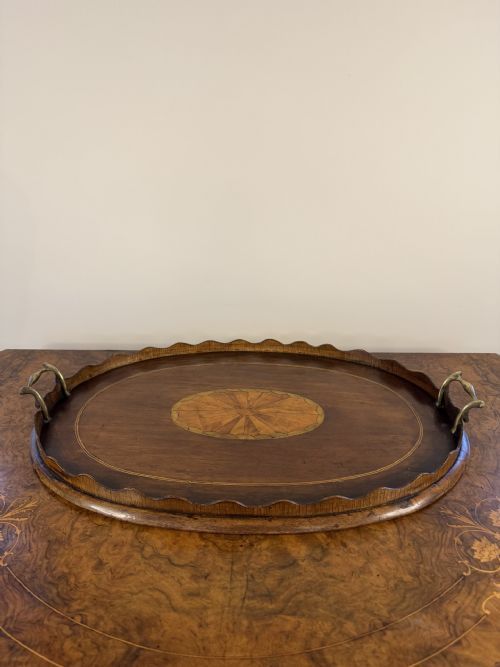
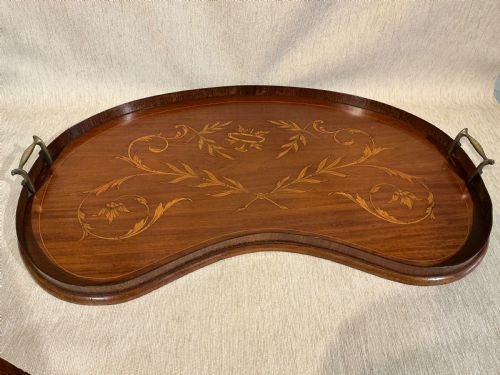


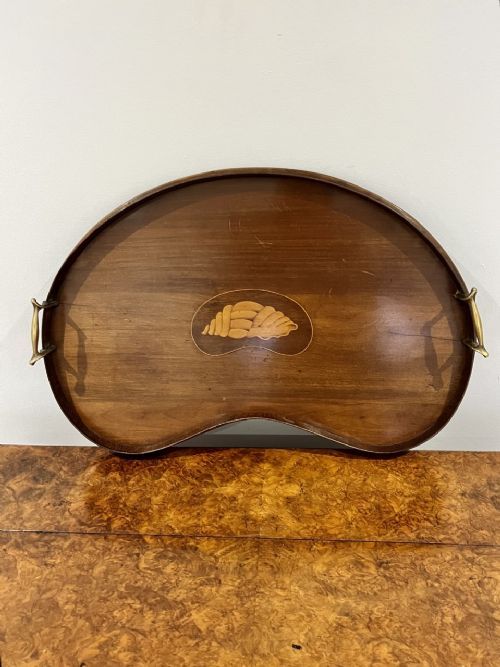


Marquetry Drinks Tray
A marquetry drinks tray brings together polished cabinet timbers and intricate wood-inlay craft to serve afternoon tea or hold decanters with distinct period elegance.
Marquetry Drinks Tray
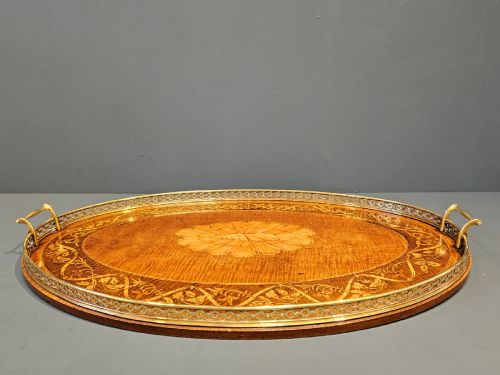
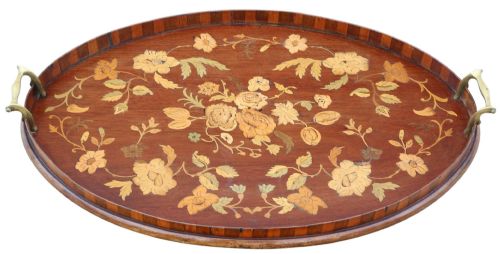
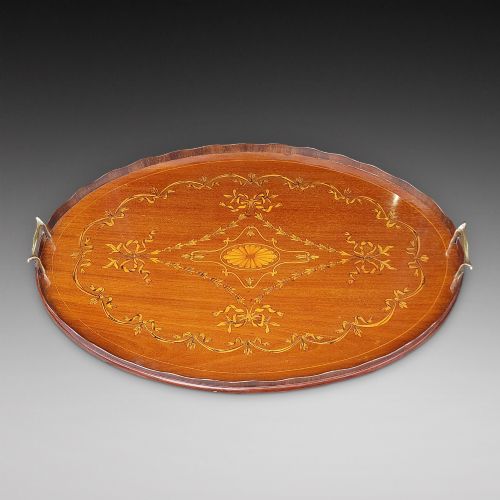
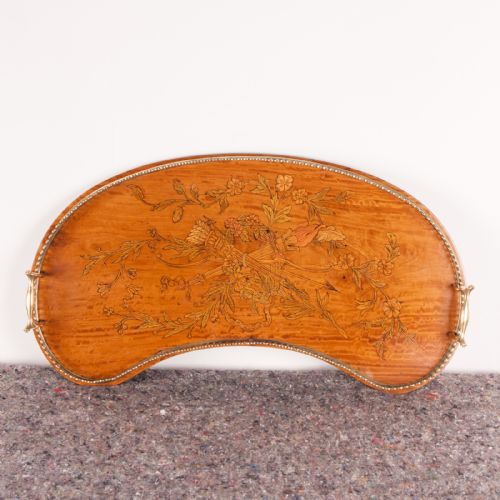
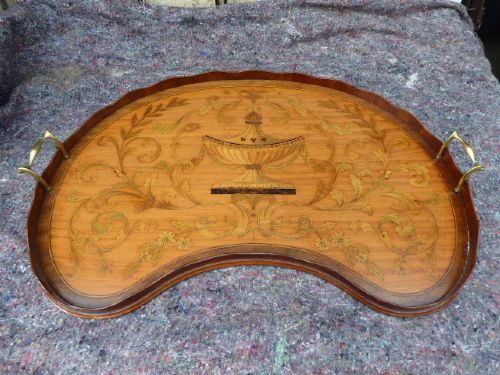
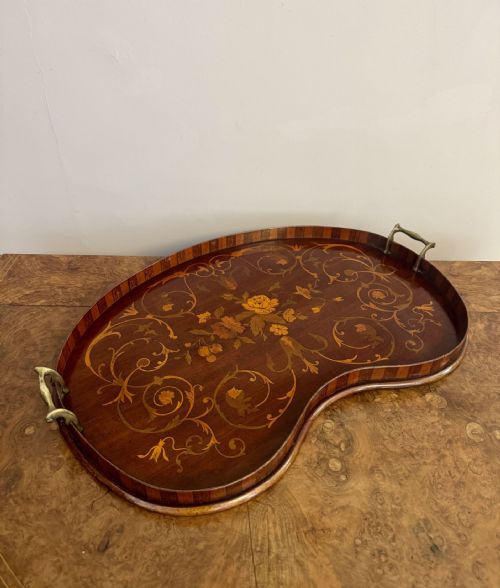
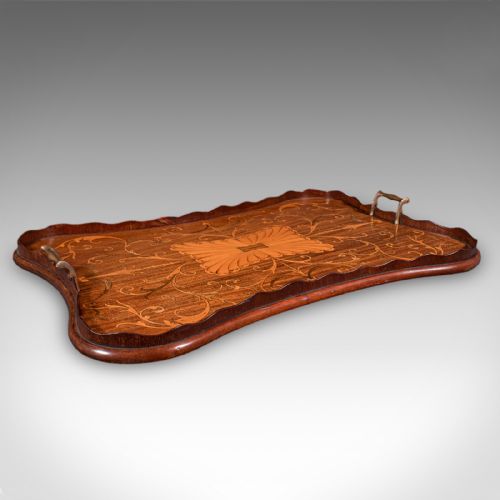
A marquetry drinks tray is a functional serving piece defined by decorative wood veneers arranged in pictorial or geometric patterns across the base. These items emerge primarily from the Victorian and Edwardian eras, alongside select Georgian and nineteenth-century examples.
The most common forms on this page include oval and kidney-shaped serving trays constructed from mahogany or satinwood. Many examples incorporate brass or silver-plated galleries and side handles for practical utility.
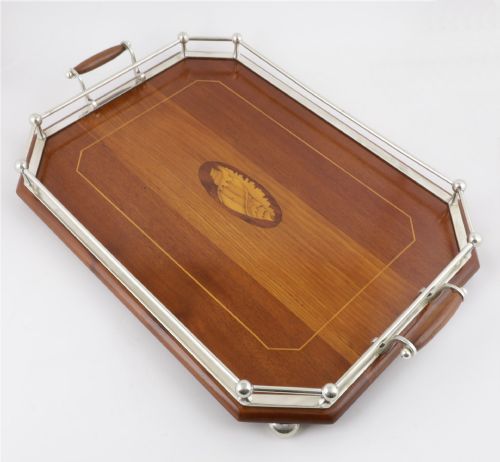
Some pieces appear fitted to stands or tables, transforming a portable serving surface into an occasional table or etagere. The physical format ranges from large octagonal platters down to unusual miniature ovals.
Materials and construction
Cabinetmakers built these trays using solid primary timbers such as mahogany, satinwood, and kingwood, often applying contrasting veneers of boxwood and burr yew for the inlay work. Marquetry inlay involves cutting thin slices of different coloured woods and fitting them together like a puzzle to form detailed motifs.
Metalwork plays a structural and decorative role, with brass and silver-plated galleries secured around the perimeter to retain glassware. Turned wooden handles and raised side rails complete the assembly of the more substantial serving pieces.
A miniature oval tray offers precise marquetry on a tiny scale, proving that grand tea traditions sometimes come in pocket-sized formats.
Judging the work
Quality rests upon the precision of the veneer cutting and the complexity of the inlaid motifs. Finer trays display tight joints between contrasting wood species and crisp execution of floral or classical patterns.
The choice of primary timber and secondary materials dictates the tier of the piece. Dense, well-figured mahogany and richly toned satinwood combined with substantial brass or silver-plated galleries distinguish the superior examples.
Edwards and Roberts
The Marquetry Drinks Tray Glossary
- Marquetry inlay
- The art of applying fitted pieces of wood veneer to a structure to create decorative pictorial designs. This technique distinguishes standard timber surfaces from highly ornate serving boards.
- Gallery
- A raised metal or wooden border fitted around the edge of a tray to prevent items from sliding off. These fixtures often utilise brass or silver plate.
- Kidney-shaped
- A curved, concave furniture form designed to fit comfortably against the body. Trays adopting this outline are typically Edwardian.
- Satinwood
- A durable, yellow-toned exotic hardwood prized for its lustrous grain. Cabinetmakers utilised it extensively for polished tray bases and inlaid details.
- Etagere
- A piece of furniture featuring multiple tiers for display or serving. Certain examples incorporate removable glass or wooden trays.
Marquetry Drinks Tray: Frequently Asked Questions
How do I clean a marquetry drinks tray?
Dust the surface gently with a dry, soft cloth to protect the delicate wood veneers and inlay. Avoid liquid polishes and excessive moisture, which can damage the antique polish and lift the veneer.
For routine maintenance, a soft brush clears debris from around brass galleries and handles. Keep the wood away from direct sunlight and heat sources to prevent the timber from warping or splitting.
Are these trays sturdy enough for daily use?
Most pieces are constructed from solid timbers like mahogany and satinwood, offering solid structural integrity for carrying lightweight items. However, delicate marquetry and silver-plated galleries require careful handling during transport.
Many collectors prefer to display these items on stands or side tables rather than subjecting them to heavy practical service. Using coasters protects the historic veneer surface from moisture rings and drink condensation.
How do I distinguish Edwardian trays from Victorian ones?
Victorian trays often lean towards rich, dark mahogany with robust proportions and classical brass mounts. Edwardian pieces frequently showcase lighter satinwood surfaces, kidney contours, and Sheraton Revival neoclassical motifs.
Examining the construction style and secondary timbers helps clarify the period of manufacture. Late nineteenth-century transitional items may combine the heavy timber choices of the Victorian era with lighter aesthetic details.
What is a tray on stand?
A tray on stand combines a removable serving surface with a dedicated wooden support frame, creating an occasional table or etagere. This configuration allowed servants to bring refreshments into a room and set the tray down securely.
The stands typically feature matching timber and tapered legs consistent with Edwardian or nineteenth-century furniture design. Some configurations incorporate a second lower tier for additional storage.