



Satinwood Serving Tray
These satinwood serving tray pieces combine pale figured timber with classical inlay, offering a refined centrepiece for afternoon tea.
Satinwood Serving Tray
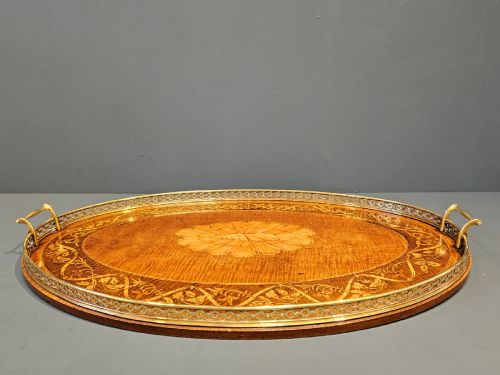
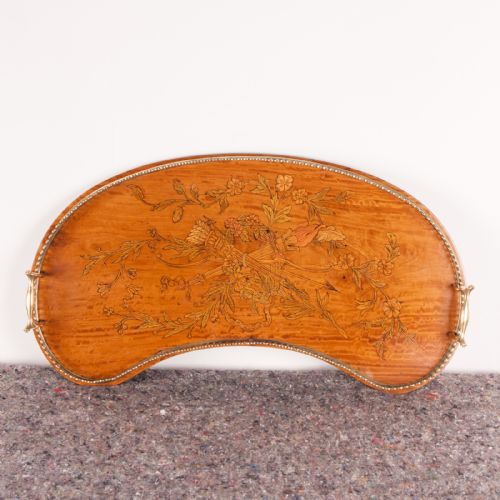
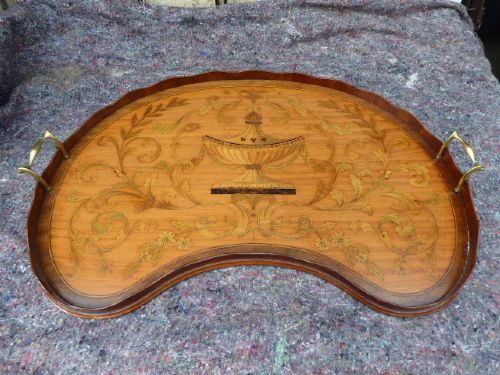
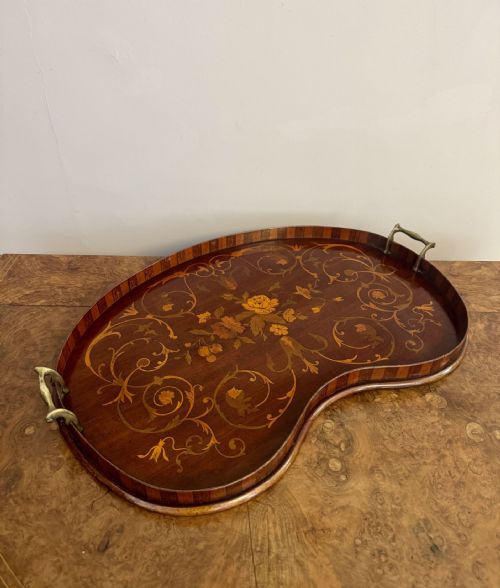
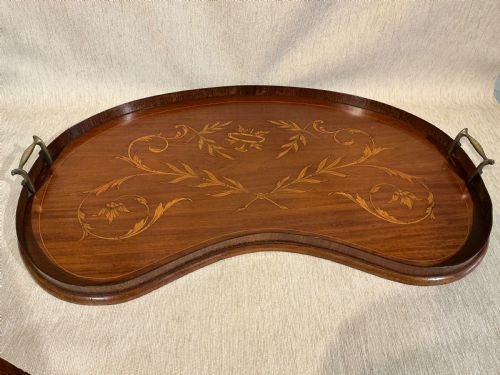
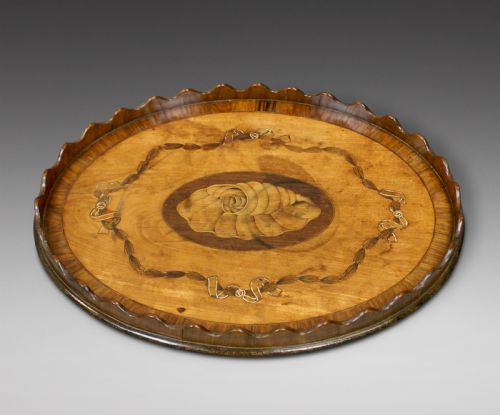
A satinwood serving tray combines light timber with contrasting inlay, appearing across Edwardian, Victorian, and eighteenth-century periods. These pieces include oval shapes, kidney-shaped designs, and rectangular serving forms.
The Edwardian era produces many examples on this page, often showing Sheraton Revival or Neoclassical Revival influence through delicate marquetry. Occasional tables and etagere forms also appear, alongside traditional handled trays.
Makers such as Edwards and Roberts represent the higher level of craftsmanship found in these furnishings. Other examples range from miniature oval trays to larger serving platters with brass galleries.
Materials and construction
Makers use satinwood and mahogany as primary timbers, often enhanced by wood veneer and marquetry inlay. Boxwood and brass frequently provide contrasting details and secure protective edges.
Marquetry inlay forms intricate decorative motifs across the timber surface, while brass galleries offer sturdy raised borders on selected trays.
Materials recorded across the selection include brass, mahogany, boxwood, and marquetry inlay.
Assessing quality
The precision and complexity of the marquetry work distinguish finer examples from simpler production. Crisp execution in the boxwood and mahogany contrasting lines indicates higher workshop standards.
The choice of figured satinwood veneers and the retention of original brass galleries influence the overall presence of the piece.
Edwards and Roberts
The Satinwood Serving Tray Glossary
- Satinwood
- A lustrous tropical hardwood prized for its pale golden colour and fine grain. It forms the smooth visual base of these decorated trays.
- Marquetry
- The art of applying small pieces of veneer to create pictorial or geometric designs on a wooden surface. This technique defines the visual style of revival pieces.
- Gallery
- A raised pierced metal or wooden border fitted around the edge of a tray. Brass versions provide both containment and structural definition.
- Sheraton Revival
- A late nineteenth and early twentieth-century design movement inspired by eighteenth-century neoclassical furniture. It brings classical symmetry and light inlay to Edwardian pieces.
- Etagere
- A piece of furniture consisting of a set of open shelves for displaying small objects. Several variations appear alongside traditional serving forms on this page.
Satinwood Serving Tray: Frequently Asked Questions
What periods do these trays come from?
The pieces span from the eighteenth century through the Victorian and Edwardian periods up to nineteen ten.
Edwardian examples often draw on Sheraton Revival styles, while earlier pieces show distinct neoclassical influence.
How were these trays used?
They served primarily for afternoon tea and entertaining guests in formal drawing rooms.
Some examples function on stands or as part of etagere and occasional table structures.
What materials make up the inlay?
Makers utilise boxwood, mahogany, and various wood veneers to create intricate marquetry patterns.
Contrasting timber tones produce floral or geometric motifs against the pale satinwood background.
Are brass galleries original?
Many Edwardian and Victorian trays incorporate pierced brass galleries around their perimeters.
These metal borders help secure items during service while framing the timber edge.