



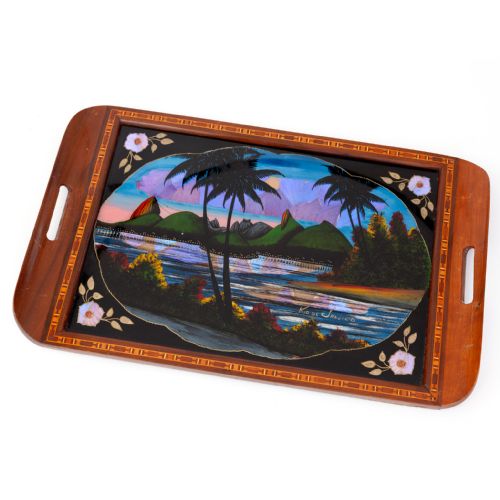


Marquetry Wood Tray
These marquetry wood tray pieces bring patterned veneers and fine timber to the table, offering a practical surface with decorative depth.
Marquetry Wood Tray
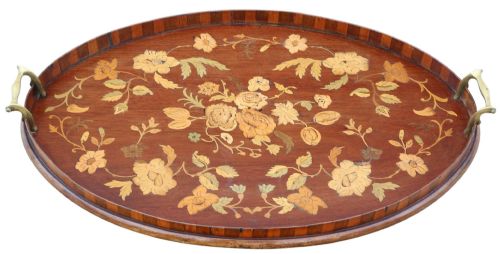
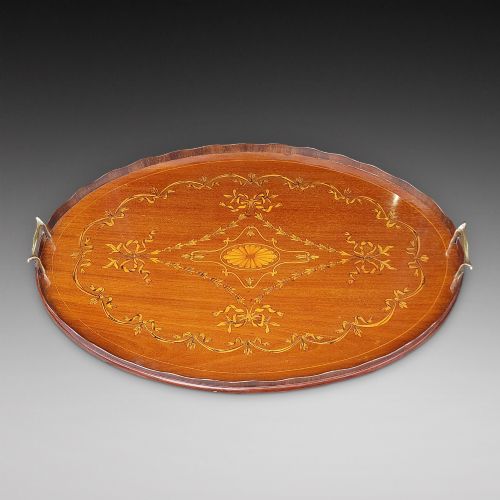
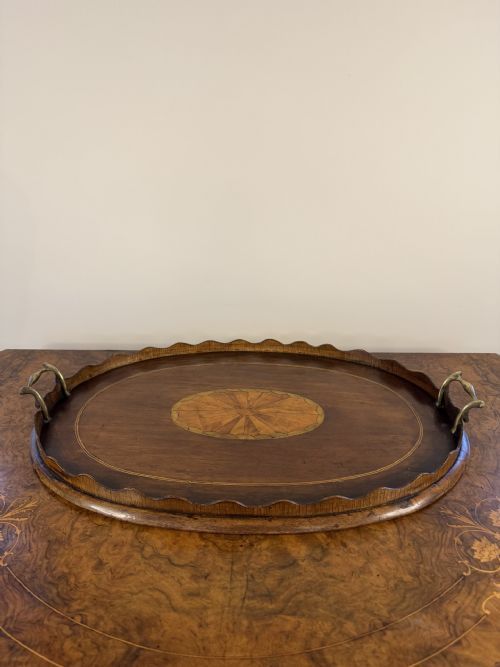
When you search for a marquetry wood tray, you encounter serving pieces, tea trays, and drinks trays spanning the Victorian, Edwardian, and Georgian periods. The most common examples on this page are Edwardian and nineteenth century mahogany serving trays detailed with satinwood and boxwood inlay.
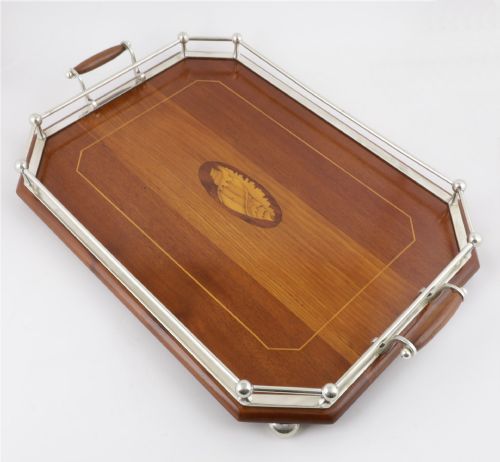
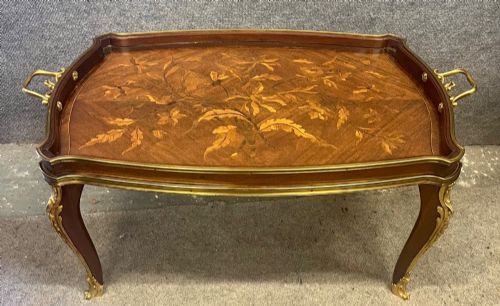
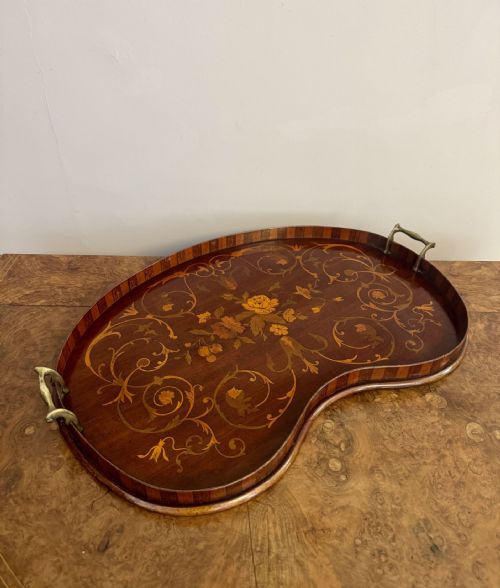
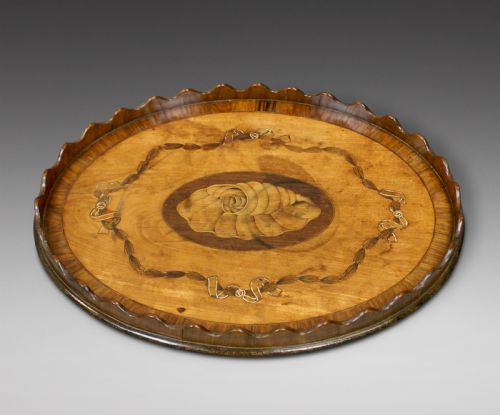
Beyond standard serving forms, the selection includes kidney shaped trays, octagonal gallery pieces, and occasional table tops. These items demonstrate how domestic woodenware evolved from formal Georgian serving equipment into decorative Edwardian entertaining accessories.
Materials and construction
Cabinet makers constructed these trays on foundations of solid mahogany, walnut, or maple, applying contrasting veneers to create pictorial or geometric designs. Satinwood, boxwood, and various dyed woods were hand cut and fitted into the surface to form the marquetry inlay.
Many examples incorporate brass galleries, silvered side rails, or wooden turned handles to secure the edges and assist with carrying. The interplay of dark timber grounds with pale inlay defines the visual structure of these pieces.
Travellers brought home distant landscapes preserved forever in wood, as seen in trays featuring intricate marquetry views of Rio de Janeiro.
Markers of quality
The distinction between standard utility items and finer pieces lies in the precision of the veneer work and the choice of secondary timbers. Tighter junctions in the inlay and more complex floral or geometric motifs indicate superior workshop output.
Hardware integration also separates execution levels, where cast brass galleries and fitted wooden handles demonstrate greater attention to detail than simpler turned rims. The crispness of the cutting across contrasting woods dictates the overall standard.
The Marquetry Wood Tray Glossary
- Marquetry inlay
- Decorative veneerwork assembled in patterns or pictures using different coloured woods and organic materials. This technique provides the primary surface ornamentation on these trays.
- Gallery
- A raised metal or wooden border fitted around the perimeter of a tray to prevent items from sliding off. Brass and silvered variants appear frequently on serving pieces.
- Satinwood
- A durable tropical hardwood with a lustrous yellowish sheen, utilised extensively for contrasting inlay work and border banding.
- Kidney shaped
- An asymmetrical curved outline popular in Edwardian serving trays and table tops designed to fit closer to the body during use.
- Sorrento ware
- Woodware decorated with micro-mosaic and marquetry, originating from the Italian town of Sorrento and often depicting architectural views or flora.
Marquetry Wood Tray: Frequently Asked Questions
How were marquetry wood trays used?
These items served primarily for carrying tea, coffee, or drinks in domestic settings, moving from the pantry to the drawing room. They functioned both as portable serving equipment and as display surfaces on tables.
Over time, many trays transitioned into static decorative objects, placed on stands or displayed flat to showcase the veneer work. Their dual role combined utility with visual display in formal households.
How do I clean an antique tray?
Dust the surface regularly with a soft, dry cloth to prevent dirt accumulation in the veneer crevices. Avoid harsh commercial cleaners and excessive water, which can damage old shellac finishes and loosen inlaid wood.
If conditioning is necessary, apply a microcrystalline wax sparingly and buff gently with a clean cloth. Protecting the wood from direct sunlight prevents the dyed marquetry elements from fading.
How can I tell Edwardian trays from Victorian ones?
Victorian pieces tend to feature heavier mahogany foundations with robust proportions and darker finishes. The inlay work often relies on straightforward geometric banding or traditional floral arrangements.
Edwardian examples frequently adopt lighter satinwood grounds, delicate kidney shapes, and refined Sheraton Revival motifs. The overall aesthetic shifts toward lighter handling and brighter contrasting timbers during the later era.
Are these trays sturdy enough for daily use?
Most surviving examples retain solid structural integrity, though older pieces require considerate handling due to age. The joinery and timber bases remain robust, but the delicate veneer demands protection from moisture and heavy impacts.
Using a protective liner or limiting service to lighter items preserves the inlaid surface. Many owners choose to display them rather than subject historic finishes to active hospitality routines.