


Vintage Wooden Butler Tray
A vintage wooden butler tray combines practical folding stands with portable serving surfaces, offering a traditional way to serve afternoon tea or display drinks.
Vintage Wooden Butler Tray
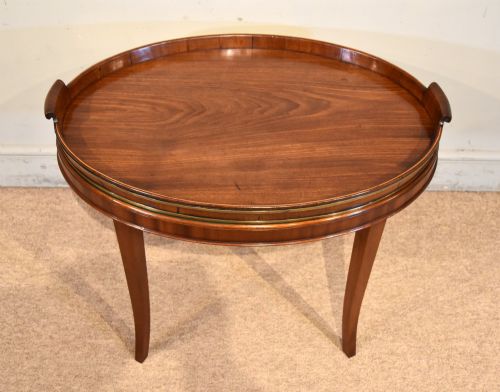
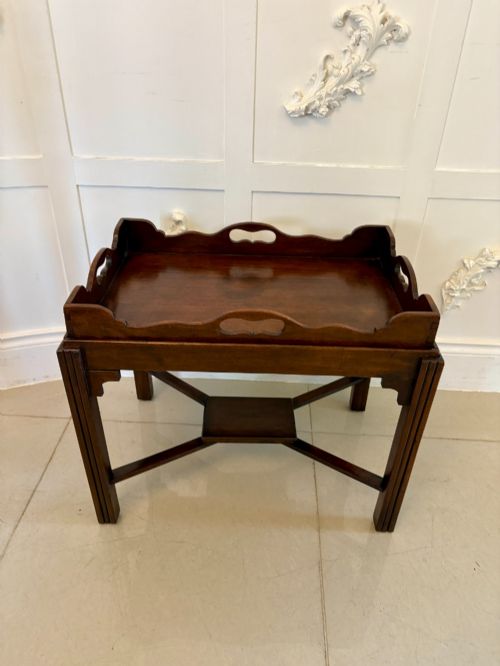
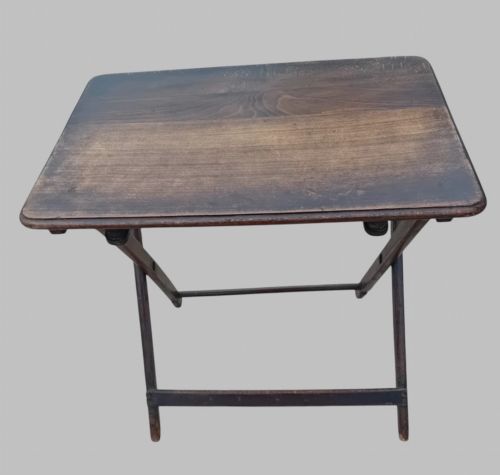
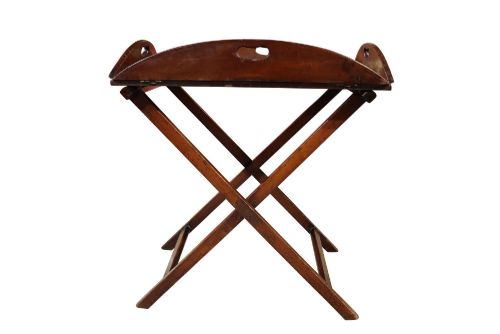
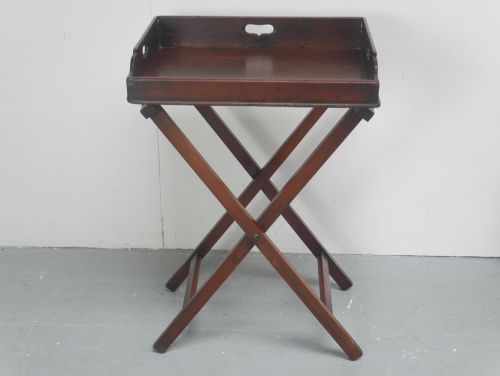
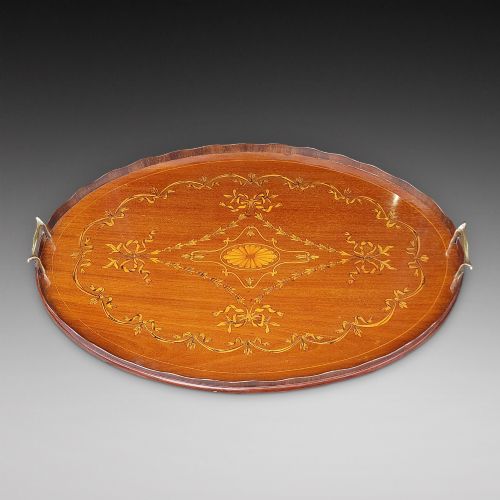
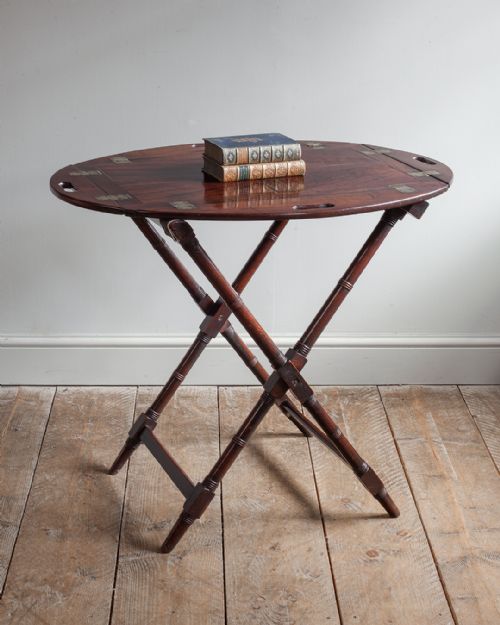
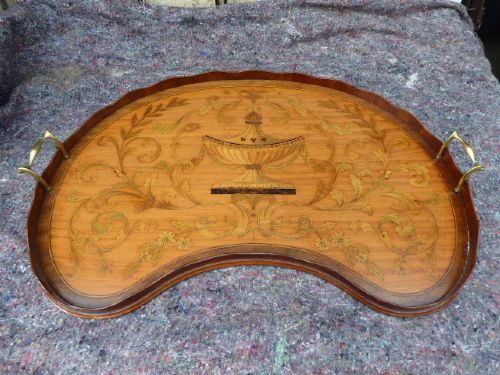
A vintage wooden butler tray typically presents as a removable rectangular, oval, or kidney-shaped tray paired with a collapsible folding stand, serving both as a portable server and an occasional side table. These pieces span multiple eras from the Georgian period through the Victorian, Edwardian, and Art Deco years, reflecting changing domestic habits in British country houses and town homes.
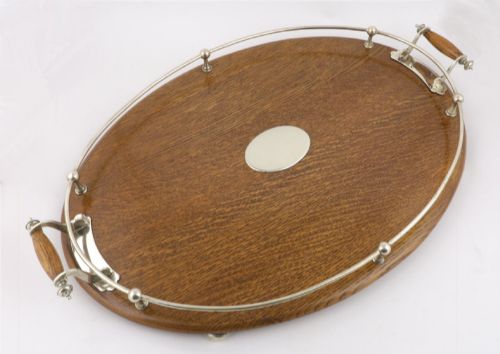
Buyers encountering this phrase most frequently meet mahogany or oak examples resting on X-frame folding stands, often incorporating brass carry handles or hinged sides that drop down for easy storage. Some pieces appear simply as deep-sided serving platters without stands, while others function permanently as coffee tables or side tables from the early twentieth century.
Originating in the quarters of domestic staff for carrying silver and china to drawing rooms, these trays evolved into versatile items for modern interiors. The selection ranges from plain utilitarian oak variants to highly decorative marquetry pieces created to sit permanently in a reception room.
Materials and construction methods
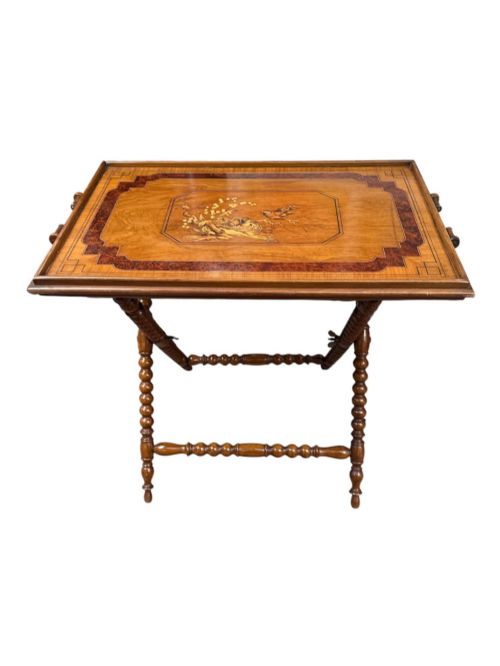
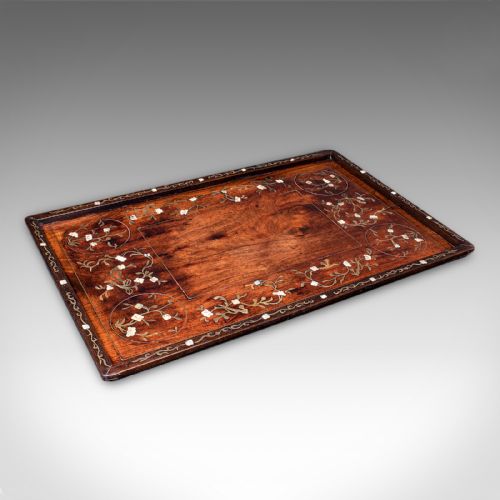
Cabinetmakers constructed these trays using dense hardwoods like mahogany, oak, walnut, and teak, often applying contrasting veneers such as satinwood, burr yew, and rosewood for decorative borders. Joinery methods included dovetail joints on tray walls and sturdy pivoting hinges on folding stands designed to support heavy silver service.
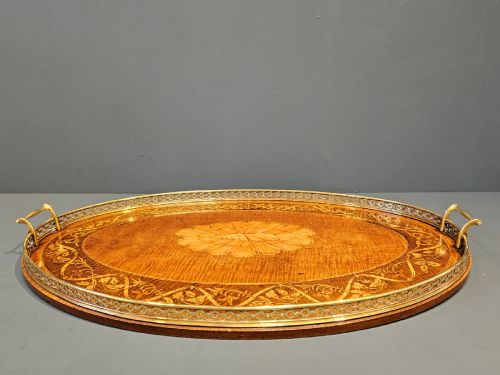
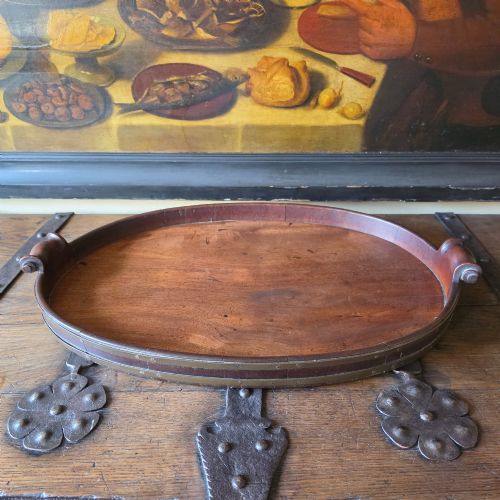
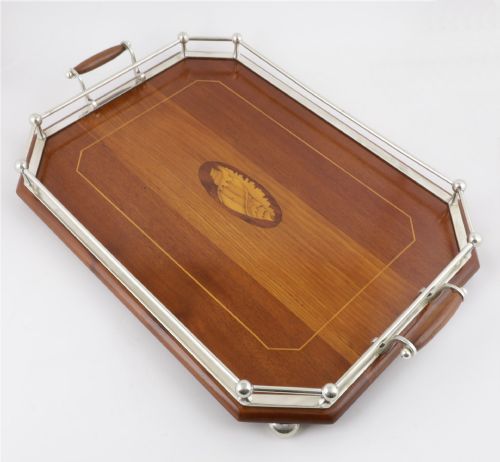
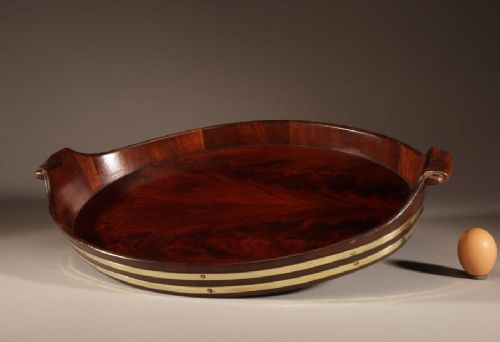
Surface decoration frequently involved intricate marquetry and satinwood inlay depicting floral motifs, shells, or geometric stringing, alongside coopered wooden construction utilising curved staves bound with brass. Makers also integrated brass carrying handles, gallery rails, and silver-plated mounts to reinforce corners and protect edges during daily service.
Listings feature woods such as mahogany, oak, walnut, satinwood, and teak, spanning periods from the 18th century through the 1930s.
Assessing quality and craftsmanship
The distinction between standard utility items and high-end examples rests upon the selection of timber veneers, the precision of the marquetry inlay, and the crispness of any carved detailing. Superior pieces employ figured mahogany or exotic woods with hand-cut geometric stringing, whereas simpler versions rely on plain plank construction intended strictly for domestic service.
Structural integrity of the folding stand and the snug fit of the tray into its supporting frame dictate the overall standard of manufacture. Well-engineered folding mechanisms operate smoothly without excessive wobble, and original brass hardware or coopered wooden rims demonstrate a higher grade of workshop production.
Edwards and Roberts
The Vintage Wooden Butler Tray Glossary
- Campaign style
- Portable furniture designed for easy transport by military officers, characteristically featuring folding stands and recessed brass hardware.
- Marquetry
- Decorative veneer work forming pictures or patterns by assembling thin pieces of wood, shell, or ivory onto a solid wooden base.
- Coopered
- Constructed from vertical wooden staves fitted together and bound with metal bands, traditionally used for buckets and specialised round trays.
- Gallery tray
- A serving tray featuring a raised pierced metal or wooden border around the perimeter to prevent items from sliding off.
- Oyster veneered
- Timber cut across branches to produce small circular or oval patterns resembling oyster shells, popular in decorative cabinetwork.
Vintage Wooden Butler Tray: Frequently Asked Questions
How were butler trays originally used?
Staff used these portable trays to transport food, porcelain tea services, and silver from kitchens to living rooms, lifting the tray off its stand once they arrived.
The raised sides and drop-down handles kept items secure during transit through large country houses and town residences before being set down on folding wooden legs.
Can I use a butler tray as a coffee table?
Many people adapt these pieces for modern living rooms by placing the tray securely onto its folding stand at a convenient height in front of a sofa.
The sturdy wooden construction and ample surface area make them practical for holding books and drinks, while the folding design allows easy relocation.
How do I distinguish Edwardian trays from Victorian ones?
Victorian examples tend to use solid oak or heavily grained mahogany with robust brass handles, focusing on utilitarian strength and deep serving wells.
Edwardian pieces frequently display lighter satinwood inlay, marquetry decoration, and kidney-shaped outlines intended more for decorative drawing room display than heavy service.
What is the difference between a tray and a tray table?
A tray is a standalone flat platter with raised edges or handles designed purely for carrying items between rooms by hand.
A tray table pairs that same removable surface with a dedicated folding stand, creating a stable piece of occasional furniture when assembled together.