
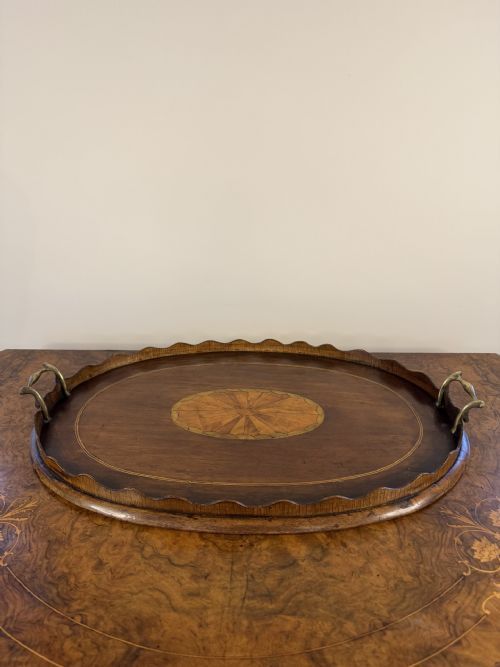


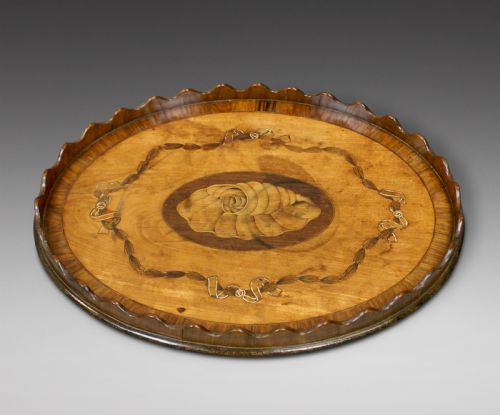


Inlaid Marquetry Gallery Tray
These inlaid marquetry gallery tray pieces combine fine timbers with meticulous decorative wood work, offering both a functional server and a striking decorative surface for the home.
Inlaid Marquetry Gallery Tray
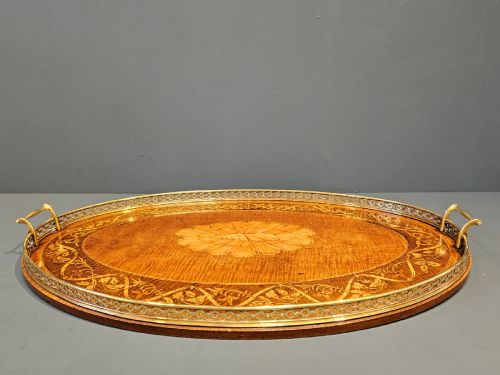
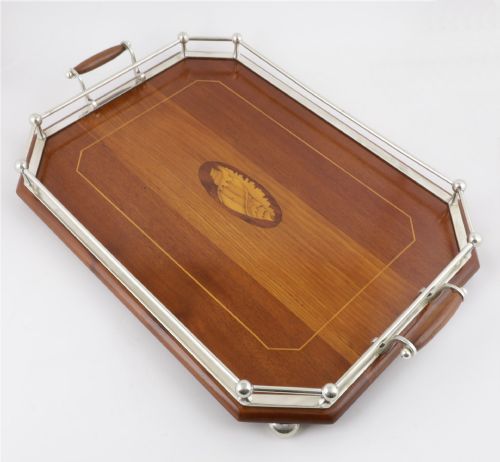
An inlaid marquetry gallery tray brings together several distinct forms, including oval serving trays, octagonal designs, tea trays, and smaller desk accessories like inkstands. They span multiple eras from the Georgian period through the Victorian and Edwardian decades, capturing shifts in domestic taste.
The most frequent examples found in this selection are constructed from mahogany or satinwood, often featuring raised wooden or metal borders known as galleries. These pieces range from large serving items designed for formal hospitality down to miniature or occasional table formats.
How they were made
Cabinetmakers built the foundational bodies of these trays using dense timbers such as mahogany, satinwood, and occasionally coromandel, selected for their stability and rich grain. Selected woods formed the core structure, shaped into oval, octagonal, or rectangular profiles.
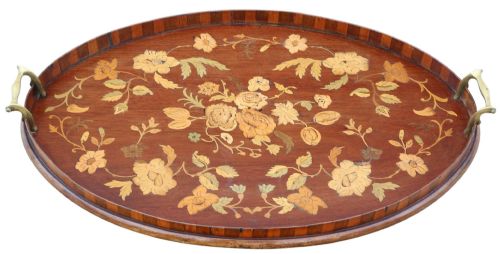
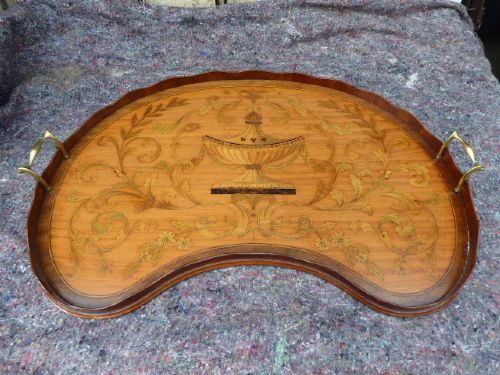
Makers applied contrasting veneers and detailed marquetry inlay directly into the wooden surfaces to create intricate geometric, shell, or floral motifs. Raised gallery edges were fashioned from matching carved wood or secured with fitted brass and silver plate mounts.
Listings feature woods spanning mahogany, satinwood, and coromandel alongside silver plate and brass galleries.
What varies in quality
The sophistication of the marquetry and inlay work dictates the upper tier of quality, distinguishing simple banded borders from pictorial or multi-wood patterns. Precision in fitting contrasting timbers without gaps marks the work of skilled workshops.
Material integration also separates standard examples from exceptional ones, particularly where brass or silver-plated galleries meet the timber body cleanly. Structural crispness in the raised gallery rims and the condition of the underlying polished wood surface remain key differentiators.
Edwards and Roberts·Rupert Favell
The Inlaid Marquetry Gallery Tray Glossary
- Marquetry inlay
- The decorative technique of applying pieces of veneer to a structure to form intricate designs and pictures. This method uses varied wood types to achieve natural tonal contrasts without paint.
- Gallery tray
- A serving or display tray featuring a raised pierced or solid rim around its perimeter. This raised border prevents items from sliding off during transport.
- Satinwood
- A light-yellow timber prized for its lustrous grain and smooth texture. It serves as a primary wood or a contrasting veneer in decorative furniture.
- Sheraton Revival
- A late nineteenth-century design movement inspired by the neoclassical furniture of George Sheraton. It favours light proportions, satinwood, and delicate inlay.
- Inkstand
- A small desk tray fitted with inkwells and pen rests. These desk accessories often incorporate matching inlaid woodwork and metal mounts.
Inlaid Marquetry Gallery Tray: Frequently Asked Questions
What periods do these trays come from?
The selection spans several eras, beginning with the Georgian and late Georgian periods through to Victorian and Edwardian examples. You will also find pieces dated specifically to the late nineteenth century around eighteen eighty.
These dates reflect the prevailing cabinetmaking styles of each decade, from neoclassical revival designs to later Victorian interpretations.
How were these trays used?
Larger examples served as formal serving trays for tea, drinks, and hospitality within the home. Smaller variations functioned as desk accessories, pen trays, and inkstands.
Over time, many of these decorative surfaces transitioned into occasional display pieces placed upon tables or stands.
What materials are typically used?
Primary woods include mahogany, satinwood, and coromandel, frequently decorated with contrasting wood marquetry inlay. Some designs incorporate brass or silver-plated gallery rails and mounts.
The combination of dark mahogany and pale satinwood creates the distinct tonal contrast characteristic of these decorative items.
How do I live with an antique tray?
These trays suit placement on side tables, chest tops, or dedicated stands where their inlaid surfaces remain visible. Avoid exposing them to direct sunlight or excessive moisture to protect the polished wood veneer.
Regular dusting with a dry cloth helps preserve the finish of both the timber and any metal mounts.
How do I tell Victorian pieces from Georgian ones?
Georgian and late Georgian examples often display restrained neoclassical proportions and simpler banded wood borders. Victorian and Edwardian pieces frequently feature heavier satinwood marquetry and elaborate metal gallery mounts.
Comparing the specific framing of the inlay and the overall weight of the timber helps distinguish the manufacturing era.