






Sheraton Revival Tray
These sheraton revival tray pieces bring classic elegance to any room, offering the refined woodwork and decorative inlay collectors appreciate.
Sheraton Revival Tray
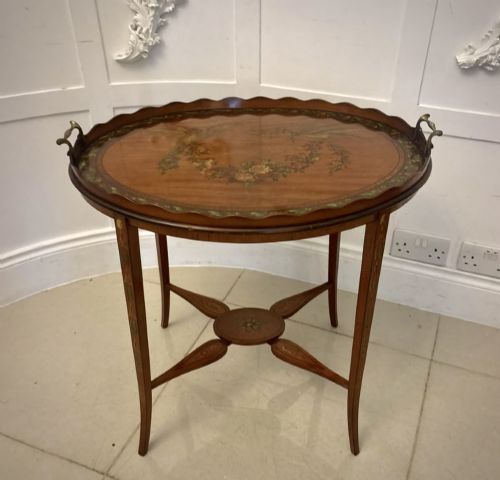
A sheraton revival tray takes many forms, appearing as standalone serving pieces or mounted upon occasional tables and stands. The selection spans the Edwardian era back to the nineteenth century, including diverse iterations in mahogany and satinwood.
Buyers encounter serving trays, butler's trays, and trays on stands, alongside related tiered tables and étagères. The aesthetic draws heavily on neo-classical motifs and eighteenth-century design principles executed during later revivals.
Most examples date from the Edwardian period or around nineteen ten, utilising lighter woods and delicate marquetry. These pieces function both as decorative accents and practical surfaces within period interiors.
Materials and construction
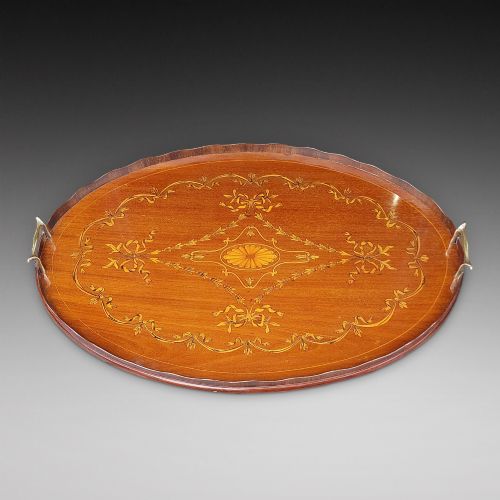
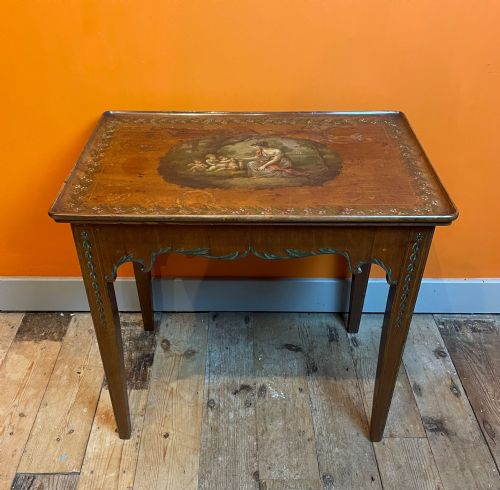
Cabinetmakers constructed these pieces primarily using mahogany and satinwood, often embellishing surfaces with boxwood and burr yew. Artisans applied intricate hand-painted detailing and marquetry to create contrasting geometric or classical motifs.
Many iterations incorporate brass galleries to secure items placed upon the surface, while others feature integrated handles. The combination of varied timber veneers defines the visual character of the construction.
Sheraton Revival Tray Retail Price Guide 2026
Typical asking prices for sheraton revival tray among the pieces listed under this phrase on Sellingantiques today, from the lower quarter to the upper quarter. They describe what is for sale here now, not the wider market.
Judging quality in these trays
The sophistication of the marquetry and hand-painted detailing distinguishes finer examples from simpler production. Precision in the wood veneers and the crispness of the inlay work indicate the level of craftsmanship involved.
Hardware such as a brass gallery or integrated handles reflects the original cost and intended function of the piece. The choice of secondary timbers and the stability of the stand or table structure further separate tiers of quality.
The Sheraton Revival Tray Glossary
- Marquetry
- Decorative veneer work forming pictures or patterns by using different woods. This technique requires considerable skill from the artisan.
- Etagere
- A set of open shelves for displaying small objects or serving. These pieces often feature multiple tiers supported by slender uprights.
- Satinwood
- A lustrous hardwood native to Ceylon and India used extensively for fine veneer. Its pale yellowish sheen contrasts effectively with darker timbers like mahogany.
- Brass Gallery
- A low pierced metal railing fitted around the edge of a tray. This feature prevents items from sliding off during service.
- Neo-Classical
- A style inspired by the classical art and architecture of ancient Greece and Rome. It emphasises symmetry, straight lines, and classical motifs.
Sheraton Revival Tray: Frequently Asked Questions
How were these trays used?
These pieces served practical functions for holding drinks, tea sets, or small household items during formal entertaining. Many also functioned as portable surfaces carried by butlers.
Over time, many trays were permanently paired with folding or fixed stands to serve as occasional tables.
How do I date a tray?
Dating relies on examining the timber species, construction methods, and style of inlay or painted decoration. Pieces originating from the Edwardian era often display lighter satinwood veneers and refined marquetry.
Earlier nineteenth-century examples may show heavier proportions or different secondary woods beneath the primary veneers.
How do I care for inlaid wood?
Inlaid surfaces require protection from direct sunlight and excessive moisture to prevent veneer lifting and fading. Regular dusting with a soft cloth maintains the finish without harming the delicate work.
Applying occasional appropriate wax preserves the sheen of satinwood and mahogany.