



Brass Handled Tray
A brass handled tray brings a tactile weight and period character to a room, serving as a functional piece or a display surface.
Brass Handled Tray
A brass handled tray combines a timber body with metal mounts, appearing primarily across Georgian, Victorian, and Edwardian periods.
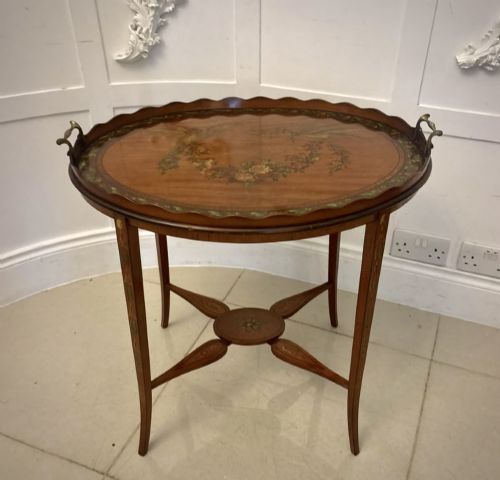
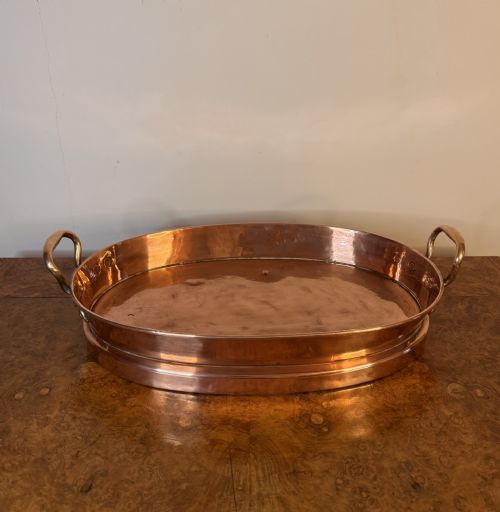
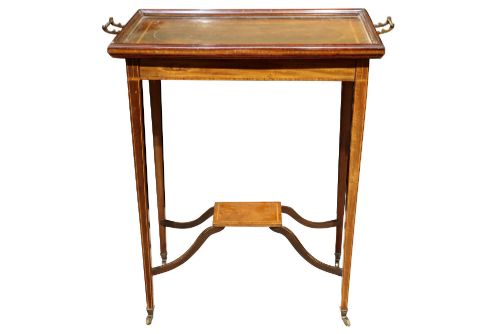
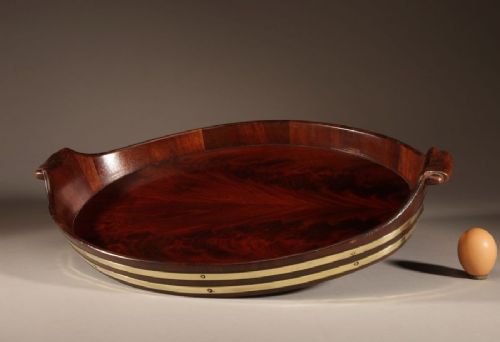
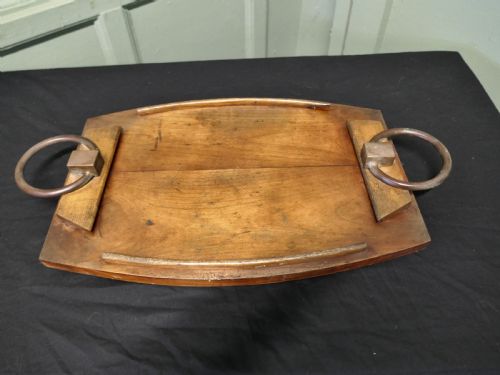
Beyond traditional serving pieces, the selection includes related forms such as tray-top tables, etageres, and coopered vessels outfitted with secure brass grips.
How they were made
Cabinetmakers utilised dense hardwoods like mahogany, elm, and rosewood for the structural body, frequently pairing them with contrasting satinwood or boxwood veneers.
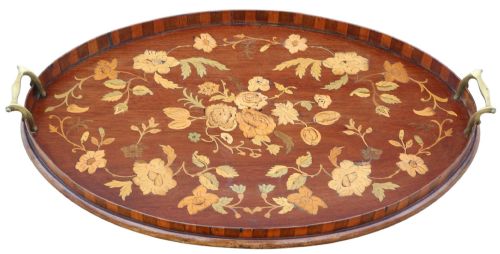
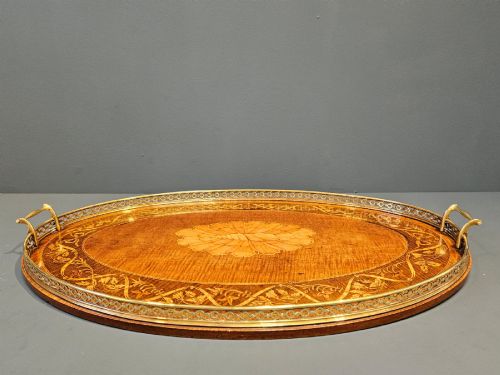
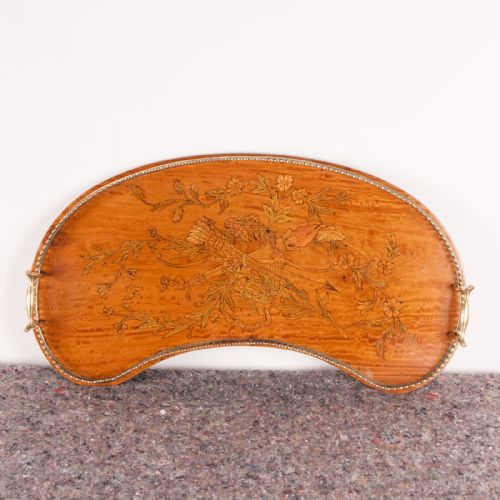
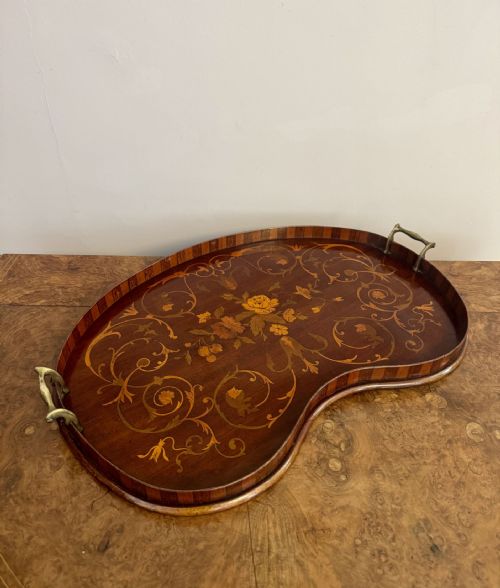
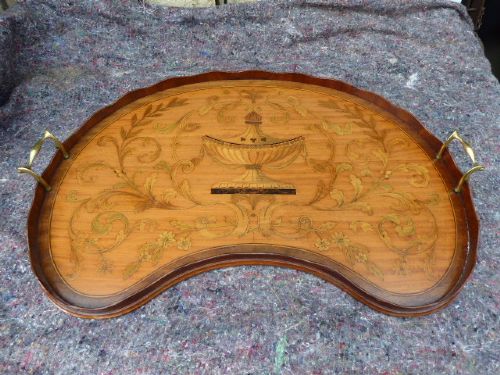
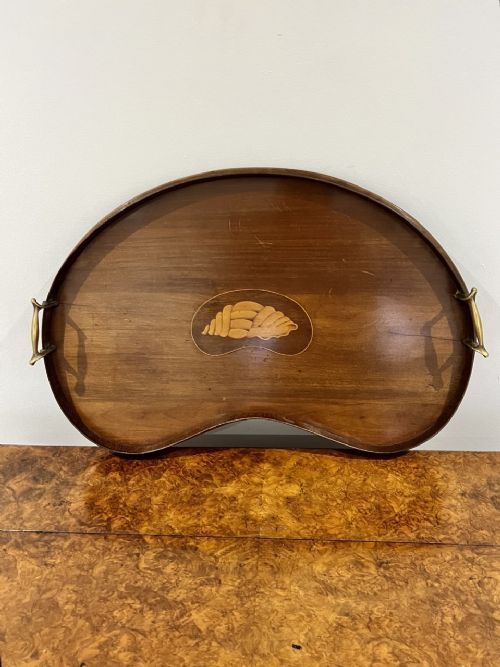
Decorative surfaces often rely on intricate marquetry inlay, depicting floral or geometric motifs set into the timber base.
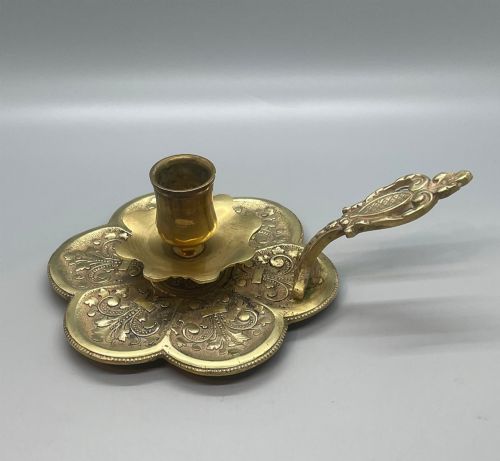
Solid brass handles and galleries were cast and securely fastened to the edges, providing both structural reinforcement and a contrasting metallic finish.
Brass Handled Tray Retail Price Guide 2026
Typical asking prices for brass handled tray among the pieces listed under this phrase on Sellingantiques today, from the lower quarter to the upper quarter. They describe what is for sale here now, not the wider market.
Listings span the Georgian, Victorian, and Edwardian eras, combining solid mahogany, satinwood inlay, and cast brass mounts.
What varies in quality
Quality rests on the crispness of the cabinetwork, seen in tight joints, the depth of the timber grain, and the precision of the marquetry inlay.
The weight and casting quality of the brass handles separate standard production from superior pieces, as heavier mounts indicate more substantial original manufacture.
Edwards and Roberts·Clay
The Brass Handled Tray Glossary
- Marquetry inlay
- Decorative patterns formed by fitting small pieces of veneer into a prepared wood surface. This technique creates detailed pictorial designs on the tray base.
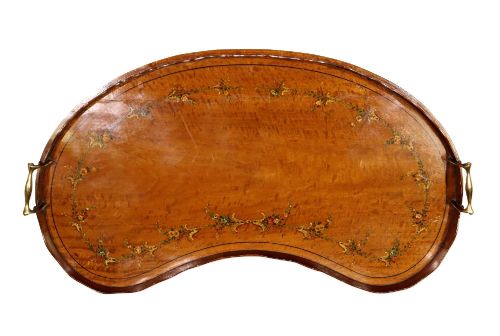
- Kidney-shaped
- A curved, indented outline designed to rest comfortably against the body. This form is particularly common in Edwardian afternoon tea trays.
- Coopered
- Construction using closely fitted wooden staves bound together, traditionally used for buckets and barrels. It appears on certain robust serving trays.
- Gallery
- A raised rim or railing around the edge of a tray or table, often pierced in brass or carved in wood to prevent items from sliding off.
- Étagère
- A piece of furniture consisting of open shelves for displaying small objects. These often incorporate removable serving trays as their top surface.
Brass Handled Tray: Frequently Asked Questions
How were brass handled trays used?
These pieces served primarily for carrying tea services, decanters, and glassware from room to room in large houses. They also functioned as stationary display platters on side tables.
Over time, many transitioned into permanent decorative accessories, resting on stands to become low occasional tables or etageres.
How do I date a mahogany tray?
Dating relies on timber selection, handle style, and inlay techniques characteristic of specific eras. Georgian pieces tend to show heavier proportions and simpler lines.
Victorian and Edwardian examples often feature lighter satinwood borders, intricate marquetry, and kidney-shaped outlines.
Are these trays suitable for daily use?
Most antique wooden trays handle light daily service well, provided they are treated with care. Polishing the timber and protecting the surface from excessive moisture preserves the finish.
Many owners choose to place them on stands or tables to minimise wear while keeping them visible in living spaces.