



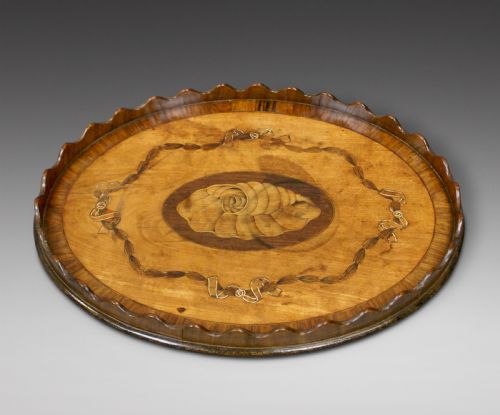


Shell Inlay Tray
These shell inlay tray examples bring together Georgian and Edwardian craftsmanship, offering a functional centrepiece for the table.
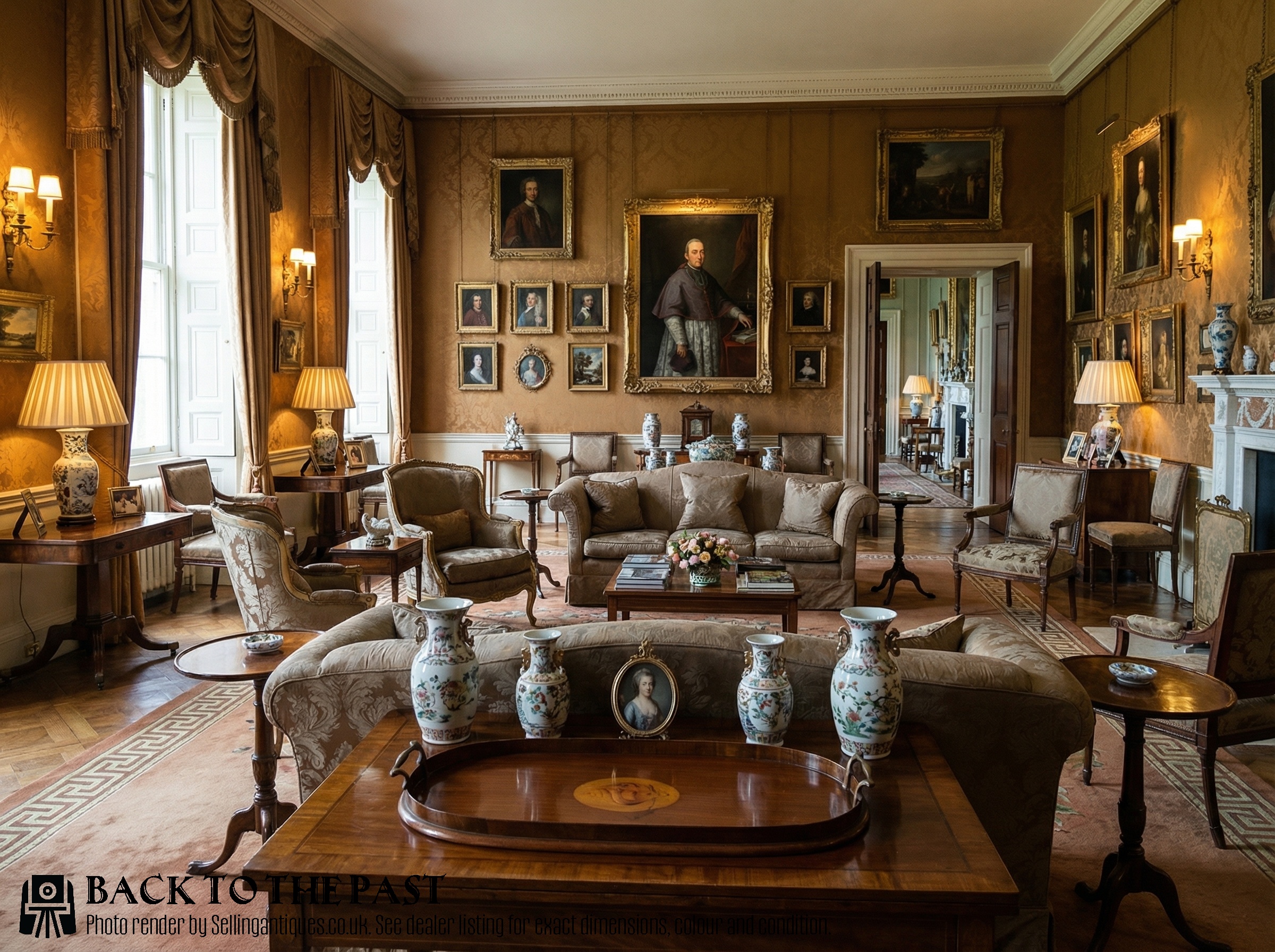
Shell Inlay Tray
A shell inlay tray is a serving piece or platter designed for afternoon tea and display, typically constructed from mahogany, yew wood, or rosewood. When you search for this phrase, you find serving trays, afternoon tea platters, and carrying trays spanning the Georgian, Victorian, and Edwardian periods.
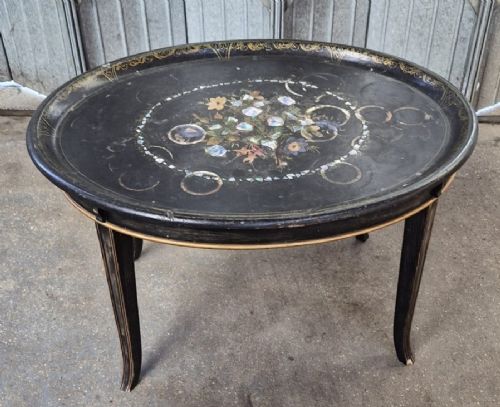
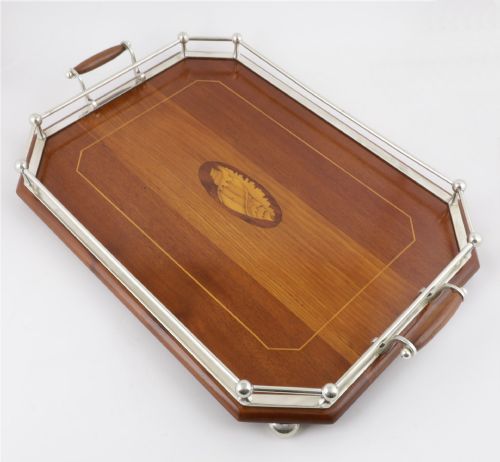
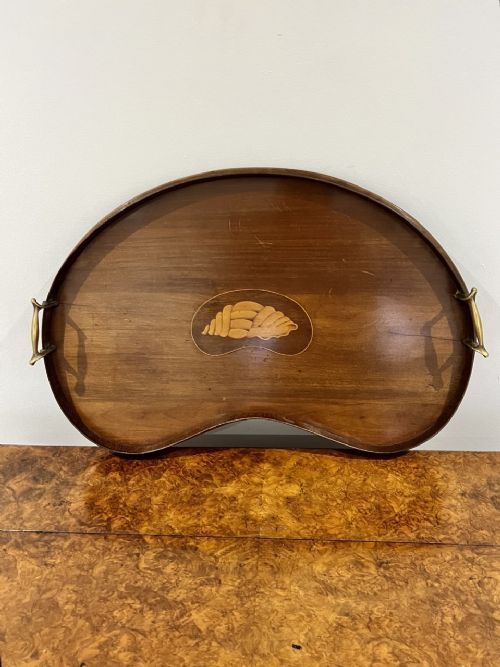
The versions most commonly met on this page include Edwardian kidney-shaped serving trays in solid mahogany and late Georgian inlaid mahogany trays. You also encounter circular carrying trays, oval platters, and octagonal gallery trays featuring silver plate and brass elements.
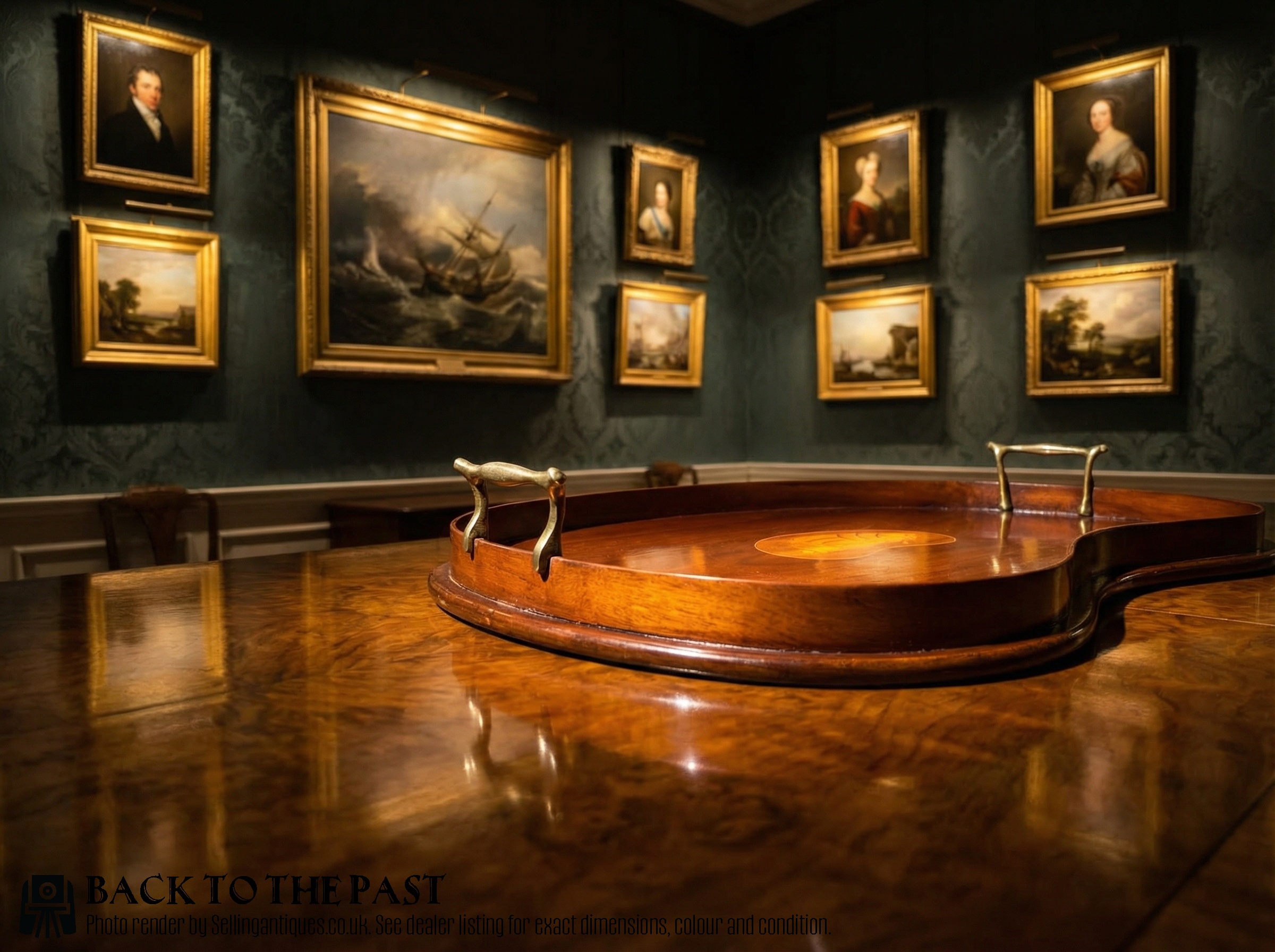
How they were made
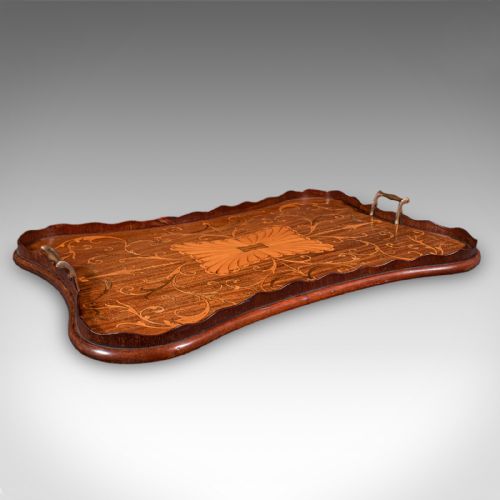
These pieces were constructed using timbers such as mahogany, burr yew, and rosewood, often enhanced with boxwood and marquetry inlay. Cabinetmakers shaped the timber into rectangular, oval, kidney, and octagonal forms, sometimes incorporating solid brass handles or silver-plated galleries.
The distinctive decorative motifs rely on precision cutting of contrasting woods to form central shell patterns. Makers also utilised fine stringing and border banding to frame the primary timber grains.
Shell Inlay Tray Retail Price Guide 2026
Typical asking prices for shell inlay tray among the pieces listed under this phrase on Sellingantiques today, from the lower quarter to the upper quarter. They describe what is for sale here now, not the wider market.
What varies in quality
The standard of a shell inlay tray depends largely on the crispness of the cabinetwork and the intricacy of the wood selection. Burr yew and figured mahogany with rich chatoyancy elevate a piece above simpler domestic examples.
Execution of the inlay distinguishes workshop output, with tightly fitted marquetry segments showing superior handling compared to basic surface work. The integration of solid brass mounts and silver-plated galleries further separates standard serving items from finer display platters.
The Shell Inlay Tray Glossary
- Shell inlay
- A decorative technique using contrasting woods cut and fitted into a timber surface to depict a seashell motif. This detail forms the focal point of many serving trays.
- Marquetry
- The art of applying small pieces of veneer to a structure to form decorative patterns. It differs from simple inlay by covering the entire surface with a mosaic of wood.
- Stringing
- Thin lines of contrasting wood inlaid into channels on a furniture surface. Cabinetmakers used this linear detail to define borders and geometric shapes.
- Gallery
- A raised pierced metal or wooden rim surrounding the edge of a tray. This feature prevents items from sliding off during service.
- Chatoyancy
- The optical reflectance phenomenon displayed by certain woods with undulating grain. Highly chatoyant timber exhibits a shifting three-dimensional depth under changing light.
Shell Inlay Tray: Frequently Asked Questions
What is a shell inlay tray used for?
These pieces served traditionally for carrying afternoon tea services, glassware, and decanters across formal rooms. They functioned both as practical serving platters and as decorative items displayed on tables.
Today, collectors utilise them for domestic presentation or display them on stands and sideboards to highlight the timber grain and marquetry.
How do I date an antique tray?
Dating relies on identifying timber choices, construction methods, and stylistic cues present in the piece. Georgian examples often feature straight-grained mahogany and understated banding, while Edwardian pieces frequently showcase kidney shapes and burr yew veneers.
Examining the underside, handle attachments, and gallery construction also provides clues regarding the manufacturing period.
What woods are common in these trays?
Mahogany forms the primary structural timber for the majority of these serving pieces across the Georgian and Edwardian eras. Makers also employed burr yew and rosewood for distinctive surface grain.
Contrasters such as boxwood and satinwood appear specifically within the marquetry motifs and border stringing to create visual separation.
Are these trays suitable for daily use?
While originally built for domestic service, antique trays require mindful handling due to their age and delicate veneer work. Modern serving subjects them to moisture and weight they may not tolerate well.
Many owners choose to place them on static display or use them exclusively for light dry items to preserve the marquetry inlay and polish.