



Wooden Serving Platter
A wooden serving platter brings tactile warmth to the table, uniting historic joinery with everyday utility.
Wooden Serving Platter
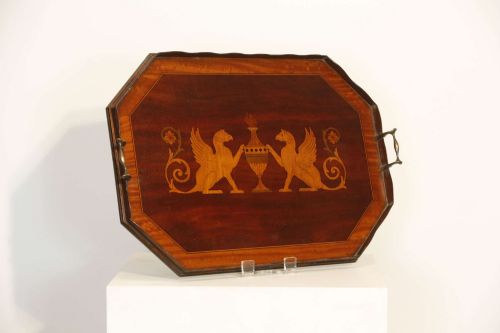
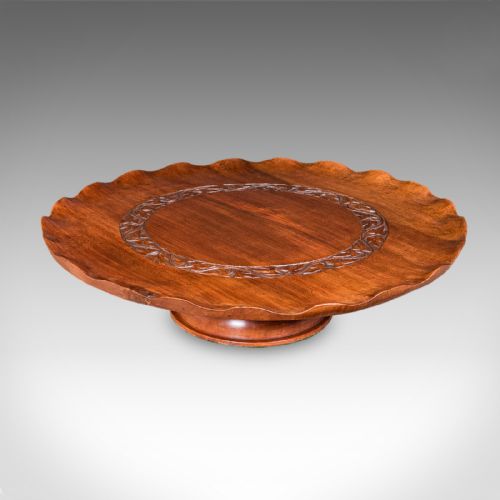
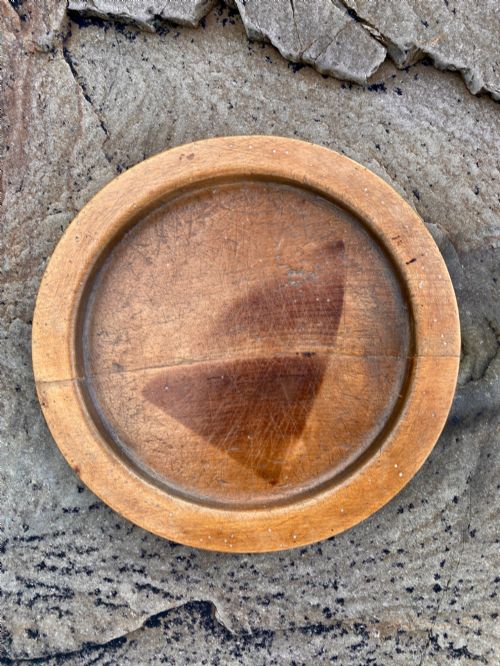
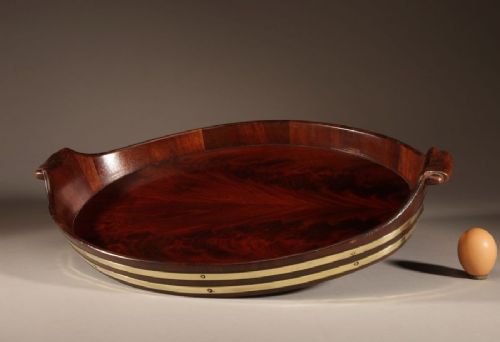
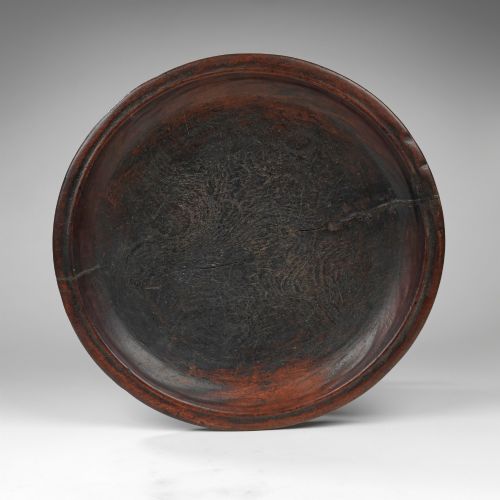
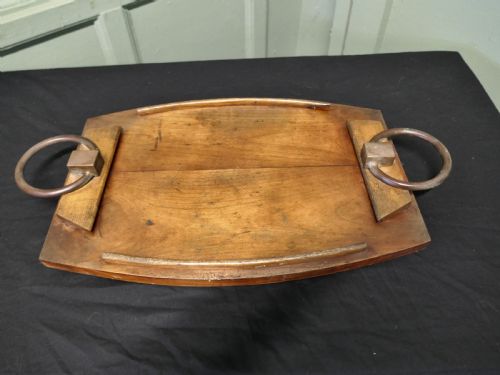
A wooden serving platter encompasses diverse forms including oval trays, rotating lazy susans, galleried trays, and deep round bowls. These pieces emerge from periods spanning the Georgian era through the Edwardian years and into the Art Deco epoch.
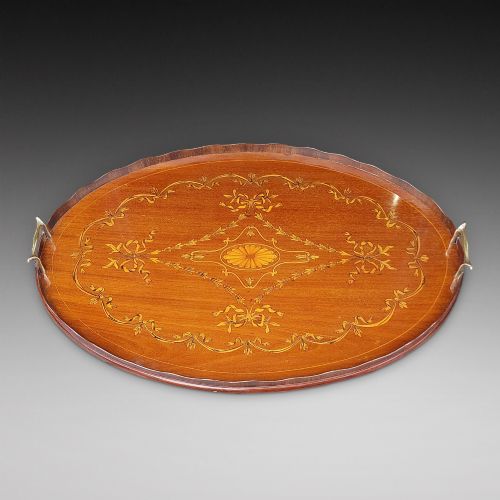
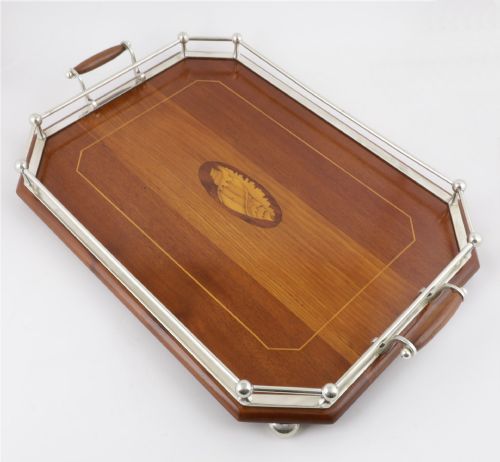
Buyers on this page most frequently encounter mahogany and oak trays, often featuring inlaid satinwood or brass galleries. English country workshops and Anglo-Indian makers provide the majority of these functional serving items.
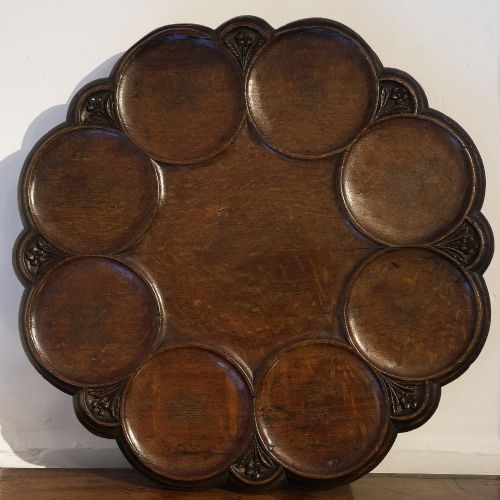
The selection ranges from simple turned treen platters to elaborate marquetry butler trays and silver-plated hybrids. Each object reflects the social rituals of afternoon tea, dining, and hospitality across multiple centuries.
How they were made
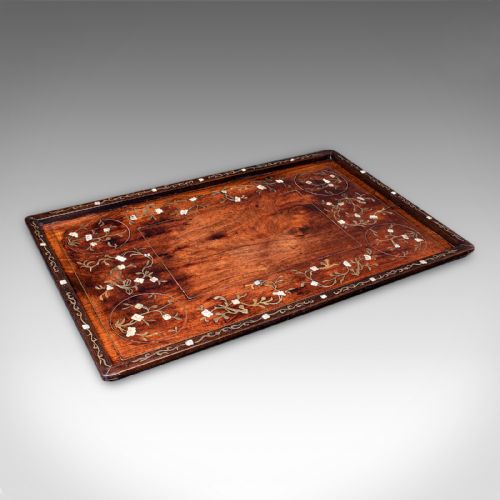
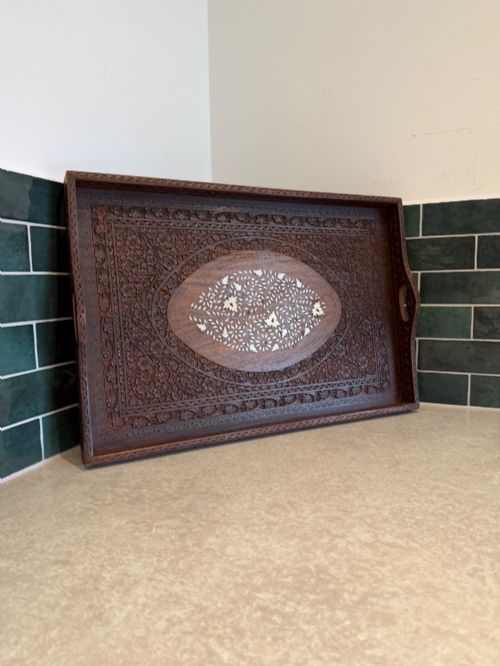
Craftsmen shaped these items using solid hardwoods such as mahogany, oak, teak, and walnut, frequently applying oyster veneers or delicate marquetry and shell inlay. Coopered construction methods appear alongside carved woodwork and turned elements.
Metal accents frequently complement the timber through cast brass galleries, handles, and silver-plated mounts affixed to the wooden bases. Artisans combined joinery, turning, and metalworking to produce sturdy serving surfaces.
Wooden Serving Platter Retail Price Guide 2026
Typical asking prices for wooden serving platter among the pieces listed under this phrase on Sellingantiques today, from the lower quarter to the upper quarter. They describe what is for sale here now, not the wider market.
Charlie Chaplin makes a surprise appearance in the barware.
What varies in quality
The standard of execution in timber selection and inlay work dictates the distinction between ordinary and superior examples. Finely figured mahogany, crisp marquetry, and substantial brass mounts elevate the piece.
Structural integrity, including the tightness of coopered joints and the smooth operation of rotating mechanisms like lazy susans, defines the grade of craftsmanship. Original fittings and well-preserved surface patinas also distinguish finer specimens.
The Wooden Serving Platter Glossary
- Treen
- Small handmade wooden household objects and utensils. This term applies to early turned bowls and platters.
- Lazy Susan
- A rotating tray placed on a table to assist in moving food. Examples in the evidence date from the nineteenth and early twentieth centuries.
- Marquetry
- Decorative veneer patterns applied to woodwork. Craftsmen use contrasting woods to form pictorial or geometric designs.
- Gallery
- A raised rim or border around the edge of a tray. These often incorporate pierced brass or silver-plated metalwork.
- Coopered
- Formed of staves fitted together and bound with hoops. This technique appears in rounded wooden trays and vessels.
Wooden Serving Platter: Frequently Asked Questions
How do I use a antique wooden tray today?
These pieces function well for serving drinks, displaying fruit, or organising items on a surface.
Careful handling preserves the historic wood and inlay during daily domestic use.
What woods were commonly used for these platters?
Makers utilised mahogany, oak, walnut, teak, elm, and satinwood depending on the region and period.
Inlaid sections often incorporate lighter contrasting timbers to create decorative borders.
How do I date an Edwardian serving tray?
Edwardian pieces often feature delicate marquetry, satinwood banding, and lighter construction styles typical of the early twentieth century.
Comparing the decorative motifs with Georgian or Victorian examples clarifies the timeline.
What is an Anglo-Indian serving tray?
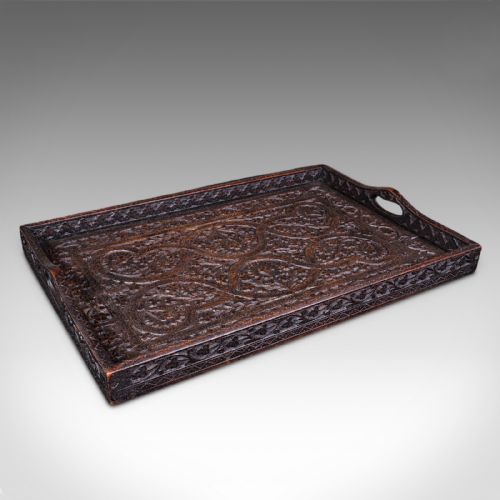
These trays originate from nineteenth-century workshops in the Indian subcontinent using dense timbers like teak.
Carved surface decoration distinguishes them from standard English country pieces.
Can I clean a brass gallery safely?
Gentle dusting and minimal moisture protect the surrounding wood while maintaining the metal components.
Abrasive cleaners damage both the silver plating and the timber veneer.