




Octagonal Serving Tray
An octagonal serving tray brings geometric structure and distinct eight-sided form to a table, prized for serving drinks or displaying objects.
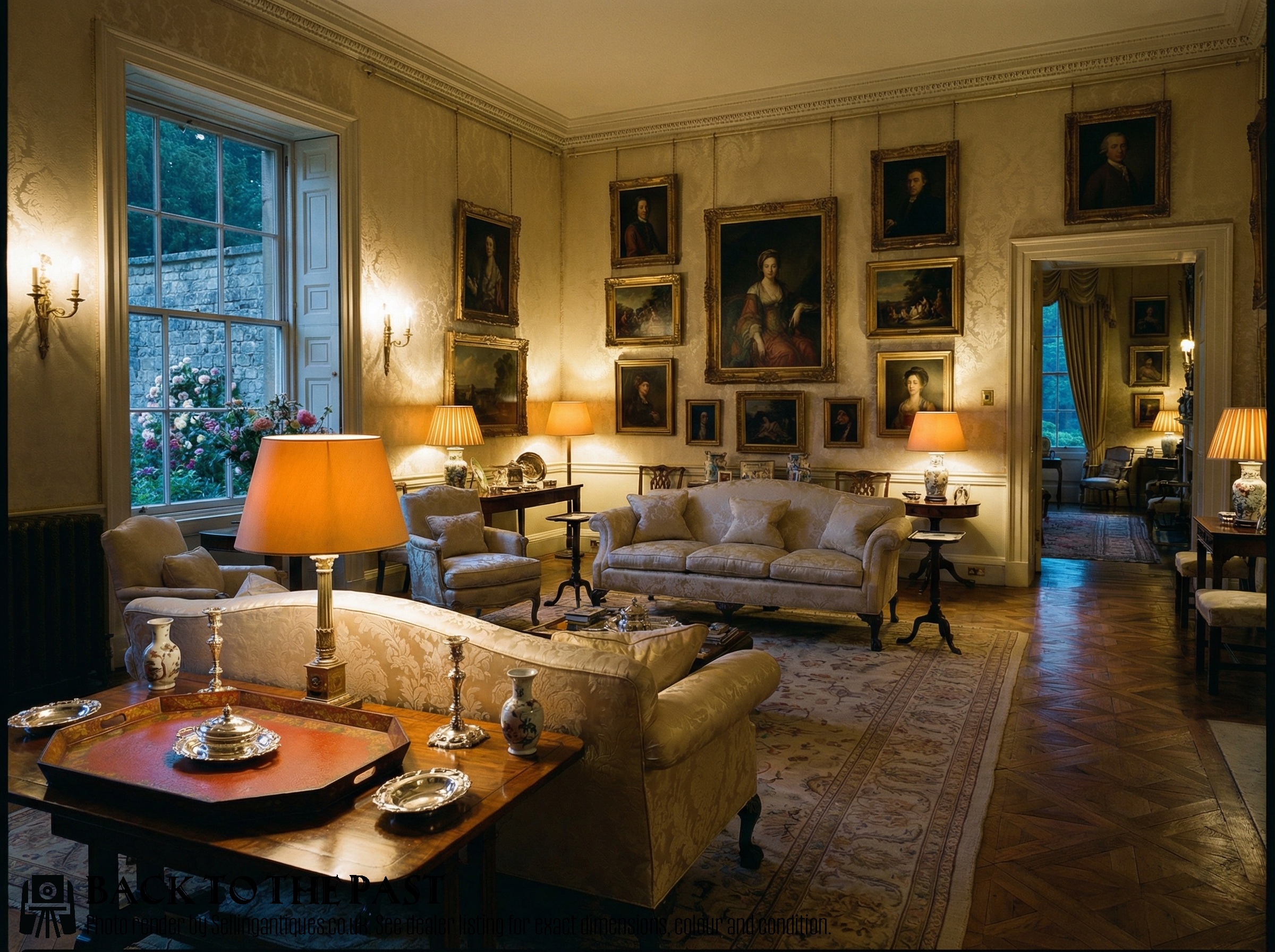
Octagonal Serving Tray
An octagonal serving tray appears across several distinct eras, bringing eight-sided geometry to domestic serving ware. The pieces meeting this description span the Georgian period, the nineteenth century, and the Art Deco years of the twentieth century.
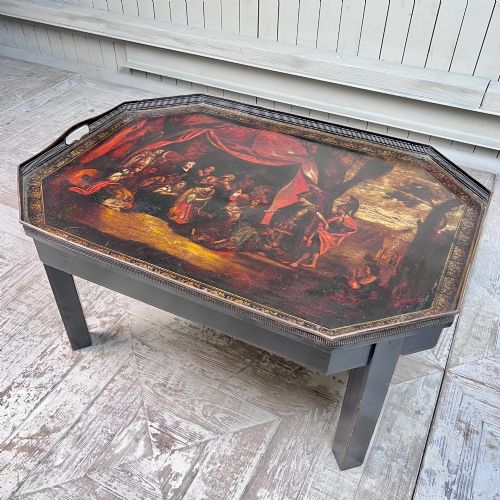
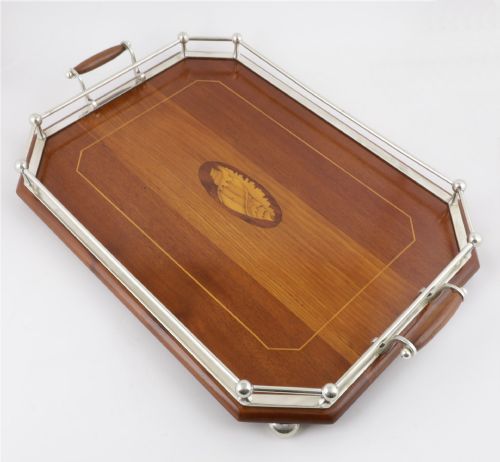
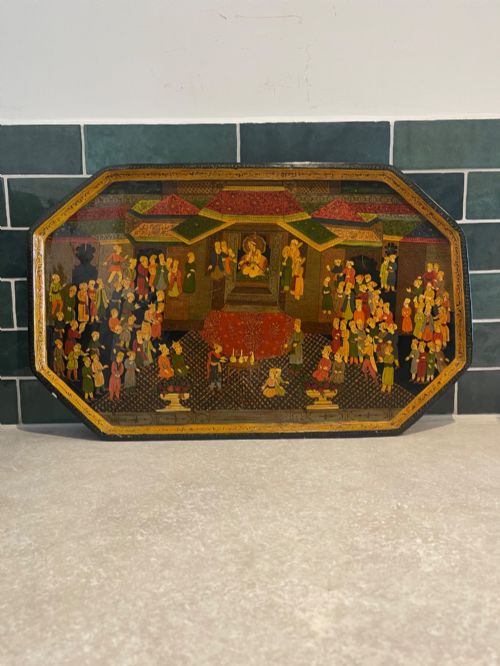
Makers shaped these items in varied forms, ranging from silver plate and wood gallery trays to papier-mâché, lacquer, and porcelain. Asian export pieces and Kashmiri painted wares sit alongside traditional English and French serving dishes.
The practical function of these objects extends from carrying drinks and bread to serving meats and cocktails. Some examples cross over into decorative display or function as low tables.
How They Were Made
Craftsmen utilised papier-mâché and lacquer for lightweight painted surfaces, often applying gold leaf or scarlet finishes. Wood construction frequently incorporated shell inlay and raised gallery borders.
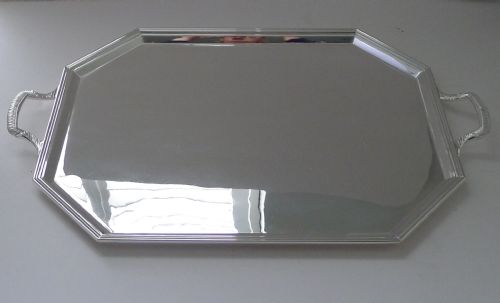
Metal versions combined silver plate or nickel silver with solid foundations, whilst ceramic pieces employed blue and white porcelain and glazed pottery. Cloisonné enamel techniques brought detailed bird motifs to Japanese metalwork bases.
Materials represented include silver plate, wood, porcelain, papier-mâché, enamel, gold leaf, and lacquer.
What Varies in Quality
The refinement of surface decoration sets apart the finer examples, from hand-painted Kashmiri and tole scenes to intricate Japanese cloisonné enamel work. Painted papier-mâché shows distinction through the preservation of its original colour and gilded detailing.
Construction methods determine durability, visible in the joinery of wood gallery trays and the weight of silver-plated mounts. The clarity of blue and white glazes on porcelain platters also indicates workshop standard.
J B Chatterley & Sons·Roberts & Dore·Lee & Wigfull
The Octagonal Serving Tray Glossary
- Papier-mâché
- A composite material made from paper pulp or reinforced sheets, pressed and varnished for trays. It provides a smooth base for painted and gilded ornament.
- Silver Plate
- A base metal coated with a thin layer of silver, commonly utilised for nineteenth and twentieth-century serving wares. It offers the appearance of solid silver at a lower weight.
- Cloisonné
- An enamel technique where metal wire creates small compartments on a metal base, filled with coloured paste and fired. Japanese makers applied this method to decorative trays.
- Gallery Tray
- A tray featuring an upright pierced or solid metal border surrounding the perimeter. This edge prevents items from sliding off during transport.
- Toleware
- Painted or lacquered metalware, typically tin or iron, decorated with pictorial scenes or floral motifs. These items date primarily from the eighteenth and nineteenth centuries.
Octagonal Serving Tray: Frequently Asked Questions
How do I clean an antique papier-mâché tray?
Dust the surface gently with a dry, soft cloth to remove particles. Avoid water and chemical solvents, as moisture damages the historic lacquer and painted finish.
Keep the item away from direct sunlight and excessive heat sources to prevent the material from warping or cracking over time.
What is the difference between a serving platter and a tray?
Serving platters and dishes are ceramic or porcelain pieces designed primarily for presenting food at the table. Trays often incorporate handles, galleries, or rigid wooden and metal bases intended for carrying items.
Many flat ceramic dishes share similar octagonal outlines and historical periods with rigid trays, leading to shared categorization.
Can I use silver-plated trays for daily serving?
Silver-plated items withstand regular use if handled with care and cleaned using appropriate non-abrasive silver polishes. Wash them by hand rather than placing them in a dishwasher to preserve the plated surface.
Acidic foods and prolonged exposure to moisture can tarnish or pit the metal, so dry the tray thoroughly after use.
How do I identify a Georgian papier-mâché tray?
Georgian papier-mâché pieces typically display deep japanned or scarlet grounds finished with hand-applied gold leaf decoration. The material feels surprisingly light yet rigid compared to later Victorian iterations.
Examine the underside and edges for signs of age, including hand-painting techniques and the natural crazing of the aged varnish.