


Art Deco Silver Barware
Art deco silver barware brings geometric discipline and spirited ingenuity to the home bar through vessels and implements designed for twentieth-century entertaining.
Art Deco Silver Barware
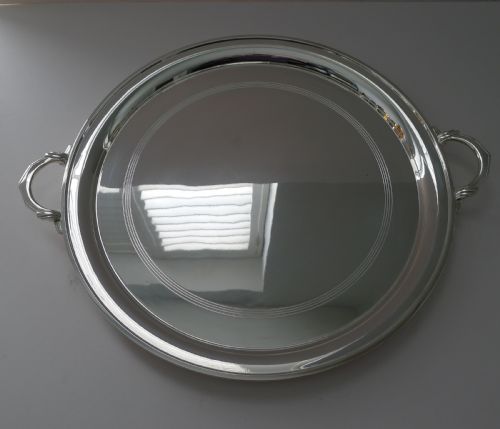
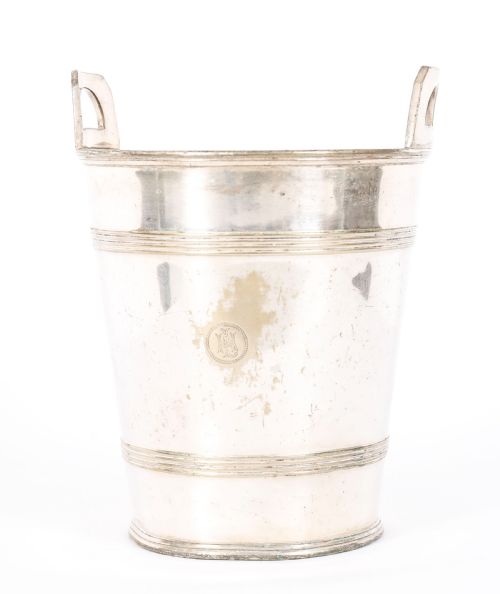
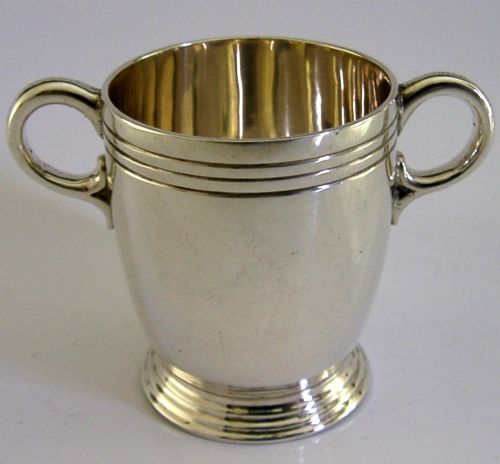
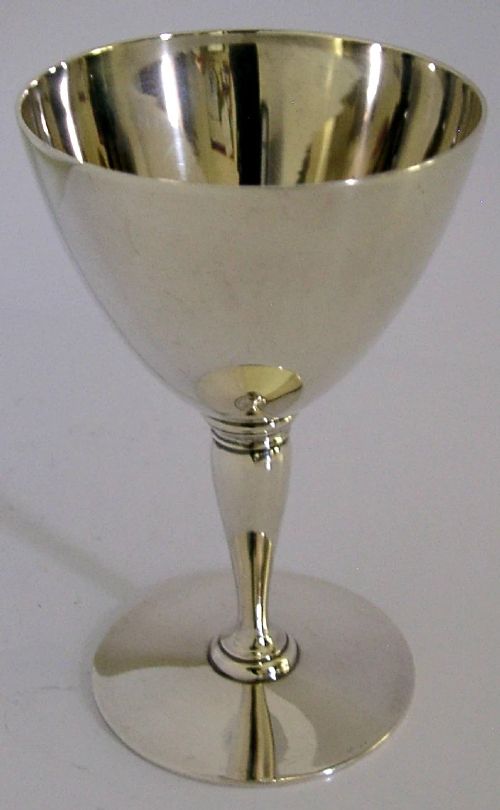
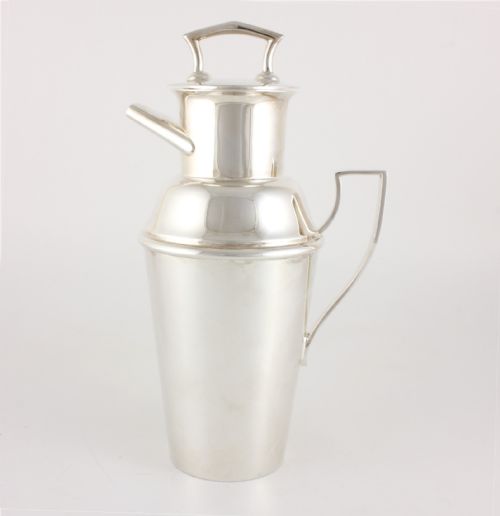
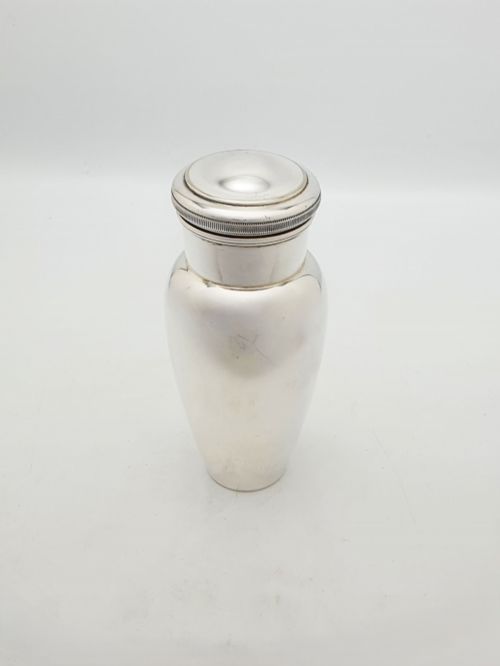
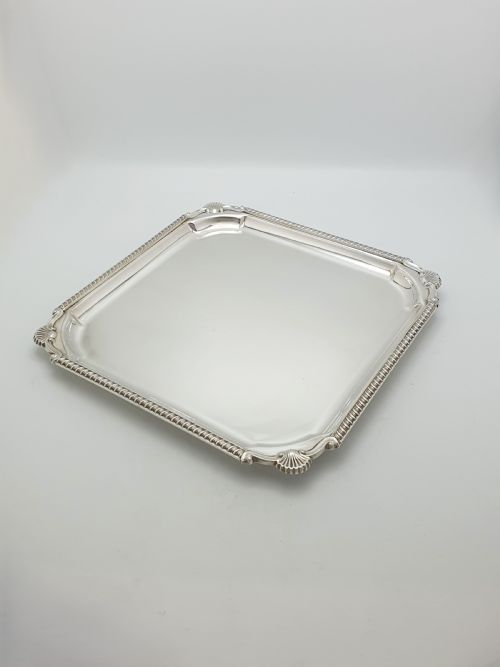
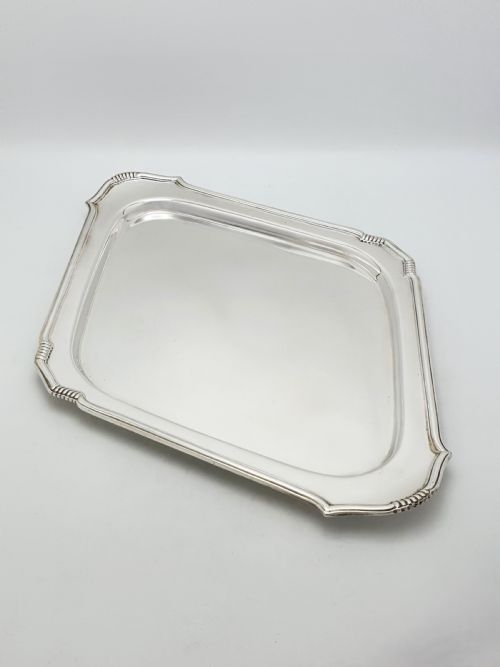
Art deco silver barware comprises cocktail shakers, trays, champagne coolers, hip flasks, decanters, and cocktail sticks originating primarily from the 1920s, 1930s, and 1940s. These pieces range from substantial silver-plated shakers styled like milk churns to delicate sterling silver beakers and novelty toothpick sets.
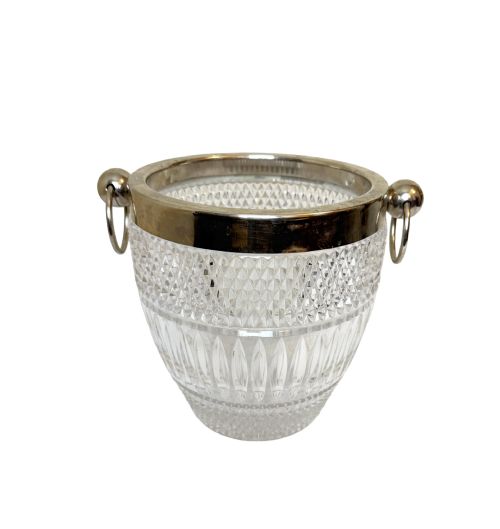
The most common versions met on this page are silver-plated cocktail shakers and serving trays, often accompanied by cut glass decanters and fitted sets of cocktail sticks. English and French makers dominate the selection, utilising both solid sterling silver and plated metals.
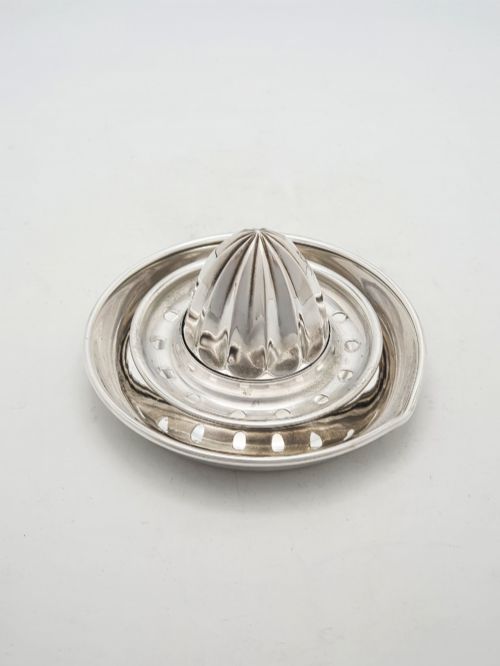
Specialised implements such as ice tongs, lemon wedge squeezers, and double-ended jigger measures reflect the era's expanding cocktail culture. Forms frequently incorporate linear borders, shell motifs, and functional mechanics like rotating recipe bands.
Materials and construction
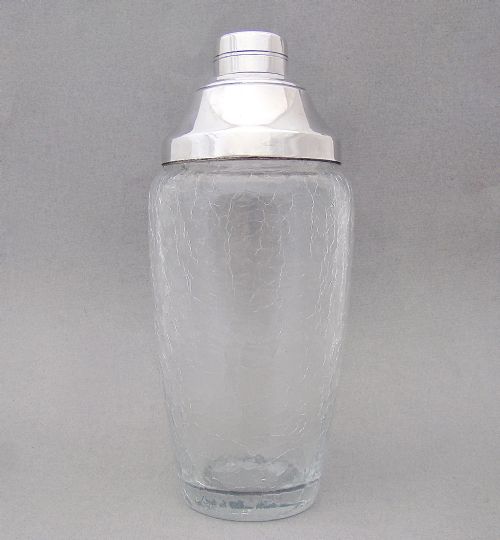
Makers constructed these items using sterling silver, electroplated nickel silver, and silver plate, frequently combining metal with cut glass, crackle glass, and green Bakelite. Handles, collars, and mounts were soldered or fitted securely to glass bodies in decanters and shakers.
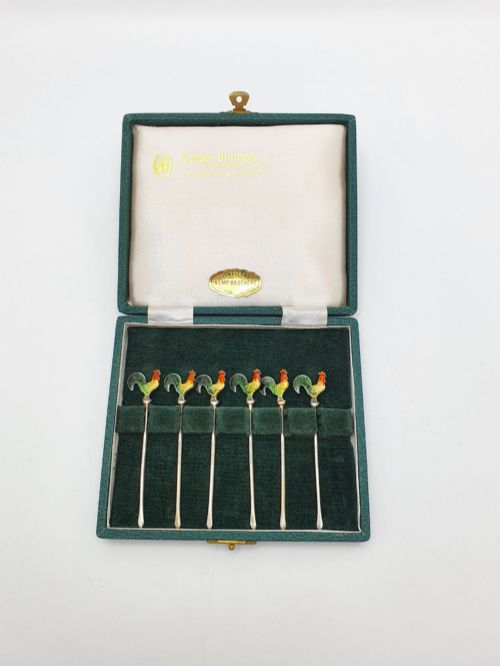
Surface decoration relied on machine-age precision, featuring engraved diamond shapes, geometric shell borders, and hand-applied enamel details on cocktail sticks. Specialist metalworking techniques shaped heavy gauge sheets into cylindrical beakers, curved hip flasks, and weighted trays.
Art Deco Silver Barware Retail Price Guide 2026
Typical asking prices for art deco silver barware among the pieces listed under this phrase on Sellingantiques today, from the lower quarter to the upper quarter. They describe what is for sale here now, not the wider market.
Listings feature works in sterling silver, silver plate, and cut glass, spanning the Edwardian era through the 1940s.
Judging the standard
Quality rests on the weight of the silver or plating, the crispness of the geometric chasing, and the integrity of any glass liners or inserts. Substantial gauge metal and maker attribution elevate certain pieces significantly above standard production wares.
The precision of mechanical elements, such as rotating recipe cylinders on shakers or the tight fit of silver bottle tops and decanter mounts, demonstrates superior workshop execution. Enamel work that remains intact without loss or chipping on small items like cocktail picks denotes careful preservation and higher original craftsmanship.
Keith Murray For Mappin & Webb·Hutton Sheffield·Tiffany & Co·Sudre·Richard Comyns·Asprey & Co·William Neale·Hukin & Heath·J. B. Chatterley & Sons·James Dixon & Sons·WMF
The Art Deco Silver Barware Glossary
- Silver Plate
- A base metal, such as nickel silver, coated with a thin layer of pure silver. This method allowed manufacturers to produce robust barware at a lower cost than solid sterling silver.
- Electroplated Nickel Silver
- Commonly abbreviated as EPNS, this refers to a durable copper, nickel, and zinc alloy coated via electrolysis. It served as the primary foundation for many mid-century cocktail shakers and trays.
- Glug Glug Decanter
- A decanter with a pinched neck designed to regulate the flow of liquid, producing a characteristic bubbling sound when poured. These vessels often feature fitted silver collars and stoppers.
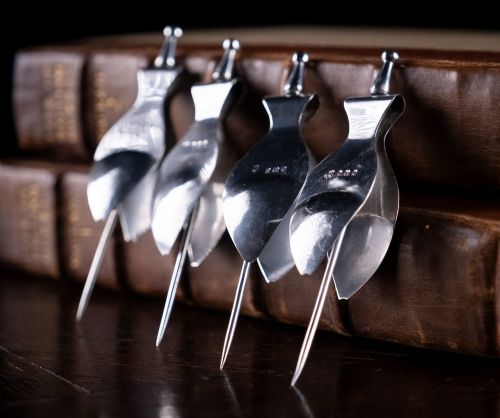
- Cocktail Stick
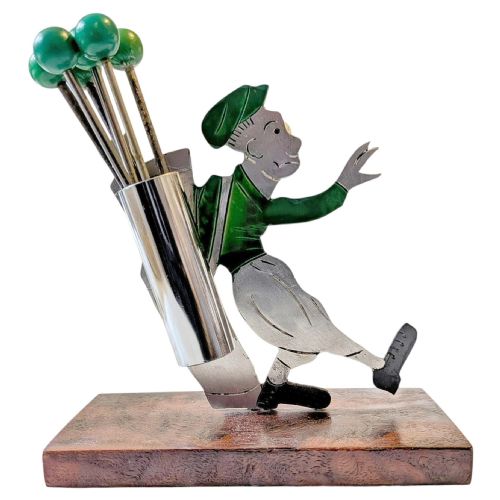
- A small, decorative pick used for garnishing drinks with olives, cherries, or lemon wedges. Sets frequently include figural terminals like golfers or birds housed in dedicated metal or glass stands.
- Jigger
- A dual-ended measuring cup utilised by bartenders to ensure precise proportions in mixed drinks. Art deco examples often feature clean geometric lines and solid sterling silver construction.
Art Deco Silver Barware: Frequently Asked Questions
Can I still use these cocktail shakers for mixing drinks?
Most metal shakers remain functional, provided the internal seals and fitting lids close securely without leaking. Inspect silver-plated interiors for wear to ensure the base metal is not exposed to acidic citrus juices.
Glass-bodied shakers require careful handling to prevent thermal shock or chipping around the metal collars. Hand washing is mandatory to preserve gaskets and delicate surface finishes.
What is the difference between sterling silver and silver plate?
Sterling silver contains a guaranteed minimum proportion of pure silver alloyed with other metals for strength, stamped with formal hallmarks indicating the standard and assay office. Silver plate consists of a base metal core covered by an outer layer of pure silver.
Markings on plated items typically denote the manufacturer or plating technique rather than silver purity. Solid silver pieces generally carry higher weight and maintain intrinsic metal value over time.
How do I identify the period of an art deco item?
Examine the piece for stylistic indicators such as stepped geometric motifs, stylised floral patterns, and machine-age symmetry typical of the interwar decades. Maker marks, registry numbers, and date letters stamped onto the metal provide precise chronological reference points.
Associated materials like Bakelite accents or crackle glass bodies also point firmly toward production between the 1920s and 1940s. Comparing construction methods with documented factory catalogues helps confirm the exact era of manufacture.