






Edwardian Satinwood Tray
These edwardian satinwood tray pieces bring refined polish and useful warmth to any room, offering a glimpse into fine period craftsmanship.
Edwardian Satinwood Tray
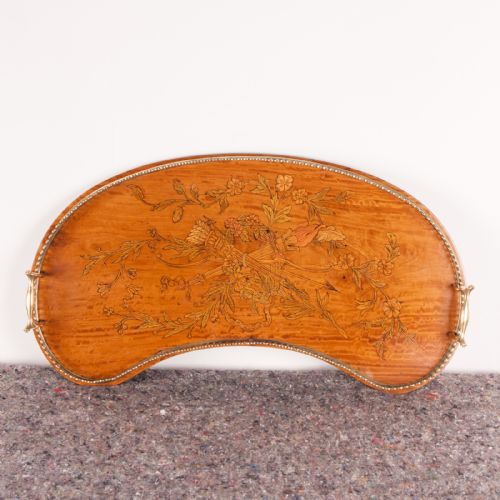
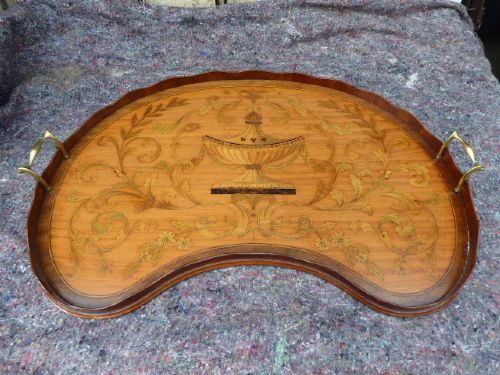
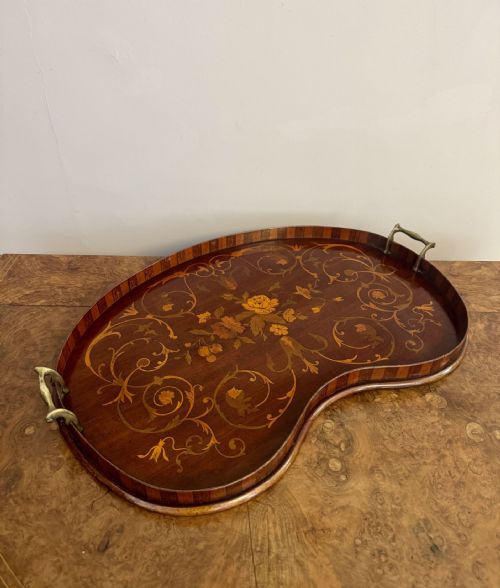
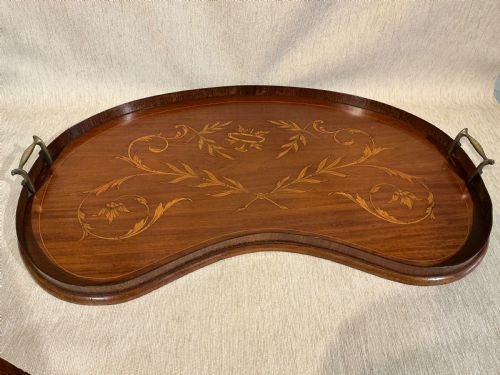
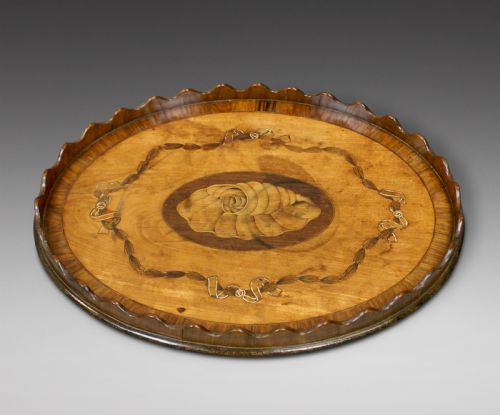
An edwardian satinwood tray represents a sophisticated form of serving and display ware, most commonly found in kidney shapes or oval formats dating from the Edwardian era and the broader Sheraton Revival period. These items often showcase delicate marquetry and contrasting timbers like mahogany, reflecting the refined tastes of their original owners.
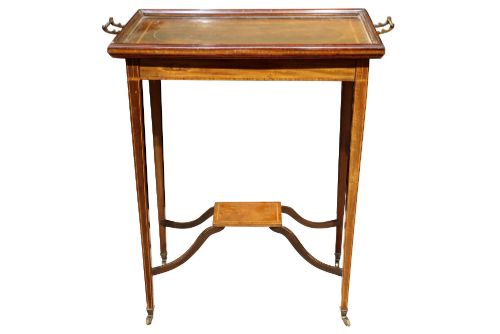
The selections available range from standalone serving pieces with brass galleries to elaborate tray top occasional tables and etageres designed for the drawing room. Most pieces date from around nineteen hundred to nineteen ten, though occasional examples stretch back into the nineteenth century.
Buyers encounter both functional serving items and decorative surfaces intended for display, frequently enhanced by hand-painted detailing or intricate boxwood stringing. This variety ensures that each piece functions equally well as a usable accessory or a focal point of period design.
Materials and construction
Craftsmen utilised smooth satinwood veneers over sturdy secondary woods like mahogany, applying careful hand-painted detailing and marquetry to create striking geometric or floral motifs. Boxwood stringing frequently outlines the edges, providing sharp visual contrast against the pale golden ground of the satinwood.
Many serving examples incorporate cast brass handles and raised brass galleries designed to secure glassware during service. These metal elements are securely fastened to the wooden base, combining structural durability with polished decorative appeal.
Listings feature satinwood combined with mahogany, brass, glass, and boxwood across Edwardian and Sheraton Revival periods.
Quality variations
Quality in an edwardian satinwood tray rests upon the precision of the marquetry and the crispness of the inlaid wood details. Superior pieces display seamless veneer work without lifting or cracking, alongside finely cast brass galleries that fit the contour of the wood perfectly.
Makers such as Edwards and Roberts or Waring and Gillow achieved exceptional depth in their surfaces through careful timber selection and polished finishing. Lesser examples exhibit simpler painted decoration rather than true wood inlay, with less attention paid to the grain alignment of the underlying satinwood.
Edwards and Roberts·Waring and Gillow
The Edwardian Satinwood Tray Glossary
- Satinwood
- A lustrous tropical hardwood with a natural golden sheen and fine grain, prized for high-end cabinet making and veneer work. It forms the primary visual surface on these decorative trays.
- Marquetry
- The art of applying pieces of veneer to a structure to form decorative patterns and pictures. Craftsmen cut various tinted woods to create floral or neoclassical scenes across the tray surface.
- Brass gallery
- A low pierced metal railing fitted around the perimeter of a serving tray or table top. This fixture prevents items from sliding off during transport.
- Sheraton Revival
- A late nineteenth and early twentieth century design movement inspired by the neoclassical furniture of George Sheraton. It relies on symmetrical forms, light timbers, and delicate inlay.
- Etagere
- A piece of furniture consisting of a set of open shelves for displaying small objects. These often incorporate a removable tray as the top tier.
Edwardian Satinwood Tray: Frequently Asked Questions
How were these trays used?
These pieces served practical roles in wealthy households for carrying afternoon tea, wine decanters, and glassware between rooms.
Many also functioned as permanent display surfaces on occasional tables or side cabinets within formal drawing rooms.
Can I use an antique tray for serving?
While sturdily built with solid wood bases and secure handles, antique pieces require gentle handling to protect the delicate satinwood veneer and polished finish from moisture.
Using coasters or linen liners helps preserve the antique surface while still allowing practical use during gatherings.
How do I spot Sheraton Revival style?
Sheraton Revival pieces show clean geometric lines, light satinwood or mahogany timbers, and restrained neoclassical inlay such as urns, swags, or bellflowers.
The overall aesthetic prioritises elegance and lightness over the heavier proportions seen in earlier Victorian furniture.