


Brass Gallery Tea Tray
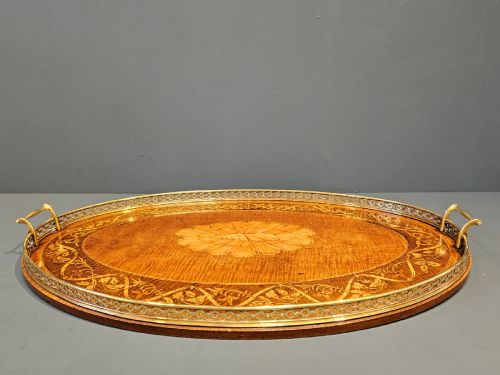
These brass gallery tea tray examples combine timber and metalwork to offer both a functional surface and a decorative antique centre.
Brass Gallery Tea Tray
When you search for a brass gallery tea tray, you encounter serving trays and occasional tables designed to transport or display glassware and china. The common thread is a raised metal rim encircling a wooden base.
The pieces on this page span the 18th century, the 19th century, the Victorian era, the Edwardian period, and later revivals. Mahogany and satinwood form the vast majority of the timber bases.
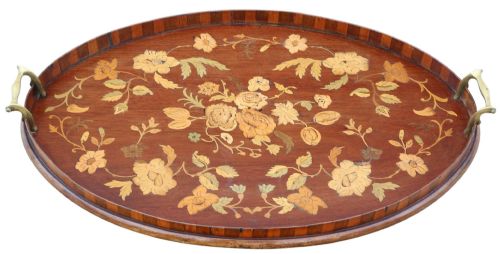
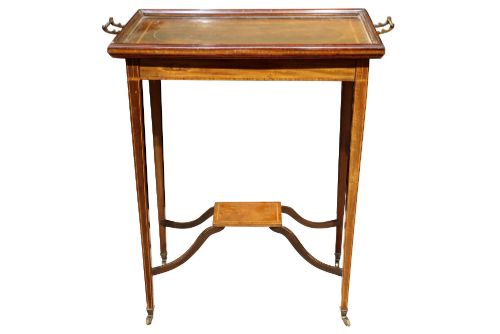
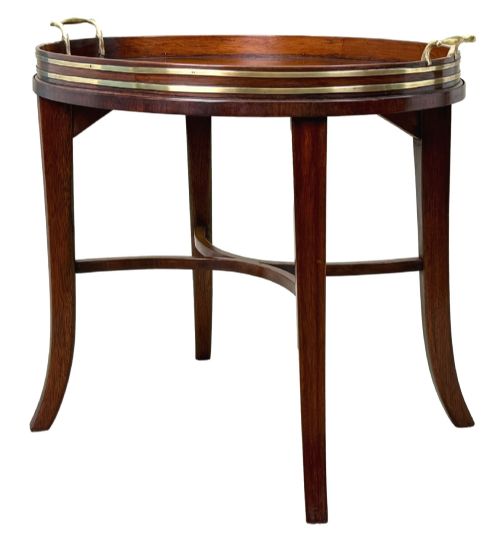
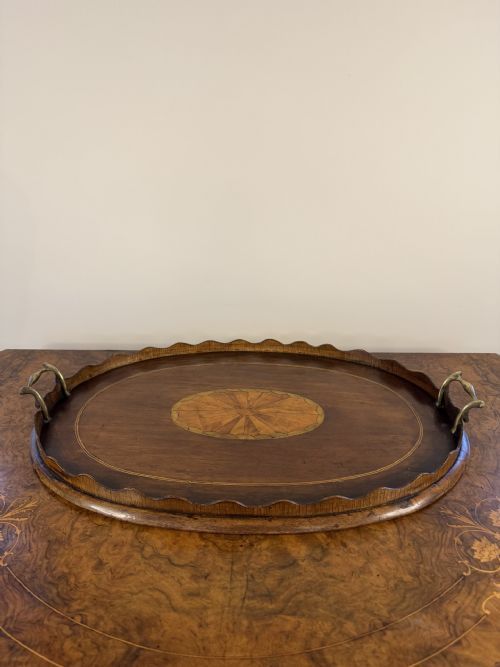
Oval shapes predominate, often fitted with handles integrated into the metal gallery or the wooden body. Some examples arrive mounted on stands to function as low tables rather than handheld servers.
How they were made
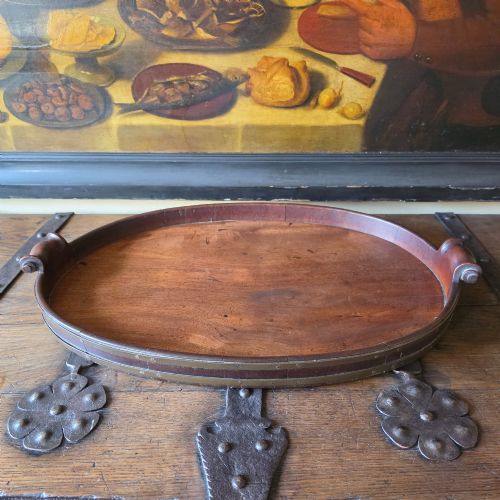
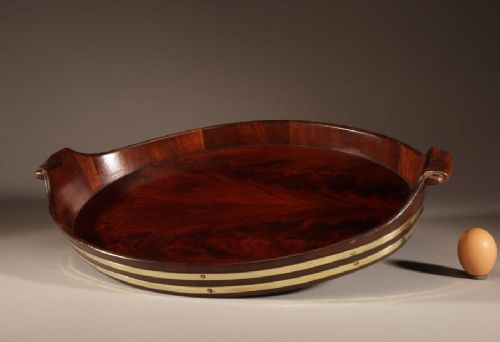
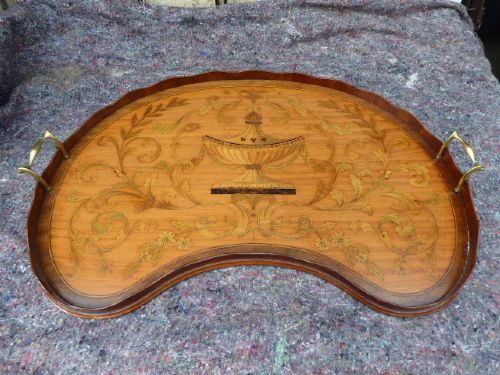
Cabinetmakers shaped the timber bases from solid mahogany or satinwood, frequently employing fine marquetry inlay and satinwood inlay to decorate the surface. Coopered construction appears on certain oval trays, utilising closely fitted wooden staves.
The defining brass gallery is secured around the perimeter of the tray to retain items safely. Makers combined these metal railings with matching brass bound decoration or built-in handles.
Some trays are so heavily coopered they feel less like tea servers and more like miniature mahogany wooden ships.
What varies in quality
The crispness of the inlaid wood and the intricacy of the marquetry set the finer examples apart from simpler production. Subtle variations in the casting and fixing of the brass gallery indicate the level of care taken in the workshop.
Proportion and timber selection dictate the overall elegance of the tray. Pieces with rich figuring in the mahogany or balanced satinwood patterning hold greater visual weight.
Edwards and Roberts
The Brass Gallery Tea Tray Glossary
- Brass gallery
- A low perforated or railed metal fence fitted around the edge of a tray to prevent items from sliding off. It is typically pierced from sheet brass or assembled from cast spindles.
- Marquetry inlay
- Decorative patterns formed by fitting contrasting veneer pieces into the wooden surface of the tray. This technique allows for elaborate floral or geometric designs.
- Coopered
- Construction method using vertical wooden staves bound together, similar to barrel making, used to shape curved tray sides. It provides structural strength for oval forms.
- Satinwood
- A lustrous yellow timber prized by cabinetmakers for its fine grain and bright appearance, frequently used for contrasting details or entire tray surfaces.
Brass Gallery Tea Tray: Frequently Asked Questions
What is a brass gallery tea tray?
A brass gallery tea tray is a serving vessel featuring a wooden base enclosed by a protective metal railing. These pieces combine timber craftsmanship with metalwork.
They were built for domestic service, allowing hosts to carry tea sets or glassware safely across rooms. Today they function equally well as decorative accents on sideboards or coffee tables.
How do I date a brass gallery tea tray?
Dating relies on observing the timber species, the style of the inlay, and the construction methods used for the base. Georgian and Victorian pieces exhibit different veneer techniques compared to later Edwardian examples.
The complexity of the brass gallery and the presence of maker attribution also help place a piece within its historical period.
Were these trays used for serving tea?
These trays served primarily for carrying porcelain tea services, decanters, and glassware in formal households. The raised brass rail kept expensive ceramics secure during transport.
Over time, many transition from active service to static display items or top occasional tables.
How do I care for mahogany and brass?
Maintain the timber base with appropriate paste wax to nourish the grain and preserve the finish. Avoid placing damp items directly onto antique wood surfaces.
Clean the brass gallery gently with a soft cloth to remove dust without disturbing the surrounding polish.