


Victorian Tea Tray
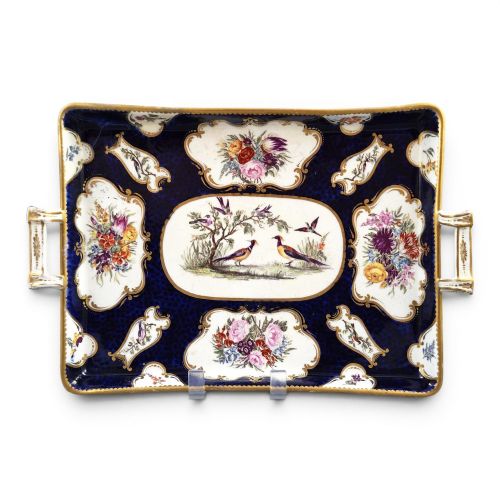
A victorian tea tray brings nineteenth-century hospitality to the modern table, offering a sturdy stage for afternoon service.
Identifying a victorian tea tray
A victorian tea tray serves as a practical platter designed for carrying and presenting tea services, finding regular use in nineteenth-century drawing rooms and parlours. These items emerge from various decades within the period, reflecting the changing tastes of domestic life.
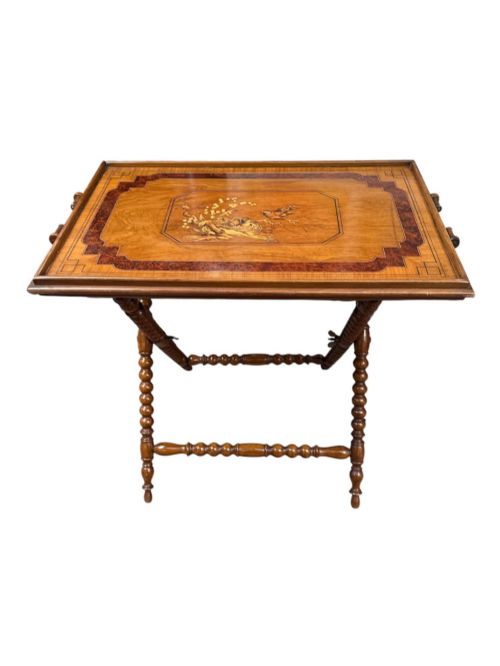
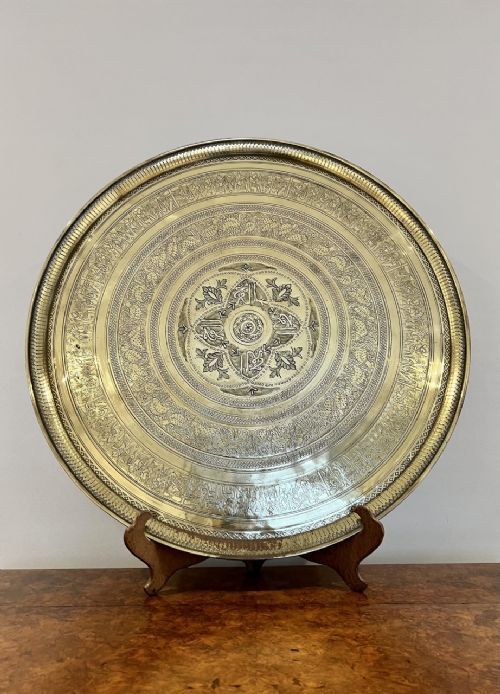
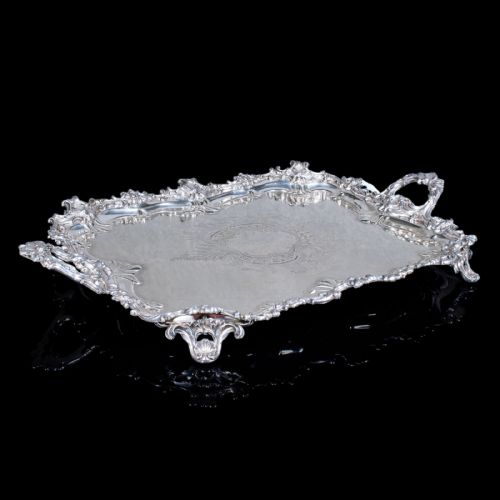
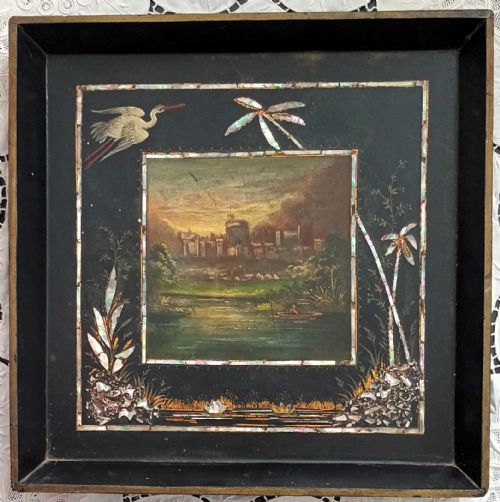
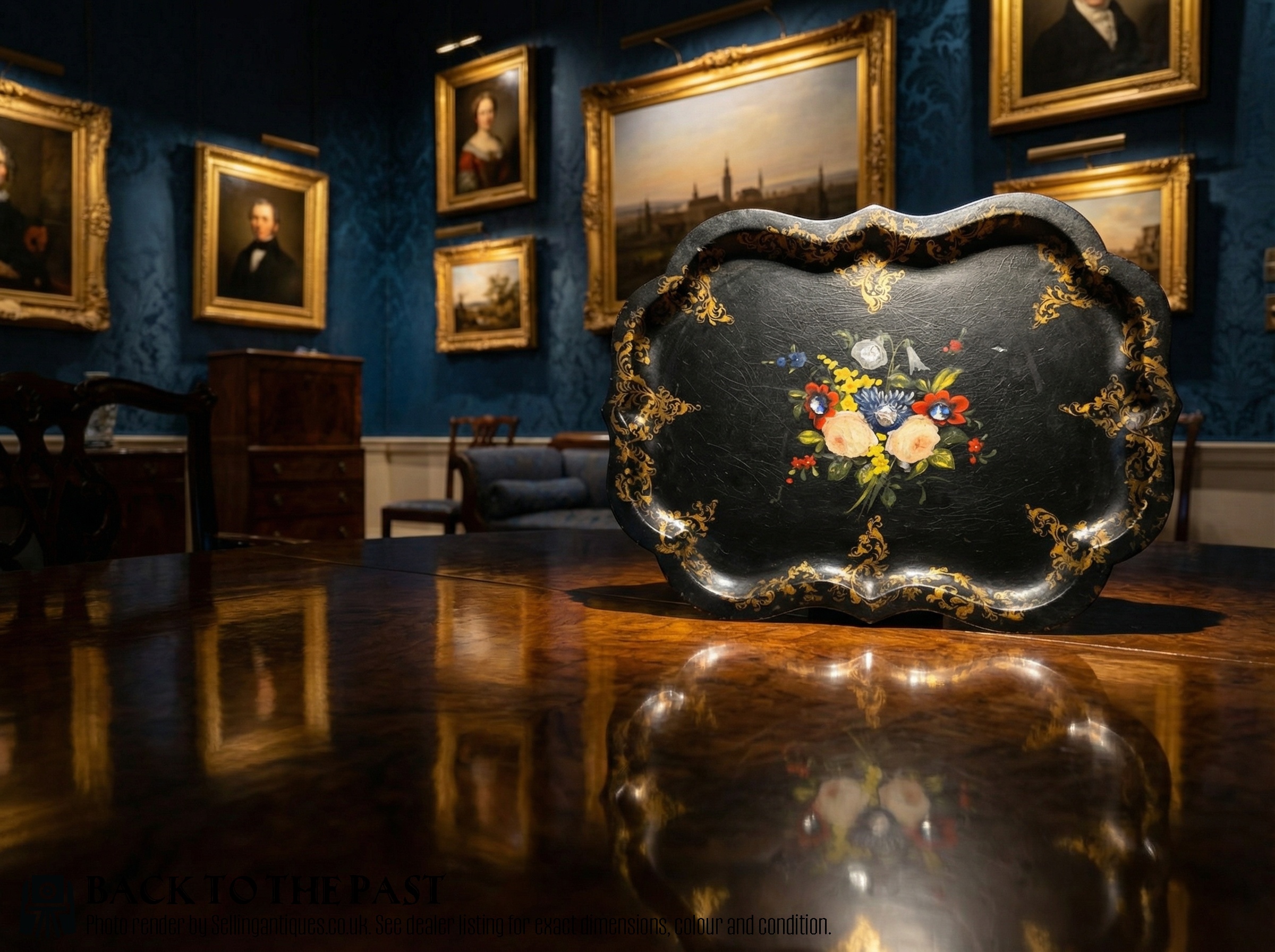
The pieces on offer span several distinct regional styles and physical forms. Mahogany, silver plate, and papier-mâché dominate the selections, alongside occasional examples in teak, hardwood, lacquer, and walnut.
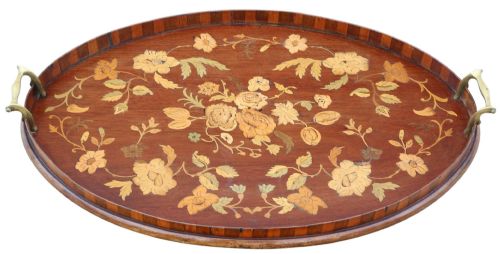
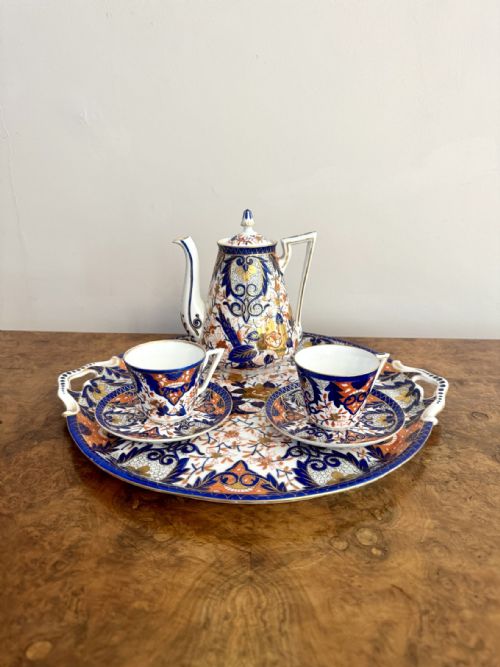
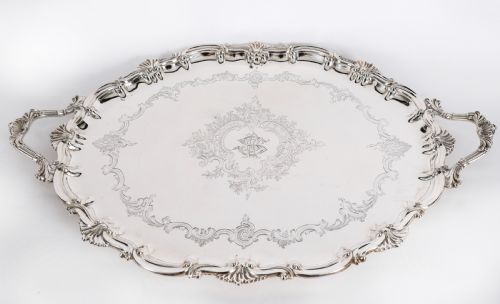
Buyers will encounter serving trays and specific afternoon tea platters featuring oval or rectangular shapes. Many incorporate twin handles for lifting, while others rely on raised edges or scalloped borders to secure the vessels resting upon them.
Materials and construction
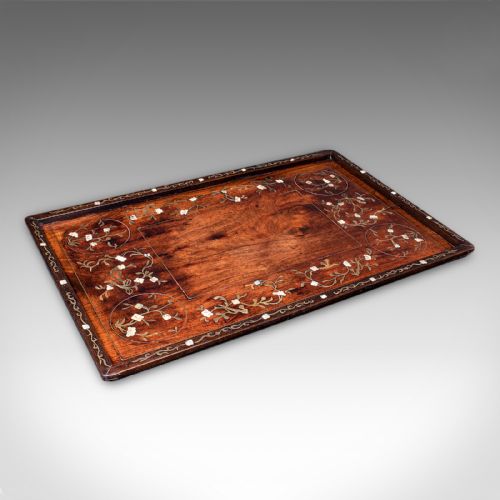
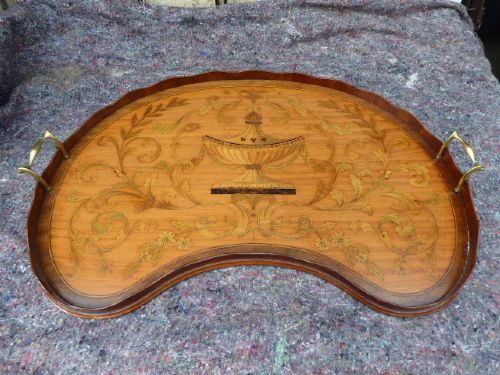
Timber trays rely on solid woods like mahogany, teak, and walnut, frequently enhanced by decorative marquetry, satinwood, or contrasting wood inlay. Artisans also utilised papier-mâché and lacquer surfaces, sometimes embellished with mother-of-pearl or gilt detailing.
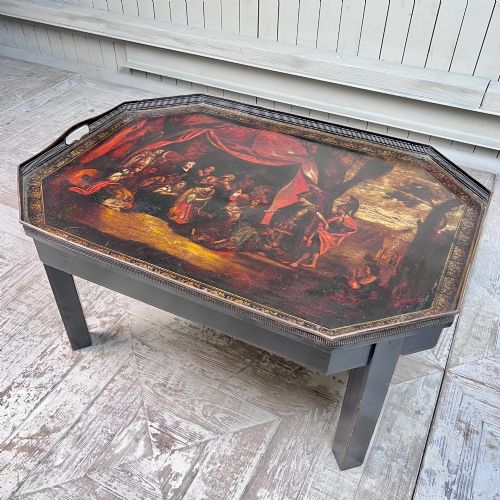
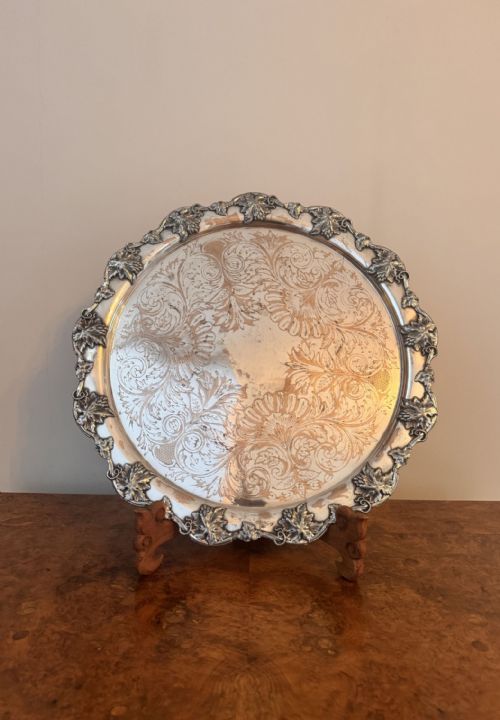
Metal examples employ silver plate applied over a base metal foundation, occasionally complemented by engraved decorative motifs. Certain pieces incorporate pokerwork or painted tôle peinte finishes on metal or wood bases.
Retail Price Guide 2026
Typical UK retail prices for victorian tea tray, calculated from the Sellingantiques database of over a million retail prices indexed since 2003. This retail price guide relies exclusively on Sellingantiques data; no external sources or auction records are used, so the figures do not describe the wider market.
Gentleman's club trays once carried evening ports and brandies just as steadily as they now steady morning teapots.
Judging the standard
Quality reveals itself in the crispness of the carving, the precision of the wood inlay, and the integrity of the silver plating. Superior pieces display harmonious proportions and secure joinery at the handles and galleries.
The choice of primary material dictates much of the character, with substantial hardwoods and heavy silver plate representing the more ambitious commissions of the era. Finer examples maintain smooth working surfaces despite decades of domestic service.
Walker & Hall·Elkington & Co
The Victorian Tea Tray Glossary
- Silver plate
- A thin layer of silver bonded to a base metal core. This technique allowed makers to produce impressive serving pieces at a lower cost than solid sterling silver.
- Papier-mâché
- A composite material made from paper pulp or layers of paper reinforced with glue, moulded and dried to create sturdy, lightweight trays.
- Marquetry
- The art of applying pieces of veneer to a structure to form decorative patterns. This technique appears frequently on nineteenth-century mahogany tea trays.
- Tôle peinte
- Painted sheet metal used for decorative domestic wares. These trays often feature dark backgrounds with contrasting floral or geometric designs.
- Gallery
- A raised rim or border surrounding the edge of a tray. This feature prevents cups and teapots from sliding off during transit.
Frequently Asked Questions
How do I clean a silver plated tray?
Use a soft cloth and a gentle, non-abrasive silver cleaner to remove tarnish without scratching the plated surface.
Avoid soaking metal trays in water, and dry them thoroughly immediately after cleaning to preserve the finish.
Can I use these trays daily?
Many nineteenth-century trays remain structurally robust enough for regular service in modern homes. Sturdy timber and heavy metal examples handle daily use well if treated with care.
Fragile papier-mâché or delicate lacquered surfaces deserve more cautious handling and suit decorative display better.
What wood was most commonly used?
Mahogany appears frequently among the wooden examples, prized for its deep colour and durability. Cabinet makers also turned to walnut, teak, and satinwood for specific decorative effects.
Inlays often incorporated various contrasting timbers to create elaborate geometric or floral borders.
How are papier-mâché trays maintained?
Dust these lightweight pieces regularly with a dry, soft cloth to protect the painted or lacquered finish. Moisture can damage the compressed paper core.
Keep them away from direct sunlight and damp environments to prevent warping or cracking of the surface.