
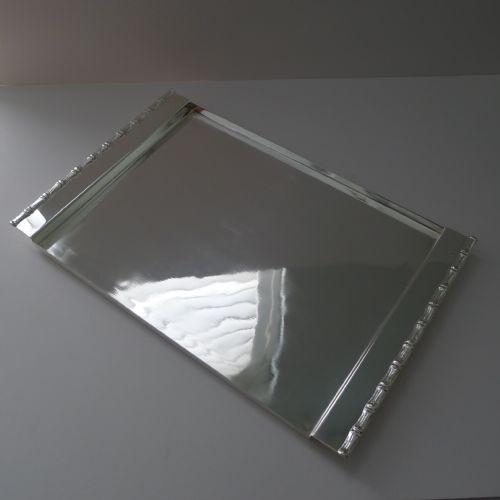
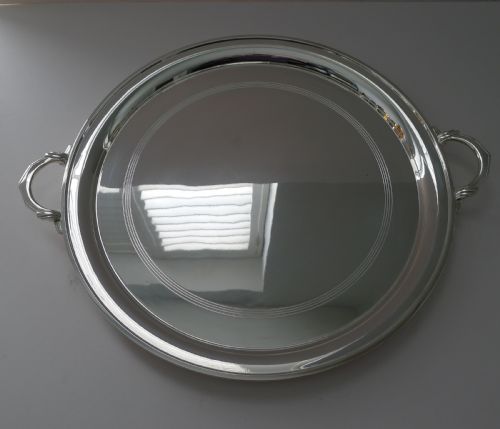
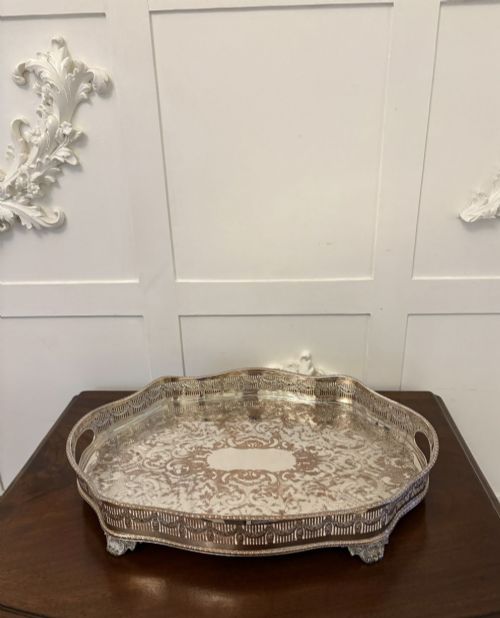
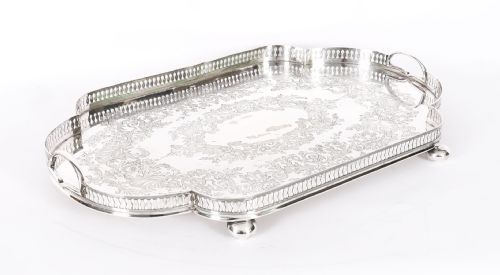


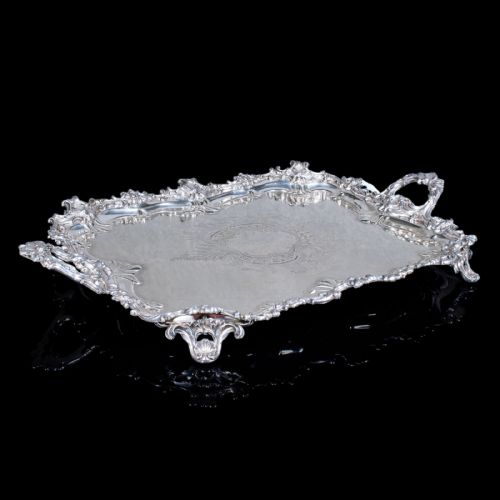
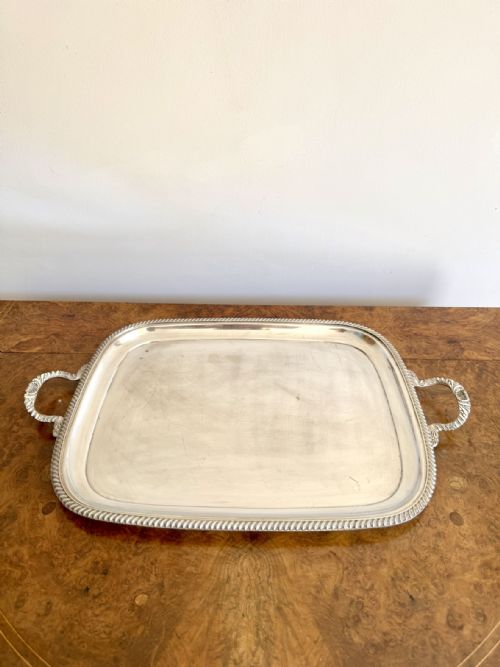
Silver Tray with Handles
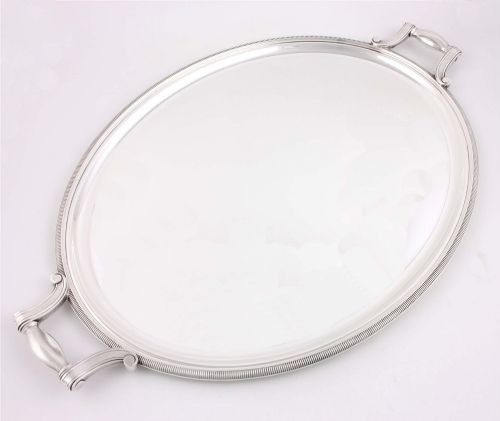
These silver tray with handles pieces are sturdy serving vessels that bring genuine period elegance to modern tables.
Identifying a silver tray with handles
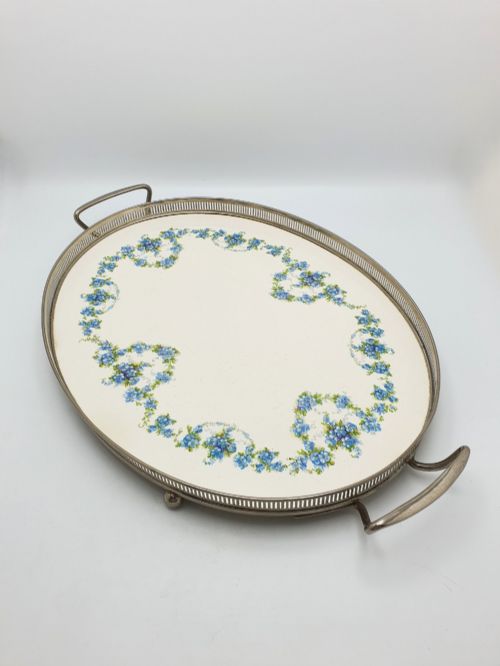
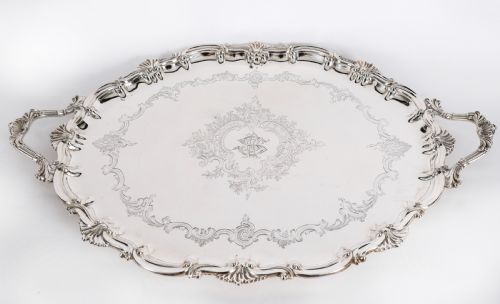
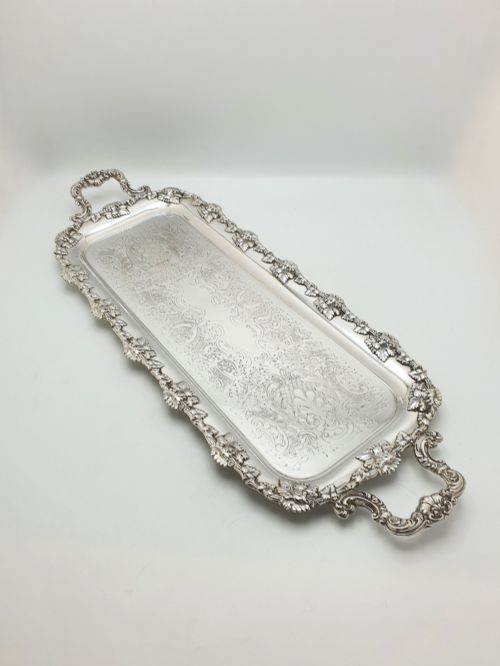
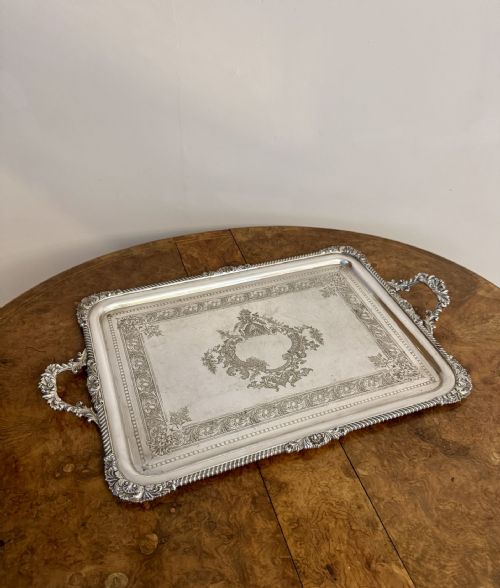
When you search for a silver tray with handles, you are looking at serving items spanning from the nineteenth century into the Art Deco period. These pieces appear in forms such as tea trays, drinks trays, cocktail trays, and gallery trays.
The majority of what you will meet on this page includes Victorian and Edwardian silver plated serving trays, alongside twentieth-century sterling silver examples.
Originating largely from English workshops, these items served practical functions in domestic dining and entertaining before becoming decorative table centrepieces.
Materials and construction methods
Makers utilised a range of foundational materials, predominantly silver plate, electroplated nickel silver, Sheffield plate, and solid sterling silver, occasionally combining them with wood.
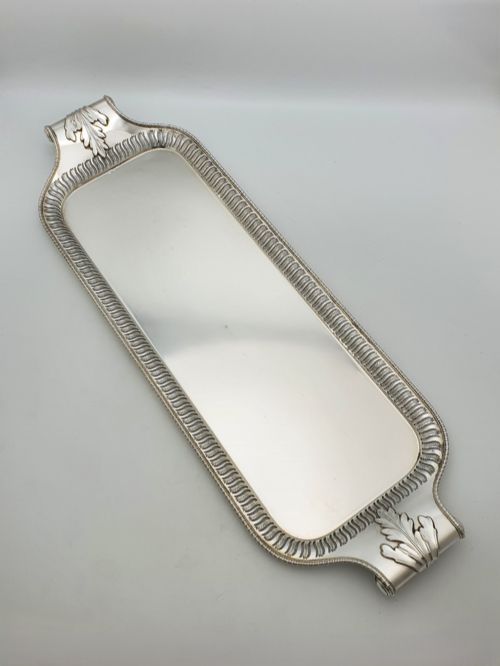
Surface decoration frequently involves detailed hand-engraving, while gallery trays incorporate pierced or raised side rails to secure glassware and decanters.
Handles were securely attached through soldering or integrated directly into the wooden or metal frames during production.
Retail Price Guide 2026
Typical UK retail prices for silver tray with handles, calculated from the Sellingantiques database of over a million retail prices indexed since 2003. This retail price guide relies exclusively on Sellingantiques data; no external sources or auction records are used, so the figures do not describe the wider market.
Materials across these listings span sterling silver, silver plate, Sheffield plate, electroplated nickel silver, copper, and wood.
Distinguishing quality across pieces
Quality rests upon the weight of the metal and the crispness of the hand-engraving across the surface. Solid sterling silver and heavy Sheffield plate represent the upper tier of production.
Design sophistication also dictates standing, with distinct Art Deco geometry by notable designers or elaborate Rococo Revival chasing separating standard utility items from finer commissions.
Keith Murray For Mappin & Webb·Elkington·BARKER BROTHERS
The Silver Tray with Handles Glossary
- Sheffield Plate
- An early method of fusing a thin sheet of silver to a thicker copper base before electroplating became common. This technique creates a distinctive layered appearance visible on older items.
- Electroplated Nickel Silver
- A durable base metal coated in a layer of pure silver through an electrolytic process. It became a standard manufacturing standard during the Victorian era.
- Gallery Tray
- A serving tray featuring a raised pierced metal gallery or railing around the perimeter. This design prevented decanters and glasses from sliding off during transit.
- Rococo Revival
- A decorative style popular in the nineteenth century characterised by asymmetrical scrollwork, floral motifs, and shell patterns. It adds ornate visual movement to tray borders.
Frequently Asked Questions
How do I clean an antique silver tray?
Use a soft cloth and a specialised silver polish designed to protect plated or solid surfaces without being overly abrasive.
Avoid harsh chemical dips that strip away the remaining plate or damage the underlying base metal.
Can I use these trays for serving drinks?
These trays were originally built for serving tea, coffee, and spirits in domestic settings.
Modern use is entirely suitable, provided you dry them promptly after use to prevent moisture spotting.
What is the difference between Sheffield plate and silver plate?
Sheffield plate involves physically fusing silver and copper together under heat prior to shaping.
Standard silver plate applies a silver coating to a nickel or alloy base through electricity later in the nineteenth century.
How do I date a silver tray?
Solid silver pieces usually carry British hallmarks indicating the assay office, maker, and year of production.
Plated items rely on style markers, such as Victorian scrollwork or Art Deco geometry, alongside maker marks.