





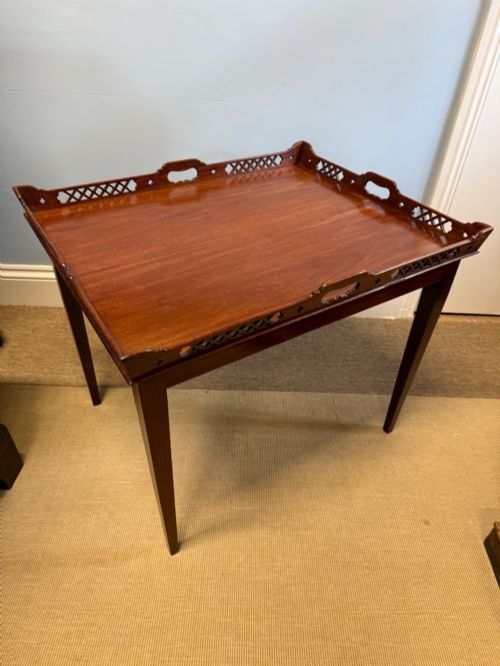


Pierced Gallery Tray
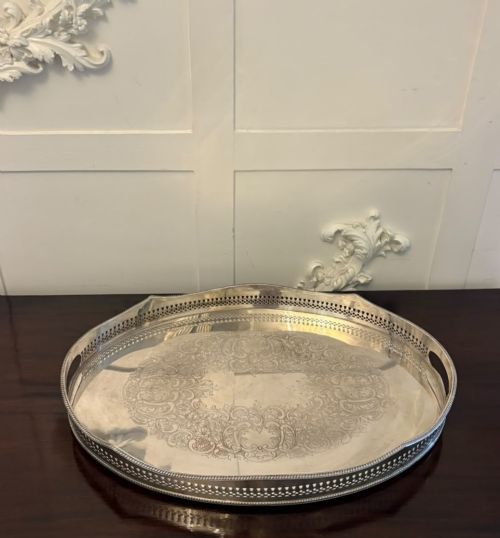
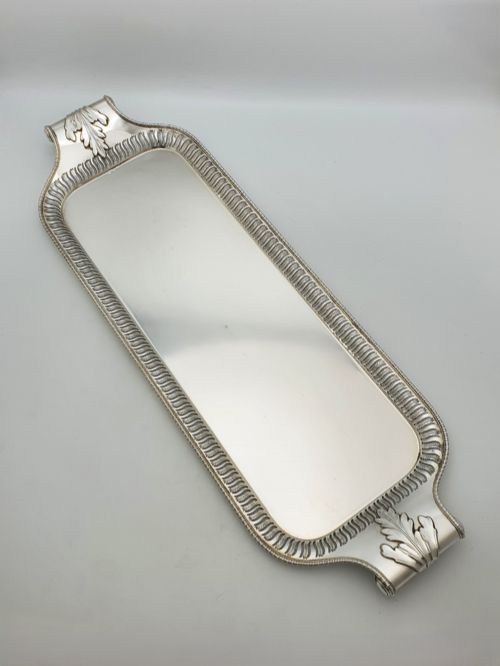
A pierced gallery tray combines raised pierced borders with a flat handling surface, offering a secure way to serve drinks or display objects.
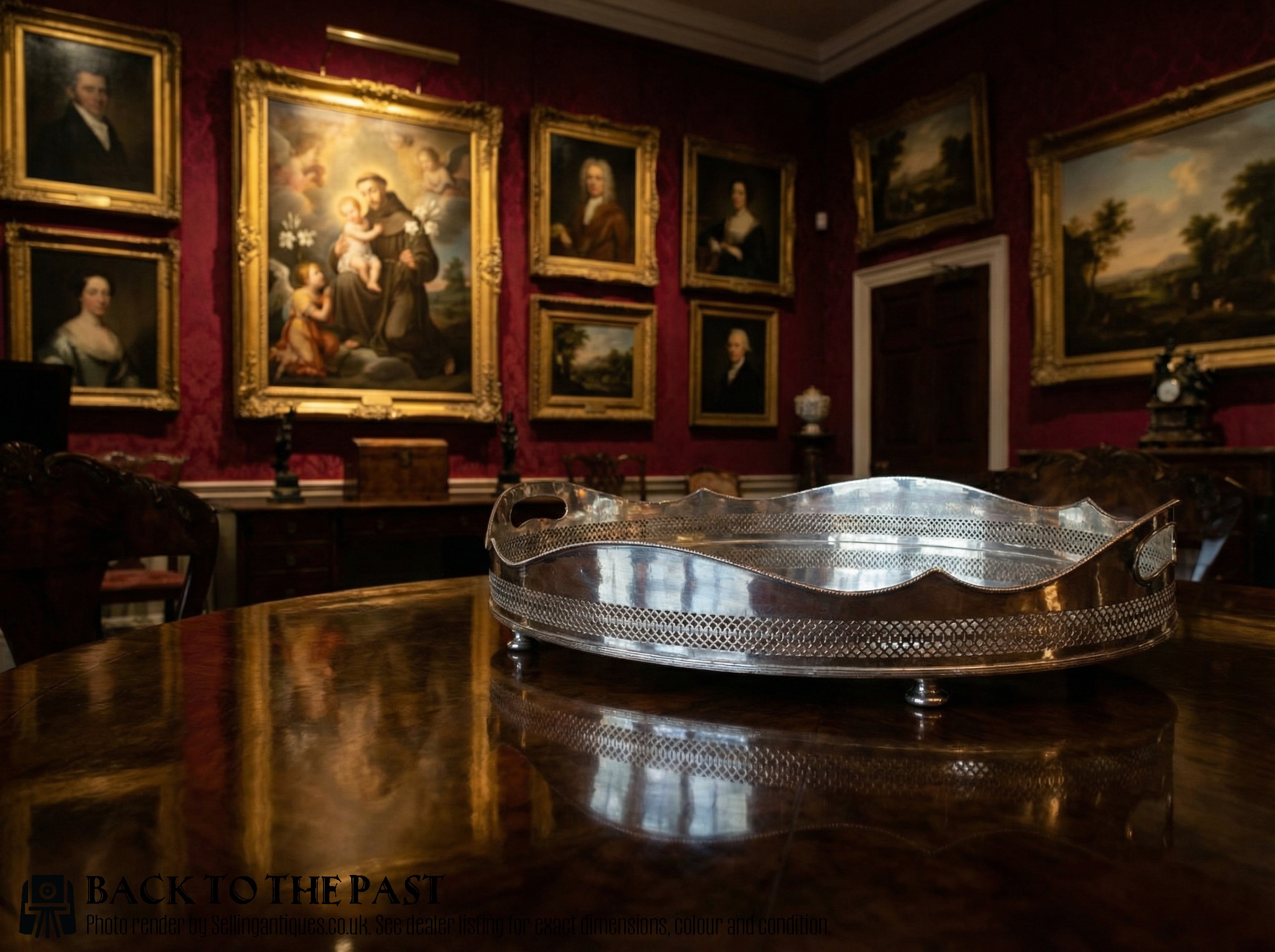
Pierced Gallery Tray
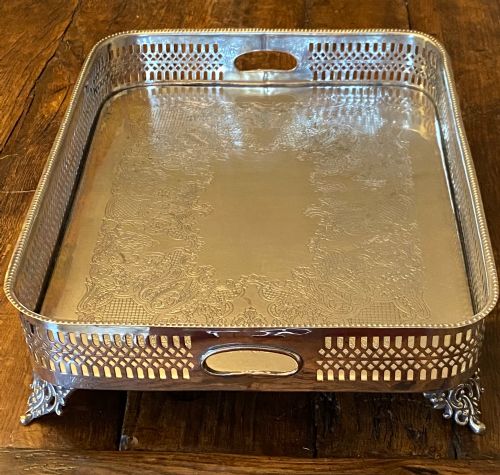
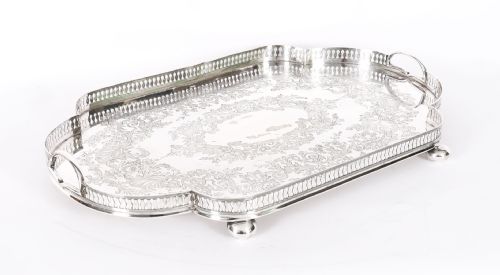
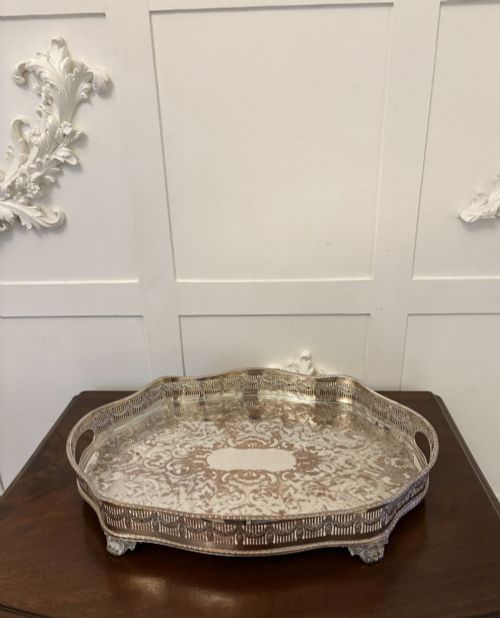
When you search for a pierced gallery tray, you encounter serving pieces defined by an upright, pierced or reticulated border encircling the perimeter. These trays appear most frequently in silver plate, electroplated nickel silver, and mahogany, stemming predominantly from the Edwardian, Victorian, and Georgian eras.
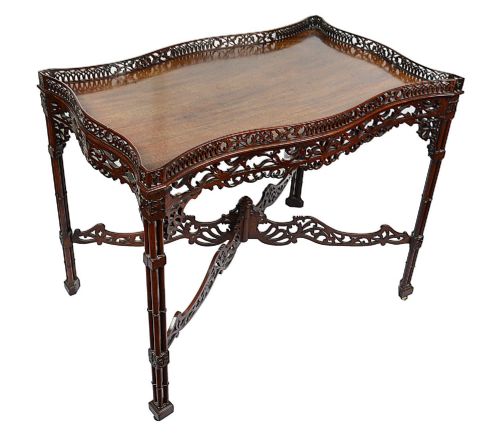
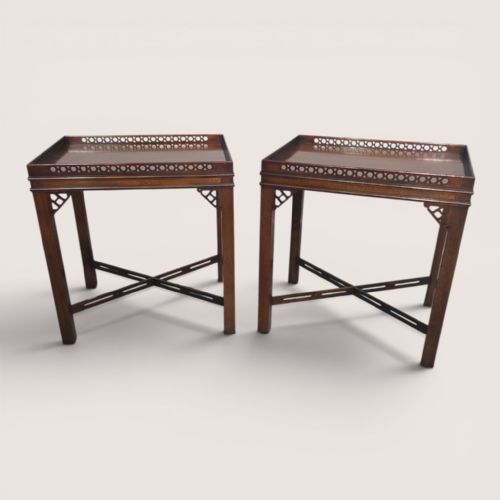
The selection ranges from oval tea and cocktail trays with handles to occasional tables and bedside night tables featuring gallery tops. You will also discover occasional wine tables and occasional pieces constructed in oak, brass, and copper alongside classic silver-plated examples.
How they were made
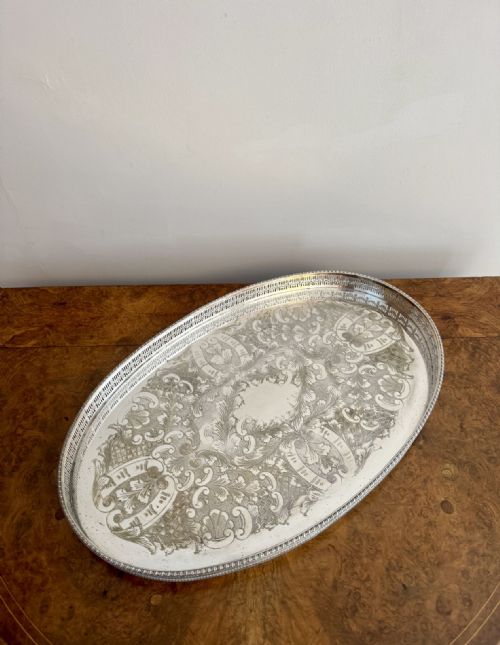
Makers utilised metals such as silver plate, electroplated nickel silver, brass, copper, and ormolu, applying plating techniques over base metals or casting solid forms. Pierced galleries were worked by hand or machine to create reticulated borders, sometimes complemented by engraved surfaces and embossed scrolls.
Wooden variants relied upon mahogany and oak, often shaped into tray tops, bedside tables, and wine tables. Joinery and carved details accompanied the gallery edges, uniting timber construction with functional raised borders.
Pierced Gallery Tray Retail Price Guide 2026
Typical asking prices for pierced gallery tray among the pieces listed under this phrase on Sellingantiques today, from the lower quarter to the upper quarter. They describe what is for sale here now, not the wider market.
Several trays double as cocktail companions, ready to hold a decanter while you pretend you live in an Edwardian country house.
What varies in quality
The standard of a pierced gallery tray depends upon the crispness of the pierced metalwork and the depth of the engraving on the tray floor. Finely pierced galleries show clean, sharp apertures without distortion, while superior silver plating maintains an even, substantial coating across the base metal.
In wooden examples, the quality rests in the selection of the mahogany or oak, the precision of the gallery joinery, and the harmony of the proportions between the tray and its stand or handles.
James Deakin·Mappin & Webb·Elkington·Lee & Wigfull·J.H. Potter
The Pierced Gallery Tray Glossary
- Gallery tray
- A serving tray featuring a raised, vertical border around the edge designed to prevent items from sliding off during transit. This perimeter is often pierced or reticulated.
- Silver plate
- A layer of silver applied to a base metal such as copper or nickel silver. This technique became widespread during the 19th and early 20th centuries.
- EPNS
- Electroplated nickel silver, a common base material for silver-plated items produced from the mid-19th century onward. It provided a durable foundation for decorative serving wares.
- Reticulated
- Describes metalwork decorated with an openwork pattern of net-like or pierced designs. It appears frequently on the borders of fine serving trays.
- Sheffield plate
- An early form of silver plating created by fusing a sheet of silver to a copper ingot before rolling them together. It is particularly associated with items from the 18th and 19th centuries.
Pierced Gallery Tray: Frequently Asked Questions
What is a gallery tray used for?
These trays were primarily utilised for serving tea, coffee, cocktails, and decanters in domestic settings. The raised pierced border ensured that glasses and cups remained secure while being carried from room to room.
Over time, many of these trays transitioned into decorative display pieces or found new life mounted on stands as occasional and bedside tables.
How do I date a silver plated tray?
Dating relies upon a combination of maker's marks, manufacturing techniques, and stylistic periods such as the Edwardian, Victorian, or Georgian eras. The weight of the base metal and the style of the engraved scrolls also offer clues to the decade of production.
Examining the type of plating, such as early Sheffield plate versus later electroplated nickel silver, helps narrow the chronological window.
What does pierced mean on a tray?
Piercing refers to the cutting out of geometric, floral, or lattice patterns from the flat metal of the tray's border. This technique lightens the visual weight of the gallery while maintaining its containment function.
The intricacy of this pierced work is a primary indicator of the maker's skill and the overall quality of the piece.