


Silver Plated Tea Tray
When you search for a silver plated tea tray, you uncover a serving vessel designed for hospitality from the nineteenth and twentieth centuries.
Silver Plated Tea Tray
A silver plated tea tray brings together the hosting traditions of the Victorian, Edwardian, and Art Deco periods. Buyers search for these pieces to serve afternoon tea, cocktails, or display glassware on a surface with historical presence.
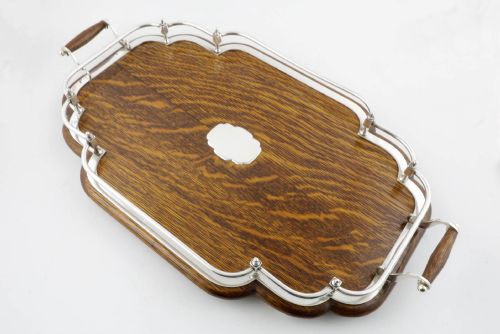
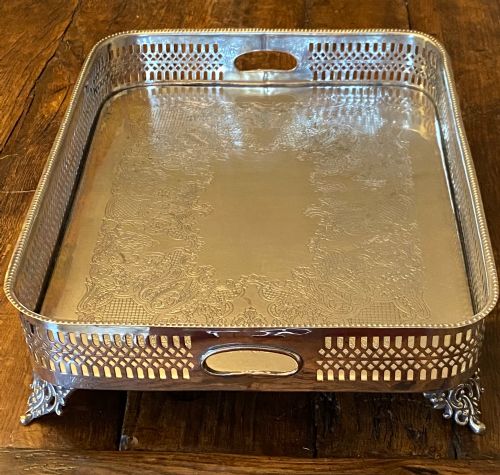
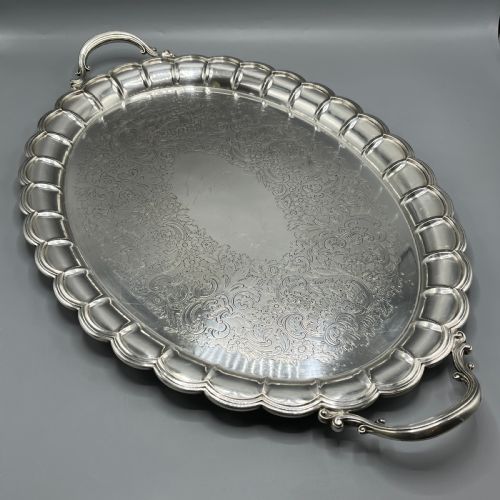
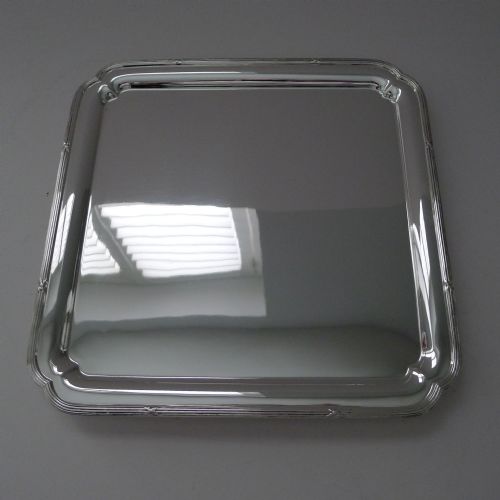
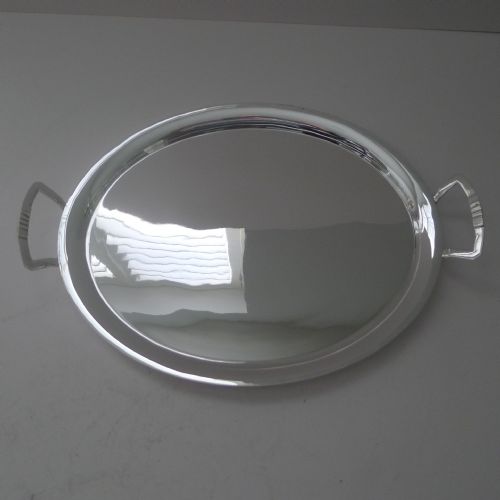
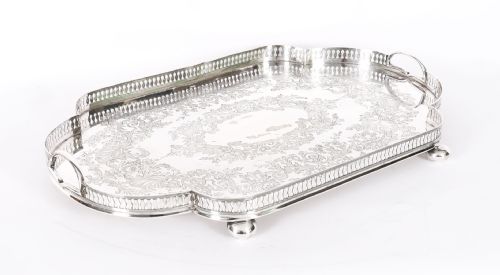
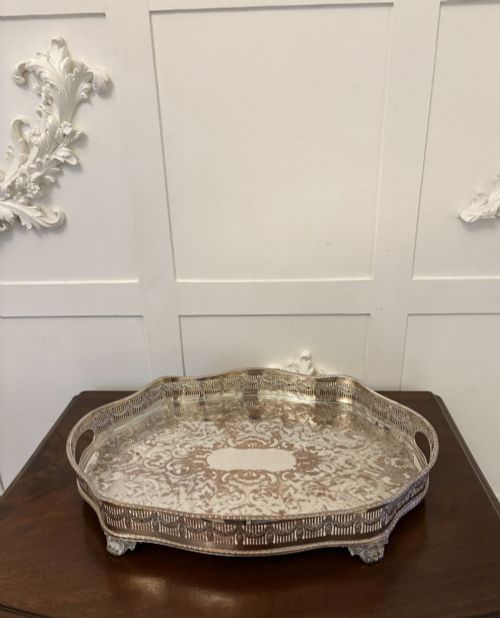
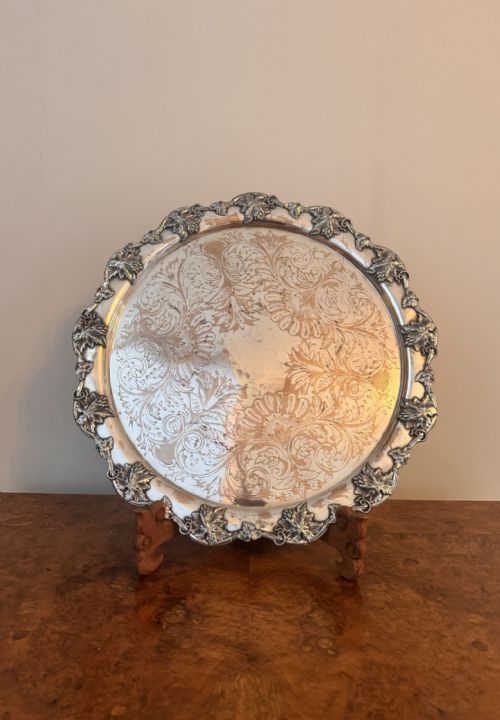
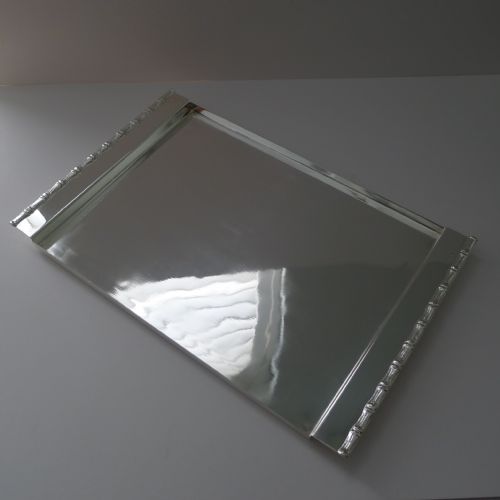
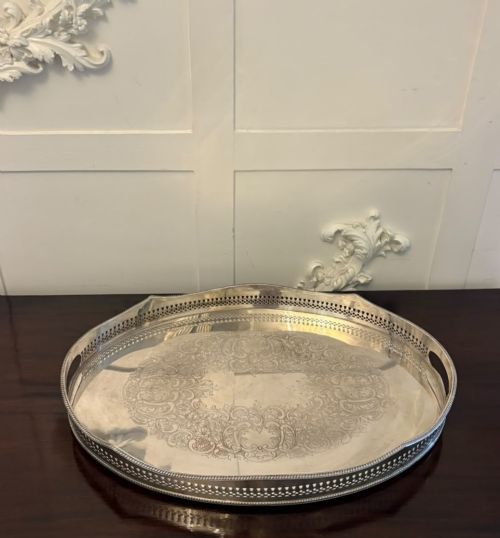
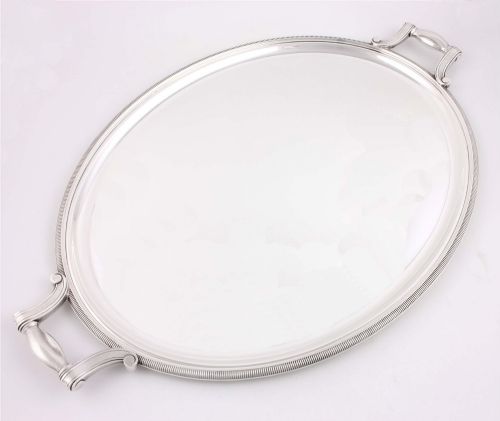
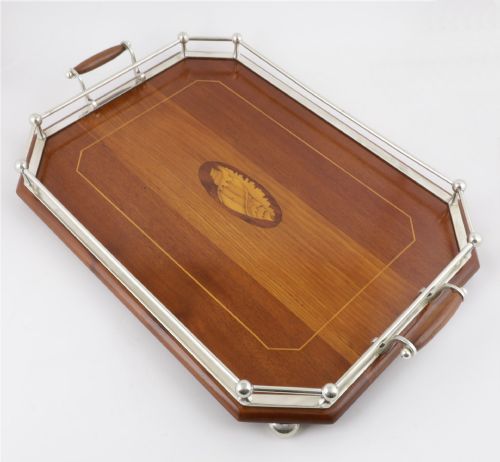
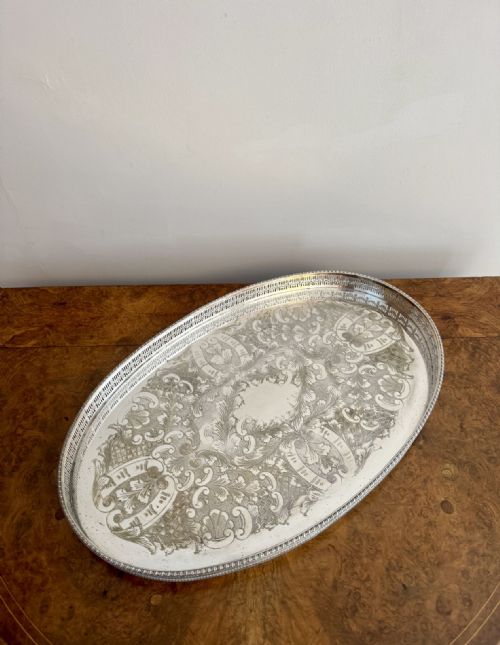
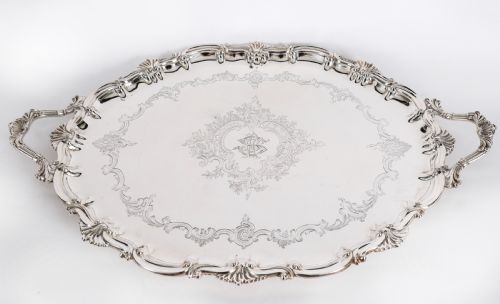
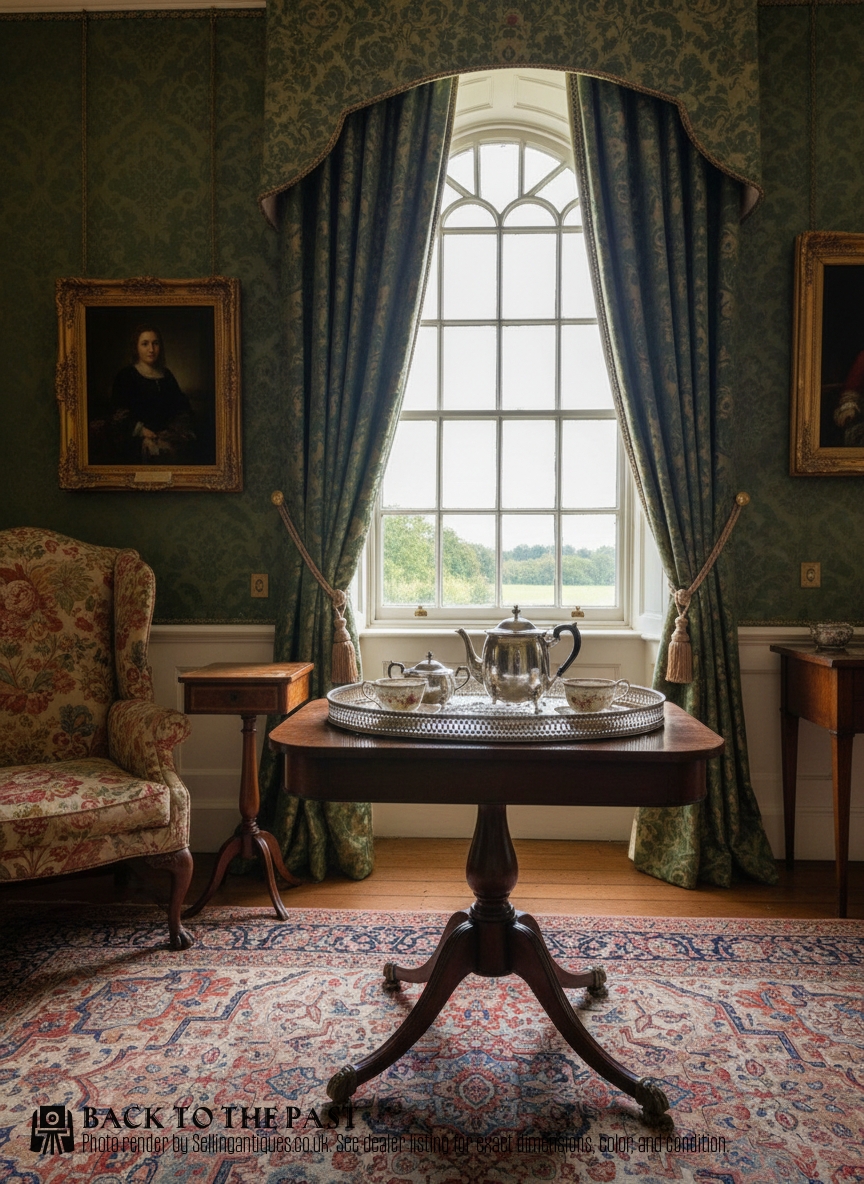
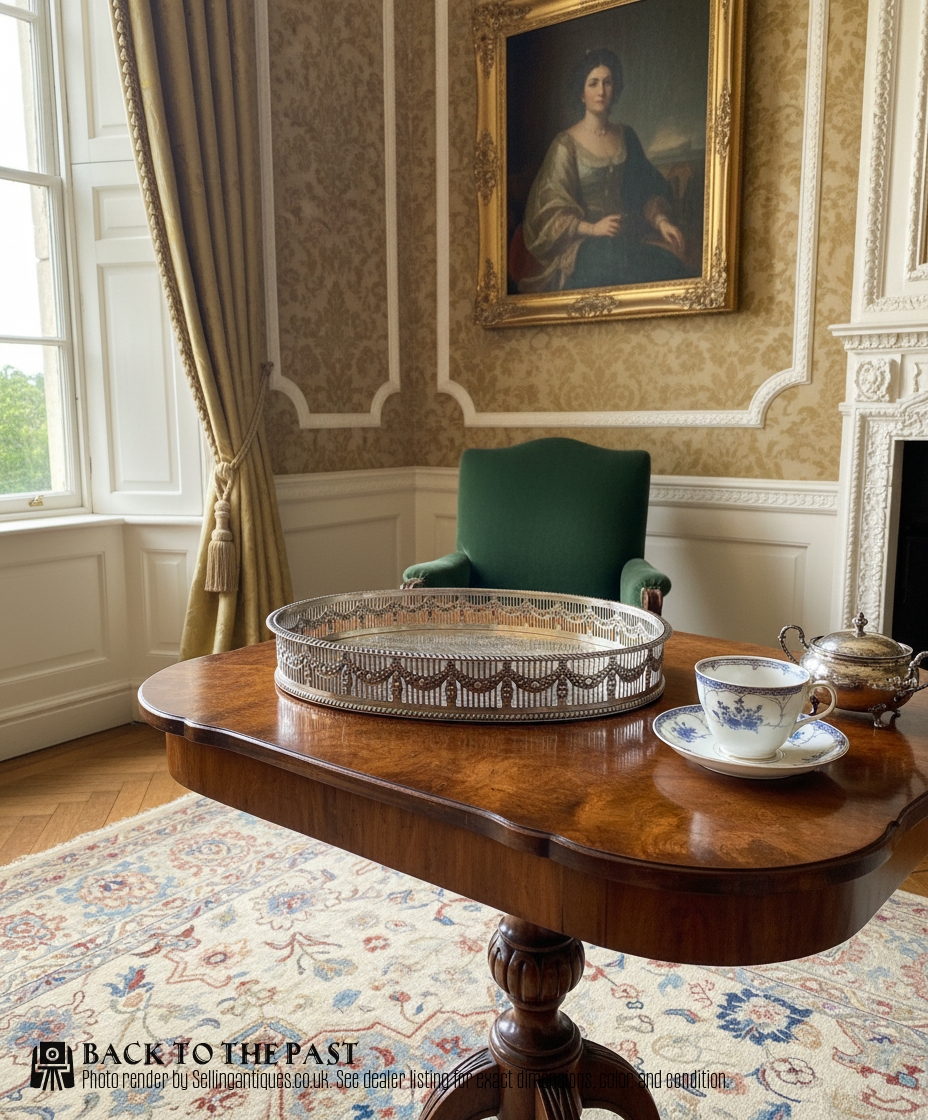
The most common examples on this page date from the Edwardian era and Victorian period, taking oval, circular, or rectangular shapes. Many incorporate raised handles, engraved fields, or pierced brass galleries to secure the vessels placed upon them.
Alongside standard serving trays, the selection includes gallery trays designed with rigid vertical borders and specialist platter forms. Originating mainly from British workshops, these utilitarian items served as domestic centerpieces during formal gatherings.
Materials and Techniques
Makers utilised a base metal, frequently copper, nickel silver, or electroplated nickel silver, coated with a thin layer of silver through plating techniques. This method allowed workshops to achieve the appearance of solid silver while maintaining structural rigidity.
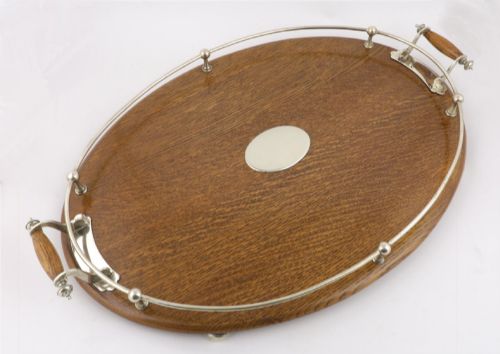
Surface decoration relied on hand engraving, embossed scrolls, and applied borders featuring grapevine motifs or geometric patterns. Certain examples integrate mahogany, oak, or shell inlay within the wooden bases, combining timber with plated metal galleries.
Silver Plated Tea Tray Retail Price Guide 2026
Typical asking prices for silver plated tea tray among the pieces listed under this phrase on Sellingantiques today, from the lower quarter to the upper quarter. They describe what is for sale here now, not the wider market.
Listings feature pieces spanning the nineteenth century through the Art Deco era, incorporating materials such as mahogany, copper, and electroplated nickel silver.
Standards of Execution
The distinction between ordinary production and superior execution rests upon the depth of the engraved detail and the weight of the base metal. Heavier pieces utilise substantial gauge metal that resists flexing when loaded with heavy teapots.
Superior trays display crisp casting in their applied handles and pierced galleries, whereas simpler items rely on stamped or pressed sheet metal. The durability of the silver plating over the underlying copper or nickel silver also determines the longevity of the piece.
James Deakin·Mappin & Webb·Thomas Bradbury & Sons·John Harrison·Christofle·Elkington & Co·James Dixon and Sons·WMF
The Silver Plated Tea Tray Glossary
- EPNS
- Electroplated nickel silver. This acronym denotes a base alloy of copper, nickel, and zinc coated with a layer of pure silver.
- Gallery tray
- A serving tray featuring an upright pierced or solid metal border around the perimeter. This raised wall prevents decanters and teacups from sliding off during transit.
- Sheffield plating
- An early technique where a thin sheet of silver was fused to a thicker copper ingot under heat. This process predates modern electroplating methods.
- Salver
- A flat serving tray typically supported on small feet. These circular or octagonal vessels were traditionally used for presenting letters or glasses.
Silver Plated Tea Tray: Frequently Asked Questions
How do I clean a silver plated tea tray?
Use a soft cloth and a dedicated silver cream formulated for plated items to remove tarnish gently. Avoid abrasive scourers that can wear through the thin silver layer.
Wash the surface with warm soapy water afterwards and dry it completely with a lint-free cloth to prevent water spots from forming on the metal.
Can I use these trays for daily serving?
These trays are structurally suited for carrying teapots, cups, and glassware during gatherings. Their durable metal construction handles regular use without losing stability.
Protect the surface from prolonged contact with acidic liquids by placing coasters beneath glasses and wiping the tray clean after each use.
How do I distinguish Edwardian trays from Victorian ones?
Victorian trays often feature heavier proportions with dense, ornate floral engraving and cast grapevine borders. They lean towards monumental scale and traditional aesthetic weight.
Edwardian examples tend to introduce lighter pierced galleries, inlaid mahogany panels, and simpler geometric or ribbon motifs reflecting changing tastes in interior design.
What is the wooden base used for in some trays?
Certain gallery trays incorporate mahogany or oak bases to provide a rigid foundation for heavier decanters and glassware. The combination of timber and silver plate adds structural strength.
This construction also protects furniture surfaces from heat and moisture while offering a contrasting visual texture beneath the pierced metal gallery.