
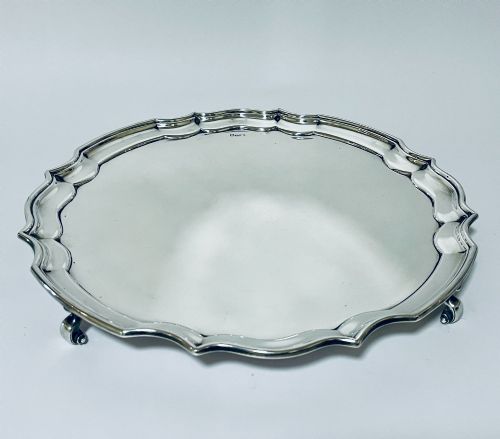


Large Silver Platter
When you search for a large silver platter, you uncover substantial metal trays, meat domes, and chargers spanning multiple periods and forms.
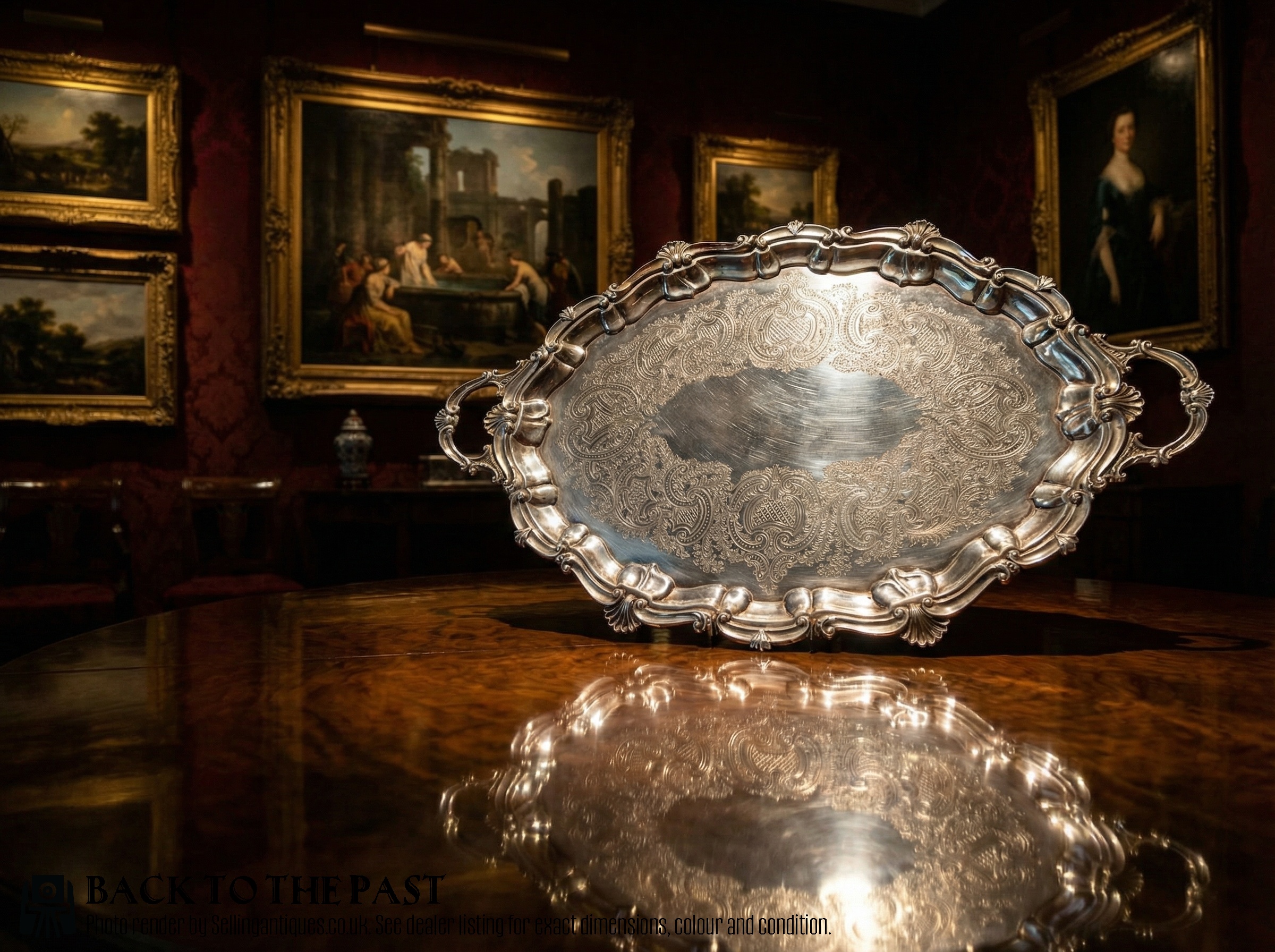
Large Silver Platter
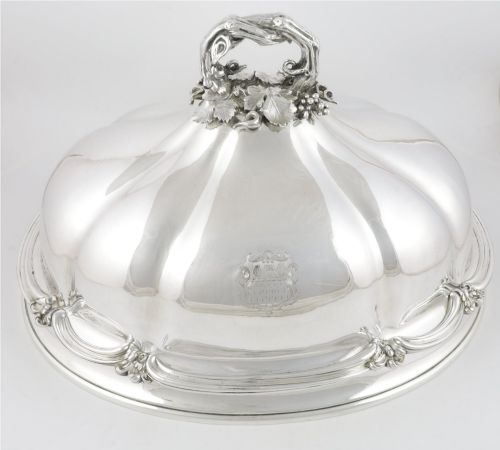
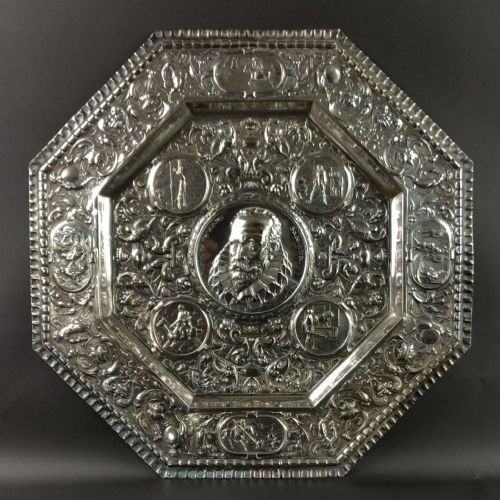
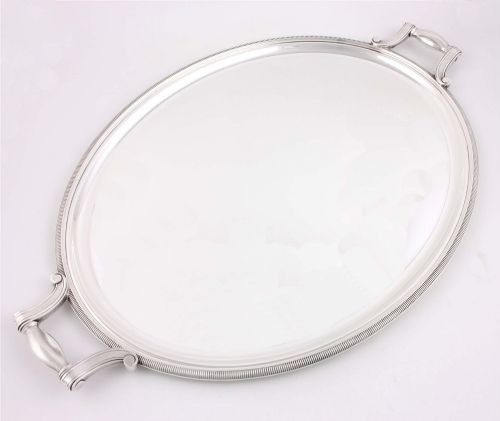
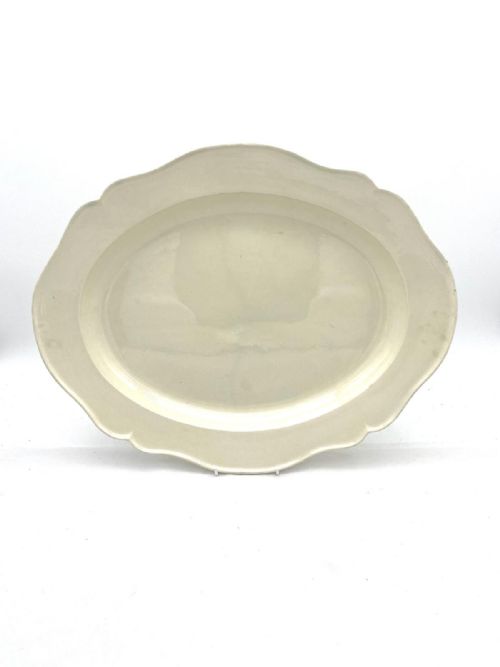
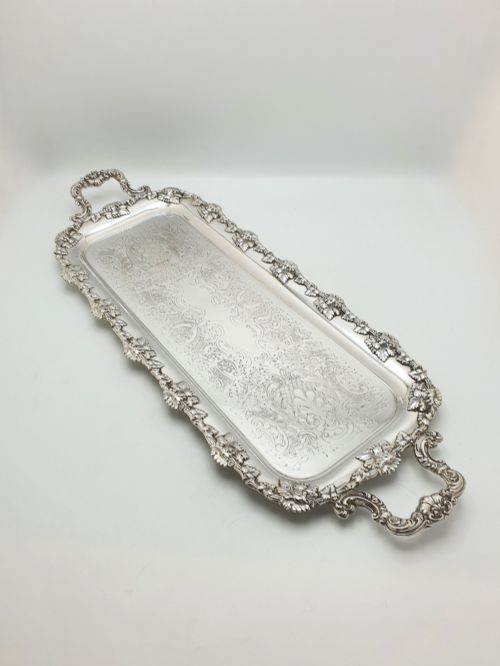
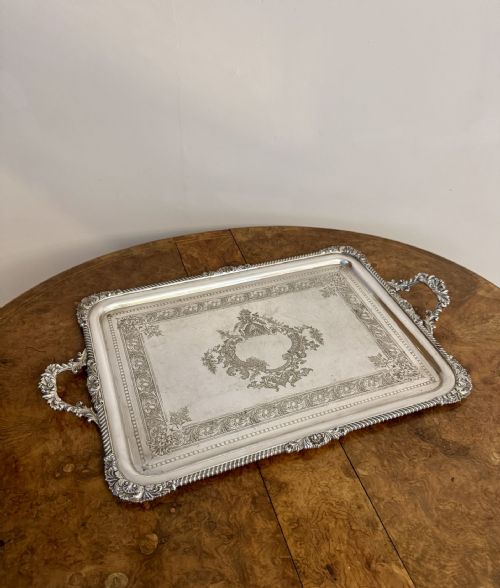
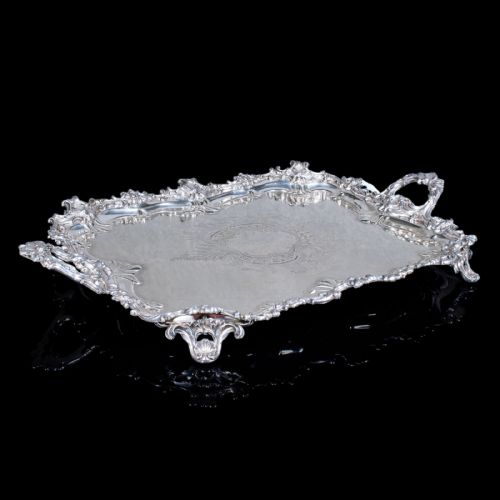
A large silver platter encompasses serving trays, salvers, meat domes, and chargers utilised for dining, display, and presentation across formal households.
The pieces on this page appear most frequently in silver plate, electroplated nickel silver, and solid sterling silver, originating primarily from Victorian and Edwardian workshops.
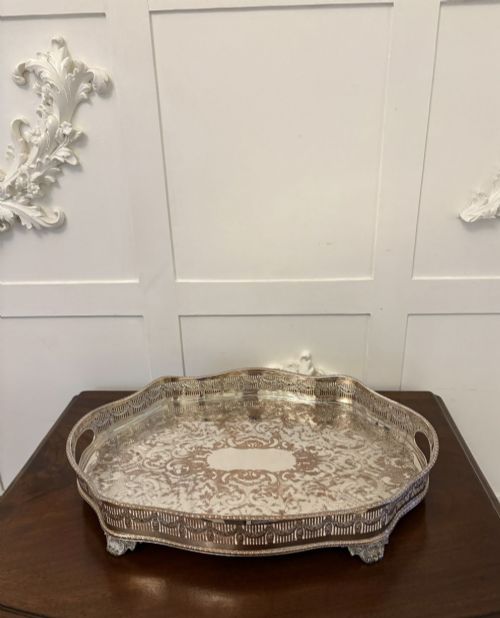
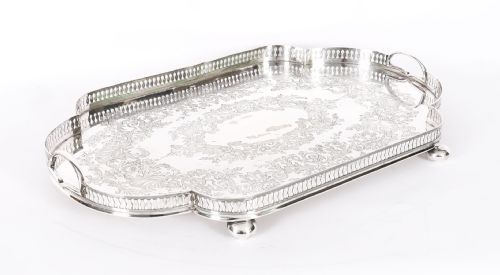
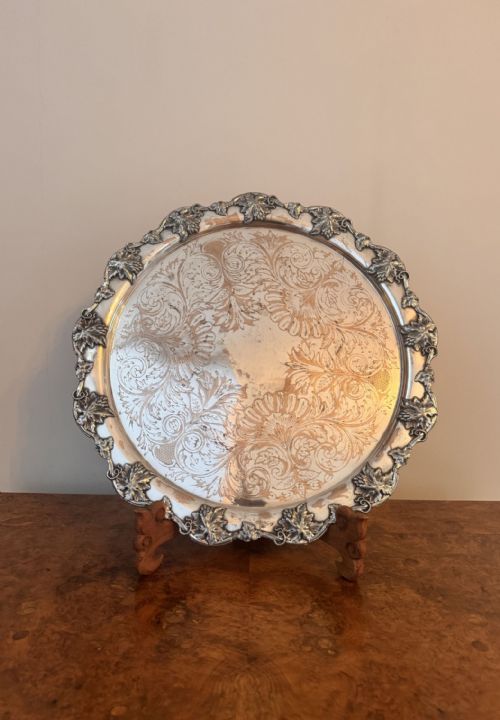
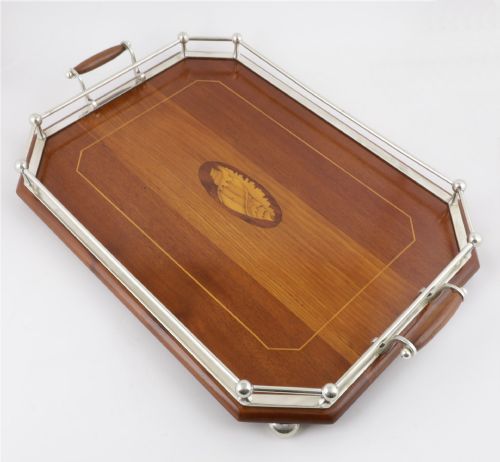
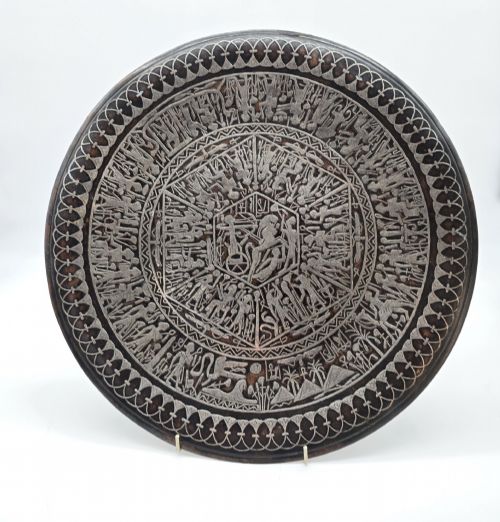
Formats vary from round chargers and oval cocktail trays to octagonal gallery trays fitted with wooden bases and carrying handles.
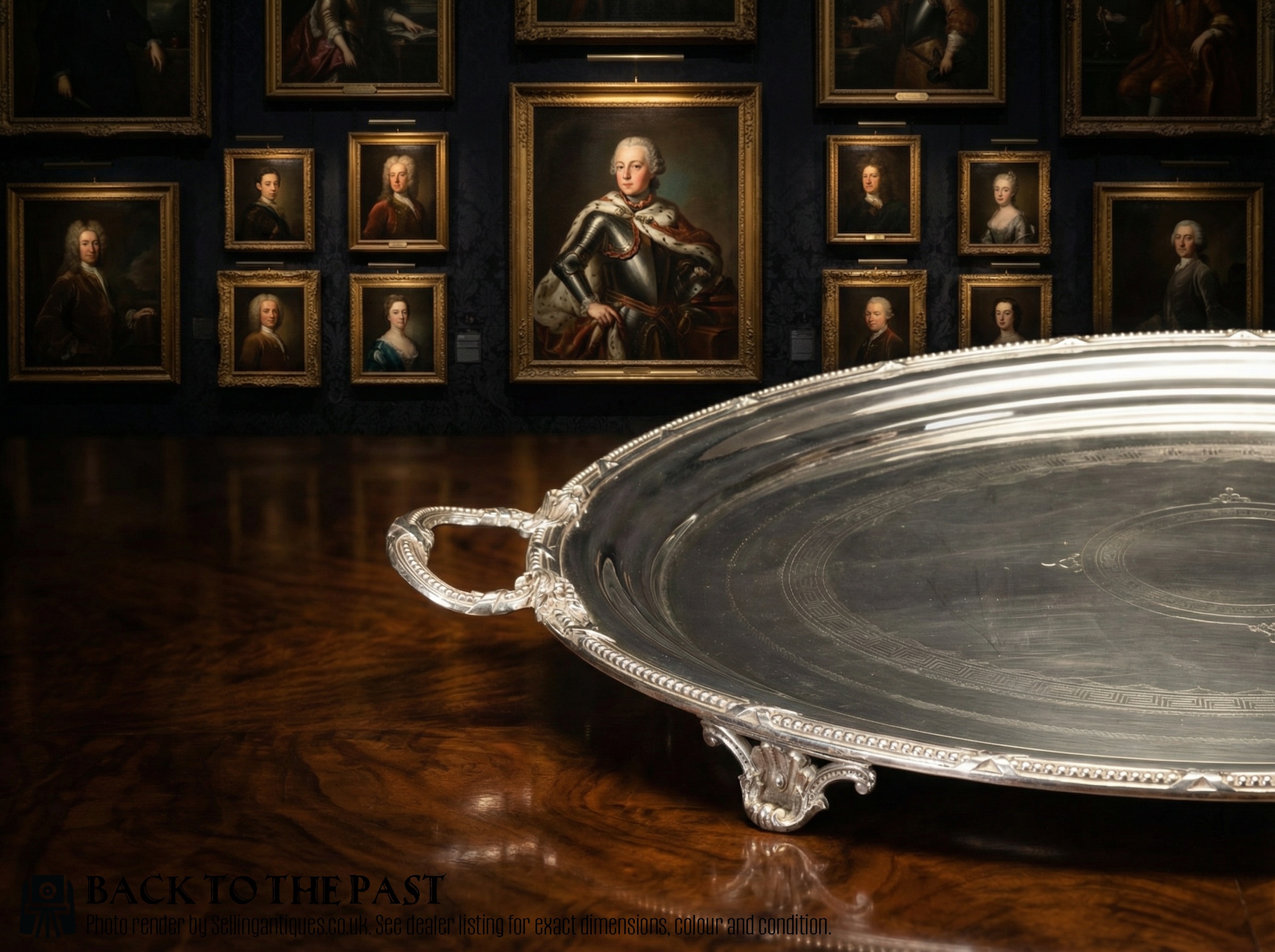
How they were made
Old Sheffield plate involves fusing a thin sheet of silver to a copper ingot, while electroplated nickel silver relies on an electrical current to bond silver particles to a base metal.
Solid silver examples utilise traditional hammering, casting, and repoussé techniques to form heavy bodies and raised decorative borders.
Makers often incorporate secondary materials such as oak bases, shell inlay, and bronze or copper contrasting inlays on specialist chargers.
Large Silver Platter Retail Price Guide 2026
Typical asking prices for large silver platter among the pieces listed under this phrase on Sellingantiques today, from the lower quarter to the upper quarter. They describe what is for sale here now, not the wider market.
What varies in quality
Quality rests upon the crispness of chased and engraved surface detailing, the weight and thickness of the base metal, and the structural integrity of applied handles and feet.
Superior execution shows in the retention of the original silver layer on plated items and the balance of cast borders on solid silver pieces.
James Deakin·Roberts Cadman·Christofle·Harrison Bros·Mappin & Webb·Boulton·Walker Knowles·Elkington & Co·Hukin & Heath·Puiforcat·Peters Hamburg·Robert W Smith·Hunt & Roskell
The Large Silver Platter Glossary
- Old Sheffield Plate
- A composite material made by fusing silver onto a copper core before rolling them into sheets. This technique predates modern electroplating.
- Gallery Tray
- A serving tray featuring a pierced or solid upright metal rim around the edge to secure glassware or decanters.
- Charger
- A large decorative plate or platter placed underneath other courses during formal dining or hung on a wall for display.
- Repoussé
- A metalworking technique where the artisan hammers the design from the reverse side to form a raised relief on the front.
- Meat Dome
- A large domed cover used to keep joints of meat warm on the dining table, often paired with a matching warming tray.
Large Silver Platter: Frequently Asked Questions
How do I clean an antique silver platter?
Use a soft cloth and a specialised silver cleaner designed for plated or sterling surfaces. Avoid harsh abrasives that wear down thin silver layers.
Wash the piece gently in warm soapy water and dry thoroughly after polishing to preserve the finish.
Can I use these platters for food?
Many silver plated and solid silver platters serve food safely, particularly meat trays and serving dishes. Ensure you check for base metal exposure beneath worn plating before direct food contact.
Acidic foods should not remain on silver surfaces for extended periods to prevent tarnishing and pitting.
What is the difference between plate and solid silver?
Silver plate applies a thin layer of genuine silver over a base metal such as copper, nickel, or brass. Solid silver pieces consist of sterling or higher purity silver throughout.
Hallmarks usually indicate solid silver, while maker marks and plate stamps denote electroplated or old Sheffield items.
How do I identify Old Sheffield plate?
Look closely at the edges and worn spots where the reddish copper base metal shows through the silver layer. This sandwich structure is unique to fused plate production.
Old Sheffield items also date earlier than nineteenth-century electroplated wares and often feature unmarked or maker-stamped surfaces.