


Victorian Electroplate Tray
These Victorian electroplate tray pieces bring reliable nineteenth-century service and gleaming presentation to a modern table.
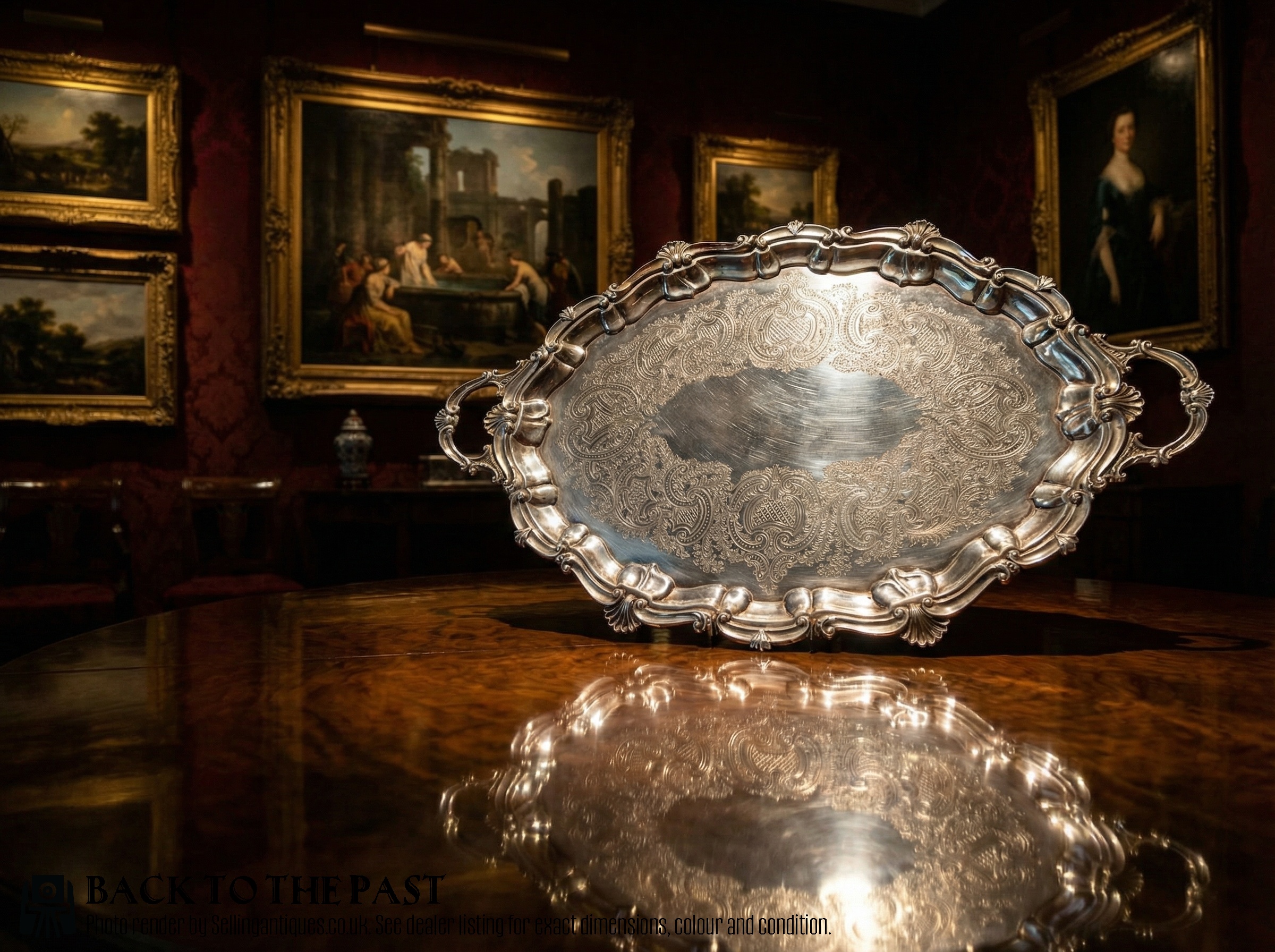
Victorian Electroplate Tray
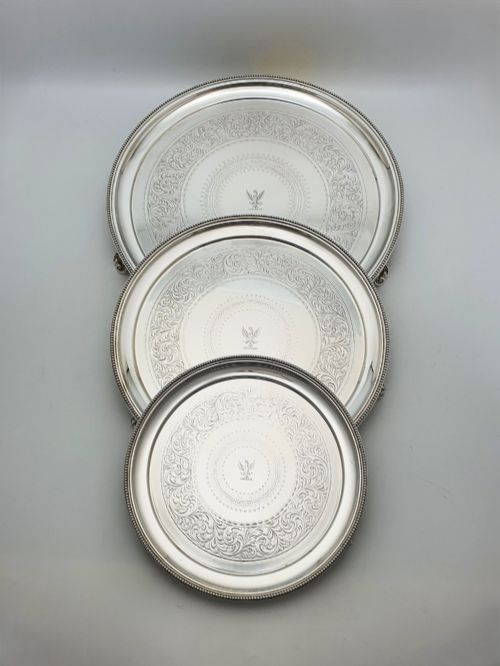
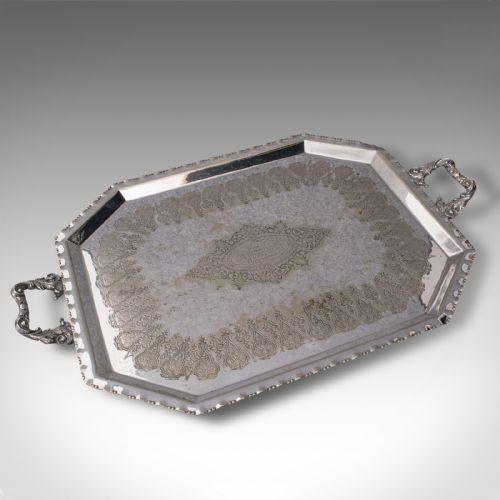
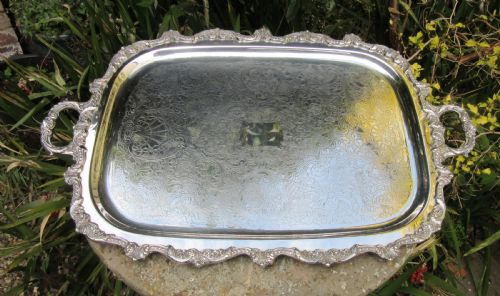
A victorian electroplate tray serves as the foundational piece for afternoon tea, formal dining, and elegant sideboard display. The pieces on this page span the nineteenth century, taking the form of circular trays, salvers, chargers, and serving dishes.
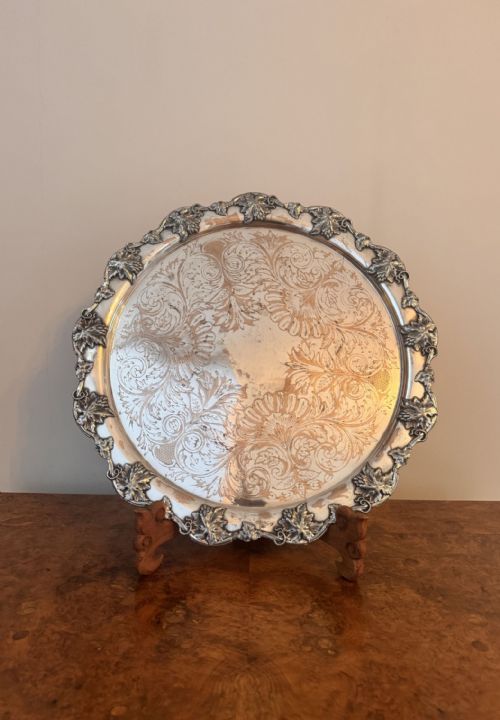
Most items you will meet date from the middle to the late nineteenth century, reflecting the rapid growth of plated manufacturing during that era. They appear in generous proportions, often featuring engraved floral motifs and decorative borders designed to catch the light.
How they were made
These items rely on a base metal foundation, specifically nickel silver or base metal, which is then treated with silver plate or electroplated nickel silver. This electroplating process deposited a thin layer of silver uniformly across the harder base material.
Engraving was applied by hand after the plating process to create floral patterns and decorative cartouches across the surface of chargers and salvers.
Listings span the nineteenth century, featuring materials such as nickel silver and silver plate shaped into serving dishes, salvers, and chargers.
What varies in quality
Quality rests in the crispness of the engraved floral details and the thickness of the original silver deposit over the nickel silver base. Pieces from established makers maintain sharper definition in their borders and handles.
The weight of the base metal and the structural integrity of the serving dish or tray dictate how well the piece survives heavy use and polishing over the decades.
Elkington·Walker & Hall·Fenton Russel
The Victorian Electroplate Tray Glossary
- Electroplate
- The process of depositing a layer of silver onto a base metal using an electrical current. This technique revolutionised nineteenth-century manufacturing by making silver-appearance items accessible.
- Salver
- A flat tray, typically with feet, used for serving drinks or presenting cards and letters. In nineteenth-century dining, these were essential for formal hospitality.
- Charger
- A large decorative plate placed underneath other dinnerware or displayed on a wall. Victorian examples often featured deep floral engraving.
- Nickel silver
- An alloy of copper, nickel, and zinc containing no actual silver. It served as the robust core metal for high-quality electroplated items.
Victorian Electroplate Tray: Frequently Asked Questions
What is a victorian electroplate tray?
A victorian electroplate tray is a nineteenth-century serving piece constructed from a base metal core coated with a thin layer of silver through electroplating.
These items were produced in various forms including circular trays, salvers, and chargers for domestic entertaining.
How do I clean my tray?
Clean these items using a gentle, non-abrasive silver polish and a soft cloth to protect the underlying electroplated layer.
Avoid harsh dips or excessive scrubbing that might wear through the silver plating to the nickel silver beneath.
Are these trays safe for food?
Most of these pieces were originally designed for serving dishes, afternoon tea, or dry foodstuffs during the nineteenth century.
Modern use should consider the condition of the silver plate and whether the underlying base metal is exposed.
How old is my tray?
Dating relies on stylistic clues such as floral engraving, Victorian shapes, and maker marks stamped into the metal.
Items on this page typically originate from the nineteenth century, specifically between eighteen sixty and nineteen hundred.