


Engraved Serving Tray
An engraved serving tray brings tactile weight and intricate surface pattern to a room, offering a functional centrepiece shaped by centuries of metalwork.
Engraved Serving Tray
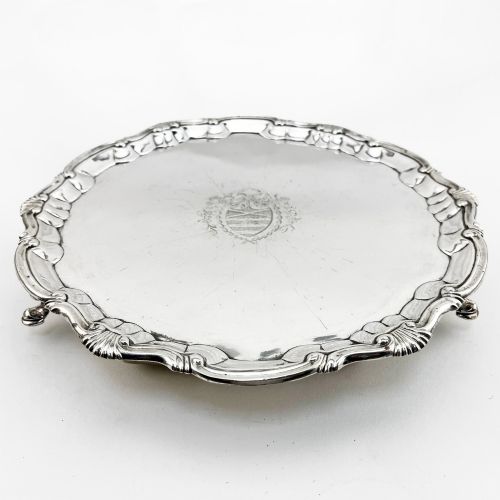
When you search for an engraved serving tray, you enter a domain where domestic hospitality meets intricate surface decoration. The pieces span centuries of craft, evolving from early Georgian sterling silver salvers to substantial Victorian and Edwardian silver plated variants.
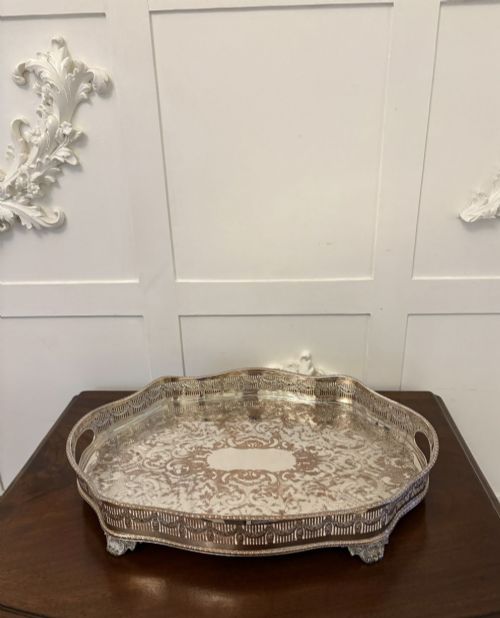
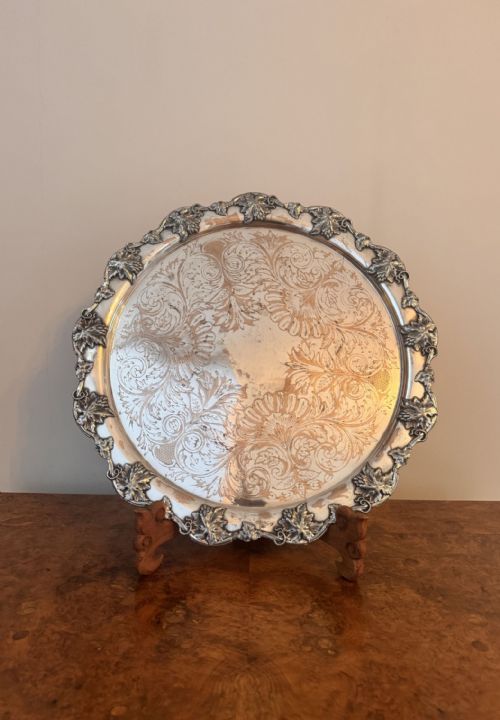
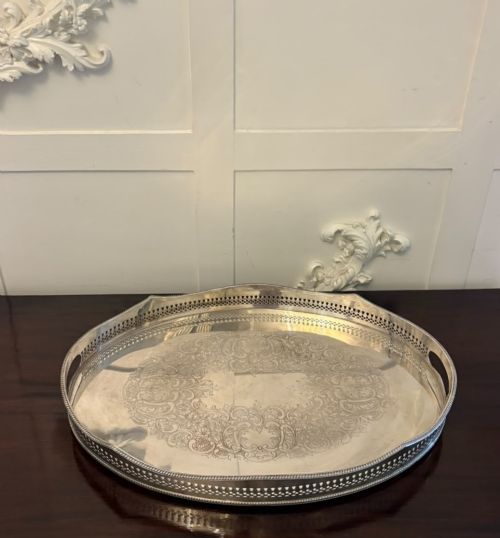
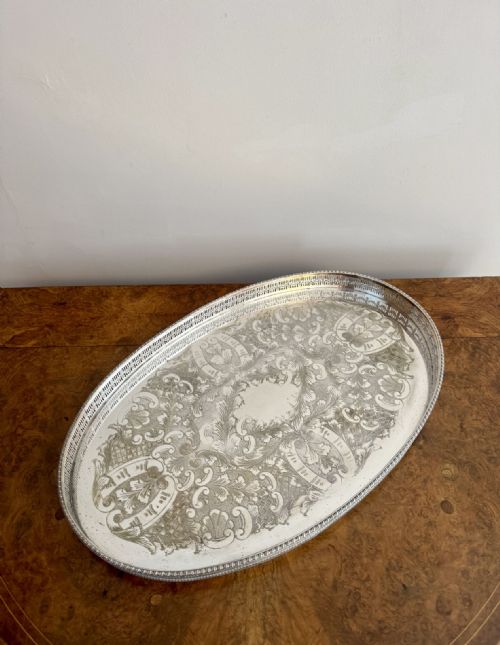
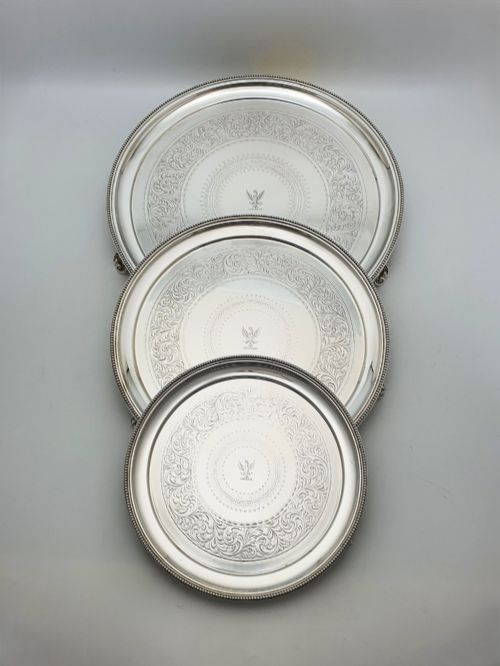
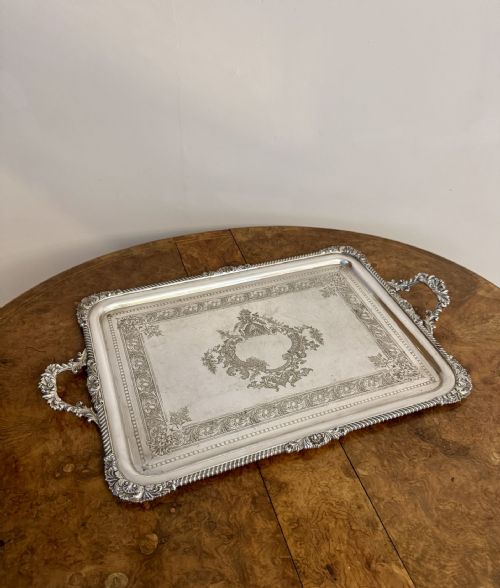
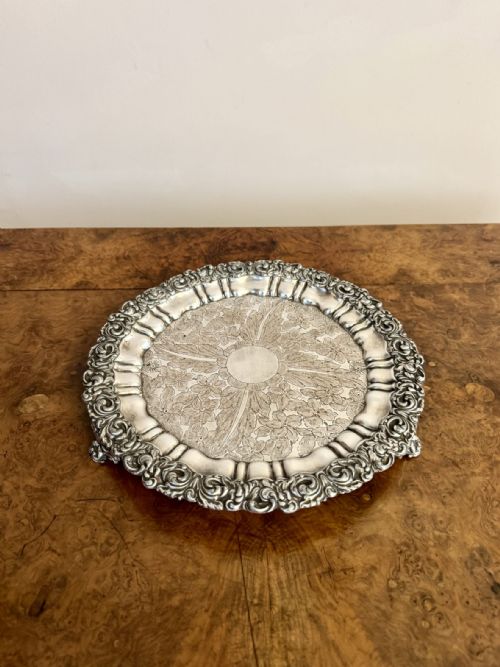
You are most likely to encounter Edwardian and Victorian silver plated examples on this page. These frequently display elaborate foliate, scroll, or fern engraving across wide circular or oval surfaces.
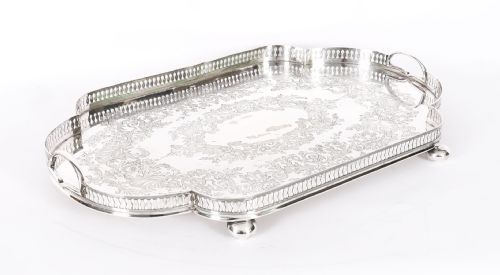
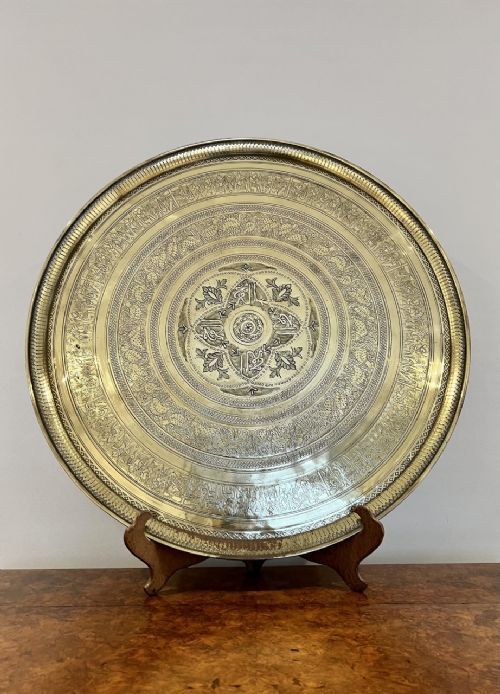
Forms range from simple flat platters and card trays to large presentation pieces with raised galleries and handles. Alongside traditional British silver and plate, the selection includes copper, mixed metal, and Anglo-Indian or Middle Eastern interpretations.
Materials and Techniques
Makers utilised sterling silver, Old Sheffield Plate, and later electroplated nickel silver (EPNS) over base metals, alongside copper and mixed metal alloys. Silver plating techniques involved fusing thin sheets of silver to copper or depositing silver via electrolysis onto a nickel brass core.
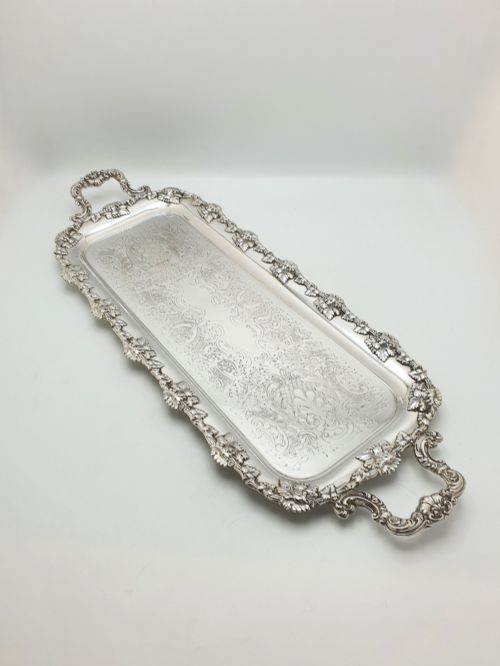
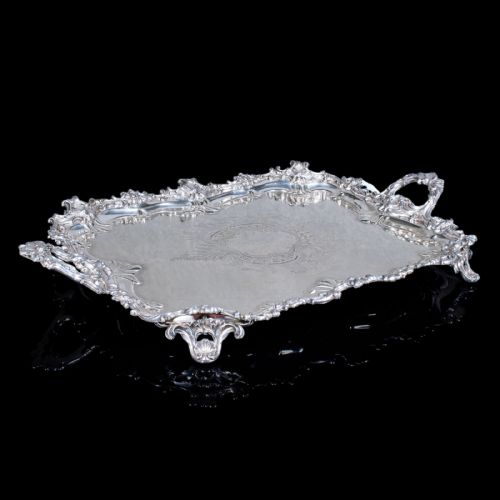
Surface patterns were applied by hand using gravers and burins to cut floral, scroll, or fern motifs directly into the metal. Pierced galleries, cast handles, and applied borders involving grapevine or scrollwork motifs were soldered or riveted to the main body.
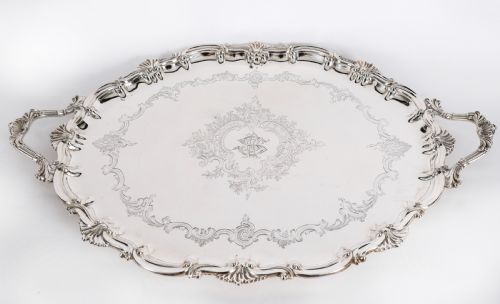
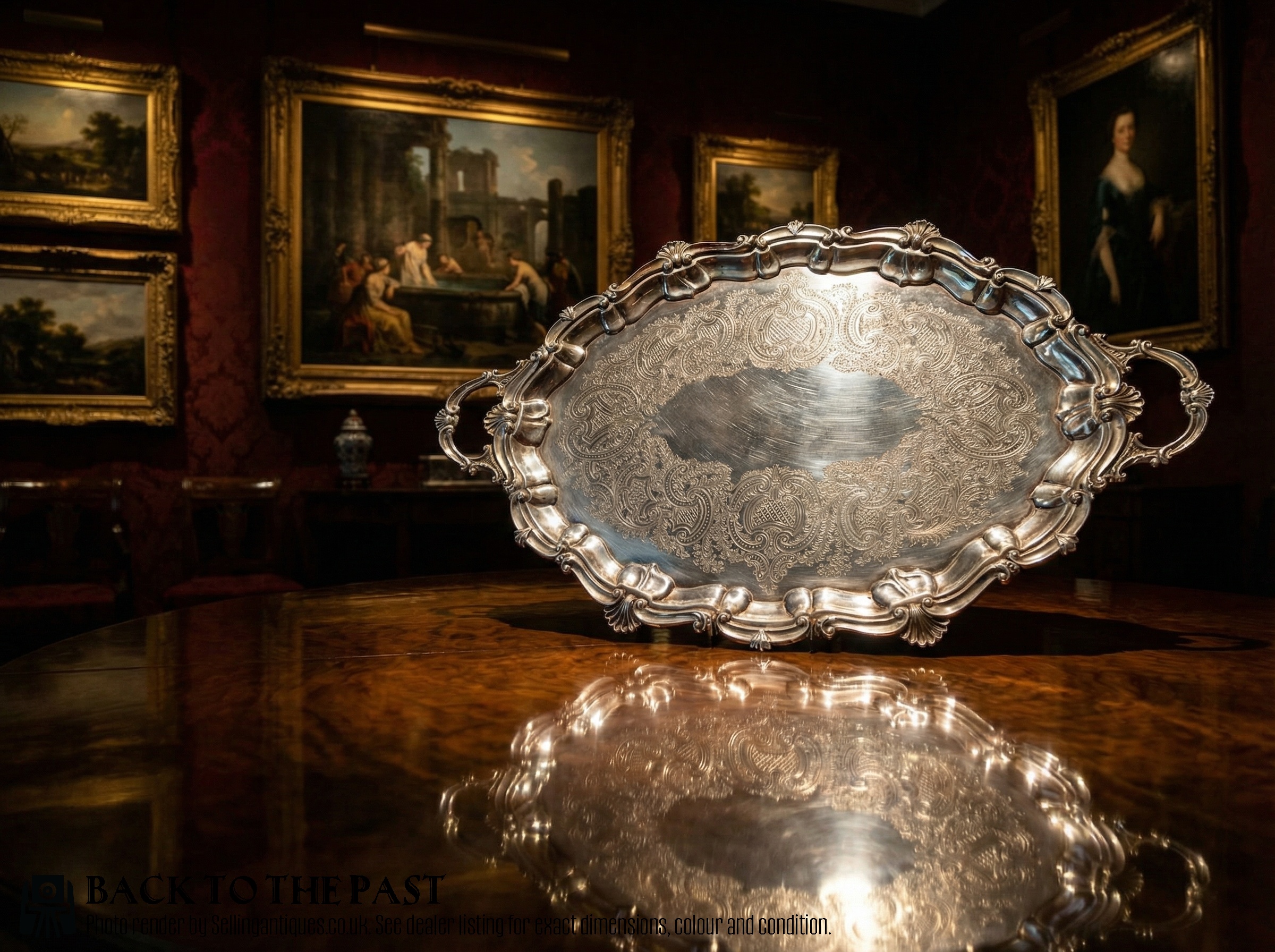
The archive and active listings demonstrate a range of forms, from small card trays to large oval presentation pieces with pierced galleries.
Judging Quality
Quality rests in the crispness and depth of the hand engraving rather than mere surface shine. Sharply defined botanical or scroll details indicate a skilled hand working the metal.
Substantial gauge metal provides rigidity, preventing the tray from flexing under weight. Maker marks from established silversmiths or plate houses further distinguish finer pieces from mass production.
James Deakin·Mappin & Webb·Thomas Bradbury & Sons·Elkington·Robert Abercromby·Hugh Wallis·John Harrison·Walker & Hall·Robert Breading·Harrison Bros·Padley Parkin·Christofle·Daniel and Arter
The Engraved Serving Tray Glossary
- Salver
- A flat tray, typically with a raised edge or feet, used for serving food or drinks. They frequently appear in silver or silver plate from the Georgian period onward.
- Gallery tray
- A tray featuring an openwork or pierced gallery railing around the perimeter to secure items from sliding off. These often incorporate sturdy handles for transport.
- Old Sheffield Plate
- An early composite material made by fusing a sheet of silver to a thicker copper ingot before rolling them into sheets. This technique predates electroplating.
- EPNS
- Electroplated Nickel Silver, a common base material composed of a copper-nickel-zinc alloy coated with a layer of pure silver through electrolysis. It became widespread during the Victorian era.
Engraved Serving Tray: Frequently Asked Questions
How do I clean an engraved serving tray?
Use a soft microfibre cloth and a gentle, non-abrasive silver cleaner suitable for plated or solid surfaces. Avoid aggressive scrubbing that might wear down thin silver plate over the engraved lines.
Take care around raised galleries and pierced borders where polish can accumulate. Rinse with lukewarm water and dry immediately to preserve the finish.
Can I use these trays for daily service?
Many solid silver and sturdy silver plated trays remain robust enough for regular use. Weight and handle construction determine how well they bear the load of glassware or teapots.
Careful handling prevents surface scratching on softer metals like copper or thin silver plate. Frequent use requires occasional gentle polishing to maintain the appearance.
What is the difference between a tray and a salver?
Salvers traditionally refer to flat, footed presentation vessels designed to hold glasses or letters. Trays generally encompass flat or shallow-rimmed carriers with or without feet, often featuring handles.
Over time, the terms became interchangeable in many listings. Both serve similar decorative and functional roles across different periods.
How do I identify the period of a tray?
Maker marks, hallmarks, and style cues provide the most reliable dating evidence. Georgian pieces often display distinct sterling hallmarks, while Victorian and Edwardian items rely on silver plate stamps and specific aesthetic motifs like ferns.
Construction methods also help, as fused Old Sheffield Plate differs visibly from later electroplated wares. Comparing the engraved decorative style to period design trends narrows the decade further.