



Round Silver Tray
A round silver tray brings immediate shine to a table, offering a practical surface for serving drinks or displaying glassware.
Round Silver Tray
A round silver tray is selected for its reflective surface and circular geometry, often appearing as a salver, serving platter, or cocktail tray. The examples seen on this page span Victorian, Edwardian, and later periods, capturing traditional domestic forms.
Most pieces encountered here are silver plated or fashioned from electroplated nickel silver, alongside heavier solid silver interpretations. These items function equally as decorative centrepieces or practical vessels for hospitality.
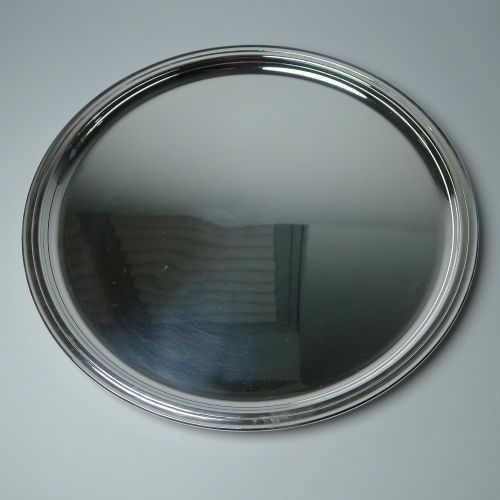
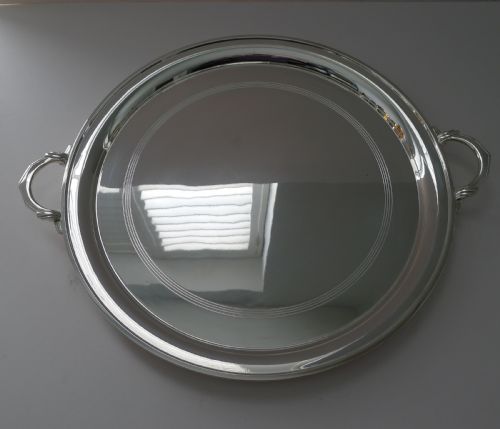
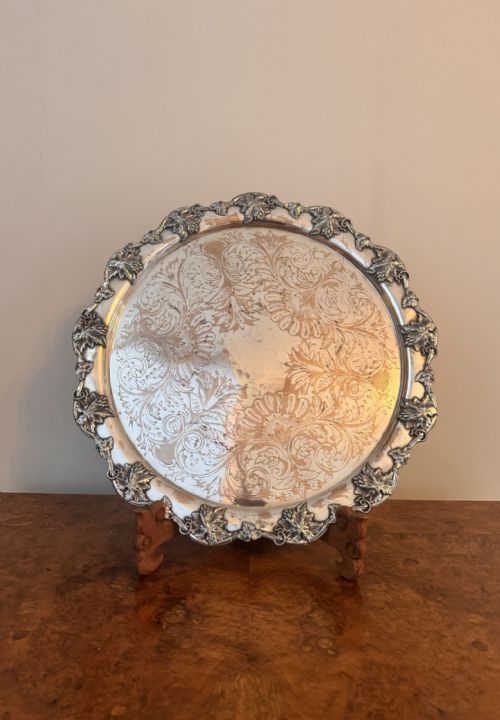
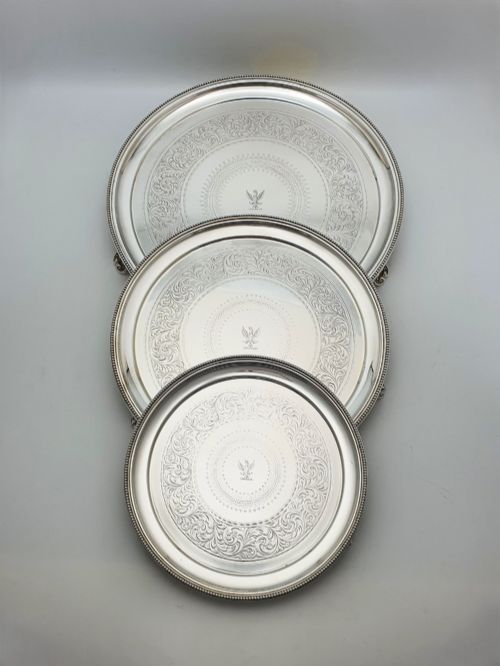
Forms range from plain circular platters to elaborately engraved salvers featuring family crests, decorative borders, and elevated gallery rails. Continental and French rococo revival influences also emerge among the items.
Materials and construction methods
The construction relies heavily on silver plating over base metal substrates, alongside solid silver examples produced by period workshops. Electroplated nickel silver provides a durable core beneath the precious metal layer.
Surface decoration involves hand engraving, chased borders, and applied gallery rails that require precise metalworking skills. Makers also incorporate integrated handles and distinct family crests punched or engraved into the centre.
Round Silver Tray Retail Price Guide 2026
Typical asking prices for round silver tray among the pieces listed under this phrase on Sellingantiques today, from the lower quarter to the upper quarter. They describe what is for sale here now, not the wider market.
One unexpected tray even comes accompanied by a matching Persian bowl for double the metallic splendour.
Distinctions in quality and execution
Quality separates simple production items from superior pieces through the depth of hand engraving and the weight of the metal base. Thicker plating and crisp, detailed chasing demonstrate higher workshop standards.
Design complexity marks the upper tier, seen in cast decorative borders, gallery rails, and marked provenance such as identified maker stamps and family crests. Simpler utilitarian platters sit at the base of the range.
Elkington·Lister·Victor Saglier·Smith and Sharp
The Round Silver Tray Glossary
- Gallery tray
- A serving tray fitted with a pierced or solid upright metal gallery border around the rim. This prevents items from sliding off during movement.
- Silver plate
- A layer of pure silver applied to a base metal such as copper or nickel silver. This technique offered the appearance of solid silver at a lower cost.
- Electroplated nickel silver
- A base alloy of copper, nickel, and zinc coated with an electrical deposit of silver. It became the standard method for durable tableware production in the nineteenth century.
- Chased
- Decorated by hammering metal from the front to sink the design into the surface without removing material. It creates low-relief ornamentation.
Round Silver Tray: Frequently Asked Questions
What is the difference between a tray and a salver?
A salver traditionally sits on small feet and serves formal functions, whereas a flat tray is designed primarily for carrying items.
Both forms appear frequently under this search category, sharing similar decorative techniques.
How do I clean a silver plated tray?
Use a gentle silver polish applied with a soft cloth, avoiding abrasive pads that can wear through the plated surface.
Regular light dusting preserves the finish without damaging the engraved details.
Can I use an antique round silver tray daily?
These items handle light domestic use, though silver plate requires care to prevent scratching and tarnishing over time.
Many owners choose to display them on sideboards when not in active service.
How do I date an Edwardian silver tray?
Edwardian items often display lighter, refined neoclassical motifs compared to heavier Victorian designs.
Maker marks and registration numbers stamped into the metal also help narrow the production decade.