
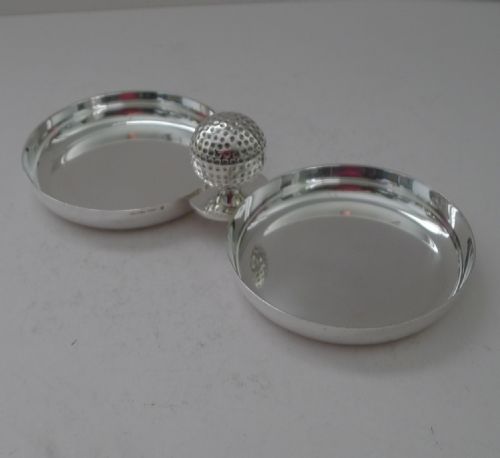


French Silver Tray
A french silver tray brings functional elegance to a table, offering polished surfaces and decorative forms from the nineteenth and twentieth centuries.
French Silver Tray
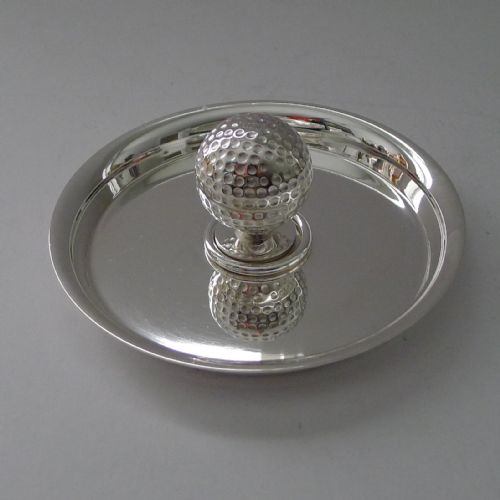
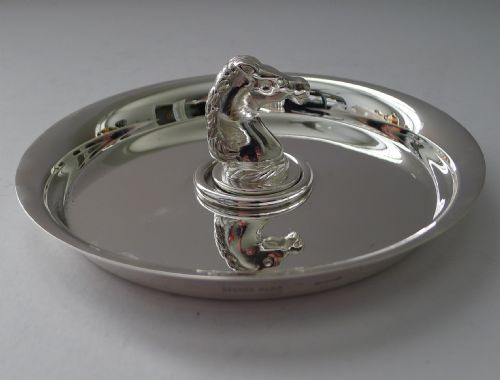
A french silver tray encompasses serving platters, cocktail trays, and smaller vide poche dishes designed for display and utility. The selections span from nineteenth century Louis XVI styles to mid-century modern pieces, reflecting changing domestic habits.
Most items encountered are silver-plated or made from solid 950 silver, often paired with mirrored glass, wood, or crystal elements. Makers utilise classic French motifs ranging from Art Nouveau curves to clean Art Deco geometric lines.
Materials and technique
Silversmiths constructed these objects using heavy silver plate over base metal, or by working with 950 solid silver. Techniques included hand engraving, casting handles, and soldering mounts to mirror plates or wooden bases.
Makers integrated secondary materials such as mirrored glass for plateau trays and clear glass for inserts. Surface finishing relied on careful polishing and detailed chasing to define borders and decorative accents.
Listings feature items from the Edwardian era through the mid-century modern period, utilising silver plate, solid silver, glass, and wood.
Assessing the pieces
Quality rests in the weight of the metal and the crispness of the engraved or cast ornamentation. Pieces by established Parisian makers demonstrate superior balance and sturdiness in handles and rims.
The preservation of the silver plating and the integrity of inset mirrored glass or wood determine the condition of each item. Thicker plating resists wear through decades of use.
Hermes Paris·Christofle Gallia·Puiforcat·Maria Pergay·Victor Saglier·Brille Paris·Maurice Dufrene·Saglier Freres·Luc Lanel
The French Silver Tray Glossary
- Vide poche
- A small tray or dish intended for emptying pockets of coins, keys, or small personal items. These are frequently found in mid-century designs.
- Silver plate
- A layer of silver bonded to a base metal core such as copper or Britannia metal. This technique allowed makers to produce large serving trays at a lower cost than solid silver.
- 950 solid silver
- A silver alloy containing 95.0 percent pure silver, which is a higher purity standard than standard sterling silver. French silversmiths utilised this standard for high-end tableware.
- Plateau
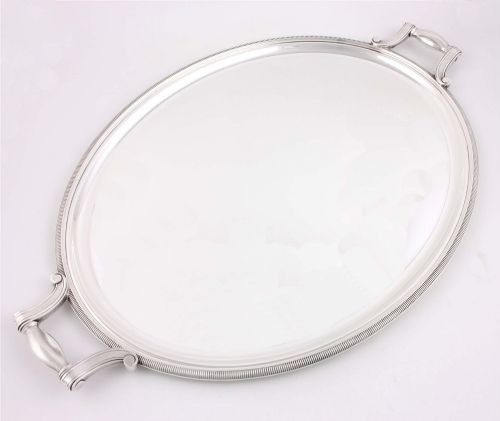
- A large tray or mirrored base used on sideboards or dining tables for displaying glassware, bottles, or centrepieces. They often feature decorative gallery borders.
- Sauciere
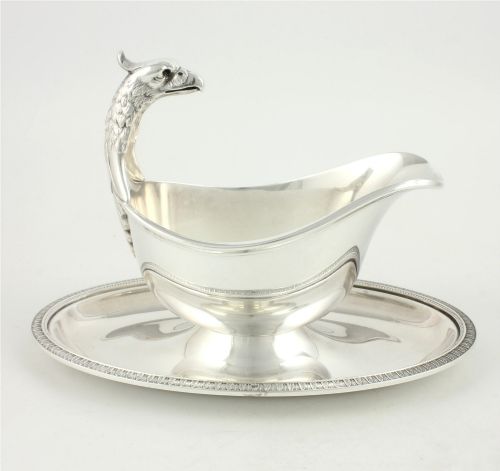
- A boat-shaped vessel designed for serving sauces or gravies, frequently supplied with an attached or matching undertray. Christofle produced notable examples in this form.
French Silver Tray: Frequently Asked Questions
How do I clean a silver-plated tray?
Use a soft cloth and a specialised silver cleaning cream designed for plated items. Avoid harsh abrasives that can strip the thin silver layer from the base metal.
Rinse the tray gently with lukewarm water and dry it immediately with a lint-free cloth to prevent water spots on the surface.
Can I use an antique tray for serving drinks?
Many silver-plated and solid silver serving trays are structurally robust enough for carrying glassware and bottles. Check that the handles are secure before lifting heavy loads.
For mirrored glass trays, ensure the backing remains dry and protected from moisture during use and cleaning.
What is the difference between Art Nouveau and Art Deco trays?
Art Nouveau trays feature organic flowing lines, floral motifs, and asymmetrical plant forms popular around nineteen hundred. They emphasise natural curves and figurative details.
Art Deco trays, dating from the nineteen twenties and thirties, showcase geometric patterns, streamlined borders, and symmetrical industrial shapes.
How do I identify a French silver hallmark?
French silver items typically feature small guarantee stamps indicating the purity of the metal, such as the Minerva head for high-purity silver. Maker's marks are usually shaped as diamonds enclosing initials and symbols.
Examine the rim, base, or underside of the tray using a magnifying glass to locate these tiny stamped impressions.