




Rectangular Silver Platter
These rectangular silver platter examples offer a sturdy serving surface spanning Edwardian, Art Deco, and Mid-Century Modern eras.
Rectangular Silver Platter
A rectangular silver platter serves as a functional serving tray, drinks tray, or entree dish across various historical periods. When searching for a rectangular silver platter, buyers encounter forms ranging from Edwardian cocktail trays to Mid-Century Modern serveware.
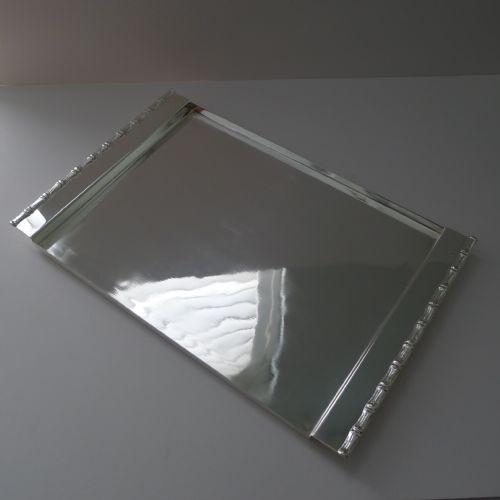
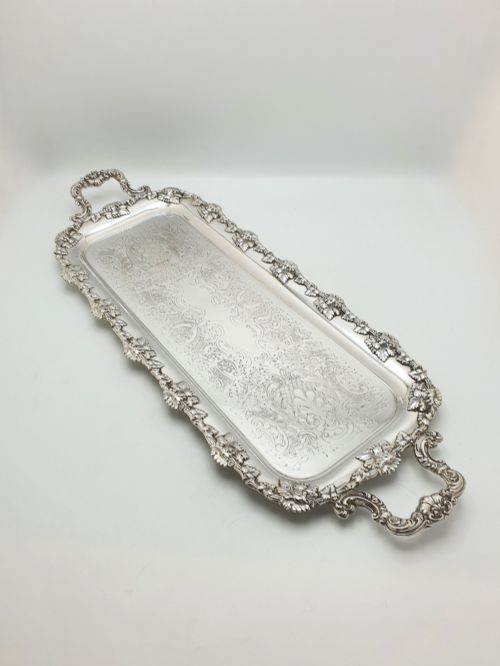
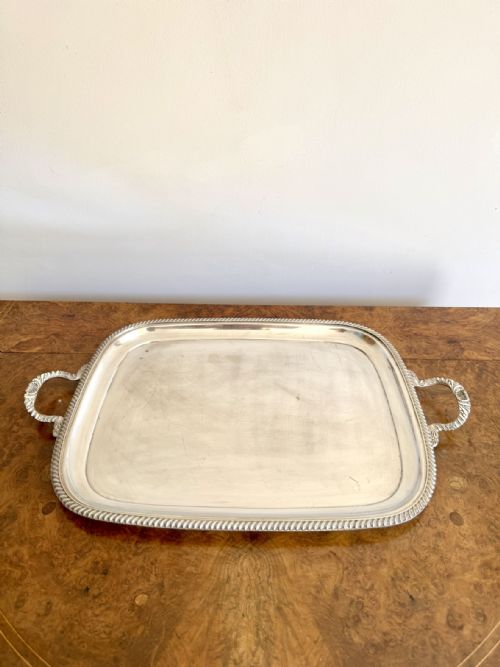
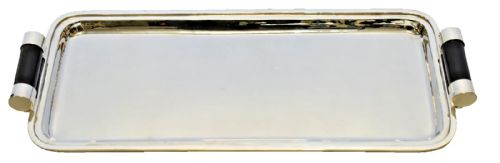
The pieces listed on this page span the nineteenth century through the nineteen-sixties. Forms include serving dishes with covers, salvers, and cocktail trays featuring bamboo handles or grapevine borders.
How they were made
These items utilise base metals such as nickel silver and electroplated nickel silver beneath a layer of silver plate. Manufacturers applied silver plating over metal substrates to achieve the appearance of solid silver.
Production techniques recorded in the evidence include electroplating, creating durable surfaces suitable for serving trays and entree dishes. Makers incorporated applied borders like grapevines and fitted handles of bamboo or metal.
Some trays wear their cocktail history proudly, having spent decades holding ice buckets and martini shakers.
What varies in quality
Quality differentiates through the crispness of decorative details such as grapevine borders and the integrity of the underlying electroplated nickel silver. Maker attributions to established firms like Hukin and Heath or Atkin Brothers also influence distinction.
Weight and balance distinguish utility pieces from formal serving dishes and salvers. The execution of handles, whether shaped as bamboo or cast metal, shows the level of craftsmanship involved.
Hukin & Heath·Frank Cobb & Co. Sheffield·Fenton Russel·Atkin Brothers
The Rectangular Silver Platter Glossary
- Electroplated Nickel Silver
- A base metal alloy of copper, nickel, and zinc coated with a layer of silver using an electrolytic process. This material provided an affordable alternative to solid silver for serving trays.
- EPNS
- An abbreviation for electroplated nickel silver commonly found on nineteenth and twentieth century serveware. It indicates the metallic composition beneath the silver plating.
- Salver
- A flat tray, typically made of metal, used for serving food or drinks. In these listings, salvers appear alongside serving dishes and cocktail trays.
- Entree dish
- A covered serving vessel designed for presenting main courses or side dishes at table. These rectangular pieces often feature matching covers.
- Silver Plate
- A thin layer of silver applied to a base metal object. This technique allowed makers to produce large serving trays and platters with the lustre of solid silver.
Rectangular Silver Platter: Frequently Asked Questions
Are these trays suitable for serving drinks?
Many examples on this page are explicitly described as cocktail trays, drinks trays, or salvers designed for beverage service.
Their rectangular shape provides stable geometry for glasses, decanters, and cocktail accessories during gatherings.
How do I identify the period of a tray?
Look to the design style, such as Edwardian grapevine motifs, Art Deco clean lines, or Mid-Century Modern bamboo handles.
Maker marks and specific construction methods recorded in the titles also help place pieces within the nineteenth and twentieth centuries.
What is the difference between EPNS and silver plate?
EPNS specifically denotes electroplated nickel silver, which serves as the metallic base beneath the silver coating on many items here.
General silver plate terminology covers any base metal substrate treated with a layer of silver through electroplating or older methods.