


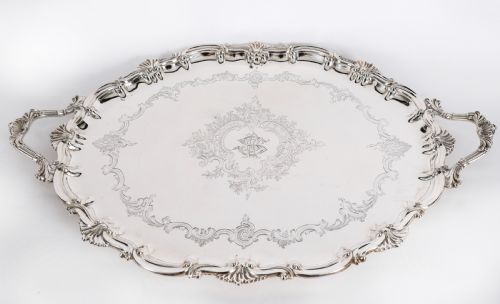

Silver Plate Serving Tray
When choosing a silver plate serving tray, you are selecting a functional centrepiece spanning the Victorian, Edwardian, and Art Deco eras designed for hospitality.
Silver Plate Serving Tray
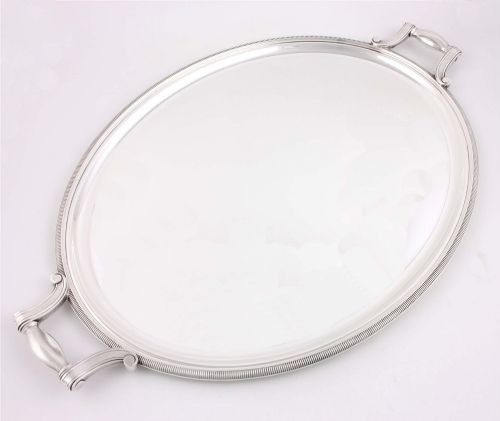
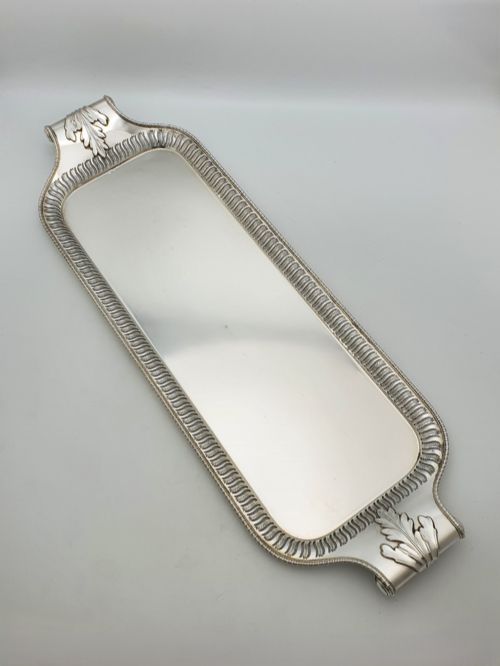
A silver plate serving tray provides a polished platform for afternoon tea, cocktails, and formal entertaining. These objects appear in various shapes including oval, rectangular, circular, and octagonal formats.
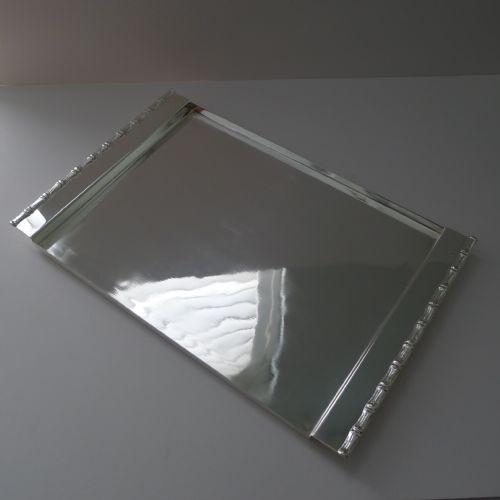
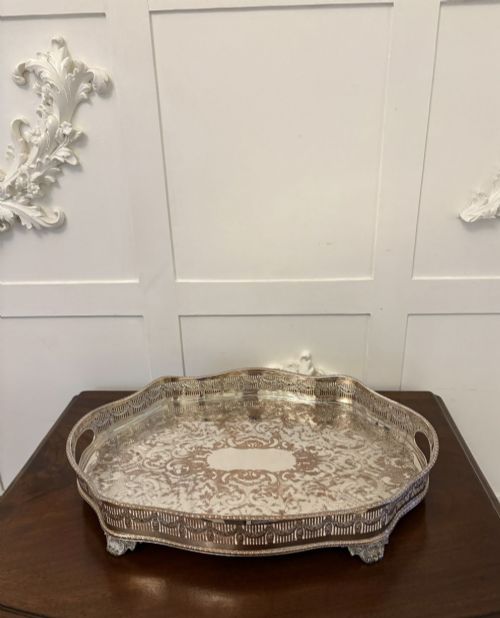
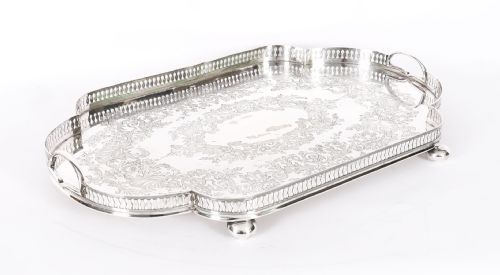
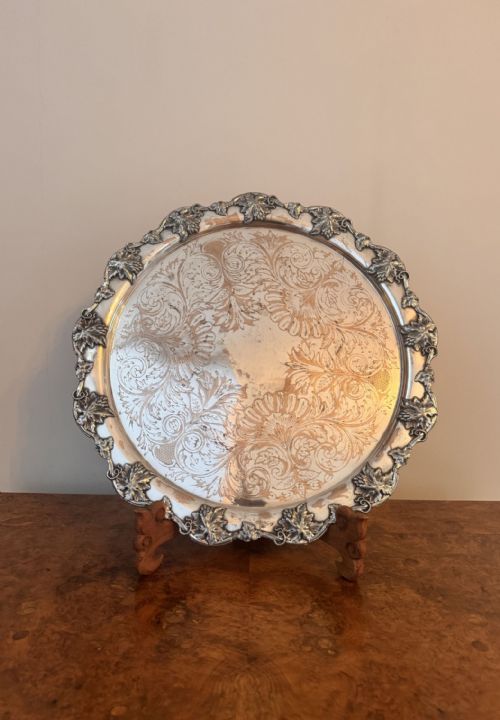
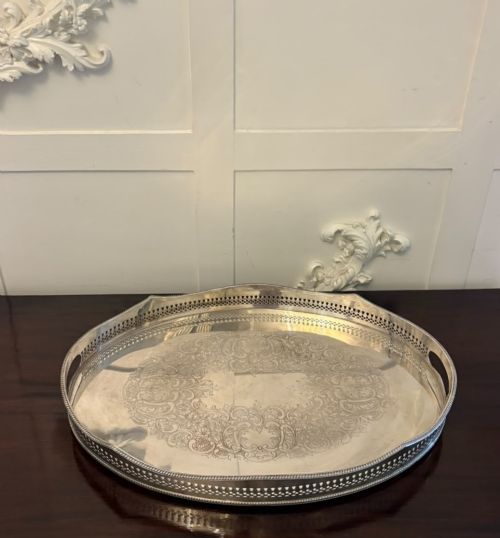
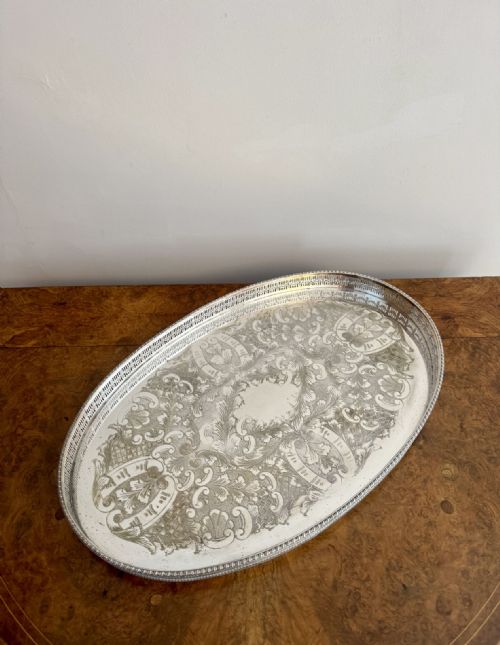
The most common examples on this page date from the Edwardian and Victorian periods, often featuring engraved surfaces or raised gallery borders. Makers also produced geometric cocktail trays during the Art Deco era.
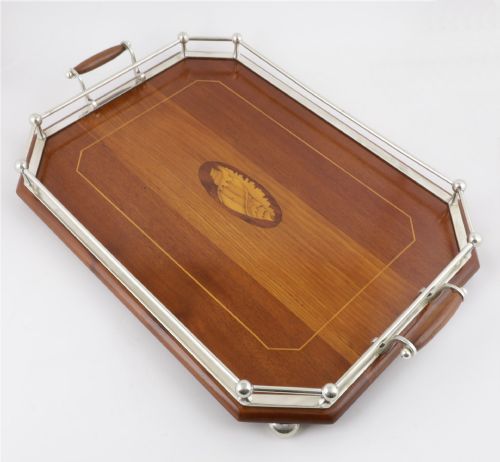
Forms range from small handled salvers to extra-large butler trays incorporating mahogany, oak, or glass elements. Regional variations include Continental decorative designs and modernist Italian interpretations.
How They Were Made
Silversmiths utilised base metal, copper, or nickel silver as a foundation before applying silver plate or electroplating the surface. Techniques such as EPNS (Electroplated Nickel Silver) became widespread during the nineteenth century.
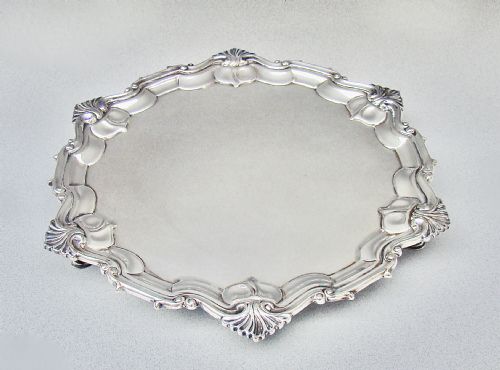
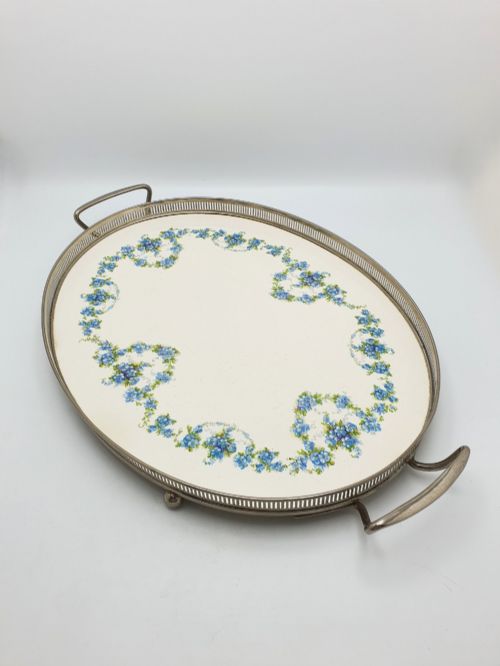
Makers added decorative detail through hand engraving, pierced galleries, repoussé work, and applied cast borders featuring motifs like grapevines, shells, and floral scrollwork. Certain pieces integrate wooden bases or hand-painted porcelain plaques.
Old Sheffield plating involved fusing a thin layer of silver to a copper core before shaping and assembling the finished tray.
Listings feature items spanning the 19th Century, Victorian, Edwardian, 1920, 1930, and 1960 periods.
What Varies in Quality
Quality depends upon the thickness of the silver application and the durability of the underlying metal base. Heavier gauge metal provides structural rigidity, preventing flex and distortion across larger serving surfaces.
The precision of hand-engraving, the crispness of cast decorative borders, and the structural integrity of applied handles distinguish standard production from exceptional workshop output. Maker attribution to notable firms frequently indicates superior manufacturing standards.
Keith Murray For Mappin & Webb·James Deakin·William Hutton & Sons·Mappin & Webb·Thomas Bradbury & Sons·Elkington & Co·Daniel Arter·John Harrison·Creswick·Walker & Hall·Padley Parkin·Viners of Sheffield·Christofle·Asprey·J Hardy·Roberts & Belk·Hukin and Heath·Barker Ellis·George Richmond Collis
The Silver Plate Serving Tray Glossary
- EPNS
- Electroplated Nickel Silver. This abbreviation denotes a base metal alloy of copper, nickel, and zinc coated with a layer of pure silver.
- Gallery tray
- A serving tray featuring a pierced or solid upright gallery border designed to secure decanters and glasses during transit.
- Old Sheffield plate
- An early form of silver plating created by fusing sheet silver to a copper ingot before rolling them together.
- Salver
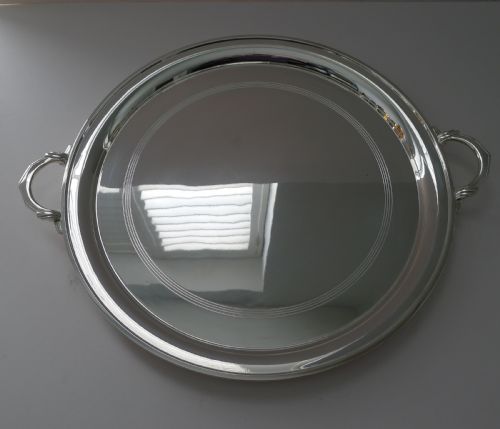
- A flat serving tray or plate, typically circular and raised on small feet, traditionally used for presenting documents or drinks.
- Repoussé
- A metalworking technique where the artisan hammers the design from the reverse side to form a raised relief pattern on the front.
Silver Plate Serving Tray: Frequently Asked Questions
How are silver plate serving trays cleaned?
Clean these items using a specialist silver cloth or a mild silver cleaning solution designed for plated surfaces. Avoid abrasive agents that can wear away the thin silver layer.
Dry the tray thoroughly after washing to prevent water spotting and tarnishing across the engraved or plain metal surfaces.
Can I use an antique tray for serving drinks?
Antique trays are structurally robust enough for regular use in serving cocktails, tea, or afternoon refreshments. The supportive handles and raised borders on gallery models keep glassware secure.
Take care to protect the surface from acidic liquids or prolonged moisture exposure to preserve the original plating.
What is the difference between a tray and a salver?
Salvers are traditionally circular serving plates raised upon small bracket feet, often utilised for presenting letters, calling cards, or individual drinks. Trays encompass a wider variety of geometric shapes and are typically fitted with handles for carrying.
Both categories utilise silver plating over base metal or copper foundations across Victorian and Edwardian manufacturing.
How do I date an antique silver plate tray?
Dating relies upon stylistic markers such as Victorian floral engraving, Edwardian pierced galleries, or Art Deco geometric layouts. Maker marks stamped into the metal provide direct reference to active workshop operating periods.
Materials also indicate age, with Old Sheffield plate predominating in earlier nineteenth-century pieces and EPNS becoming standard later.