




Vintage Silver Drinks Tray
A vintage silver drinks tray anchors a gathering, offering a polished stage for crystal decanters and low-stemmed glasses.
Vintage Silver Drinks Tray
A vintage silver drinks tray provides a sturdy, decorative surface designed to hold glassware, decanters, and cocktail equipment. Buyers searching this phrase will find a wide array of serving pieces built to facilitate hospitality across multiple decades.
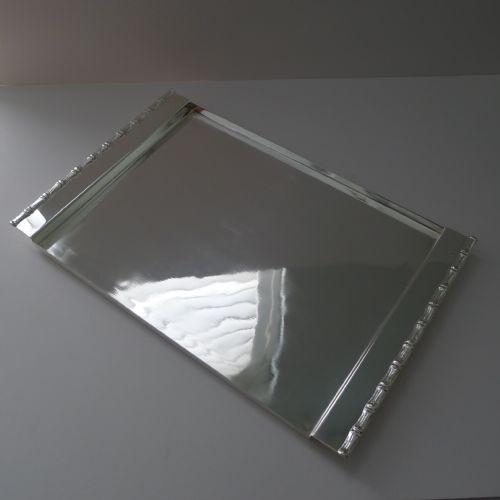
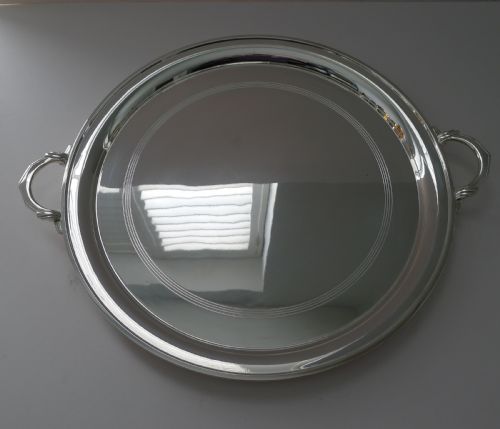
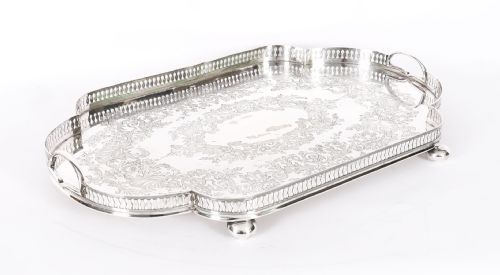
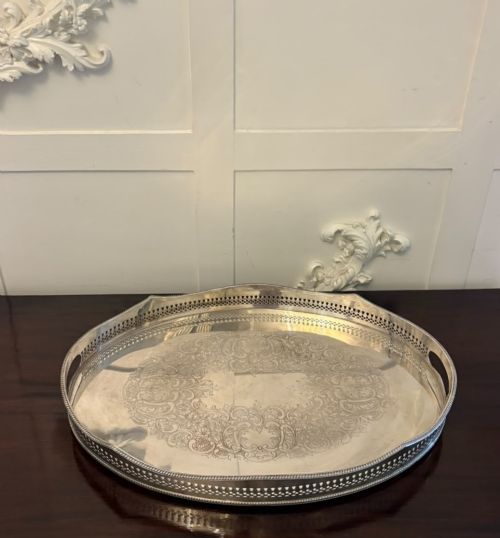
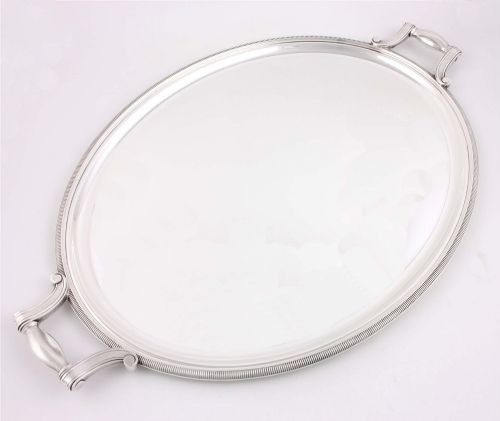
The Edwardian period contributes heavily to the selection visible on this page, often supplying gallery rails and intricate surface engraving. Pieces from the Art Deco era also appear frequently, bringing geometric lines and streamlined shapes suited to cocktail service.
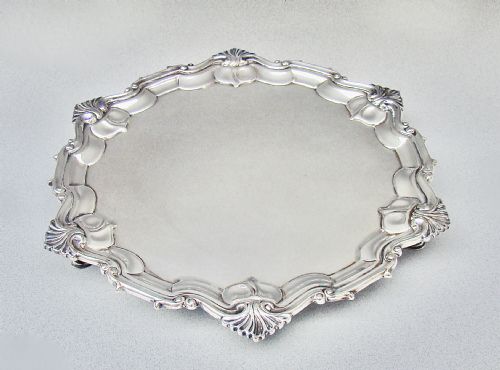
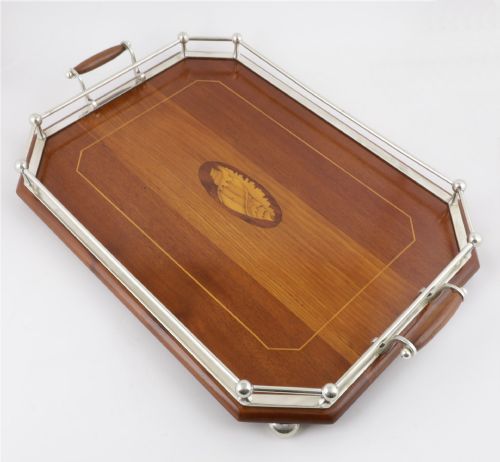
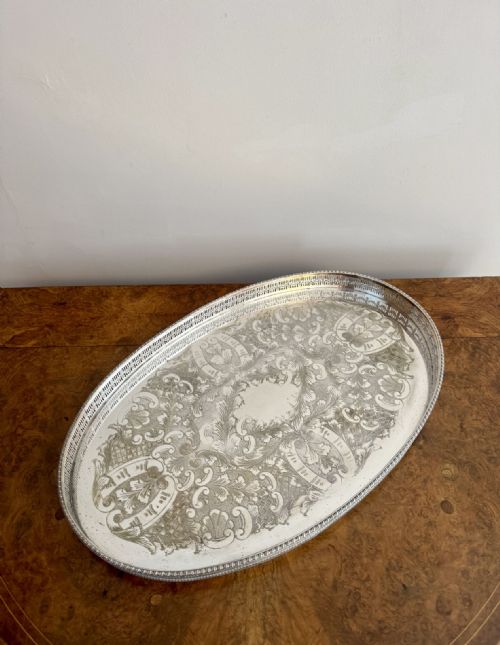
Forms vary from straightforward oval and circular plates to octagonal models and diamond shapes. Variations encompass designs fitted with handles, raised rims, or wooden gallery borders inlaid with shell details.
Construction and materials
Manufacturing methods rely predominantly on silver plate, EPNS, and electroplated nickel silver applied over base metal foundations. These plated layers provide the visual weight and bright appearance of solid silver while maintaining structural rigidity.
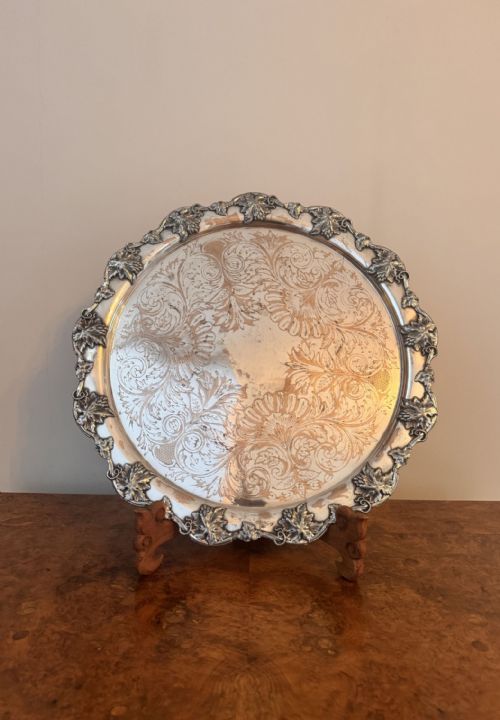
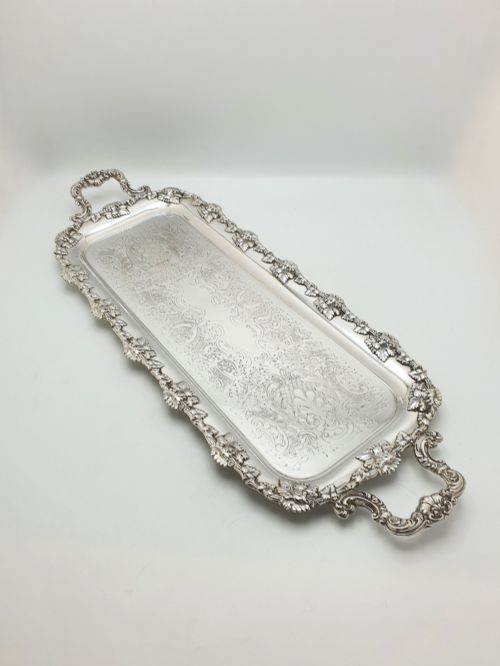
Many examples incorporate secondary materials into their frames, pairing metal mounts with mahogany, oak, cut glass, or mirror panels. Borders are often cast separately, displaying embossed scrolls, grapevine motifs, or pierced galleries before attachment to the main body.
Vintage Silver Drinks Tray Retail Price Guide 2026
Typical asking prices for vintage silver drinks tray among the pieces listed under this phrase on Sellingantiques today, from the lower quarter to the upper quarter. They describe what is for sale here now, not the wider market.
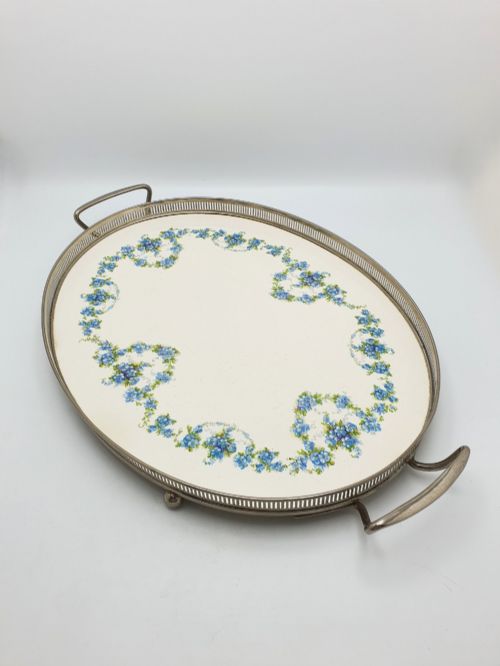
One mirror tray retains a blue floral centre, ensuring your gin and tonic rests upon an indoor garden.
Evaluating standard and execution
Grading standard depends heavily on the crispness of the chased engraving and the structural integrity of applied rims or handles. Higher-grade examples display deep, hand-punched details on the surface and secure, well-balanced galleries.
The thickness of the silver plating relative to wear areas dictates long-term durability. Maker reputation also influences distinction, as established firms employed skilled artisans to execute complex borders and structural joints.
Keith Murray For Mappin & Webb·James Deakin·William Hutton & Sons·Christofle·Elkington·Ralph Lauren
The Vintage Silver Drinks Tray Glossary
- Gallery tray
- A serving plate surrounded by an openwork or solid vertical metal rim designed to keep items from sliding off. These raised walls often feature pierced vertical slats.
- Salver
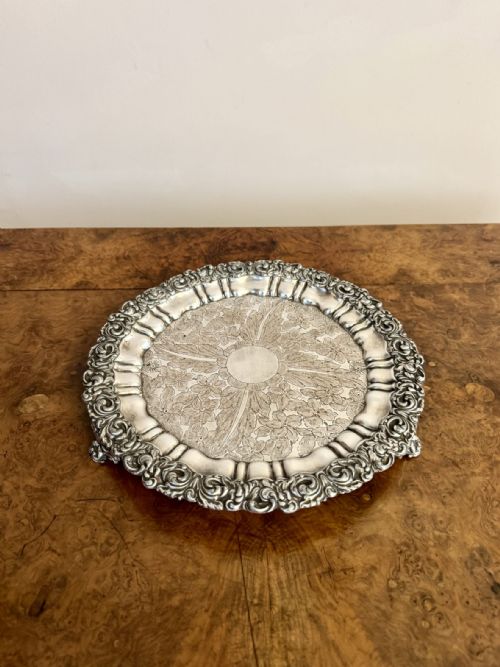
- A flat serving tray, typically round and supported by small feet, used traditionally for presenting glasses or calling cards. They often feature an engraved central field.
- EPNS
- Electroplated Nickel Silver, a common base metal alloy coated with a thin layer of pure silver through an electrolytic process. It serves as the primary structural material for most twentieth-century tableware.
- Pierced gallery
- An ornamental metal fence cut through with decorative open patterns that runs along the perimeter of the tray. This technique lightens the visual weight of heavy metal borders.
- Demitasse service
- A matched set comprising a tray alongside small cups and vessels intended for serving strong coffee or liqueurs. These groupings concentrate multiple matching items onto a single compact platform.
Vintage Silver Drinks Tray: Frequently Asked Questions
How do I clean my silver plated tray?
Maintenance requires a soft cloth and a specialised silver polish formulated to clean plated surfaces without wearing away the top layer. Avoid abrasive pads or harsh chemical dips that strip the underlying plating.
After polishing, rinse the tray with warm water and dry it immediately with a soft towel to prevent water spots. Regular dusting keeps tarnish at bay between deeper cleanings.
Can I use these trays for serving drinks?
These trays were originally manufactured for domestic hospitality, making them entirely suitable for carrying decanters, glasses, and cocktail shakers. The sturdy metal and wood construction supports the weight of glassware during service.
Protect the surface from prolonged moisture exposure by wiping up condensation promptly. Using coasters or linen mats helps preserve the silver or mirrored base from scratches.
What is the difference between a salver and a tray?
A salver typically denotes a flat, circular serving platform raised slightly on small feet. They concentrate on engraved central fields and decorative moulded rims rather than carrying handles.
Trays encompass a broader range of shapes including oval, rectangular, and octagonal formats, frequently fitted with handles or high gallery walls. Salvers tend to feel more formal, while trays prioritize functional transport.
How can I tell an Edwardian tray from an Art Deco one?
Edwardian examples generally display traditional ornamentation like floral scrolls, ribbon borders, and pierced galleries reflecting Victorian revival tastes. The aesthetic leans toward ornate elaboration and curved botanical motifs.
Art Deco trays shift toward geometric precision, featuring diamond shapes, streamlined handles, and stepped borders characteristic of the 1920s and 1930s. The decoration relies on clean lines rather than flowing naturalistic patterns.