


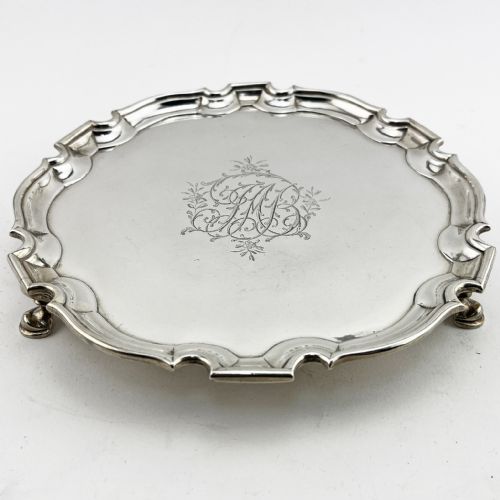

Engraved Silver Serving Tray
An engraved silver serving tray brings period weight and detailed surface work to the table, usually seen here in Victorian and Edwardian silver plate.
Engraved Silver Serving Tray
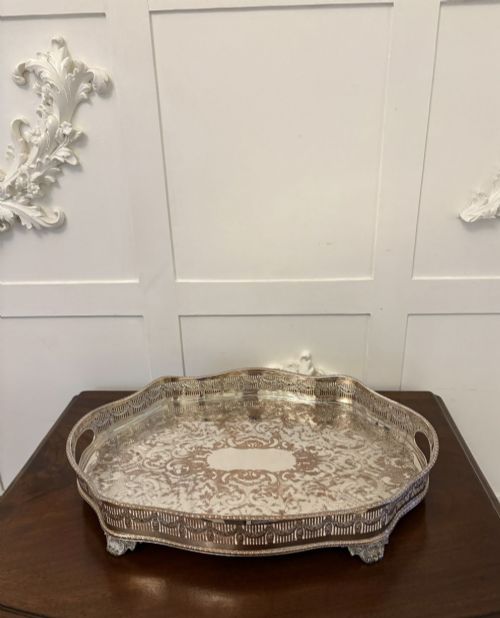
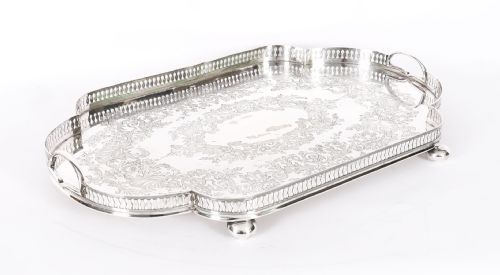
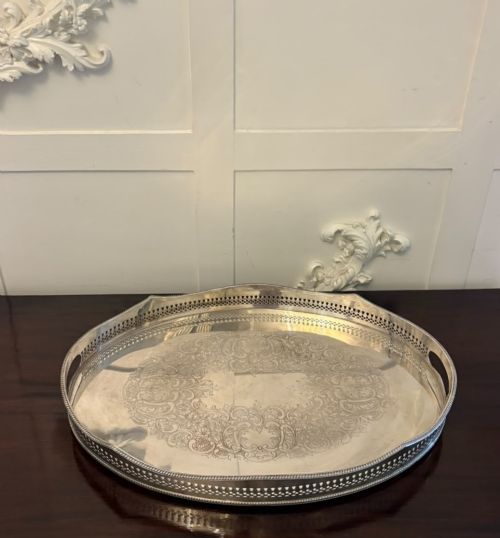
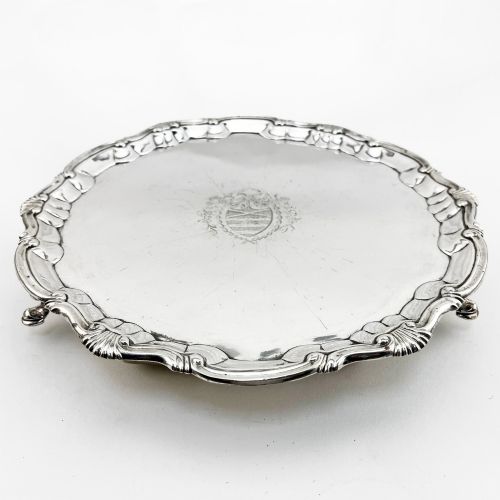
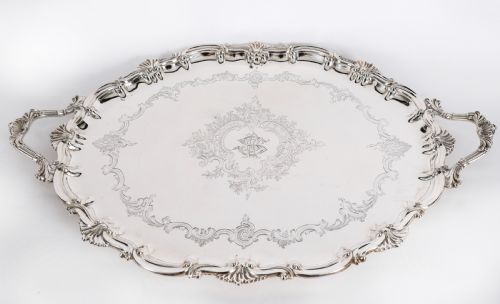
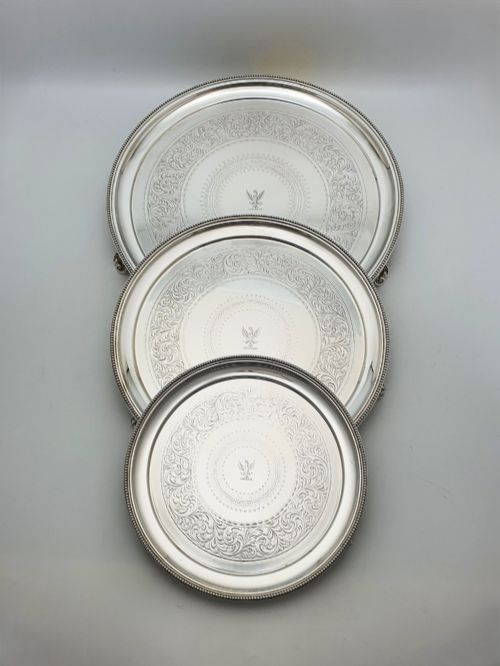
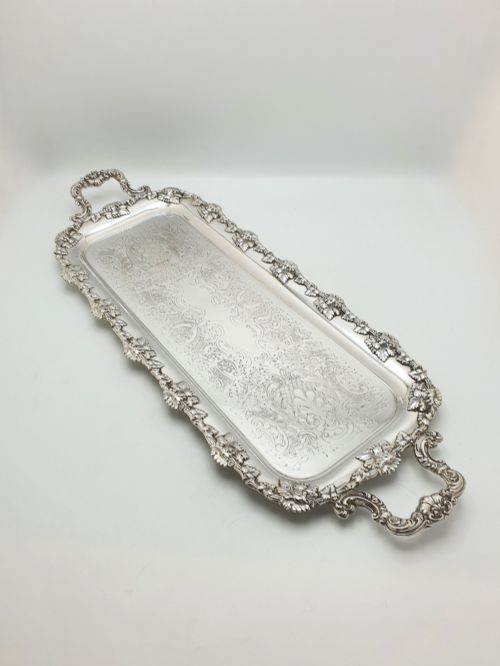
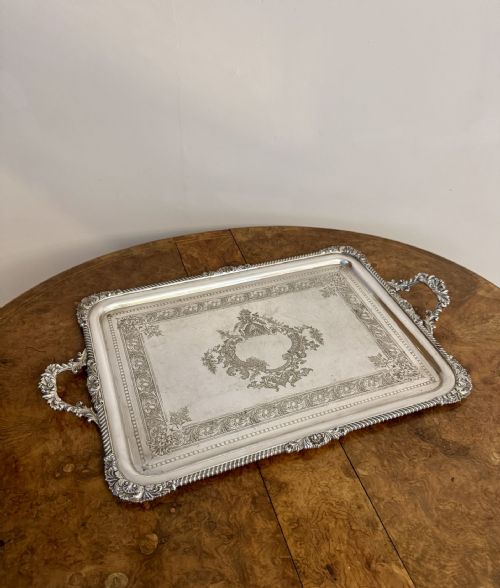
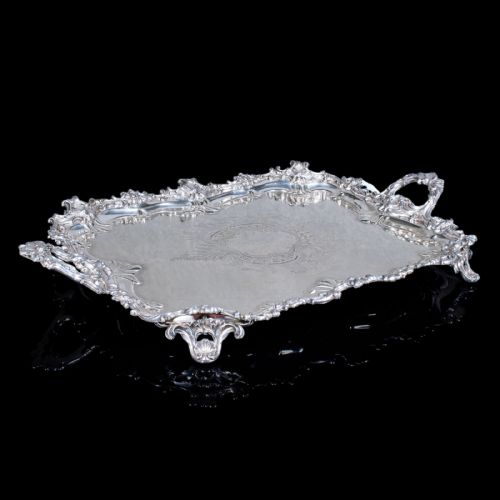
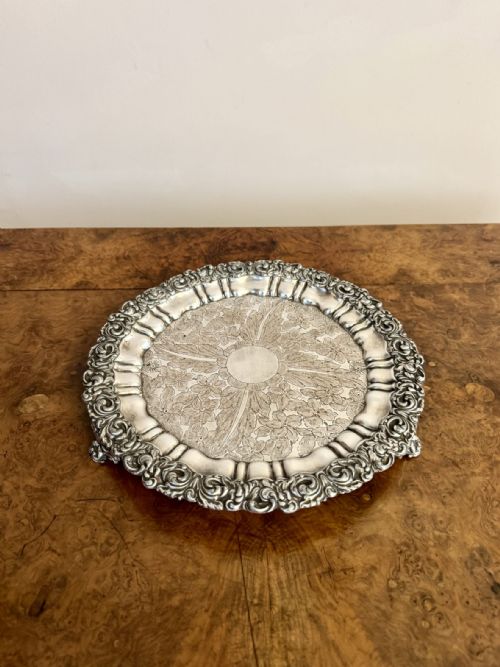
When you search for an engraved silver serving tray, you encounter formal domestic metalwork designed for pouring tea, presenting drinks or carrying dishes. These items appear across various forms such as large presentation trays, tea trays, round salvers and oval platters.
The versions most common on this page date from the nineteenth century into the early twentieth century, spanning Victorian, Edwardian and Georgian periods. Makers utilised solid sterling silver alongside silver plate, EPNS, copper and base metal cores to build these functional items.
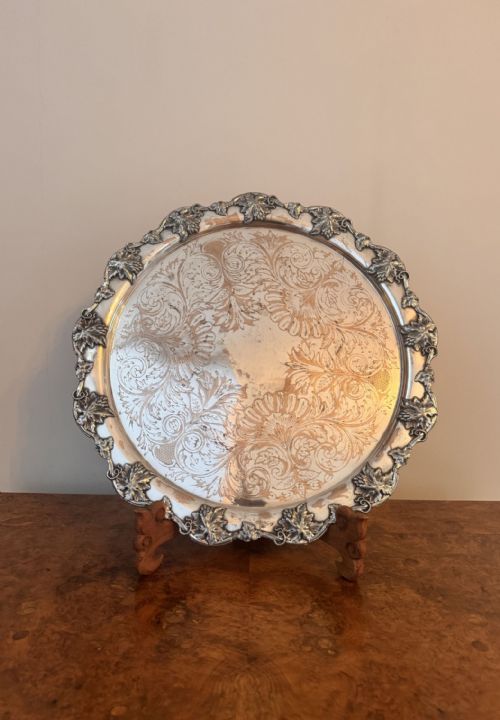
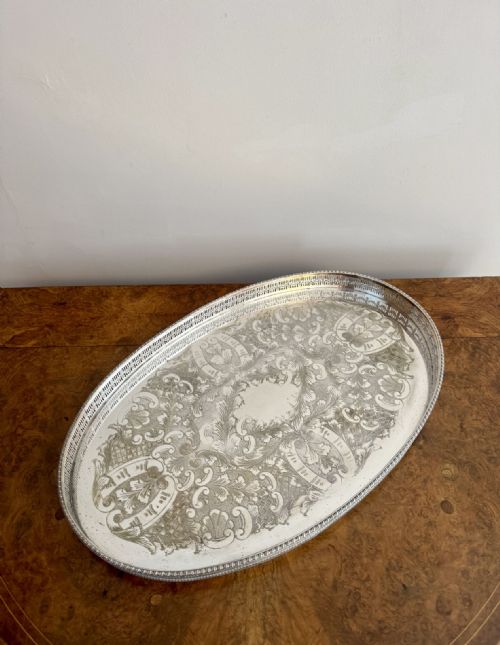
Many examples feature surface decoration ranging from intricate floral and scroll engravings to pierced galleries and grapevine borders. Their origins encompass English workshops, Scottish pieces and Indian Colonial silver salvers.
How they were made
Makers constructed these pieces using silver plate, Old Sheffield Plate and solid sterling silver, often working over copper, nickel silver or base metal foundations. Sheffield plating fused a thin sheet of silver to a copper base, while later electroplating deposited silver onto nickel or other metals using an electrical current.
Surface patterns relied on hand engraving, embossing and chasing to cut or push scrolls, ferns and floral motifs into the metal. Workshops also soldered cast handles, applied detailed cast rims with grapevine or scroll designs, and pierced galleries from sheet metal.
Several Victorian trays feature delicate fern engravings, capturing a nineteenth-century obsession with woodland fronds that Victorian fernsellers turned into a national craze.
What varies in quality
The standard of a piece depends heavily on the crispness and depth of the surface engraving, as shallow or worn lines indicate heavy past cleaning. Weight and gauge also separate sturdy presentation pieces from lighter items that flex when lifted.
Construction details reveal finer craftsmanship, such as the neatness of soldered joints on handles, the precision of pierced galleries, and the preservation of the underlying metal on plated surfaces where base metal begins to show through.
James Deakin·Mappin & Webb·Thomas Bradbury & Sons·Elkington·John Harrison·Walker & Hall·Robert Breading·Harrison Bros·Padley Parkin·J Dixon & Sons
The Engraved Silver Serving Tray Glossary
- Silver plate
- A method where a layer of silver is bonded or electroplated onto a base metal such as copper, nickel silver or brass. This technique allowed makers to produce domestic items with the appearance of solid silver at a lower cost.
- Salver
- A flat tray, typically circular or oval with feet, used for serving drinks or presenting cards and letters. In antique metalwork, these often feature heavily engraved centres and raised decorative rims.
- Gallery tray
- A tray distinguished by an upright pierced or solid gallery wall around its perimeter, designed to keep items from sliding off during service. These often include built-in handles or raised feet.
- Old Sheffield Plate
- An early form of plated metal created by fusing a sheet of silver to a copper ingot before rolling them into sheets. Pieces made this way often show subtle lines of copper on reverse edges.
- Chasing
- A metalworking technique where the artisan pushes and displaces metal from the front using punches and a hammer to create raised surface decoration without removing material.
Engraved Silver Serving Tray: Frequently Asked Questions
How do I clean an antique silver tray?
Clean silver plate and sterling pieces gently with a specialised silver cloth or mild cream to preserve the recessed dark lines of the engraving. Avoid abrasive dips that strip the character from older surfaces.
Frequent washing is unnecessary; soft dusting and occasional polishing keep the metal stable without wearing through thin plating.
Can I use these trays for serving food?
Most of these trays serve well for carrying glasses, teapots or bottled drinks during gatherings. Solid silver and sound silver plate handle dry foods or bottled service safely.
Check the surface condition first, as worn plating exposing base metal or copper underneath means direct contact with wet or acidic foods should be avoided.
What is the difference between a salver and a tray?
Salvers traditionally stand on small feet and function primarily for presenting documents, cards or drinks in formal settings. They are most often circular with decorated flat centres.
Trays generally include handles and larger oval or rectangular shapes designed for carrying heavy tea services from room to room.
How do I date an antique silver tray?
Dating relies on maker marks, assay office stamps on sterling items, and stylistic clues like Victorian fern engraving or Edwardian pierced galleries. Hallmarks provide exact years for solid silver pieces.
Plated items depend more on maker signatures, patent dates, and structural styles associated with the nineteenth or early twentieth centuries.