



Victorian Engraved Silver Waiter
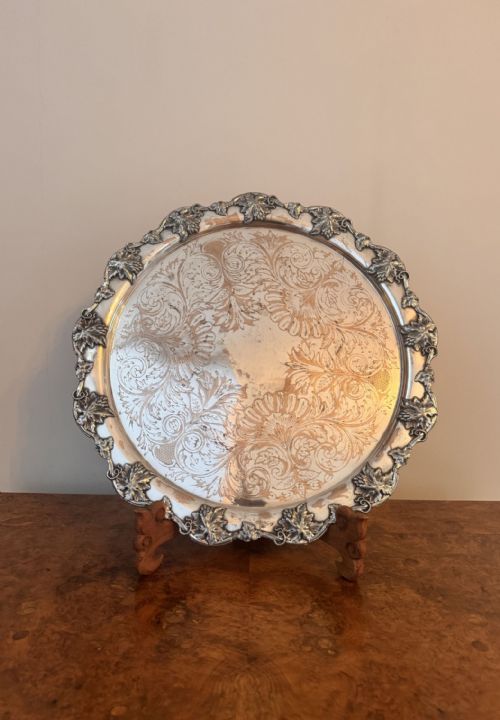
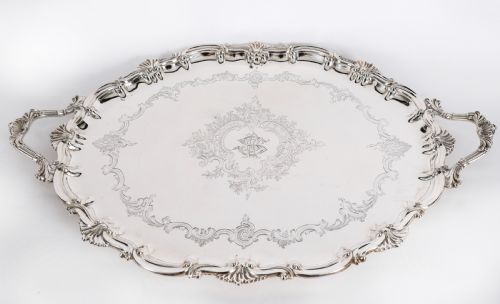
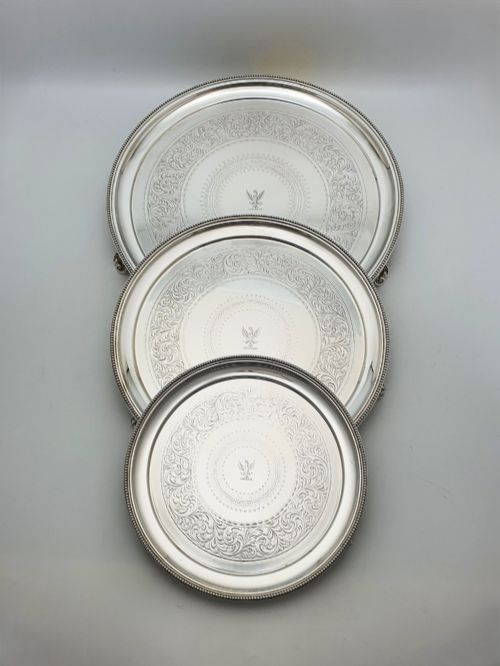
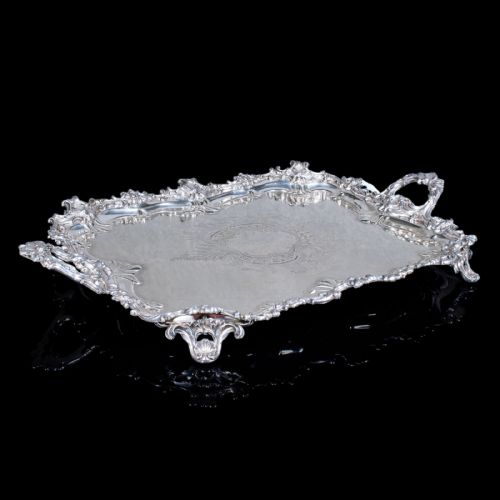
A victorian engraved silver waiter is a small serving tray for drinks or calling cards, valued for its fine hand-cut surface decoration.
Victorian Engraved Silver Waiter
A victorian engraved silver waiter is typically encountered as a circular or oval tray resting on short feet, designed for serving glasses and small vessels. These pieces range from intimate domestic servers to large monumental presentation trays used for formal hospitality.
Originating predominantly from English workshops of the nineteenth century, these items reflect the Victorian taste for elaborate table service. Regional variations include Indian colonial productions and Irish examples, expanding the domestic repertoire into distinct stylistic territories.
Materials and construction
Makers built these trays using base metals, nickel silver, or copper coated with a layer of silver through traditional Sheffield plating or later electroplating methods. Sterling silver examples were fashioned from solid precious metal rather than plated compositions.
Surface patterns were applied by hand using gravers to cut fine lines, scrolls, and floral motifs directly into the metal. Raised rims and feet were frequently cast separately and soldered or mounted to the main body.
One extraordinary tray travelled across the Atlantic to the World's Fair in Chicago before finding its way here.
Judging the standard
Quality rests upon the crispness of the engraved decoration and the weight of the metal used in the body and rim. Superior pieces maintain deep, clear hand-cut lines and rigid, substantial forms that resist flexing under weight.
The architectural integration of cast feet and detailed borders separates standard domestic items from exhibition-grade presentation pieces. Maker attribution to notable firms often correlates with higher execution standards in the chasing and finishing.
Thomas Bradbury And Sons·Elkington·John Harrison·Padley Parkin·J Dixon And Sons·Tiffany And Co·Fenton Russel·Lister·Lee And Wigfull
The Victorian Engraved Silver Waiter Glossary
- Waiter
- A small serving tray or salver, typically supported on feet, used for carrying drinks or letters. In nineteenth-century usage, the term often denoted smaller platters compared to larger serving trays.
- Salver
- A flat tray of silver or other metal used for serving food or beverages. These pieces frequently feature raised, ornamented borders.
- Sheffield Plate
- A composite material formed by fusing a sheet of silver to a thicker copper ingot before rolling. This early method preceded electroplating.
- EPNS
- Electroplated nickel silver, a common base metal composition coated with a layer of silver using an electrical current. It became widely utilised by Victorian manufacturers.
- Reticulated
- Ornamented with an openwork pattern resembling a net or lattice. This technique appears on pierced gallery trays.
Victorian Engraved Silver Waiter: Frequently Asked Questions
What is a silver waiter used for?
These trays served drinks, afternoon tea, and calling cards in Victorian drawing rooms. They provided a stable, decorative surface for passing glasses or letters.
Today they function effectively as drinks trays, centrepieces, or decorative display surfaces on sideboards and tables.
How do I clean a silver plated waiter?
Maintenance requires a soft cloth and a gentle silver polish formulated for plated items. Avoid abrasive pads that can wear through the thin silver layer to the base metal underneath.
Regular, light dusting preserves the engraved surface details without stripping the natural patina built up over decades.
Are these trays made of solid silver?
Most examples found in this category consist of silver plate, electroplated nickel silver, or old Sheffield plate over a base metal foundation. Sterling silver versions are less common but do appear.
Hallmarks and maker marks stamped on the reverse typically clarify the exact metal composition used by the manufacturer.
How can I tell the age of a tray?
Dating relies on maker marks, style periods, and manufacturing techniques like Sheffield plating versus electroplating. Victorian pieces often display registration marks or specific firm ciphers.
Stylistic shifts from rococo revival scrolls to simpler late-century pierced galleries also help narrow down the decade of production.