


19th Century Silver Platter
A 19th century silver platter brings heavy metalwork and grand dining history straight to the modern table.
19th Century Silver Platter
When you search for a 19th century silver platter, you encounter a wide variety of large serving vessels, salvers, chargers, and meat domes designed for formal dining tables. The pieces on this page span the Victorian era, the William IV period, and earlier decades, reflecting the shifting tastes of the nineteenth century.
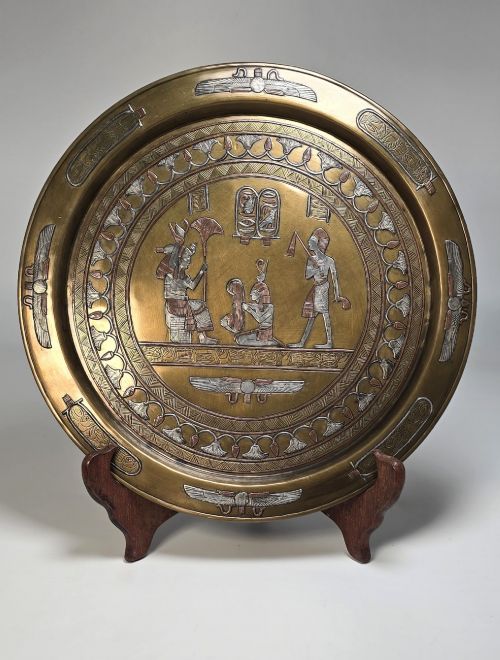
You are most likely to meet silver-plated versions alongside sterling silver, copper, base metal, and electrotype metal pieces. Makers employed styles ranging from plain Victorian neo-classical designs to intricate Renaissance revival, Egyptian revival, and Indian colonial motifs.
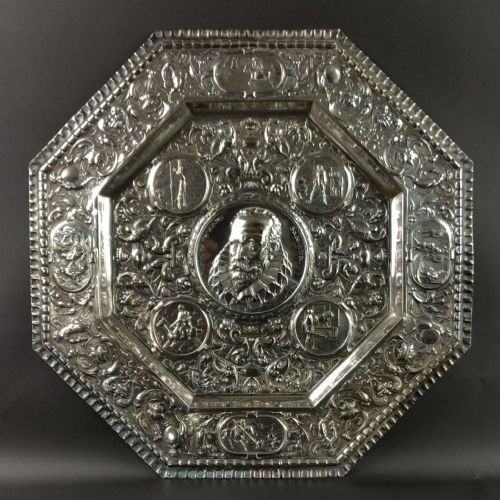
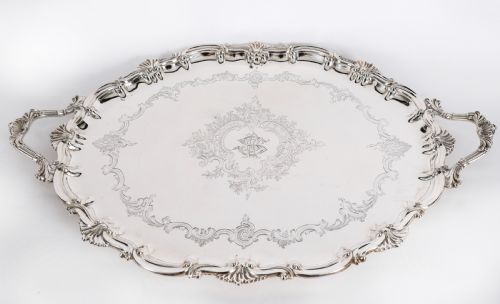
Forms include oval serving trays, decorative chargers depicting historical figures like Miguel de Cervantes or Ferdinand III, mazarine draining trays, and matching meat platter covers. Each object served a specific function in nineteenth-century hospitality, from presenting joints of meat to displaying fruit or dessert.
Methods of manufacture
Silversmiths and manufacturers utilised sterling silver, old Sheffield plate, and later electroplating techniques over copper or bronze bases to create these robust serving items. Methods like repoussé work allowed artisans to hammer detailed figural scenes and floral borders into the metal from the reverse side.
Makers also applied silver inlay, mercury gilding, and electrotyping to achieve rich surface finishes and complex sculptural reliefs. Heavy gauge base metals provided the structural rigidity needed for large serving trays and meat domes meant to withstand daily household service.
The evidence shows diverse object forms including mazarine draining trays, meat domes with eagle finials, and large figural chargers.
Assessing quality and craftsmanship
The weight of the metal and the crispness of the chased or repoussé decoration separate standard items from superior works. Finer examples display deeply struck maker marks, well-balanced proportions, and thick layers of silver plating that have endured generations of cleaning.
Design complexity also marks the upper tier, seen in figural battle scenes, custom cast handles, and detailed heraldic engraving. Master silversmiths maintained strict geometric symmetry on large oval trays and ensured that applied borders remained firmly attached to the body.
Thomas Bradbury & Sons·John Harrison·Henry Wilkinson·Elkington & Co·Peters Hamburg·Fenton Russel·Cresswick·Paul Storr·Durand
The 19th Century Silver Platter Glossary
- Salver
- A flat tray, typically with feet, used for serving glasses or presenting items. They formed an essential part of formal domestic service.
- Charger
- A large decorative plate or platter placed beneath other courses or displayed on a sideboard. These pieces often feature extensive repoussé work or figural scenes.
- Repoussé
- A metalworking technique where the artisan hammers the design from the reverse side to create a raised relief on the front. It requires great skill to maintain even metal thickness.
- Old Sheffield Plate
- A composite material made by fusing a sheet of silver to a thicker copper core. This method predates electroplating and produces a warm, durable finish.
- Mazarine
- A pierced insert placed inside a platter to drain juices from meat or fish. They represent specialised Victorian dining technology.
- Electrotype
- A metal object produced by electrodepositing silver onto a mould. This technique allowed manufacturers to replicate complex sculptural forms accurately.
19th Century Silver Platter: Frequently Asked Questions
How do I clean a silver plated platter?
Use a gentle, non-abrasive silver polish and a soft cloth to remove tarnish without wearing through the thin silver layer. Avoid harsh chemical dips, particularly on electroplated or old Sheffield pieces where the base metal might show underneath.
Wash the platter in warm, soapy water immediately after use and dry it thoroughly with a lint-free cloth. Proper storage in a tarnish-resistant cloth bag preserves the surface finish between uses.
Are these platters safe for serving food?
Most antique silver and silver-plated platters are suitable for serving dry foods, fruit, or bread. Platters with significant wear to the plating might expose the underlying copper or base metal, which requires caution with acidic foods.
Modern food safety guidelines suggest using a protective barrier like a doily if the silver plating is compromised. Inspect the surface for any flaking or active corrosion before putting food directly onto the metal.
What is the difference between a salver and a tray?
A salver traditionally stands on small feet and functions as a formal serving vessel for drinks or calling cards. Trays are generally flat or have integrated handles for carrying heavier dishes from the kitchen to the dining room.
Victorian terminology often used these words interchangeably depending on the manufacturer and the intended household use. Both forms showcase the metalworking styles of the period.
How can I tell old Sheffield plate from electroplate?
Old Sheffield plate often shows a thin line of exposed copper along the cut edges where the silver sheet was folded over the core. This method produced a rich, deep lustre characteristic of the early nineteenth century.
Electroplate, introduced around the middle of the nineteenth century, covers the entire base metal uniformly without edge seams. Makers' marks on electroplated items also differ from the stamped hallmarks found on sterling silver.