

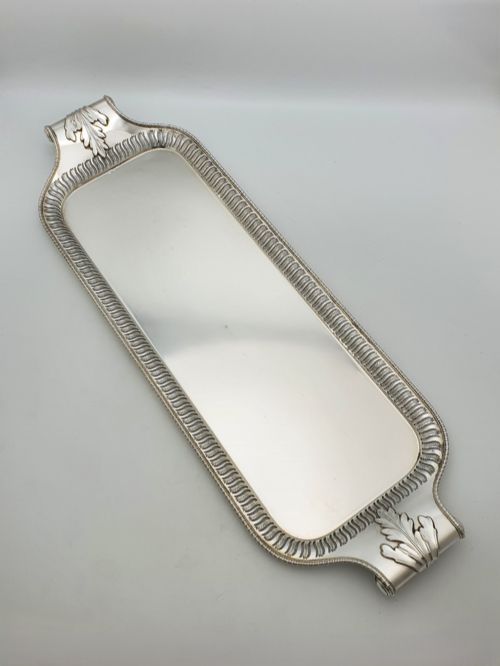
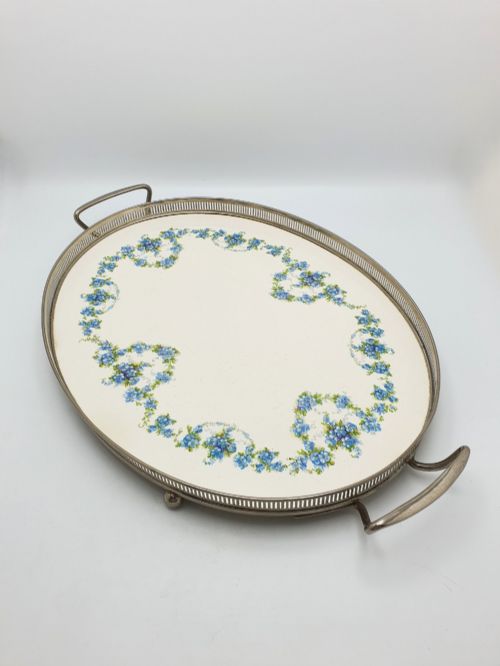
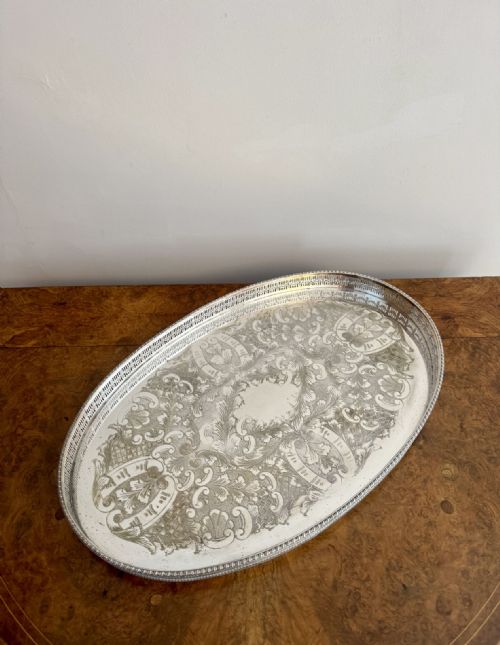
Silver Plated Platter
A silver plated platter brings the weight and bright finish of silver to the dining table or sideboard without the need for constant maintenance.
Silver Plated Platter
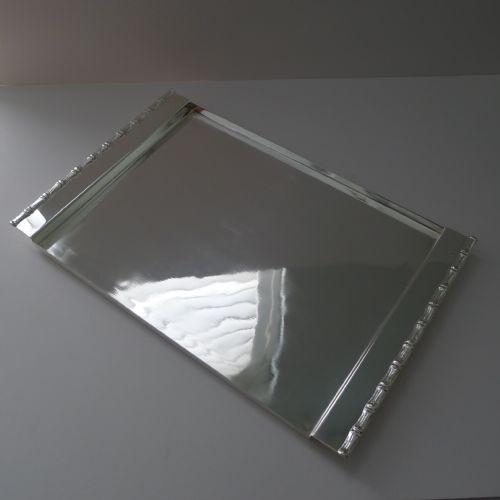
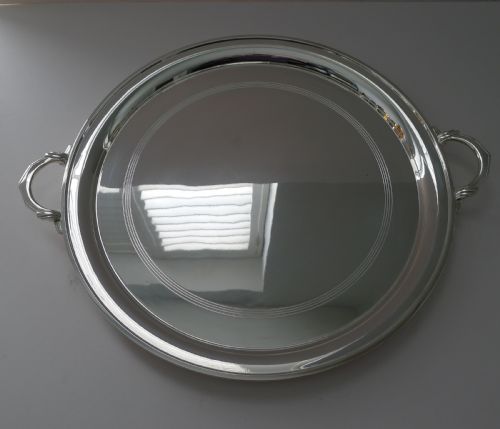
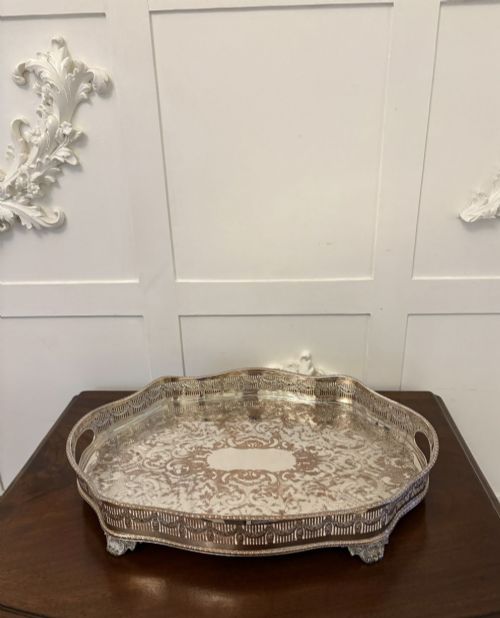
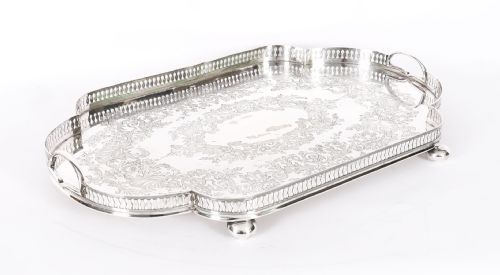
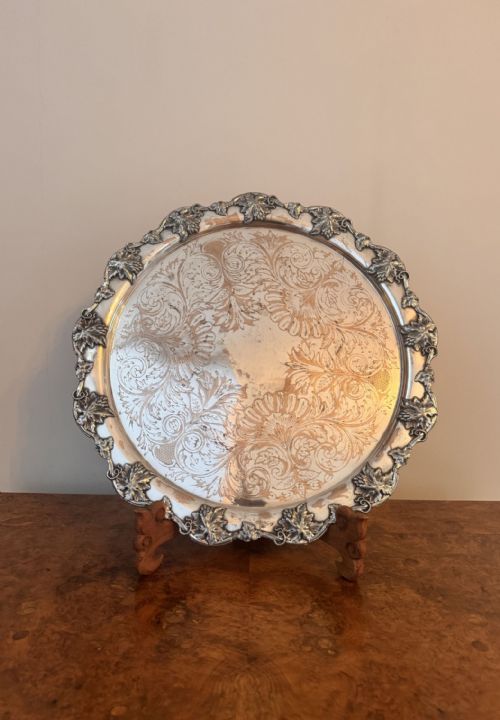
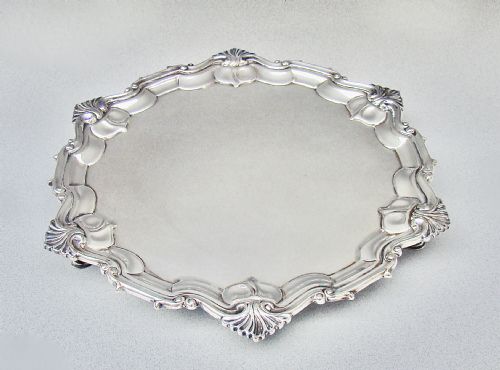
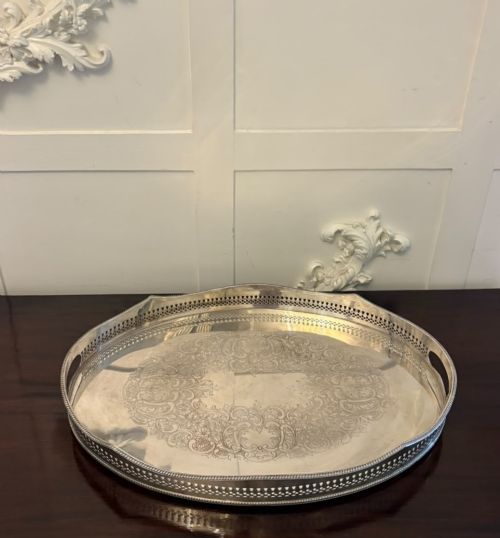
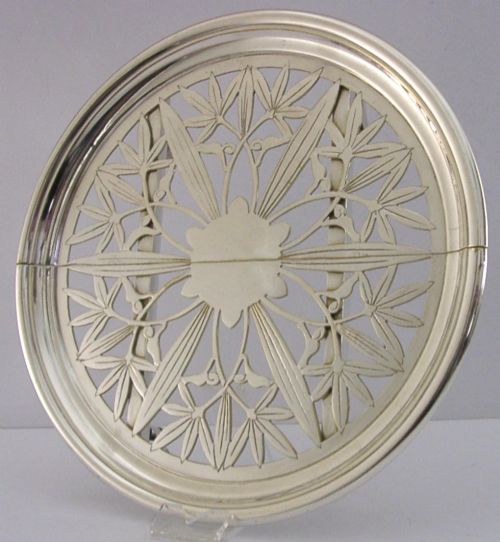
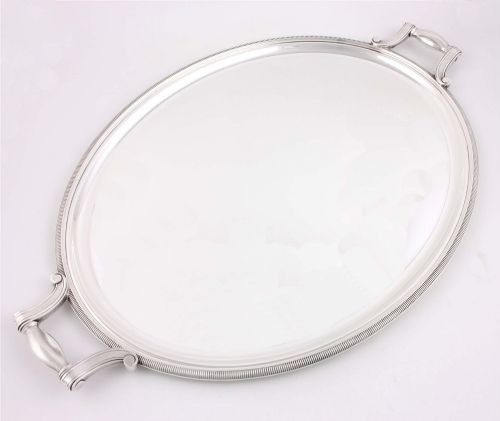
A silver plated platter serves as a flat vessel for presenting food, drinks or afternoon tea, appearing in forms ranging from simple circular salvers to large oval trays with handles.
The pieces on this page span from the Georgian period through the Victorian and Edwardian eras into the Art Deco style and the mid-century modern period, showing how dining habits changed over time.
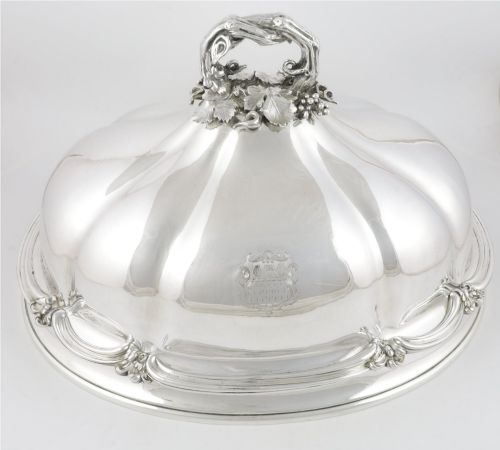
Makers from Sheffield and Birmingham sit alongside continental European workshops and Middle Eastern metalsmiths, producing everything from heavy meat domes to cocktail trays with pierced borders.
Materials and Methods
Early examples utilise Old Sheffield Plate, a technique where a thin sheet of silver is fused to a copper base before rolling, often revealing a thin red copper line where wear occurs.
Later Victorian and Edwardian pieces rely on electroplated nickel silver, known as EPNS, which applies a coating of pure silver onto a base metal alloy using an electrical current.
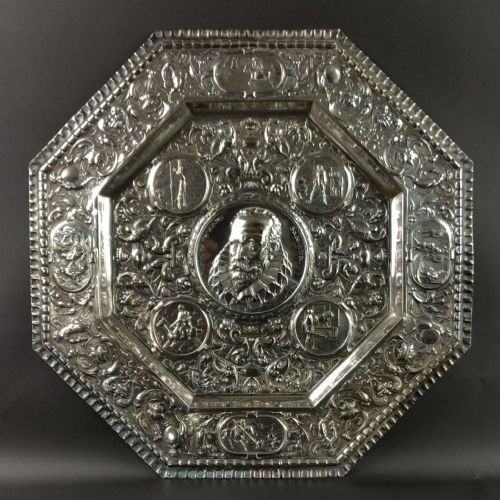
Decoration is achieved through hand engraving, repoussé work, chased floral borders, applied cast handles, and occasionally wood or shell inlays set into the metal frame.
Silver Plated Platter Retail Price Guide 2026
Typical asking prices for silver plated platter among the pieces listed under this phrase on Sellingantiques today, from the lower quarter to the upper quarter. They describe what is for sale here now, not the wider market.
Listings feature items from the Victorian and Edwardian eras alongside mid-century modern designs, utilising materials such as copper, EPNS and solid silver.
Evaluating Quality
The quality of a piece rests upon the thickness of the original silver deposit and the crispness of the hand-chased or engraved details across the surface.
Substantial base metals provide a rigid structure that resists bending under the weight of heavy roasts or loaded decanters, whereas thin bases feel light and flex easily in the hand.
Renowned makers apply superior finishing techniques to the undersides and handles, ensuring that joints are secure and mounts are cast with precision.
Mappin & Webb·James Deakin·William Hutton & Sons·Roberts Cadman·Christofle·Thomas Bradbury & Sons·John Harrison·Henry Wilkinson·Matthew Boulton·Walker & Hall·Elkington
The Silver Plated Platter Glossary
- EPNS
- Electroplated Nickel Silver. A common base metal alloy of copper, zinc and nickel coated with a layer of pure silver.
- Old Sheffield Plate
- A fused laminate of silver and copper. Craftsmen produced this material before the invention of electroplating by melting the two metals together.
- Salver
- A flat serving tray typically supported on small feet. These pieces usually hold glasses or small dishes rather than heavy joints of meat.
- Gallery Tray
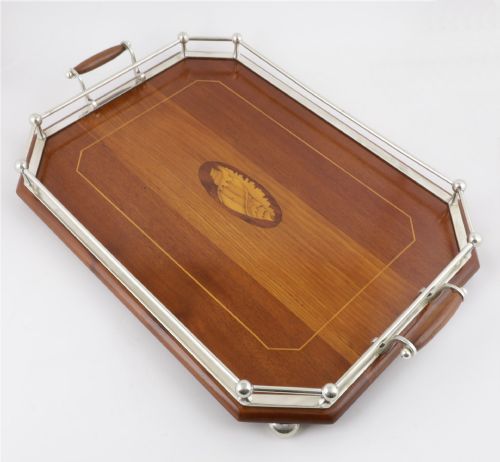
- A serving tray fitted with a pierced or solid upright gallery rim around the edge. This barrier keeps decanters and glasses secure when the tray is carried.
- Repoussé
- A metalworking technique where the artisan hammers the design from the reverse side to form raised patterns in relief on the front.
Silver Plated Platter: Frequently Asked Questions
How do I clean a silver plated platter?
Use a soft cloth and a gentle silver cream formulated specifically for plated items to remove tarnish. Avoid harsh abrasive pads that can wear through the thin silver layer.
Wash the tray in warm soapy water and dry it thoroughly with a lint-free towel immediately after cleaning to prevent water spots.
Can I use these platters for serving food?
Most antique silver plated platters are suitable for serving dry foods, canapés, or roasted meats. Ensure that acidic foods like citrus or vinegar are not left on the surface for extended periods.
Wash the piece gently by hand after use rather than placing it in an automated dishwasher, which will damage the finish.
How can I tell Old Sheffield Plate from EPNS?
Old Sheffield Plate often shows a faint line of reddish copper where the silver layer has worn away through decades of polishing. Electroplated nickel silver reveals a grey or yellowish base metal underneath.
Weight and construction methods also help distinguish the two, as fused plate generally dates from before the introduction of electroplating in the mid-nineteenth century.
How do I date a silver plated tray?
Examine the style of the engraved decoration and the shape of the handles, which often reflect the prevailing aesthetic of periods like Victorian, Edwardian or Art Deco. Maker marks stamped on the underside also provide clues to the active years of the firm.
Consulting historical maker mark registries helps narrow down the decade of production based on the specific punches used.