
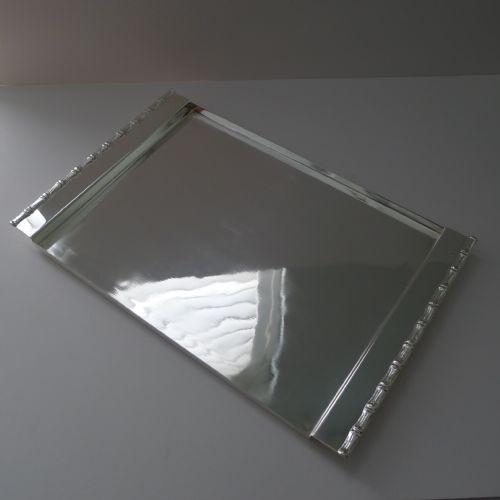
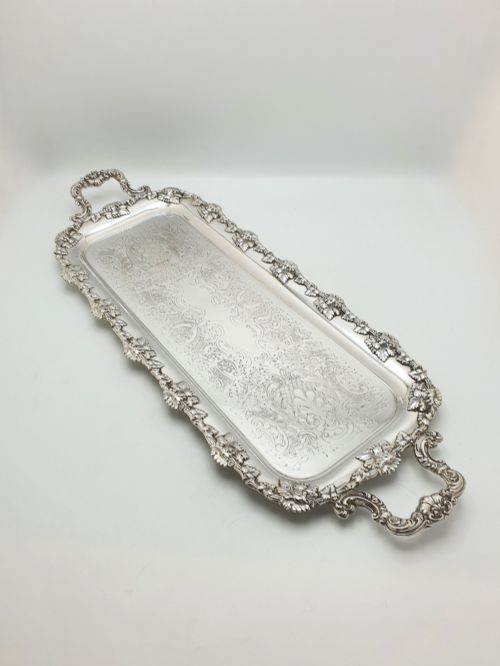
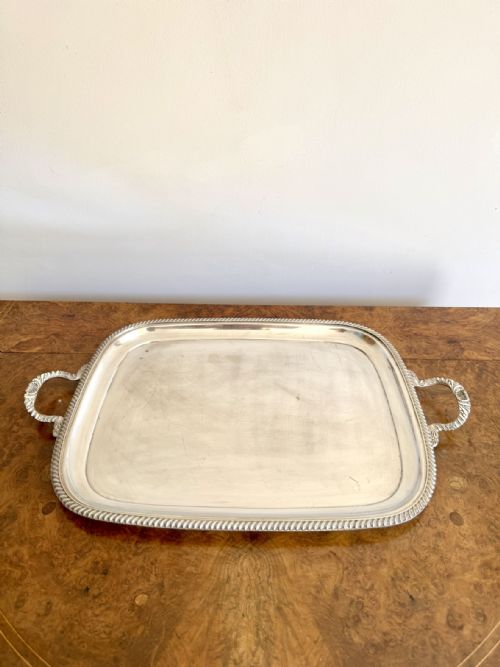


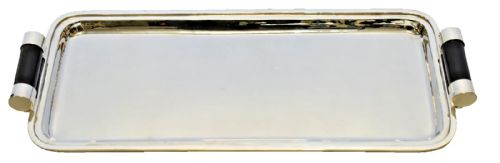


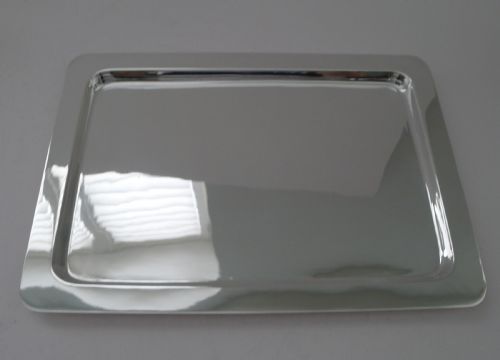


Rectangular Silver Tray
A rectangular silver tray brings functional elegance to any room, offering a polished surface suited to drinks, cocktails, or display.
Understanding the Rectangular Silver Tray
A rectangular silver tray bridges utility and ornament, serving practical roles as a cocktail or drinks tray while functioning as a decorative centrepiece. The pieces found here span the nineteenth century through the mid-century modern era, encompassing Edwardian, Art Deco, and vintage styles.
Buyers frequently encounter silver plate, EPNS, and electroplated nickel silver versions alongside rarer sterling silver examples. Forms range from simple serving trays and cocktail platters to oak and mahogany gallery trays with fitted handles.
Origins include notable English makers from Sheffield alongside international firms such as Christofle, reflecting diverse manufacturing traditions across the decades.
Materials and Construction
The foundation of these pieces typically involves a base metal such as nickel silver or standard metal, which is then coated in silver plate or EPNS through electroplating techniques. Some heavier examples incorporate wooden elements like oak or mahogany for structural galleries.
Decoration is achieved through various finishing methods, including hammered designs, cut corners, and applied decorative borders. Handles are securely riveted or soldered to the main body to support the weight of glassware and decanters.
Retail Price Guide 2026
Typical UK retail prices for rectangular silver tray, calculated from the Sellingantiques database of over a million retail prices indexed since 2003. This retail price guide relies exclusively on Sellingantiques data; no external sources or auction records are used, so the figures do not describe the wider market.
Some nineteenth-century models double as miniature balconies, keeping your gin and tonic securely corralled by miniature wooden railings.
Assessing Quality and Finish
Quality rests upon the thickness of the silver plating and the resilience of the underlying base metal. Heavier gauges of silver plate and robust foundational metals resist wear from daily polishing and use.
The precision of decorative borders, the crispness of hammered textures, and the secure attachment of handles distinguish standard production items from finer workshop pieces. Maker attribution also influences distinction, with recognised silversmiths and firms achieving greater consistency in proportion and detail.
Ralph Lauren·Hukin & Heath·John Collyer & Co.·Frank Cobb & Co.·Christofle·Garrard & Co
The Rectangular Silver Tray Glossary
- EPNS
- Electroplated Nickel Silver. A common base metal alloy coated with a layer of pure silver, widely utilised in nineteenth and twentieth-century manufacturing.
- Gallery Tray
- A tray featuring a raised pierced or solid gallery rail around its perimeter. This design originally kept decanters and glasses secure during carriage.
- Silver Plate
- A thin layer of silver bonded to a base metal core. This technique provided the visual appeal of solid silver at a lower cost.
- Cocktail Tray
- A specialised serving tray designed for beverages and barware. These pieces often date from the Edwardian and Art Deco periods when home entertaining flourished.
- Sterling Silver
- An alloy consisting of pure silver and other metals, usually copper, meeting a strict fineness standard. It represents the solid precious metal tier of tableware.
Frequently Asked Questions
How do I clean a silver plated tray?
Use a specialised silver cloth or mild silver polish designed for plated items to remove tarnish gently.
Avoid abrasive cleaners or harsh scrubbing pads that can wear away the thin silver layer over time.
Were these trays used for food or drinks?
Most examples serve as cocktail, drinks, or serving trays intended for glassware and decanters. Some smaller pieces function as trinket dishes or pin trays rather than tableware.
Gallery trays with wooden bases were specifically designed to carry bottles safely across a room.
How can I tell the period of a tray?
Examine the style clues, such as geometric Art Deco lines from the 1920s or Edwardian decorative borders from the early 1900s. Maker marks and stamps on the underside also help date the piece.
Materials like EPNS and silver plate span the Victorian and mid-century eras, requiring design context for exact placement.
Can I use an antique tray daily?
Solid construction and durable silver plate allow for regular use in serving drinks or displaying items. Proper care and gentle handling preserve the finish for years of enjoyment.
Ensure moisture is not left sitting on wooden gallery bases to protect the natural grain.